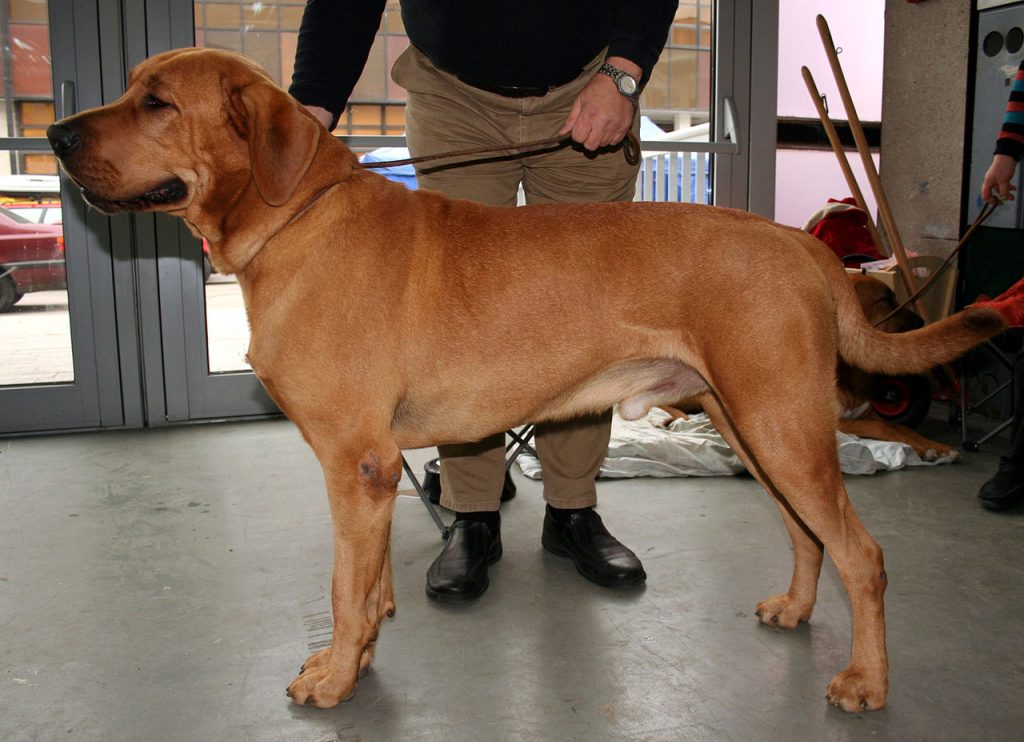
The Broholmer is a large and powerful Danish mollusk with a secret that surprises the first time viewer: beneath that imposing body lives a quiet, gentle dog deeply attached to his family. Formerly an estate keeper and deer hunter, today the Broholmer is above all a serene companion and a natural watcher who does not need to bark too much to command respect. In this guide you will find everything that matters before you share your life with this breed: character, coexistence, care, health and their history of rescue from extinction.
Is the Broholmer for you?
The Broholmer is a fantastic breed for the right home, but its size and its guardian character don’t fit just anyone.
In favour .
- A calm, balanced and very familiar temperament.
- Born vigilante: dissuades without being aggressive for free.
- Patient and affectionate, he usually gets along well with children.
- Short hair, easy to maintain.
- He is neither nervous nor a compulsive barker; he is calm at home.
To be taken into account
- Very large dog: he needs space, a large car and a budget.
- She drools and changes her hair seasonally.
- Rare breed: few breeders and waiting lists.
- It requires early socialization and a serene guide.
- Health hazards of giants (hip, torsion of the stomach).
Character and temperament

If we had to sum up the Broholmer in one word, it would be the balance. The breed standard describes it as a calm, good-tempered and friendly dog, but at the same time attentive and vigilant in the face of the unknown.
He’s not a nervous or reactive dog. A well-bred Broholmer doesn ‘t explode on any stimulus . observe, evaluate and only then decide. Their barking is serious and deep, and their mere presence is usually enough to deter an intruder without the need to go to an adult. With his family, however, he becomes affectionate, calm, and hugely attached; he enjoys being close to his people and participating in domestic life with the discretion of a confident dog.
This security, coupled with its size, means that the Broholmer needs an owner with calm authority – someone who sets rules consistently and without shouting. It is not a domineering or difficult dog, but a large mole that must learn from a puppy to control its strength and to trust its guide’s decisions.
Coexistence: children, other pets, flat and loneliness
With children. The Broholmer is usually patient and tolerant, a good-natured giant that fits well into families. That being said, its volume forces caution: a 60-kilogram dog can throw a small child without malice just by turning. It always supervises play, teaches the child to respect the dog’s spaces, and lets the relationship grow on calm, not euphoria.
With other pets. has been well socialized since puppyhood, coexisting smoothly with other dogs and with house animals. As a good watchdog, he can be territorial with strangers entering his space, so introductions in neutral terrain and early socialization are the best investment.
Flat and lonely. is not the most urban breed in the world. It tolerates life on the floor if given several daily outings, but is much more comfortable in a house with a garden or terrain to patrol. As for solitude, it is an attached dog that prefers the company of its family; it tolerates mice only if it is gradually accustomed to it, but does not fit into homes where it spends the whole day without anyone.
Education and training
The Broholmer is intelligent and wants to please, which facilitates his upbringing, but he is also an independent-minded mole that does not respond well to harshness. The key is positive reinforcement, perseverance and getting started early: A puppy of this breed will soon reach a size that makes it unthinkable to correct by force, so basic obedience and impulse control must be established while it is manageable.
Early socialization is, without question, the number one priority. Exposing a puppy to people, noises, other dogs, and various situations builds the confident, sociable adult that the breed promises. A poorly socialized Broholmer can become overly suspicious, and in a dog of this size that is a serious problem.
Work in short, motivating, and consistent sessions. Avoid punishment-based training: with a Danish mole, patience, gentle repetition, and rewards work much better. Teaching him to walk correctly with a leash from a young age will save you discomfort when he weighs more than many people.
Exercise and activity

Despite its size, the Broholmer is neither a tireless athlete nor a hyperactive dog. It needs moderate daily exercise – a couple of good walks and some space to move – but its energy level is average: it enjoys the activity and then relaxes quietly at home.
During growth, special care must be taken. Giant breed puppies have developing joints and bones that are damaged by excessive exercise, jumping, and repeated climbing stairs. The ideal is to offer quiet walks and controlled play, avoiding forcing the young dog until its skeleton matures.
In the adult, scent walks, walks in the countryside and moments of play on safe ground provide plenty for its needs. It is not a dog for high-impact sports or for accompanying distance runners, but it is an excellent companion for quiet walks and outdoor life.
Care: fur and hygiene
The maintenance of the Broholmer is among the simplest of the large breeds. Its hair is short, hard and attached to the body, with a dense inner coat that protects it from the cold. A weekly brushing is enough to keep the coat clean and distribute the natural fat; in the spring and autumn mowers it is advisable to increase the frequency to remove the dead hair, because then it loosens quite a bit.
Bathing should be occasional, only when it is really dirty, so as not to dry out your skin. Like moles of somewhat dangling lips, it is advisable to check and clean the folds of the mouth, as it tends to drool and moisture can accumulate. Pay attention also to the ears, which must be checked and cleaned regularly, and to the nails, which are cut when they do not wear themselves.
Complement hygiene with frequent tooth brushing – important in large dogs to prevent mouth problems – and regular checkups of pads and skin.
Foodstuffs
To feed a mallard properly is above all a matter of quantity, quality and timing. It needs a good quality feed or diet, formulated for large or giant breeds, with an adequate protein intake and a balance of calcium and phosphorus that respects its bone development. In puppies this is crucial: too fast growth from overfeeding favors joint problems.
This breed, like other large deep-chested dogs, is sensitive to gastric dilation-torsion, a vital urgency; avoiding copious meals, exercise just before and after eating, and heavy water intake reduce the risk.
Watch your weight realistically. A Broholmer should be strong but not obese: excess weight punishes his joints and shortens his life. Adjust rations to his age, activity and physical condition, and check with your veterinarian for specific amounts.
Health and life expectancy
The Broholmer’s life expectancy is around 7 to 12 years, in line with other large molosoid breeds.
The points to watch for are hip and elbow dysplasia, common in large dogs and related to genetics and growth; and gastric dilation-torsion(swelling), an emergency that requires immediate action. Specifically for the breed, degenerative myelopathy has been documented in some imported lines: an adult-onset spinal cord disease, comparable to human ALS, that causes a progressive loss of mobility of the hind limbs. That is why it is crucial to go to serious breeders who test their breeders and work under the umbrella of breed health organizations.
The best medicine is prevention: proper weight, careful exercise during growth, good nutrition, regular veterinary checkups, and responsible sourcing.
Physical appearance

The Broholmer is a large molosoid, rectangular in build and powerful in appearance, dominated by robust forelimbs and a massive, broad head. It resembles the English Mastiff, though more functional and less heavy.
In terms of size, males measure about 75 cm high to the cross and females about 70 cm high. The weight ranges between 50 and 70 kg in males and between 40 and 60 kg in females.
The hair is short, hard and sticky, with a thick inner coat. The colors allowed range from light yellow or golden (fawn) to brownish yellow, in addition to black. Small white spots are allowed and a black mask may appear on the face.
Origin and history
The Broholmer is one of those breeds with a story worth telling. Its roots go back to the Danish Middle Ages, when molosoid-type dogs were used for deer hunting. These specimens were descended in part from mastiffs sent from England to the great Danish lords, who crossed them with their own dogs; at first the type was more reminiscent of a Great Dane, until it evolved into the current molosoid.
In the late 18th century, the breed gained identity and numbers thanks to the count Sehested of Broholm, which boosted its breeding in purity.
The 20th century almost wiped it off the map: After World War II, the Broholmer was on the brink of extinction. Around 1975, a group of enthusiasts organized to rescue him and, under the auspices of the Danish Kennel Club and the society created to rebuild the breed, he undertook a meticulous recovery program. Thanks to that effort, the Broholmer is today recognized by the International Cinological Federation (FCI) within Group 2, and lives a second chance as a companion and guard dog.
Curiosities
- A name with a noble surname. The breed owes its name to the Broholm estate of Count Sehested, its great promoter in the 18th century.
- Risen from the ashes. was on the brink of extinction after World War II and was rescued by amateurs starting in 1975.
- The Danish Mastiff. In English it is also known as Danish Mastiff, in reference to its origin and to its resemblance to the great moles.
- Hunter turned guardian. He started out chasing deer in the Middle Ages and ended up tending farms and manor estates.
- A distant relative of the Great Dane. In its beginnings, the type approached that of the Great Dane before taking its definitive molosoid form.
If you are attracted to the Broholmer because of its calm molosoid demeanor, you may want to compare its character with that of other noble giants before deciding. Check out the Gran Danés, with whom it shares historical roots; the towering English Mastiff, its molosoid relative; the versatile Cane Corso; and the benevolent giant San Bernardo. Comparing temperaments, sizes, and needs will help you choose the molosoid that best suits you.
Frequently asked questions about the Broholmer
Is the Broholmer a dangerous or aggressive dog?
No. The breed standard describes a calm, balanced and good-natured molos, vigilant with strangers but never nervous or aggressive without reason.
How long does a Broholmer live?
Their average life expectancy is around 7 to 12 years, a normal fork for a large molosoid dog. A balanced weight, moderate exercise during growth, and regular veterinary checkups help bring them closer to the top of that range.
How tall and how much does an adult Broholmer weigh?
The males measure about 75 cm at the withers and weigh between 50 and 70 kg; the females are around 70 cm and between 40 and 60 kg. It is a large dog, rectangular in construction and powerful, with a massive head typical of molluscs.
Is the Broholmer good with kids?
Yes, it is usually a patient and gentle family dog, which makes it a good companion for families with children. However, due to its volume, it is always advisable to monitor contact with small children to avoid unintentional pushes or falls, and to teach the child to respect the dog.
Does the Broholmer need a lot of exercise?
It is not a hyperactive dog. It needs daily quiet walks and some space to move around. During growth it is advisable to avoid intense exercise, jumping and repeated stairs to protect its forming joints.
Can you have a Broholmer on one floor?
It is possible if it is guaranteed several daily outings, but it is not ideal. Because of its size and its vocation as a guardian of farms and estates, it is more comfortable in a house with a garden or terrain to patrol and stretch.
What health problems does the breed have?
Like all large dogs, it is susceptible to hip dysplasia and gastric dilation-torsion (swelling), and some imported lines have been found to have degenerative myelopathy, a disease of the spinal cord.
Does the Broholmer shed a lot of hair?
It has short, hard hair with a dense inner coat, so it loosens moderately and increases in spring and autumn moult.