Puppy socialization – the stage that defines your dog

There’s a stage in your dog’s life that lasts only a few weeks and sets the tone for the rest of his life: confident or fearful, calm with visits or a bunch of nerves. That stage is socialization. And the most unfair thing is that it happens so early — between 3 and 14 weeks of life — that many caregivers don’t even know it exists until it’s over.
In this guide we tell you how socializing a puppy works well and on time: what exactly it is (and what it is not), when to do it, how to fit it into the vaccination schedule according to current veterinary criteria, and the most common mistakes.
What socializing a puppy is (and isn’t)
Socializing is not “playing with a lot of dogs”. It’s a much broader process: exposing the puppy, in gradual and positive form, to everything he’s going to live with as an adult. People of all kinds, balanced dogs, cats, city noises, cars, different floors, the vet, manipulating his body… The goal is for his brain to archive all of that as “normal” and not as a threat.
The key word is positive. Socializing is not bombarding the puppy with stimuli until it is saturated, but associating each novelty with something good: rewards, play, calm. A puppy that is afraid in a poorly designed exposure is not socializing; it is learning just the opposite.
And why does it matter so much? The American Veterinary Behavioral Society (AVSAB) sums it up with a devastating data: behavioural problems – not infectious diseases – are the number one cause of death in dogs under three., because they’re behind most abandonment and euthanasia in young animals, and a lot of those problems stem from poor or nonexistent socialization.
Critical window: 3 to 14 weeks
Ethologists call this stage sensitive period of socialization. It runs roughly from 3 to 12-14 weeks of life and is a real biological window: during those weeks curiosity weighs more than fear, and the brain is designed to accept novelty.
This has two enormous practical consequences:
- The first part isn’t up to you.: from 3 to 8 weeks the puppy is (or should be) with its mother and siblings, learning canine language and bite inhibition.
- The second part depends almost entirely on you.: when you come home at 8 weeks, you have about 4-6 weeks of optimal window left.
As a general guideline, work is divided as follows:
| Age of the child | What’s going on? | Who works it? |
|---|---|---|
| 0-3 weeks | Neonatal and transitional period: eyes and ears open | Mother and breeder (soft handling) |
| 3-8 weeks | Socialization with its species: play, bite, signals | Litter, mother and breeder |
| 8 to 12 weeks | Arrival at home, liaison, first controlled exits | You, with the vet’s guidelines |
| 12 to 16 weeks | Closing the window: consolidating and broadening experience | You (walks, puppy classes) |
| 4 to 12 months | Maintenance: socialization does not “end” | You, all through adolescence |
An important nuance: around 8-10 weeks many puppies go through a brief period of increased sensitivity to fear. This does not mean that you have to lock yourself in the house, but take even more care that the experiences are smooth and pleasant, and do not force anything if the puppy shows insecurity.
What veterinarians say about socializing a puppy
Here’s the classic dilemma: the vaccination schedule isn’t completed until about 16 weeks — just when the socialization window has already closed. For years the advice was “don’t take him out until he has all the vaccines”, and the result was generations of healthy dogs with parvovirus but full of fears.
The official position of the AVSAB(American Veterinary Society of Animal Behavior) is clear: the behavioural risk of not socializing outweighs, in most contexts, the health risk of prudent exposure. Specifically, it considers that puppies can start socialization classes from 7-8 weeks of age, provided they have at least the first dose of vaccine administered at least 7 days before and their first deworming.
No, there’s a sensible middle ground between bubble and recklessness.
- Sí: carrying him in your arms or backpack on the street so he can see, hear and smell the world; receiving varied visits at home; riding him in the car; hanging out with healthy, vaccinated, balanced adult dogs from trusted people; attending puppy classes in clean facilities with vaccination requirements.
- No: dog parks, areas with urine and faeces of unknown dogs, ponds, or contact with dogs of questionable health status, until the vaccination schedule is completed.
Having said that, the specific guideline should give you your veterinarian, because the risk-benefit balance changes depending on the area (prevalence of parvovirus or roundworm) and the condition of the puppy.
How to socialize your puppy step by step
The recipe is simple to state: variety + gradualness + positive association. Always carry small, tasty prizes with you, let the puppy get close to things, and reward calmness and curiosity.
People of all kinds
Your puppy has to learn that humans come in many formats. Educators usually propose as a reference a hundred different people during this stage; don’t get obsessed with the number, but with the variety:
- Men and women, children and the elderly.
- People with beards, sunglasses, hats, helmets, hoods or umbrellas.
- People in wheelchairs, with crutches, with canes, with strollers.
- Delivery men, runners, cyclists, skaters.
Golden rule with children: always supervised, with the child calm and seated, and letting the puppy decide whether to approach.
Sounds, surfaces and environments
- Suelos: parquet, tile, grass, sand, metal grates, sounding deck, ramps and stairs.
- Ruidos: vacuum cleaner, dryer, washing machine, doorbell, traffic, motorcycles, garbage truck.
- Entornos: car from small (short and pleasant journeys, not just to the vet), bar terraces, school grounds to exit, loading and unloading areas views from far away.
- Veterinary and hairdressing: stop by sometimes just to say hello and receive an award.
Other dogs and other animals
Quality before quantity. A pair of adult stable, vaccinated and patients dogs teach more than twenty chaotic encounters. Well-directed puppy classes are an excellent tool: supervised play, disinfected floors, and a professional who cuts the game when it gets hot. If you live with cats, gradual introductions, with escape routes for the cat and puppy controlled.
Manipulation and handling of the body
From day one, in sessions of seconds: touching your ears, opening your mouth, holding your paws, gently brushing, simulating nail cutting… always followed by a prize. Your vet and your canine hairdresser will thank you for fifteen years. Add in short moments alone, so you learn that being alone is not a drama: hyperlinking is also a socialization problem.
Shades by race
All puppies need socialization, but not all of them have the same difficulty.
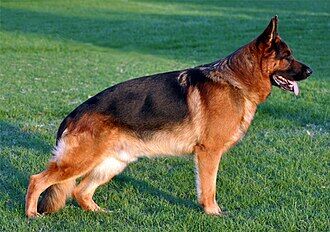
- Protection and guard breeds, like the Cane Corso, the Rottweiler or the Pastor Alemán: their natural suspicion of strangers is a selection trait, not a defect. In these breeds early socialization with varied people is not optional: it is the difference between a safe and discriminating dog and a dog suspicious of everyone.
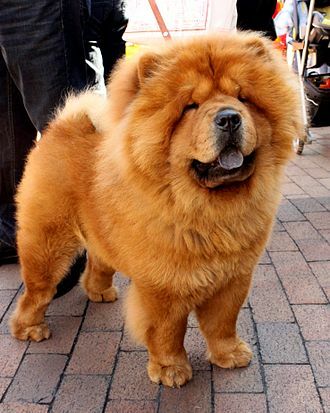
- Primitive or independent breeds, like Shiba Inu or Chow Chow: they are usually reserved by nature and their “useful” window is noticeably shorter.
- Very sociable breeds, like the Labrador Retriever or the Golden Retriever: they have it easier with people, but that does not exempt you from working with noises, surfaces, loneliness and self-control.
- Mini breeds, like Chihuahua: they are the forgotten great ones of socialization. Because “everything is solved by taking them in your arms”, many grow up without tools and end up being fearful or chronic barkers. Treat them like complete dogs: walking, smelling, knowing and solving.
Common Mistakes That Ruin Socialization
- Wait until you have all the vaccines to start.. Mistake number one: when the last dose comes, the window is practically closed. There’s a lot of safe work to do before then.
- Putting a puppy in the middle of a 10-week-old fair is not socializing, it’s saturating. If it freezes, yawns without sleep, licks its nose constantly or tries to run away, you’re going too fast.
- Holding him up to be caressed by a stranger or dragging him towards something that gives him respect only teaches him helplessness.
- If you only know your family and your friends’ two dogs, you’ll be afraid of the rest of the world.
- Tight greetings with the leash on teach frustration and bad manners better few and well-chosen encounters than greeting every dog that passes.
- Quitting work at 4 months. The critical window closes, but socialization is maintained or lost. In adolescence (6-18 months) fears may reappear: he continues to accumulate positive experiences throughout his life.
- Punishing Fear. Scolding a puppy for growling or being scared adds one bad experience on top of another. If something scares him, step away, give him space and try again another day with more distance.
What if my dog is an adult?
The fact that the window has closed does not mean that there is nothing to do; it means that the process is different. An adult with socialization deficits can improve tremendously with desensitization and counterconditioning: very gradual exposure, at comfortable distances, associating the stimulus with good things. It is slower than with a puppy and the goal is improvement, not always complete “healing”.
If your adult dog has intense fears or reacts aggressively, do not improvise: go to a veterinarian who specializes in behavior or a positive dog trainer.
Frequently Asked Questions
When should you start socializing a puppy?
From the first day. The sensitive stage runs from 3 to 12-14 weeks of life: up to 8 weeks the work falls on the breeder and the litter, and from the moment it comes home it falls on you. Don’t wait to complete the vaccinations to start: there are many safe ways to expose it to the world earlier (in arms, at home, with known healthy dogs).
Can I take my puppy outside without all the vaccines?
With caution, yes. The AVSAB considers that puppies can start socialization classes from 7-8 weeks with at least one dose of vaccine administered 7 days in advance and a deworming. On the street: in arms or backpack without stepping on the ground, avoiding areas with urine, feces or unknown dogs. Confirm the exact pattern with your veterinarian according to the risk in your area.
Until what age can a dog be socialized?
The optimal window closes around 12-16 weeks, but socialization should be maintained throughout life, especially during adolescence (6-18 months), when fears may reappear. An adult dog can also improve by gradual desensitization, although the process is slower and it is advisable to do so with a professional if there are serious fears.
What if I don’t socialize my puppy?
It greatly increases the risk of fears, phobias, reactivity and aggressiveness due to insecurity in adulthood.According to the AVSAB, behavioural problems are the number one cause of death in dogs under three years of age, ahead of infectious diseases, because they are behind much of the abandonment and euthanasia.
Is socializing the same as playing with other dogs?
No. Balanced dog play is only part of it. Socializing includes all kinds of people, noises, surfaces, environments, car, vet, body manipulation and moments of solitude. In fact, excessive uncontrolled play with other dogs can create problems of frustration and lack of attention towards you.
How do I know if I’m going too fast?
Watch your body language: freezing, tail down or between the legs, licking your nose repeatedly, yawning without sleep, gasping without heat, or trying to run away are signs of stress. If they appear, increase the distance with the stimulus, decrease the intensity, and end the session with something easy and pleasant.