Otitis in dogs: why it occurs again and how to prevent it
You treat your dog’s otitis, he gets better in a week, you breathe easier… and a month later he’s shaking his head and scratching his ear again. If it rings, you’re not doing anything weird: otitis in dogs is one of the most frequent reasons for consultation in veterinary medicine and, in particular, one of the most frequent. The key is in a detail that almost no one explains to you: An ear infection is almost never the underlying problem, but the consequence of something else. And if that “something else” is still there, the otitis comes back.
In this guide, I’ll tell you, with veterinary judgment and no smoke, why it’s recurring so much, how to recognize it early and what you can do at home to distance relapses as much as possible.
What is otitis and why it’s not “just dirt”
External otitis is inflammation of the outer ear canal, the part of the ear that goes from the ear canal to the eardrum. When that duct becomes inflamed, it changes its microclimate: It raises humidity and temperature, accumulates wax, and disrupts the natural balance that kept bacteria and fungi that normally live on the skin at bay. That’s when those microorganisms multiply uncontrollably and itch, smell and secretion appear.
The most common misconception is that the ear is infected “because it was dirty”. In fact, it’s usually the other way around: the ear fills with earwax and why ? secretion. Something inflamed it first. So cleaning a lot, on its own, doesn’t cure a background otitis. Understanding that difference is the first step to stop going around in the same circle.
Why it repeats itself: the four-factor model
In veterinary dermatology, otitis is explained by a very useful scheme of four types of factors. Almost all recurrent otitis fail because only one of them (usually the infection) was attacked and the others ignored.
| Type of factor | What is it? | Frequent examples |
|---|---|---|
| Primario | The real cause of inflammation | Allergies (atopia, food allergy), parasites such as ear mites, foreign bodies (a spike), hormone problems |
| Secundario | The infection that appears on top of the inflammation | Bacteria (Staphylococcus, Pseudomonas) and yeasts (Malassezia) |
| Predisponente | Traits that make the ear more vulnerable, already present before | Drooping ears, narrow or hairy ducts, excess moisture from baths or swimming pools |
| Perpetuante | Changes that are generated over time and maintain the problem | Thickening of the duct, excess cerumen, biofilm, calcification in chronic cases |
The central idea is this: all recurrent otitis is, basically, secondary to something else.. In studies of canine otitis externa, allergies are the most frequent primary causes, with atopic dermatitis at the head (identified as a primary factor in around 70% of cases in some series), followed by parasites and food hypersensitivity. If the dog is allergic and you only treat the infection, the skin of the ear will continue to become inflamed and the bacteria will re-colonize as soon as you finish the drops.
Perpetuating factors are another major cause of failure. Each outbreak of inflammation leaves sequelae in the duct: it thickens, narrows, produces more wax. Over time, these changes make relapses more frequent and more difficult to treat, to the point that in very advanced cases the duct becomes calcified and no longer responds to drops.
Breeds and ears with more ballots
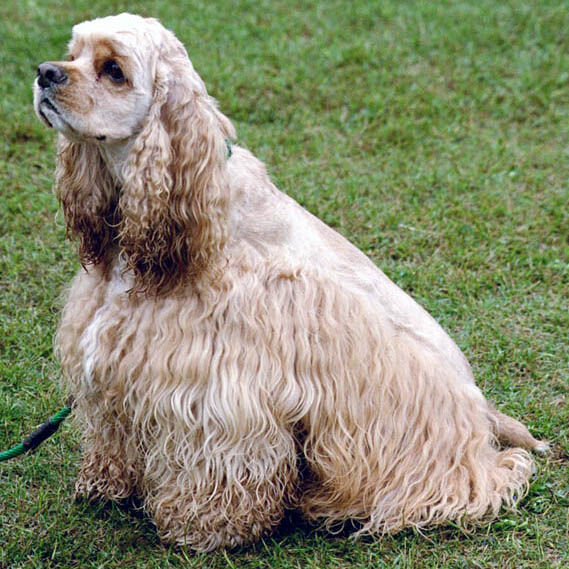
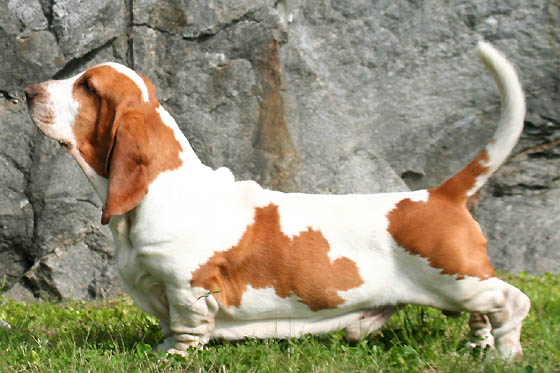
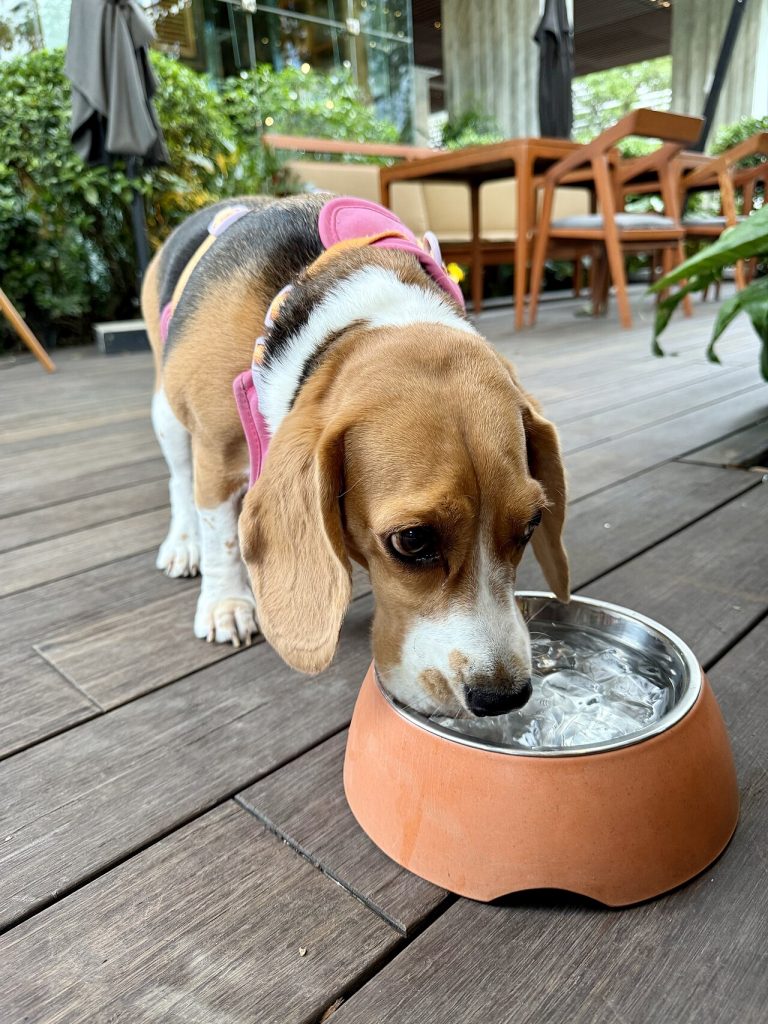
No dog is exempt from otitis, but anatomy dictates. The dropped ears that cover the ear canal reduce ventilation and trap heat and moisture, a perfect environment for bacteria and yeast. That’s why breeds with long and heavy ears like the Cocker Spaniel or the Basset Hound top almost every statistic: in some series the Cocker appears in up to 1 in 5 cases of otitis.
There are other risk profiles for different reasons:
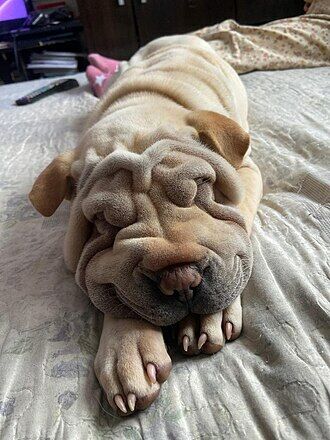
- Narrow pipes: the Shar Pei has the ear canal specially closed, which makes drainage and ventilation difficult.
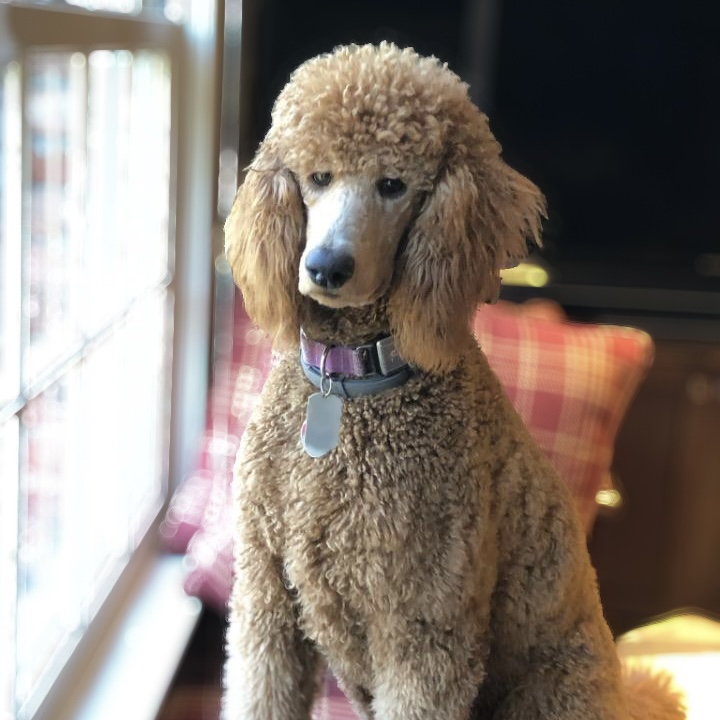
- Hairy ducts: the Caniche and many toy breeds accumulate hair inside the duct, which retains wax and moisture.
- Water and very active dogs: the Labrador Retriever and Golden Retriever are often wet and, in addition, have quite a tendency to atopic dermatitis, a combination that multiplies the risk.
- Large, dangling ears: the Cavalier King Charles Spaniel and the Bulldog Francés also appear frequently; in the case of the Frenchie, very attached to his allergic skin.
If you live with one of these breeds, it does not mean that your dog will get otitis yes or yes, but it does mean that routine prevention will pay you much more than in a dog with upright ears and a dry duct.
How to Recognize It Early
The sooner you act, the less damage builds up in the duct and the less likely it is to chronicle.
- Shake your head or side to one side repeatedly.
- He scratches his ear or rubs it against the couch and the floor.
- Characteristic foul odor coming from the ear.
- Secretion brown, yellowish or dark waxy in appearance.
- Redness, swelling or heat in the ear canal.
- He gets upset or complains when you touch his area.
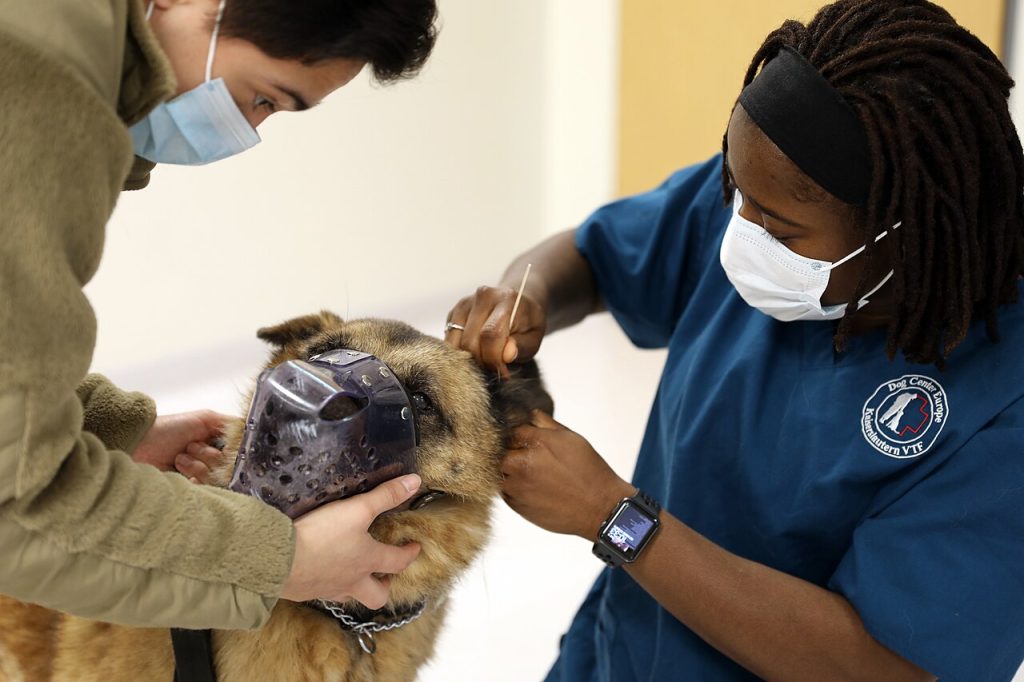
The reason is important: if the eardrum is pierced, some products can damage the inner ear, and only a check with otoscope (and often a microscope cytology) allows to know if there are bacteria, yeast or mites, which are treated differently.
How to prevent relapse, step by step
Real prevention has two legs: control the underlying cause(that’s directed by your vet) and care for the environment of the ear(that’s done by you at home).
- Dry your ears well after bathing and swimming. The water that stays inside softens the skin of the duct and facilitates infection. Use a cotton to remove moisture from the visible part and, if your dog swims a lot, ask for a specific drying-astringent solution.
- Check your ears once or twice a week. learns how they smell and what they look like when they’re healthy to detect the change as soon as it starts.
- Clean only when necessary and with the proper product. In healthy ears, clean for more irritation and imbalance, a veterinary optical cleaner, not home remedies.
- Treat the root cause. If there’s an allergy behind it, controlling it (elimination diet, atopy treatment, parasite control) is what really cuts relapses.
- Keep the vents running. If there is a lot of hair covering the duct, check to see if it should be trimmed; always do so with veterinary discretion, because pulling out the raw hair also inflames.
- Do not leave the treatment prematurely. A bacterial or yeast infection usually takes 2 to 4 weeks; stopping when “it feels good” is one of the most typical causes of relapse.
In dogs with chronic otitis, the veterinarian may indicate a maintenance plan (e.g., scheduled cleaning that is spaced out, or topical anti-inflammatory drugs on alternate days to control the underlying inflammation).
Well-done ear cleaning
Doing it right makes the difference between helping and making it worse.
- Lift your ear and fill the tube with the optical cleaner your veterinarian has recommended.
- Massage the base of the ear gently for a few seconds; you’ll hear a “chof” sound.
- Let the dog shake its head: this moves the dirt up from the bottom to the exit.
- Remove with a cotton swab or gauze only what you see in the accessible part.
And a rule of thumb: never use cotton swabs inside the duct. They push dirt to the bottom, they can damage the eardrum, and they compact the wax just where you don’t want it. You also don’t resort to homemade mixtures of vinegar, alcohol or oils: they irritate already inflamed skin and can be painful if there are wounds.
Common Mistakes That Perpetuate It
- Reusing drops from a previous episode without knowing what the microorganism is this time or if the eardrum is intact.
- Stop treatment on the first day of improvement. The inflammation subsides before the infection is fully resolved.
- Clean the ear every day “for hygiene”. Excessive cleansing irritates and drags down the skin’s natural defenses.
- Being alone in the ear. If the dog relapses again and again, you have to look further: there is almost always an allergy or a skin problem behind it.
- Use hypos and home remedies. We’ve said it before, but it’s the mistake that does the most damage.
- Let weeks pass before you go to the vet. Each untreated outbreak approaches the duct to the chronograph.
An honest note: in the management of recurrent otitis there are nuances where professionals do not always agree (how often to clean, what drying solution to use, when to introduce maintenance anti-inflammatories).
Frequently Asked Questions
Why does my dog’s ear infection always come back?
Because almost all recurrent otitis is secondary to an underlying cause, usually an allergy. If you only treat the infection with droplets and don’t control that primary problem, the skin of your ear becomes inflamed again and bacteria or yeast multiply again.
How often do I have to clean a healthy dog’s ears?
A healthy ear doesn’t need a daily routine; cleaning the most irritated and unbalanced skin. It’s usually enough to check them once or twice a week and clean only when you see wax or dirt, with a veterinary optical cleaner.
Can I use chopsticks to clean my ear?
The sticks push the dirt to the bottom, compact the wax, and can damage the eardrum. The correct thing to do is apply the cleanser, massage the base of the ear, let the dog shake his head, and remove with a cotton swab just what’s left in plain sight.
What breeds are more prone to otitis?
Those with long, slender ears like the Cocker Spaniel or Basset Hound, those with narrow canals like the Shar Pei, those with very hairy canals like the Poodle, and water dogs or dogs with allergic skin like the Labrador, Golden or French Bulldog.
How long does it take to heal an ear infection?
A bacterial or yeast infection usually requires between 2 and 4 weeks of treatment. Chronic cases or with changes already established in the duct may require months or a lifelong management.
Does pool or bath water cause otitis?
It does not cause it on its own, but it is an important predisposing factor: the retained water softens the skin of the duct and creates a moist environment that favors infection.