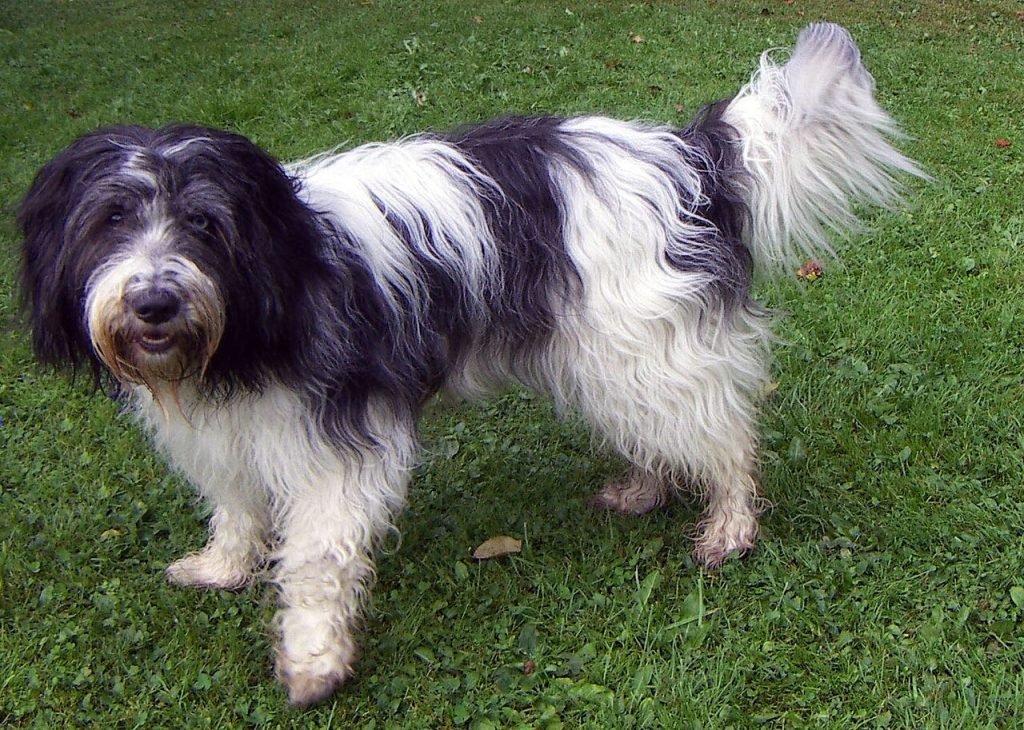
The Schapendoes is a medium-sized Dutch Shepherd Dog, with a long, ragged coat and a temperament as cheerful as it is tireless. Born to gather sheep in the heaths and peatlands of Drenthe and the Veluwe, today he shines in agility, flyball and as a sporting companion of active families. If you’re looking for a rustic, smart, affectionate, high-energy dog – and not afraid of the brush – the Schapendoes have plenty to fall in love with.
Is the Schapendoes for you?
Before you get carried away by that hairy face and those lively eyes sticking out of your bangs, let’s be honest: the Schapendoes is a working dog with an acrobatic soul. It needs to move, think and be with you. It’s not a couch dog or an ornament; it’s an adventure companion who gives back more than you give. Here’s a quick rundown to get you started.
In favour .
- Very smart and easy to motivate: he learns fast and enjoys working with you.
- Cheerful, affectionate and very close to his family.
- Agile and athletic: a natural star of agility and dog sports.
- Medium-sized, manageable, comfortable in many homes.
- Rustic and healthy, with few serious hereditary problems.
- Good with kids and sociable if you’re well-behaved.
To be taken into account
- High energy – requires daily exercise and real mental stimulation.
- The long coat becomes tangled: it must be constantly brushed.
- He is easily bored and may bark or “invent” mischief if left alone too long.
- Shepherd instinct: tends to control movement (children, other dogs).
- Rare breed: breeders are not always easy to find.
- It’s not a dog for those who seek quiet and low maintenance.

Character and temperament
If we had to define the Schapendoes in one word, it would be lively. He is a sharp, brave, good-natured dog who faces life with an infectious optimism. In his homeland he is described as a shepherd “who works thinking”: He wasn’t a dog waiting for orders, but one who figured out on his own how to move the herd through rough terrain. That intelligent independence is still very much present.
With his family he is affectionate, loyal and very sociable. She loves to be involved in everything that happens at home and hates to be left out. It is not a dominant or quarrelsome dog; on the contrary, it tends to get along well with almost everyone. But that joy has a counterpart: bored or unattended, the Schapendoes channels their energy as best they can, and that’s where the barking, the running and the jerking come in. A well-exercised and stimulated Schapendoes is a balanced and charming dog.
It is also a sensitive dog: it responds much better to play, a loving voice, and positive reinforcement than to harshness. A harsh treatment turns it off or makes it nervous, while a patient and funny owner gets the best out of it.
Coexistence: children, other pets, flat and loneliness
With children: The Schapendoes is usually an excellent playmate. Its energy and tolerant character go well with active children who know how to treat a dog with respect. As a good shepherd, it may tend to “gather” or chase the little ones when they run; nothing serious, but it is advisable to teach it from a puppy that people are not sheep.
With other pets: is well socialized, cohabits well with other dogs and usually accepts house cats. Its herding instinct is for movement control, not intense hunting, so multi-species coexistence is feasible with calm presentations.
On the floor: can live in an apartment as long as is given the exercise it needs. It’s not a dog that settles for three short walks. A happy floor Schapendoes is a Schapendoes that goes for a run, trains and gets really tired every day.
In the face of loneliness: here’s his Achilles heel. He’s a very attached dog who can’t handle long absences. If he spends a lot of hours, he can only develop separation anxiety, barking and destructive behavior. He needs company, routine, and if you’re away, someone to look after him.

Education and training
Training a Schapendoes is, in general, a pleasure: it’s smart, it wants to please and it learns quickly. But its intelligence comes with that independent vein of the working dog, so don’t expect robotic obedience. It works much better if it understands why ? does things and if the training has rhythm and fun.
The keys with this breed are consistency, short and varied sessions, and positive reinforcement. Rewards, play, and praise work wonders; harsh methods, on the other hand, produce a muted or suspicious dog. Early socialization – people, noises, other animals, environments – is essential so that their sensitivity does not lead to shyness.
As a good shepherd, he shines when you give him a “job”: obedience routines, tricks, object-hunting, dog sports. A Schapendoes with a busy mind is an easy dog; a boring one, a little whirlwind.
Exercise and activity
This is a non-negotiable point. The Schapendoes was bred to spend the day moving through demanding terrain, and its agile body and reflexes betray it. It needs at least one to two hours a day of quality activity: long walks, running, intense play and, very importantly, mental exercise.
It’s one of the races where the agility seems tailor-made: Jumps elegantly, spins on a palm and really enjoys the circuits. He also excels in flyball, obedience, and sports shepherding. If you enjoy hiking, running, or any outdoor activity, he will be an indefatigable companion. What he doesn’t tolerate is sedentary lifestyle: With no outlet for his energy, he will seek it out on his own.
Care: fur and hygiene
The long, dense and slightly wavy coat of the Schapendoes is its hallmark… and its main requirement of maintenance. It is a hair that tends to tangle and form knots easily, especially behind the ears, in the armpits and on the legs. A thoroughly brushed once or twice a week(more if the dog goes out in the field) keeps the coat healthy and without loyalties.
It’s not a scissor hairdresser breed: he works mostly with brush and comb, untying knots with patience. The baths will be only when really needed, with soft shampoos, drying well to prevent moisture from softening the skin under so much hair. Check your eyes, ears, and pads regularly. With teeth and nails, the usual routine: frequent tooth brushing and nail trimming when needed.
Foodstuffs
Being an active and athletic dog, the Schapendoes appreciates a complete and balanced diet, adjusted to its actual level of exercise. A sporting specimen that trains daily needs more energy input than a calmer one; the key is to adapt the ration to each dog and monitor its body condition.
Split food into two daily servings, stick to the recommended amounts for your weight and avoid excess rewards (easy to forget when you train a lot with food). Fresh water always available, especially after exercise. If you have any questions about diet, amounts or food changes, your vet is the best guide.
Health and life expectancy
The Schapendoes is a rustic breed and, as a whole, quite healthy, the result of its origin as a functional working dog.
The best prevention is to go to responsible breeders who perform the relevant health tests, keep veterinary checks and vaccinations up to date, take care of weight and do not neglect eye and ear hygiene under that abundant hair.

Physical appearance
The Schapendoes is a medium-sized, hairy and unkempt looking dog that hides a light, agile and well-proportioned body. It gives the impression of being always ready to jump, and it is.
Its most striking feature is the long, thick and slightly wavy coat, which covers body, legs, tail and face. He has a characteristic moustache and beard, and his small, dangling ears are almost hidden under his hair. Beneath the fringe are large, round, expressive eyes. The standard supports any colour, although blue-grey, black and white combinations are very typical. The set conveys exactly what it is: A rustic dog, cheerful and constantly on the move.
Origin and history
The Schapendoes comes from the Países Bajos, specifically the type of farm and herding dog that for centuries worked in the province of Drenthe and in the Veluwe, a region of forests and peatlands. In fact, “does” is thought to refer to a dialectal term for “swamp”, in reference to those wetlands where it thrived. These dogs were not yet a definite breed: They were the local working dogs, adapted to people, to the terrain and to everyday tasks. In the first dog shows, around the 1870s, they were shown simply as “domestic herding dogs”.
The modern history of the Schapendoes has a dramatic chapter: the Segunda Guerra Mundial nearly wiped it off the map, and the current breed descends from a handful of survivors.
Exported to North America, it is listed in the Canadian Kennel Club as Dutch Sheepdog and in the United Kennel Club in its herding groups; the American Kennel Club includes it in its Foundation Stock Service, the first step towards full recognition.
Curiosities
- Its name in Dutch literally means something like “woolly sheep dog” (schaap, sheep).
- It was on the brink of extinction after World War II: the entire current population descends from a few specimens.
- It is related to a whole club of “hairy shepherds”: the Bearded Collie, the Puli, the Bobtail, the Bergamasco, the Brie Shepherd or the Polish Shepherd of Plain share with him that unruly air.
- In Canada it is officially known as Dutch Sheepdog(Dutch Shepherd Dog).
- Despite its average size, it is an exceptional jumper: in agility it challenges much larger dogs.
- It is still a rare breed outside the Netherlands, making it a delightful rarity in any park.
If the cheerful and hardworking nature of the Schapendoes has won you over, you may be interested in other herding breeds with that athletic and alert point. Take a look at the Border Collie, the absolute benchmark of intelligence and herd work; the Pastor Australiano, another versatile and very familiar athlete; the furry and sociable Collie; or the cheerful Shetland Shepherd, a little shepherd as smart as he is loving.
Frequently asked questions about the Schapendoes
Is the Schapendoes a good family dog?
Yes. He is affectionate, sociable, and usually gets along very well with children, provided he is socialized since puppyhood and given the exercise he needs.
How much exercise do you need a day?
Enough: one to two hours a day between walks, runs and games, more mental stimulation.
Is it hard to brush and care for your hair?
Its long coat entangles easily and needs to be thoroughly brushed once or twice a week to avoid knots.
Can he live in a flat?
Yes, as long as it is provided with sufficient daily exercise. Size is not the problem; the problem would be not letting out its energy. A well-tired Schapendoes adapts to apartment life.
Are you okay being alone?
He’s very attached to his family, he can’t handle long absences, and he can develop separation anxiety, and he needs company, and if you’re away for a long time, someone to look after him.
How long does a Schapendoes live?
Its life expectancy is around 12 to 15 years. It is a rustic and healthy breed; with good care, veterinary checks and a proper weight, it usually enjoys a long life.
Is it easy to train?
It’s smart and it learns fast, but it has an independent working dog vein. It responds wonderfully to positive reinforcement, play and short, fun sessions; hard methods turn it off.
Where does the Schapendoes originate from?
From the Netherlands, where he worked as a sheepdog in the Drenthe and Veluwe regions.