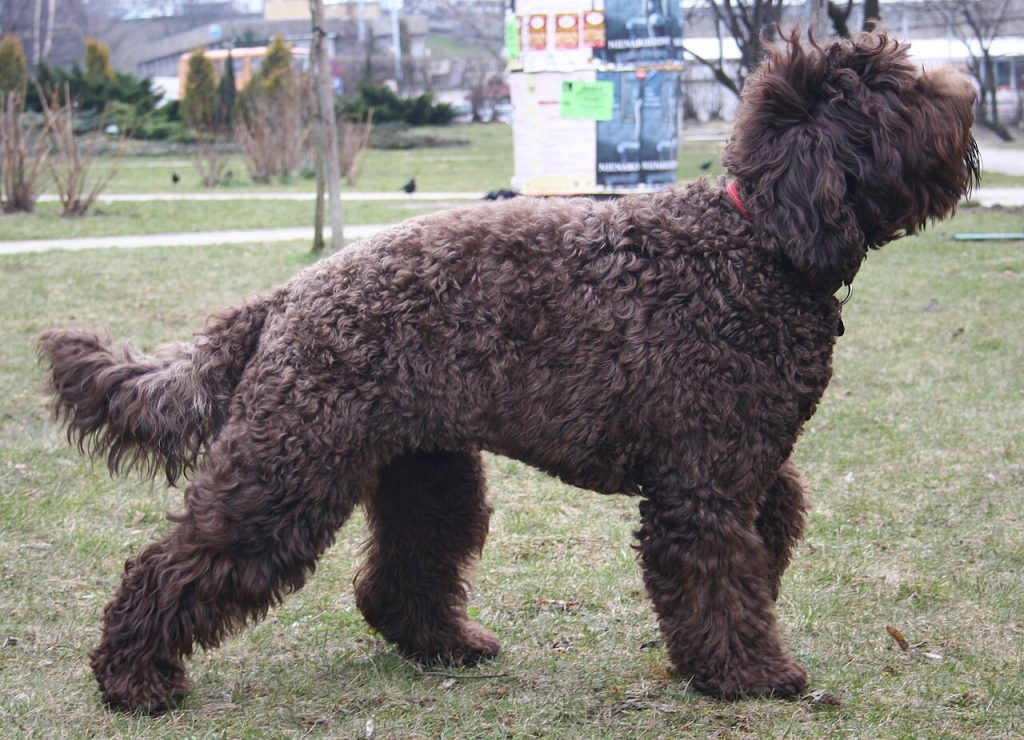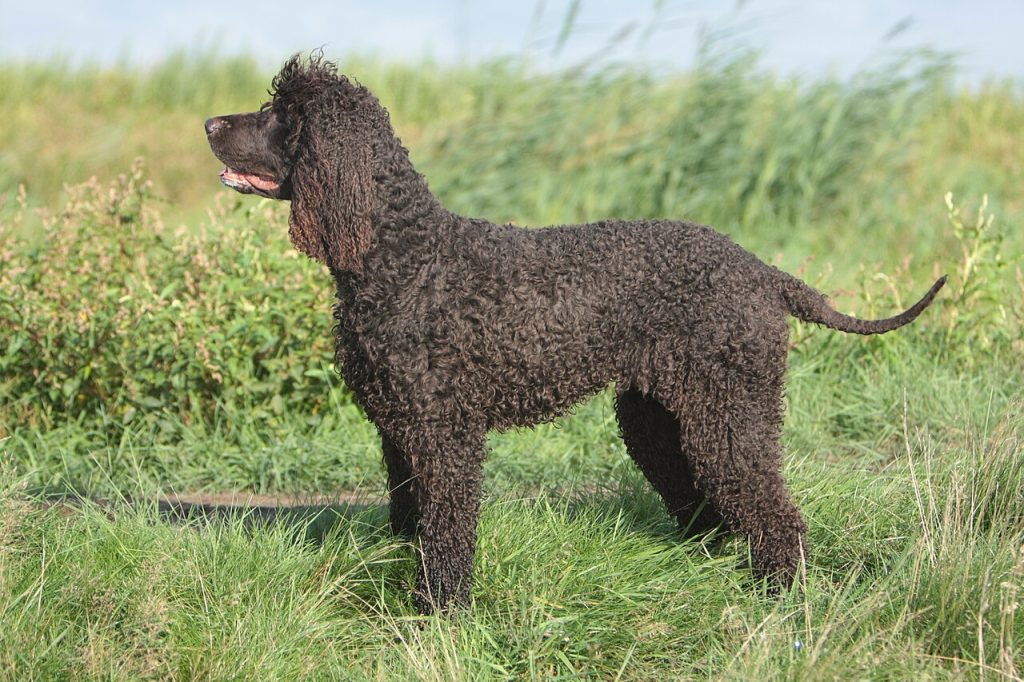
The Irish Water Dog(Irish Water Spaniel) is the tallest of all spaniels and one of the nine native dogs of Ireland. Unmistakable by its coat of tight, liver-colored curls, its mane on its head and its peculiar peeled “rat tail”, it is a tireless water-collecting hunter, as smart as it is mischievous: It’s no wonder he’s known as the “clown” of spaniels. Rare today even in his homeland, he remains an athletic, loyal teammate with a sense of humor that hooks anyone who knows him.
Is the Irish Water Dog for you?
The Irish Water Dog is a working dog with a lot of energy and a mind that needs constant occupation. It shines with active owners who enjoy dog sports, water or hunting, and who can devote time to it both physically and mentally. It is not the ideal breed for a sedentary life or for someone who does not want to be involved in their education and grooming. Before you fall in love with her curls, take an honest look at these two columns.

In favour .
- Very smart and easy to motivate for the job.
- Coat that barely loosens hair; good choice for mild sensitivities.
- Excellent swimmer and all-around athlete.
- Loyal, sensitive and good family companion well socialized.
- Cheerful and funny character, with a unique wit.
To be taken into account
- He needs plenty of daily exercise; he gets bored and tangled up otherwise.
- Demanding coat: frequent brushing and trimming every 6-8 weeks.
- He may be suspicious of strangers or other pets without early socialization.
- Rare breed: difficult to find responsible breeders.
- Drooping ears prone to infection; require constant hygiene.
Character and temperament
The Irish Water Dog is active, willing, and energetic, inheriting from its hunter ancestors a strong instinct for loyalty and a genuine desire to please its people, which makes it a “team player” and greatly facilitates its training as a puppy.
Its most famous trait is intelligence. It learns quickly, is always alert, and observes the world with almost mischievous curiosity. That restless mind explains its nickname of the Spaniel’s “clown”: it often does ordinary things in extraordinary ways and finds surprising solutions to problems you pose to it. It’s a thinking dog, and that means it needs challenges to keep from getting bored.
Emotionally, it is sensitive and very aware of its environment. It is not aggressive, but it is reserved: some specimens are cautious with strangers if they have not been well socialized as children. With its family, on the other hand, it is loving, loyal and able to protect it if necessary.
Coexistence: children, other pets, flat and loneliness

Well bred and socialized, the Irish Water Dog is usually an excellent family dog. It gets along well with respectful children and, generally, with the other pets in the house. Its balanced character and attachment to the family make it a reliable companion in the day to day.
It is important to note that not all dogs tolerate cats or very small dogs equally, especially if they have not been used to them as puppies.
In terms of habitat, it adapts to living on the floor whenever it gets the exercise it needs, but its natural habitat is a house with access to open spaces and, if possible, water. He is happy to fall asleep on the couch after a good day of activity, but he does not like prolonged loneliness or boredom: A neglected Irish Water Dog can become rebellious and seek his own amusements.
Education and training
Their combination of intelligence, desire to please, and team spirit makes them quick and willing learners who respond wonderfully to positive reinforcement, short and varied sessions, and challenges that stimulate their minds.
This same cleverness has a B-side: if you bore him with repetition or treat him harshly, he disconnects or improvises in his own way. The key is to keep the training fresh, consistent and firm without being abrupt. Discipline from a young age, coupled with extensive socialization, prevents distrust of strangers and bad fit with other pets.
It’s a dog that needs to occupy its head as much as its body. Obedience, agility, tracking, charging tests or working in the water: any discipline that gives it a purpose makes it more balanced and happy.
Exercise and activity
There are no shortcuts here. The Irish Water Dog was bred to work for hours in marshes and rivers, and that endurance is still intact. It needs regular and quality exercise, ideally two or three outings a day combined with play or sport. An unspent specimen tends to become mischievous and destructive.
Water is his element. His padded feet make him a powerful swimmer, so giving him access to lakes, rivers or beaches is a gift to him. Beyond the bathroom, it fits into a huge range of activities: Obedience, agility, tracking, flyball, dock jumping, hunting trials and scent work. The ideal home is one where you can exercise your mind and body at the same time, such as a work or sports environment.
Care: fur and hygiene

The curly and dense coat is the sign of identity of the breed, and also its main task of maintenance. It sheds very little hair, but demands constancy.
Every six to eight weeks, a scissor cut is appropriate to profile and shape the mantle. A curious detail: regular exposure to water helps to form the correct “squeaks” on the body. The face, unlike that of the poodle, is smooth and hardly needs repair.
Its long, fallen ears, covered in hair, are a delicate spot: they accumulate moisture and are prone to infection, so they need to be cleaned frequently. The routine is completed with regular tooth and nail care. The good news is that even a novice owner can consistently keep the coat clean and unknotted.
Foodstuffs
As a medium-sized, athletic and highly active dog, the Irish Water Dog needs a complete and high-quality diet, adapted to its level of exercise, age and weight.
It is advisable to monitor the weight: overweight punishes its joints, and this breed has a certain predisposition to hip and elbow problems. It adjusts the rations to its actual expenditure, avoids excessive rewards and always consults the veterinarian before any doubts about quantities or changes in diet. Fresh and clean water should always be available, especially in a working dog and nothing so much.
Health and life expectancy
The life expectancy of the Irish Water Dog is around 10 to 12 years. A British study from 2024 estimated an average of 10.8 years, somewhat below the average of purebred dogs.
Among the conditions to watch out for are joint conditions. Hip dysplasia affects about 30 percent of the breed and elbow dysplasia about 18 percent; both cause pain and limited movement. About 14 percent suffer from chronic ear infections, which are closely linked to their long, dangling ears, something that good ear care helps control. 10% may experience seizures, sometimes a symptom of epilepsy. There are also reports of alopecia and distichiasis (mis-implanted eyelashes).
The breed community is especially active in health: organizations such as the American Club (IWSCA) and the IWS Health Foundation promote genetic testing, transparency, and specific studies.
Physical appearance
The Irish Water Dog is a robust and compact dog, the tallest of the spaniels. The males measure between 56 and 61 cm at the withers and weigh 25 to 30 kg; the females are somewhat lighter. It conveys an image of an intelligent, upright and strong dog, with great resistance and a bold and enthusiastic temperament.
Its star feature is the coat of dense, liver-colored curls, ranging from chocolate brown to a characteristic purple hue difficult to see in other breeds. Over the head is a topknot of long, loose curls that falls from the crown, often covering the eyes, with a “beard” on the back of the throat and large, hanging ears covered in hair.
Another unmistakable mark is the “rat’s tail”: smooth, tapering toward the tip and completely free of long hair, except for a few centimeters of curls at the base. The face, on the other hand, is completely smooth.
Origin and history
The modern breed, as we know it, developed in Ireland in the 1830s. It is one of the nine native dogs of the island, sometimes called “bog-dog”, and was historically kept by landowners and knights who hunted and shot birds. Its great versatility, able to act as a specimen, collector and spaniel at the same time, made it ideal for those who could not maintain a whole pack of specialized dogs.
Justin McCarthy of Dublin is considered the breed’s father, but he left no breeding records, so their exact origins are the subject of speculation. Possible ancestors have been suggested as the poodle, Portuguese Water Dog, Barbet, old generic “water dogs” and the now extinct English Water Spaniel, among others. There is even a thesis that their ancestors came from Persia to Ireland through Spain. Irish folklore even links him to the Dobhar-chu, a mythological creature.
The only indisputable thing is its ancient lineage. Today it is a rare breed: just a few thousand specimens in the world, classified as a vulnerable native breed.
Curiosities
- It is nicknamed the “clown” of the spaniel because of its intelligence and ingenious and mischievous way of solving tasks.
- Its padded feet are no ornament: they make it one of the best swimmers in the canine world.
- The peeled, sharp “rat tail” is an almost exclusive feature that allows it to be identified at a glance.
- In 1979, Ch. Oak Tree’s Irishtocrat, “Dugan”, won the Westminster Kennel Club’s Best in Show – the first time in the race’s 103-year history that it had done so.
- Beyond hunting, it has been used as a drug and explosive detector dog and as a therapy dog.
- It appears in Irish fiction: “Maria” is featured in the late 19th-century Somerville and Ross stories, and the breed was featured in the documentary series Madraí na nGael about native dogs of Ireland.
If you are attracted to this athletic and characterful spaniel, you may also be interested in other water, hunting and working breeds with which it shares energy and intelligence. Check out the Caniche, one of its possible curly coat relatives; the versatile Labrador Retriever and the sleek Golden Retriever, large water collectors; or the versatile Vizsla, another energetic all-terrain hunter.
Frequently Asked Questions About the Irish Water Dog
Is the Irish Water Dog hypoallergenic?
There is no such thing as a completely hypoallergenic dog, but its dense curly coat barely loosens hair, so many people with mild sensitivity get along with it without problems.
How long does an Irish Water Dog live?
Their life expectancy is around 10 to 12 years. A British study in 2024 placed the average at 10.8 years, somewhat below the average of purebred dogs. With good weight control, regular exercise, ear care and veterinary checkups, many specimens reach old age well.
Do you need a lot of exercise?
Yes. It is an energetic working dog that needs long walks and daily activity, ideally two or three outings and moments of play or sport. An Irish Water Dog that does not expend energy tends to get bored and look for mischief. It loves the water and nothing wonderful thanks to its flabby feet.
Is he a good family dog?
It usually gets along well with respectful children and other pets in the house, and is loyal and sensitive to its environment. It needs early socialization, because some specimens are suspicious of strangers or do not tolerate small cats and dogs well if they do not get used to puppies.
How much maintenance does your coat take?
A thorough brushing up to the skin every one to two weeks to avoid knots, and a cut with scissors every six to eight weeks to shape the mantle. Regular exposure to water helps to form the correct curls. The face is smooth and hardly requires repair. Fallen ears require frequent cleaning.
Does it bark a lot or does it serve as a guard dog?
It is not an excessive barker, but it is very alert and warns with a severe bark. If trained, it can act as a guard and protect its family, although it is not an aggressive dog by nature.
Where did the breed come from?
The modern breed was established in Ireland in the 1830s. Justin McCarthy, of Dublin, is considered the breed’s father, although he left no breeding records.
Why do they call him the “clown” of spaniels?
Because of his inquisitive intelligence and mischievous nature, he often solves tasks in surprising ways and does ordinary things in an extraordinary way.