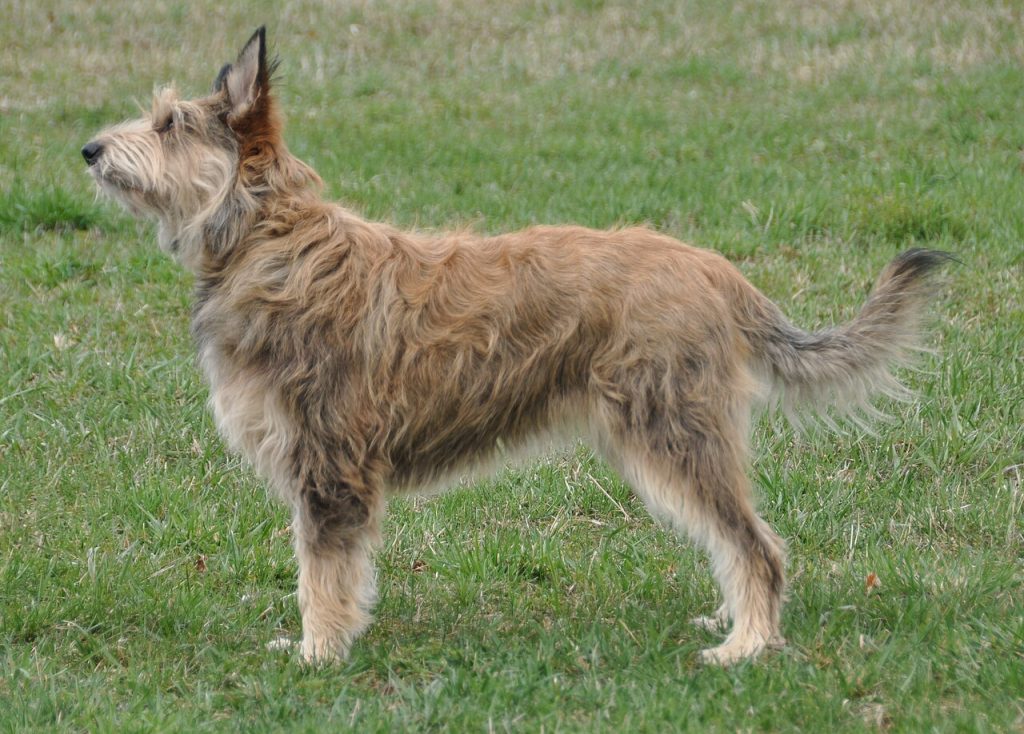
The Berger Picard– also called Picardy Shepherd – is a rustic-looking and unkempt, intelligent, loyal and hugely vital French shepherd dog. Recognizable by its upraised ears, crowded eyebrows, and smiling expression, this rare breed was on the brink of extinction in the 20th century. If you’re considering sharing your life with a Berger Picard, here’s the complete guide.
Is the Berger Picard for you?

The Picard Shepherd is not a dog for everyone, and that is precisely why you should be honest before choosing it. He’s a working dog in body and soul: He needs exercise, mental stimulation and, above all, to be part of his family’s daily life. In return, he offers seamless loyalty, a cheerful character, and astonishing intelligence. These boxes summarize who fits in and who doesn’t.
It suits you if…
- You lead an active life and want a dog for running, walking, agility or herding.
- You can give him time and company – he does not tolerate prolonged solitude well.
- You’re looking for an intelligent, sensitive dog with a sense of humor.
- You’re gonna socialize him thoroughly for his first two years.
- You like a natural guard, attentive but not aggressive.
It’s better another race if…
- You spend many hours outside and the dog would be left alone every day.
- You’re looking for a quiet, sedentary, low-energy dog.
- It’s your first dog and you don’t want to invest in education and socialization.
- You’re annoyed by a dog that’s stubborn or needs a lot of mental activity.
- You want a common, easy-to-find breed close to home.
Character and temperament
Temperament is, along with appearance, what best defines the Picard Shepherd. He is a lively, alert and intelligent dog, with remarkable sensitivity and a firmness of character that comes from his past as an independent shepherd. He responds quickly to obedience training, but he’s not an automaton: He thinks, decides and sometimes has an opinion. That blend of vivacity and judgment makes him fascinating to anyone who enjoys a dog with personality.
With his own he is affectionate, demonstrative and very attached; with strangers he tends to be reserved and cautious, a direct inheritance of his guardian instinct. He ‘s not an excessive barker: He warns when it’s necessary, but he doesn’t live up to it. He has a reputation for a keen sense of humor – he quips, plays, and smiles – which makes him an endearing companion. That ‘s right . He’s an emotional dog, who suffers with toughness and thrives with affection and consistency.
Coexistence: children, other pets, flat and loneliness

With children: Well socialized, the Berger Picard is an excellent family dog, patient and playful with the children of the house.
With other pets: usually gets along well with other dogs and animals, especially if it grows up with them. As a good herding dog, it can show a tendency to control movement – chase or regroup – which is channeled through education and play.
Floor and solitude: can live on the floor if given plenty of exercise outside, but what it really needs is not space, but companionship. It is a family-claiming dog that is uncomfortable being alone for many hours; prolonged loneliness generates stress and can lead to destructive behaviors. It tolerates cold and weather without problems thanks to its rustic coat.
Education and training

The Picard Shepherd is intelligent and quick to learn, which makes it easy to train… as long as it’s done right. His sensitivity demands a focus on positive: reinforcement with rewards, play and friendly voice, short, varied and meaningful sessions. Monotonous repetition bores him and coercive methods block him or make him suspicious. He needs a calm, confident, consistent guide who calmly sets boundaries.
The great priority is not formal obedience, but the socializing. This breed requires extensive and positive exposure to people, dogs, noises, and environments during its first two years of life. A well-socialized Picard is balanced and sociable; one that has not been can become overly reserved or reactive.
Exercise and activity
There are no shortcuts here: the Berger Picard is a energetic, hardworking and tireless dog that needs to expend body and head daily. One or two long hours of activity – strenuous walks, running, play – are the minimum. It enjoys accompanying those who go hiking, cycling or horseback riding, and appreciates both physical exercise and mental challenges.
It is a breed that shines in dog sports: agility, herding, tracking, obedience, flyball, lure coursing, French ring and Schutzhund. Channeling its energy into one of these disciplines is not a luxury, but almost a necessity: a stimulated Picard is happy and balanced; a bored one seeks its own amusement, almost always in the form of mischief.
Care: fur and hygiene
Good news for such an active breed: its maintenance is it ‘s simple .. The Berger Picard’s coat is rough, semi-long (about 5-6 cm) and with little undercoat, designed to withstand the weather. A thorough brushing every week or two is sufficient to remove dead hair and avoid tangles; the moult is moderate. It is not advisable to slice or cut it: That rustic hair is their natural coat from the cold, rain and dirt, and the surface dirt tends to come off on its own as it dries.
The rest of the care is customary for any dog: check and clean the ears (straight and well ventilated, which helps), cut the nails when necessary, maintain dental hygiene and bathe only when it is really dirty so as not to dry out its skin.
Foodstuffs
A sporting dog uses more energy than a sedentary one, so the ration must be adapted to its actual exercise, to its age and to its physical condition to keep it muscular and without overweight, an important factor in taking care of its joints.
It should be noted that some examples are whimsical dining rooms: They may be selective or reluctant to eat. It is not a cause for alarm in itself, but it helps to maintain stable routines, avoid excessive rewards, and not turn every meal into a bargain. Divide the daily ration into two portions and always have fresh water at your disposal. If you are unsure about your weight or diet, it is best to consult your veterinarian.
Health and life expectancy
The Berger Picard is a rustic breed and, collectively, relatively healthy, with a life expectancy of approximately 12 to 14 years.
The two most relevant conditions are hypoplasia of the hip and progressive atrophy of the retina(APR), an eye disease that leads to vision loss. This is why it is essential to go to a responsible breeder who carries out and provides written hip tests (radiographs) and ophthalmological certification of the breeders. Regular veterinary checkups, weight control, adequate exercise, and daily vaccination and deworming complete your health care.
Physical appearance
The Berger Picard is a medium size dog, well muscled and somewhat longer than tall, with an air that is both rustic and elegant.
Its hallmark are the naturally erect ears, tall and broad at the base – it is the only French shepherd dog to wear them without intervention – along with its crowded eyebrows that do not cover its dark, straight eyes, its beard and moustache, and that expression that many describe as a smile. The hair is rough and crisp to the touch, of medium length, which gives the set its characteristic ragged appearance. The tail, naturally, reaches up to the corveon and ends in a slight J-shaped curve. The cloak comes in two colors: lemonade(fauve) and triggered(bringé), with variations in hue.
Origin and history
The Berger Picard takes its name from the Picardía, a region of northeastern France where it was forged as a small farm dog: Shepherded sheep and cattle and guarded the family’s modest possessions. Some even employed him as a smuggling dog between France and Belgium, taking advantage of his resilience and natural distrust of strangers. Some authors believe that its ancestors arrived in northern France with the Franks, and it is related to breeds such as the Briard and the Beauceron, or to Dutch and Belgian shepherds.
A 2018 genetic study provided an eye-opener: Before 1859, a widely distributed European shepherd dog gave rise to the Berger Picard, the German Shepherd and five Italian Shepherd breeds. The Picard appeared in the first French dog shows of the 19th century, but its rustic appearance never made it popular as a competition dog. His big drama came with the world wars: As their population concentrated on the farms of the northeast, the Somme trench war almost wiped out the breed. In the 1940s and 1950s, a group of hobbyists rebuilt it from the few surviving examples, and the FCI recognized it in 1955. Today it remains rare even in France, with limited populations in Europe and North America.
Curiosities
- It is the only French Shepherd with natural upright ears; its relatives Briard, Beauceron and Pastor des Pyrénées carry them fallen or folded.
- He became famous in cinema: he starred in the American film Because of Winn-Dixie(2005), where many viewers believed that the dog was a street-bred and not a rare pure French breed.
- In Germany, a Berger Picard named Joker became a television star by appearing in six comedies based on the novels by Rita Falk.
- It shares a common ancestor with the German Shepherd, according to the most recent genetic studies.
- He is also known by his nickname shepherd Pikhaar and his unmistakable “smile”.
If you are attracted to the Berger Picard because of its intelligent and active herding character, you may be interested in other herding breeds with a similar profile. Discover the Pastor Alemán, with whom it shares an ancestor; the tireless Border Collie; the versatile Pastor Australiano; or the elegant Collie, all working dogs with a lot to offer.
Frequently Asked Questions about the Picard Shepherd
Is the Picard Shepherd a good family dog?
Yes. The Picard Shepherd is loyal, balanced and very attached to his people; he enjoys participating in home life and usually gets along well with children if socialized as a puppy. He is not an ornamental dog: he needs companionship, exercise and time with an owner. Well integrated, he is a stable companion, fun and protective without being aggressive.
Is it a difficult breed to train?
The Picard Shepherd learns quickly and responds very well to obedience, although he has character and is bored with mechanical repetition. He works with positive reinforcement, short and varied sessions, and a calm and consistent guide. Hard methods block him.
How much exercise do you need a day?
It is an energetic and tireless herding dog: it needs at least one or two hours a day of physical and mental activity. It loves to run alongside those who do walking, cycling or horseback riding, and shines in agility, herding or tracking.
You lose a lot of hair and it’s hard to take care of?
No, its coat is rough, half-length, and thinly coated, and it is easy to maintain: a thorough brushing every week or two is usually enough, and it sheds moderately.
Can he live in a flat?
It can, as long as it is guaranteed plenty of daily exercise outdoors. It is not a passive indoor dog: what it really needs is not square footage, but activity, stimulation and the company of its family. It tolerates the cold well and enjoys the outdoors, but should not be left alone for too many hours.
What health problems do you have?
It is a rustic and generally healthy breed, with a life expectancy of about 12 to 14 years. The hereditary ailments to be monitored are hip dysplasia and progressive retinal atrophy (APR).
Why are there so few of them?
The breed was on the brink of extinction after World War I and World War II, as its population was concentrated in the farms of northeastern France, devastated by the trenches of the Somme.
How is it different from the German Shepherd?
They share a common ancestor: a 2018 genetic study placed before 1859 a European shepherd dog from which both the Berger Picard and the German Shepherd emerged. But the Picard is more rustic and unkempt, with rough hair, crowded eyebrows and beard, while the German Shepherd has short hair and a huge worldwide spread compared to the rarity of the Picard.