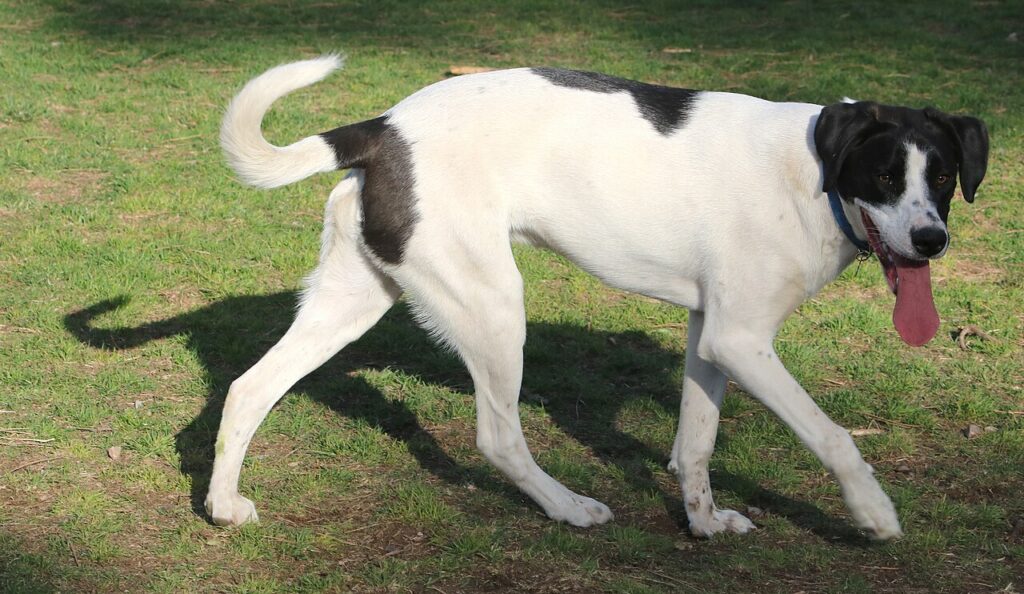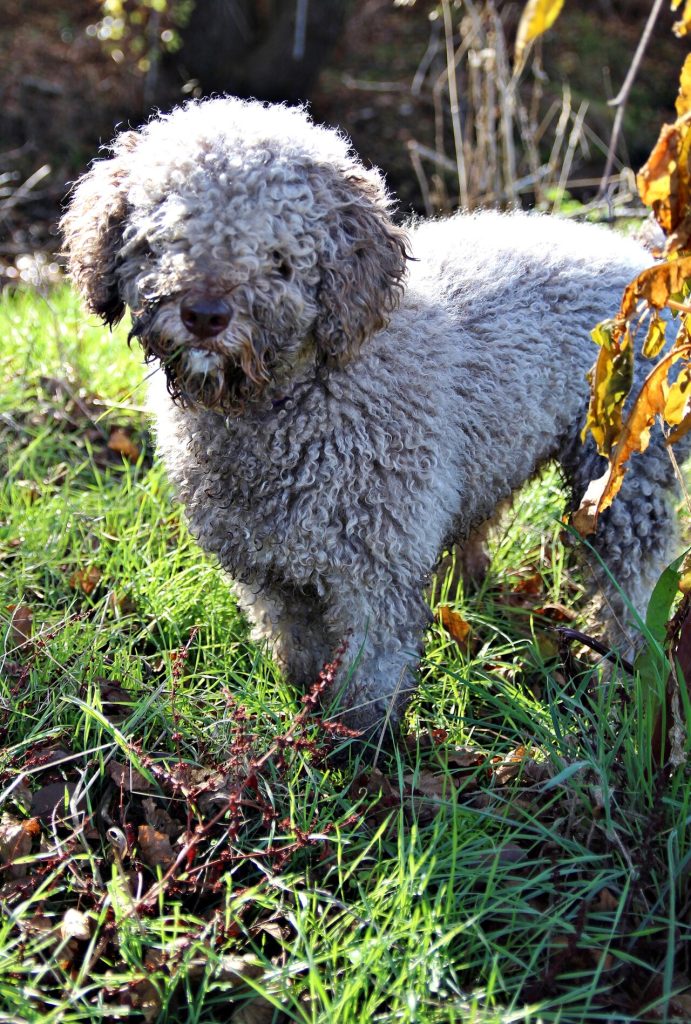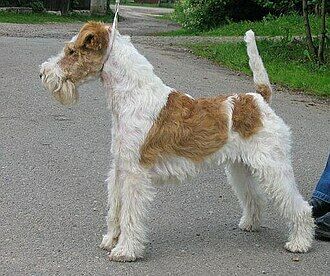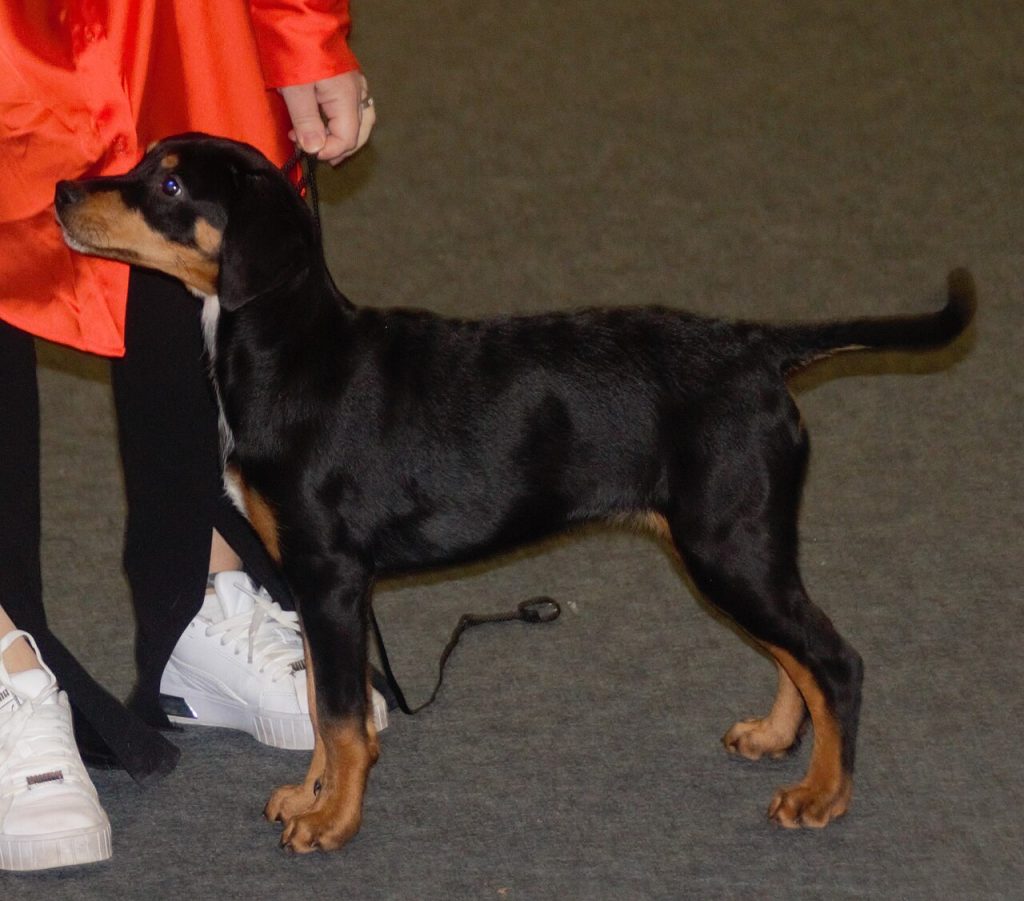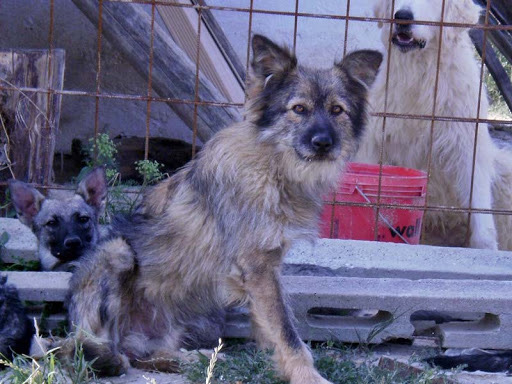
The Cane Paratore is a small to medium-sized, wolf-like Italian herding dog, originally from the Abruzzo. Their name, taken from the local dialect, alludes to their way of working the herd: Instead of biting or intimidating, he leads the cattle by gently touching them or standing in their way. It is a rustic, hardy breed that is little known outside Italy, where a handful of herders and hobbyists strive to preserve its lines. If you’re looking for a rustic, hardworking companion with a genuine history behind it, the Cane Paratore is a fascinating breed, though almost impossible to find outside its homeland.
Is the Cane Paratore for you?
Before you fall in love with this breed, you should be realistic: the Cane Paratore is a field dog, not a saloon dog, and it is also very rare.
In favour .
- Rustic, sturdy and physically strong.
- Very adaptable to diverse environments and climates.
- He matures quickly and learns the trade easily.
- General good health and a strong immune system.
- He handles the cattle with gentle, non-aggressive methods.
- Intensive working relationship with his person and his herd.
Against
- Practically impossible to get out of Italy.
- Not recognised by the FCI: no official standard.
- He needs a lot of exercise and mental work every day.
- Watchful and defensive nature: requires socialization.
- It’s not a dog for a small flat or to be quiet.
- There are hardly any breeders or specific veterinary literature.
Character and temperament
The Cane Paratore is, first and foremost, a functional herding dog, and its character is shaped by centuries of selection on utility rather than aesthetics. Sources describe it as a rapidly maturing, defensive animal with remarkable levels of adaptability and resilience in very different contexts. That combination draws a dog that is alert, attentive to its surroundings, and with a strong work ethic.
The most striking thing about his temperament is how ? works the cattle. Unlike dogs that bite or press aggressively, the Cane Paratore guides animals with light touches or by getting in their way – in fact, hence its name. That “diplomatic” style suggests a dog that thinks before acting, capable of reading the situation and of dosing pressure rather than imposing force.
Its defensive side should not be confused with a gratuitous aggressiveness: it is an attentive guardian who takes care of what he considers his own. With his family he tends to be loyal and overturned, and as a good herding dog he values closeness and shared activity.
Coexistence: children, other pets, flat and loneliness
As a herding breed raised alongside herds, the Cane Paratore usually coexists well with other animals with which it is raised since puppyhood; not in vain its trade consists of moving between cattle without harming it.
With children he can be a devoted companion if he grows up with them and mutual boundaries are respected, always under the own supervision of any active dog.
Where it clearly does not fit is in a sedentary life of small floor. It is a dog made for the field, movement and work, which appreciates space, outdoor air and tasks. It also does not take well prolonged solitude: a dog so oriented to bond and activity can become frustrated and develop undesirable behaviors if spending many hours alone and without stimulation.
Education and training
This is a dog that is intelligent and quick to learn, logical qualities in a breed that has been selected for generations to collaborate with the herder.
Early socialization is the key piece. Because of its defensive nature, it is advisable to expose it from puppyhood to people, animals, noises and various situations, in a positive and progressive way, so that it grows balanced and confident. Positive reinforcement – rewards, play, recognition – fits their collaborative mindset much better than coercive methods, which can undermine the confidence of such an attentive dog.
As a herd management tool, it responds well to the guidance of a coherent and serene person. Establishing clear routines, channeling its shepherding instinct into games or tasks, and keeping the mind busy are the best recipe for an obedient and happy Cane Paratore.
Exercise and activity
The Cane Paratore is a long-distance athlete. It was designed to accompany cattle for long journeys through the abrupt terrain of the Abruzzo, and that resistance is part of its essence. Translated into life with a family, it means that it needs plenty of daily exercise: long walks, running, exploration and, above all, activity with a purpose.
Purely physical wear and tear is not enough. Being a mentally alert working dog, it appreciates cognitive stimulation: olfactory games, obedience exercises, canine sports or any task that tests its head. A Cane Paratore that goes out to graze or work is a full dog; one that only takes a short walk around the apple will accumulate energy and, with it, problems.
Care: fur and hygiene
The coat of the Cane Paratore is dense and of variable length: there are specimens with short hair and others with semi-long hair, both variants being popular. It is a rustic coat, designed to protect it from the elements, which generally does not require sophisticated care. Regular brushing helps to keep it clean and to control the moult, which tends to intensify in the changes of season.
The rest of the hygiene is that of a healthy and active dog: check the ears – erect or semi-erect – to prevent dirt and moisture, cut the nails when they do not wear themselves out, take care of dental hygiene and bathe only when it is really necessary not to dry the skin.
Foodstuffs
The history of feeding the Cane Paratore is that of a herding dog: it has traditionally been fed a simple diet based on what was available in the rural environment, such as bran, whey, hard bread and leftovers from meals.
Today, it is advisable to provide them with a complete and balanced diet adapted to their size, age and, especially, their high level of activity. A working dog uses a lot of energy and must replenish it with an adequate intake of quality protein and fat, without becoming overweight when the days are quieter. If you have any doubts about quantities or about a particular condition, it is best to consult your veterinarian.
Health and life expectancy
Overall, the Cane Paratore is considered a healthy and resilient dog. There is even anecdotal local evidence that it has a strong immune system, which some attribute to its wolf ancestry.
Despite its robustness, it has some predispositions that should be known: – osteodystrophy, spinocerebellar ataxia and Legg-Calvé-Perthes disease (necrosis of the head of the femur). These are problems to be watched for, especially because the reduced genetic stock of the breed can favor the emergence of hereditary conditions. Regular veterinary checks, responsible breeding and care for joint and neurological health are the best tools for prevention.
Physical appearance
The Cane Paratore is a robust dog of small to medium size: adults usually weigh between 8 and 10 kg and are around 30-35 cm tall.
The mantle is thick and variable in length – from short to semi-long – and supports a great diversity of colours: agate, sable, grey tarragon, blackbird or “leopard” (merle), black, or fire with black mask. This variability of coat and hair is consistent with a rustic and unstandardised breed, where function has always weighed heavier than aesthetic uniformity. The result is a harmonious, agile and well adapted to prolonged effort.
Origin and history
The Cane Paratore is originally from the Abruzzo, its historical region in central Italy, where it has survived mainly in its traditional role without becoming popular among dog lovers outside. Its name comes from an Italian dialect: “Paratore” translates as “stand in front” or “touch”, and is sometimes also called Cane Toccatore. Both names describe his trade: assisting in agricultural work by driving livestock with gentle methods, such as light touching or getting in the way of animals.
Genetics has shed light on its origins. A 2018 study concluded that, shortly before 1859, a widely distributed European herding dog gave rise to the German Shepherd, the French Berger Picard and five Italian Shepherd breeds: the Bergamasco Shepherd, the Cane Paratore itself, the Giant Lupino, the Pastore d’Oropa and the Pastore della Lessinia and the Lagorai. That is, it shares a common trunk with some of Europe’s most recognizable working dogs.
Today it is a rare and virtually unknown breed outside Italy. Their numbers have declined because of changes in farming and livestock techniques, and they are not recognized by the Fédération Cynologique Internationale (FCI). Its conservation rests with enthusiasts in the Abruzzo and nearby areas, who are determined to keep their bloodlines alive. The breed’s small genetic pool has led to some occasional natural crossing with wild wolves, something local conservationists even see as a way to preserve genetic diversity.
Curiosities
- Its name is a statement of intent: “Paratore” means “to stand before” or “to touch”, just what it does to move the flock without violence.
- He is also known as Cane Toccatore, “the dog that plays”.
- It shares genetic trunk with the German Shepherd and the Picard Shepherd, according to the 2018 study.
- It is one of the five Italian shepherd breeds that emerged from a common ancestor alongside the Bergamasco.
- Their small genetic pool has led to natural crosses with wolves, seen as a way to enrich the diversity of the breed.
- There is video documentation of the Cane Paratore gathering sheep, one of the few windows into his actual work.
If you are attracted to the profile of the Cane Paratore as a rustic and hardworking herding dog, you will be interested in other related and much more accessible breeds. Its direct genetic relative is the Pastor Alemán, while for cattle work the tireless Border Collie and the versatile Pastor Australiano stand out. Shetland Shepherd
Frequently asked questions about the Cane Paratore
What is the Cane Paratore?
It is a breed of herding dog native to Italy, specifically the Abruzzo region. Small to medium and wolf-like in appearance, it leads the cattle with gentle methods – light touching or getting in their way – hence its name.
Does the FCI recognize the Cane Paratore?
No, the Fédération Cynologique Internationale does not recognize the breed, which lacks an official standard. Their survival depends on breeders and enthusiasts from the Abruzzo and nearby areas who work to preserve their bloodlines.
How tall and how much does a Cane Paratore weigh?
Adults usually weigh between 8 and 10 kg and measure around 30-35 cm. It is therefore a robust dog of small to medium size, agile and resistant.
Is the Cane Paratore a good family dog?
It is loyal and devoted to its owners, but its watchful nature and strong work instinct require early socialization, plenty of exercise, and a purposeful life.
Do you need a lot of exercise?
Yes, it was bred to accompany the cattle for long hours and has great endurance. It needs daily physical exercise and, above all, mental stimulation: olfactory games, obedience, canine sports or tasks that occupy its head.
What health problems does the Cane Paratore have?
It is generally considered a healthy dog with a strong immune system, but has a predisposition to osteodystrophy, spinocerebellar ataxia and Legg-Calvé-Perthes disease.
Why is he crossing with wolves?
Because of their small population size and limited genetic stock, occasional natural crosses with wild wolves have occurred, which local conservationists see as a way to preserve the breed’s genetic diversity.
Can you get a Cane Paratore outside of Italy?
It is a rare breed, linked to its traditional function and practically unknown outside Italy. Anyone interested in it will have to go to the breeders and hobbyists who keep it in the Abruzzo and its surroundings.