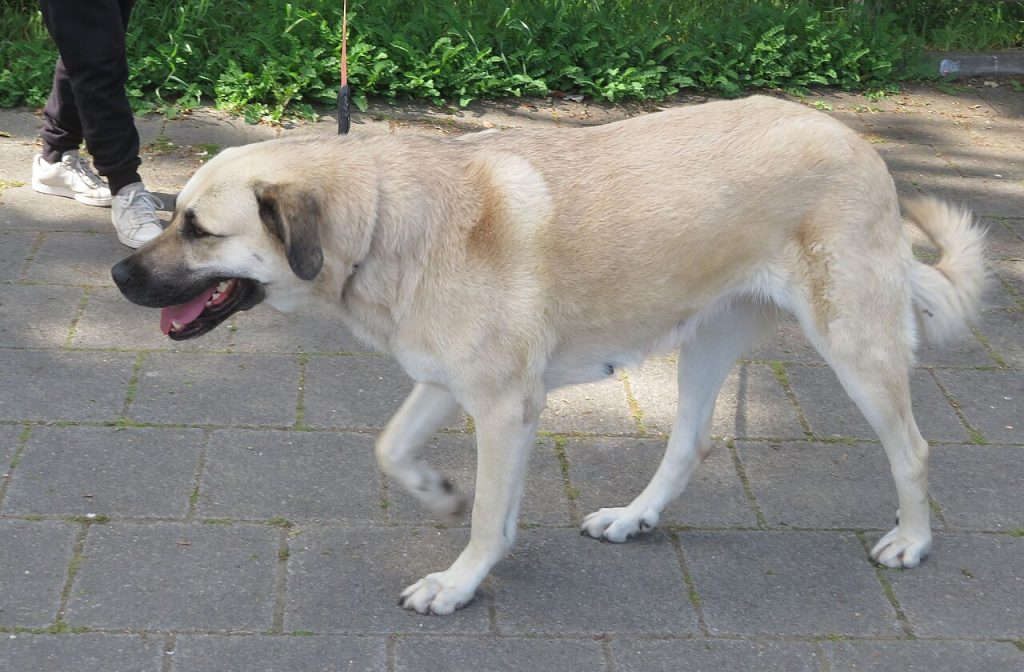
The Kangal is the great cattle guard dog of Turkey, considered there a true national treasure. Raised for centuries by Anatolian shepherds to stand up to wolves and other predators, it combines impressive size, surprising serenity and an unwavering protective instinct. It’s not just any company dog: The Kangal is a working guard with capital letters, and understanding him well is the first step in knowing if he’s the right dog for you.
Is the Kangal for you?

The Kangal is a magnificent breed, but demanding. Before you fall in love with its demeanor, it is advisable to be honest about what it means to live with a guard dog of almost 60 kilos, with a marked territorial instinct and categorized as potentially dangerous in Spain. It is not a dog for anyone, and there is nothing wrong with recognizing it. These boxes summarize the good and what you should value with a cool head.
In favour .
- Exceptional guardian: protects territory, family and animals with total dedication.
- Calm and composed at home; not barking or fussing without cause.
- Very healthy and long-lived for his size, with few hereditary problems.
- Loyal, loving and protective of his own, including the children in the family.
- Durable, easy to maintain coat most of the year.
To be taken into account
- PPP race in Spain: demands license, insurance, muzzle and belt in public.
- Strong territorial instincts and distrust of strangers.
- It needs a large, fenced-in lot; it doesn’t fit in a small floor.
- Independent and of character – not a dog for first-time owners.
- It changes intensely once or twice a year.
Character and temperament
The Kangal’s temperament is its most fascinating trait. Despite its size and strength, it is a remarkably calm and thoughtful dog. He is not a nervous watchman who barks at everything that moves, but a calm watcher who observes, evaluates, and only acts when he senses a real threat. This ability to discern between normal and dangerous is the result of centuries of selection alongside herds.
To his family he is affectionate, loyal and deeply protective. He develops a close bond with the people and animals he considers “his own”, and he will do anything to protect them. With strangers, however, he is reserved and suspicious by nature: He doesn’t seek aggression, but he doesn’t give away his trust either. This combination of tenderness towards his own and serenity in the face of the unknown defines the true Kangal.
It is also an independent dog with its own criteria. It was bred to work alone in the mountains, making decisions without a shepherd by its side, and that autonomy is noticeable in its character. It is not submissive or especially eager to please, which requires an owner who knows how to earn their respect instead of imposing.
Coexistence: children, other pets, flat and loneliness

With children s in their home, the family-bred Kangal is usually patient and protective; it considers them part of its herd and cares for them instinctively.
With other pets, the key is in breeding. A Kangal who has grown up alongside sheep, goats or other dogs protects them as his own: that’s what he was born for. With unknown dogs of the same sex he can be dominant, so presentations should be calm and controlled. Early socialization makes the difference.
On the floor, let’s be clear: it’s not its habitat. The Kangal needs space to patrol and fenced terrain that it can consider its territory. It can live in a house with a large garden, but an apartment with no outlet causes it frustration.
As for the loneliness, it tolerates spending time alone better than many breeds, because it is accustomed to independence.
Education and training
Training a Kangal requires patience, consistency and, above all, mutual respect. It is not a dog that obeys for the sake of obeying; it needs to understand why things happen and trust who is guiding it. Training should be based on positive reinforcement, calmness and a calm authority, never on harshness, which only gets such a powerful dog to shut down or distrust.
early socialization is non-negotiable. Exposing him as a puppy to people, animals, noises and various situations, always in a controlled and positive way, is what makes the difference between a balanced keeper and an overly reactive dog. The sooner you start this work, the better.
Due to its territorial instinct and strength, the Kangal is not a dog recommended for first-time owners. It needs someone with experience in large and guard breeds, who knows how to set clear boundaries from the beginning and maintain them consistently.
Exercise and activity
The Kangal is an endurance dog rather than an explosive one, although it can reach surprising speeds when the situation demands it. It is not an agility athlete or an urban racing companion, but it does need to move daily and, above all, have a purpose. Its natural way of expending energy is patrolling its territory.
On a cattle ranch or on a large plot of land, the Kangal self-regulates: It walks, watches and rests at its own pace. In more confined environments, it is necessary to ensure long, quiet walks every day, with time for sniffing and exploring. Mental exercise – watching, monitoring his environment – is as important to him as physical exercise. A Kangal with nothing to guard is a dissatisfied dog.
Care: fur and hygiene

The Kangal’s mantle is double and of moderate length: a dense inner layer that insulates it from the winter cold of Anatolia and the intense summer sun, and a waterproof outer layer that repels water and snow.
The maintenance is simple most of the year: a weekly brushing is enough to remove dead hair and keep the skin healthy. The exception are the seasonal moved, one or two a year, in which hair is released in abundance and it is advisable to brush it several times a week to speed up the process and control the remains at home.
Other than that, their care is the basics of any large dog: baths only when really needed, regular checking and cleaning of ears, control of nail growth, and regular dental hygiene.
Foodstuffs
As a large dog, the Kangal needs a quality diet well suited to its size, age and activity level. A complete and balanced diet, or a diet supervised by a veterinarian, should provide the Kangal with the protein and energy it needs without causing overweight, which is especially bad for the joints of giant breeds.
During the puppy stage, special care should be taken: large dogs grow slowly and need a controlled intake of calcium and energy for their bone development to be healthy.
Health and life expectancy
The Kangal is a particularly robust and healthy breed, something unusual in dogs of its size. Its functional selection, geared towards real work rather than aesthetics, has preserved great genetic solidity. Its life expectancy is usually between 12 and 15 years old, a remarkable figure for such a large dog.
Still, it shares certain risks with other giant breeds that should be watched for: Hip and elbow dysplasia, gastric dilation-torsion in deep-chested dogs and, with age, weight-related joint problems. Maintaining a healthy weight, taking care of your diet while growing, and having regular veterinary checkups are the best ways for you to reach old age in good health. Acquiring it from a responsible breeder who tests the health of the parents further reduces these risks.
Physical appearance
The Kangal is a large, strong and well-proportioned dog, although less heavy than other mastiffs, which gives it greater agility and speed. The males usually measure between 72 and 78 cm at the cross and the females between 65 and 73 cm, with a tolerance of 2 cm in both directions.
Its most characteristic feature is the color: The coat varies from pale lion to gray wolf, always accompanied by an unmistakable black mask on the snout. The ears, medium-sized and sloping, and the tail curled over the back complete a powerful but elegant silhouette. Everything in his physique responds to its function: A body capable of traveling great distances, withstanding the extreme Anatolian weather and facing a wolf if necessary.
Origin and history
The Kangal takes its name from the village and district of Kangal, in Sivas Province, the easternmost part of the Central Anatolia region, in Turkey. Its ancestors have been accompanying Turkish shepherds as livestock keepers for centuries, defending the herds from wolves, bears and other predators in a territory with a harsh and demanding climate.
The International Canine Federation officially recognized it in 1989, and the most recent breed standard dates from 2018. In the United Kingdom, the Kennel Club recognized it as the Turkish Kangal Dog as of April 2013. In the United States its history is intertwined with that of the Shepherd from Anatolia: the imported specimens from the late 1960s gave rise to this designation, although the Turkish authorities still do not recognise the Anatolian as a pure Turkish breed and claim the Kangal as their genuine guardian.
Curiosities
- In Turkey, the Kangal is considered a national treasure and a source of local pride.
- Their bite force is one of the most powerful in the canine world, around 743 PSI.
- It can reach speeds of up to 35 miles per hour, unusual for a dog of its size.
- Since 1994, the Cheetah Conservation Fund has donated about 300 Kangales to farmers in Namibia to protect their livestock from cheetahs, resulting in cheetah deaths per farmer falling from 19 to 2.4 per year, helping to conserve this endangered species.
- Its double coat not only insulates it from the weather, but its density helps protect it from bites in a confrontation.
If you are drawn to the world of large working and guard dogs, you may be interested in other breeds with strong character and impressive presence. You can discover the versatile Pastor Alemán, the powerful Cane Corso, the imposing Mastín or the athletic Rottweiler, each with its own story and unique way of understanding guarding and loyalty.
Frequently Asked Questions about Kangal
Is the Kangal a dangerous dog?
The Kangal is not aggressive by nature, but it is a large territorial guardian with a very powerful bite. Because of its protective instinct and distrust of strangers, it is classified as a potentially dangerous breed (PPP) in Spain and other countries. With early socialization, responsible handling, and an experienced owner, it is a balanced dog; but it is not a breed for beginners or households that cannot control its strength.
Do I need a license to own a Kangal in Spain?
Yeah, I got it. In Spain the Kangal is on the list of potentially dangerous breeds by royal decree, so its possession requires an administrative license, civil liability insurance, certificate of psychological and physical fitness, and the use of muzzle and non-extendable belt in public spaces. It is also advisable to consult the specific regulations of each autonomous community and municipality before purchasing one.
Does the Kangal adapt to living in a flat?
The Kangal is a large, active dog accustomed to patrol open spaces. It can live indoors as long as it has access to a wide, fenced-in terrain and receives sufficient daily exercise, but a small flat without an outlet does not fit its needs or its guardian instinct.
Is Kangal good with children?
Raised in a family and well socialized, the Kangal is usually tolerant, patient and very protective of the children in their home. However, due to its size and power, all interaction must be monitored, and the child must be taught to respect the dog.
How much exercise does a Kangal need?
It needs daily activity: long walks, space to move and, above all, a purpose. It is not a dog for high-intensity canine sports, but it does require walking and patrolling. In a farm with cattle or wide terrain it self-regulates; in more limited environments, generous daily outings must be guaranteed to avoid boredom and frustration.
Does the Kangal get along with other dogs and pets?
With animals of its own group with which it lives since puppyhood (sheep, goats, other dogs of the house) it is usually protective and careful: for that it was bred. With foreign dogs of the same sex it can be dominant or territorial.
How long does a Kangal live?
The Kangal’s life expectancy is usually between 12 and 15 years, a remarkable longevity for a dog of its size.
Does the Kangal lose much hair?
It has a double coat that changes intensely once or twice a year, coinciding with the seasonal changes. During these mouldings, abundant hair is released and it is advisable to brush it several times a week; the rest of the year a weekly brushing is enough to keep the coat clean and healthy.