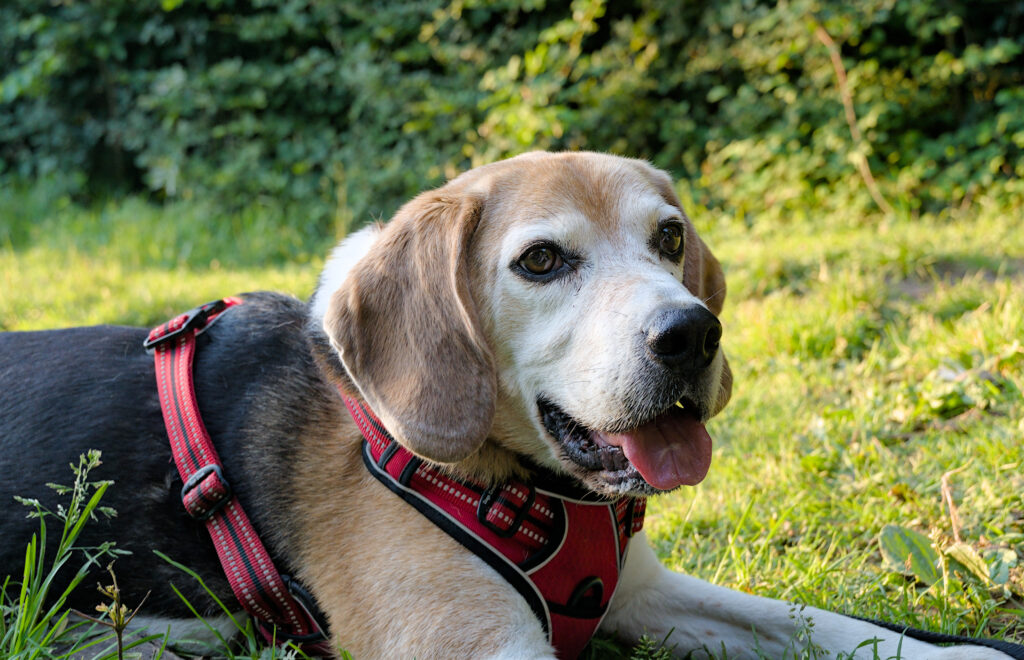
The beagle is one of the most beloved companion dogs in the world: A small to medium-sized British bulldog, cheerful, sociable and with a prodigious nose. If you’re looking for a familiar, playful, hardy breed, the Beagle has plenty to fall in love with, but it’s best to get to know its tracking character and energy well before you decide. In this comprehensive guide we go over everything you need to know about the Beagle: character, coexistence, education, exercise, care, health, appearance and history.
Is the Beagle for you?
Before you get carried away by those pleading brown eyes, let’s be honest: The Beagle is a hunting dog adapted to family life, and that marks both its virtues and its challenges.
In favour .
- Cheerful, friendly and very sociable with people and other dogs.
- Excellent with children: patient and playful.
- Manageable size and short hair, easy maintenance.
- Robust and durable, with no major extreme aesthetic problems.
- Curious, intelligent and motivated by food, which makes it easier to work with prizes.
To be taken into account
- Its sense of smell dominates everything: if it catches a trace, it can ignore you completely.
- It tends to bark and howl; it’s not the quietest dog.
- He suffers from loneliness: he is a pack dog prone to separation anxiety.
- Naturally gluttonous: a strong tendency to overweight if diet is not controlled.
- He needs daily exercise and a fenced-in garden, because he’s a born escapist.
Character and temperament
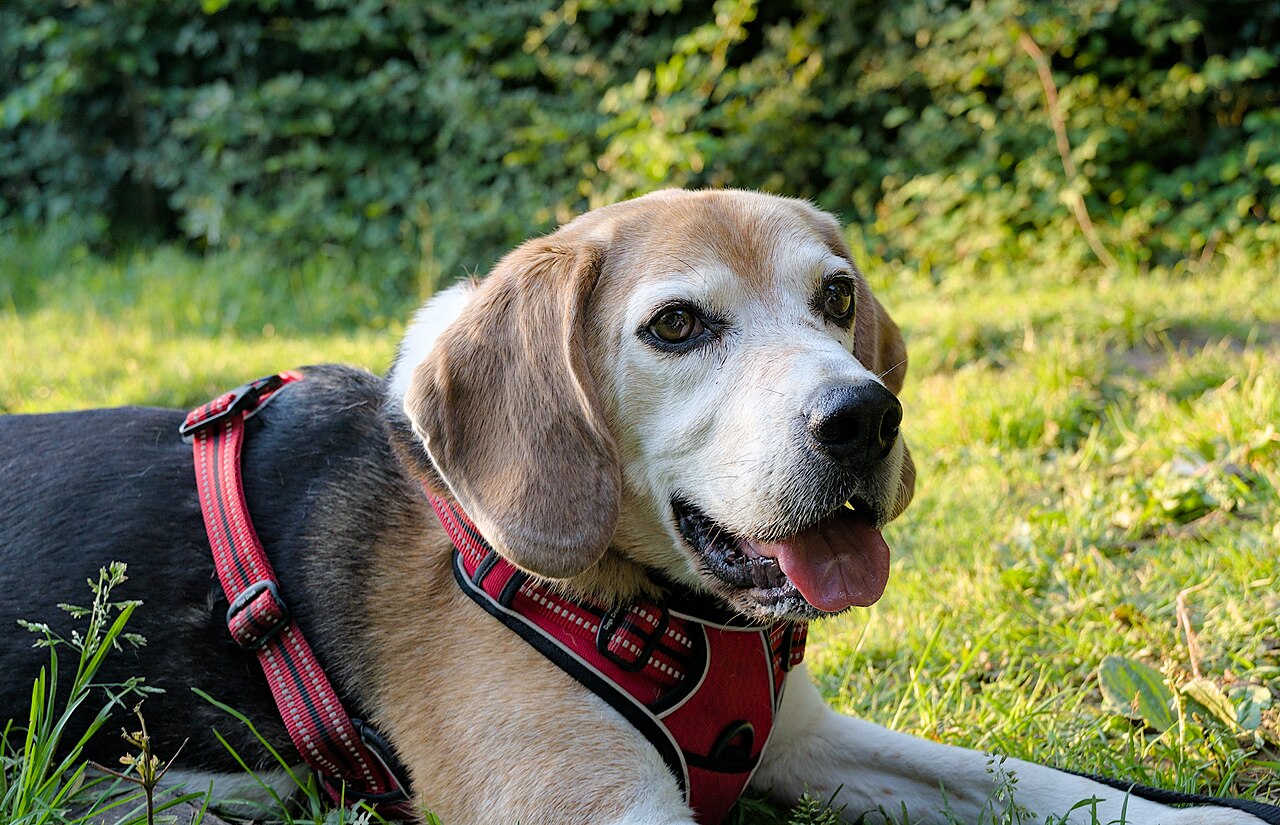
The breed standards describe the Beagle with one word that sums it up well: merry, that is, cheerful. It is a dog of balanced temperament and friendly disposition, which is usually neither aggressive nor fearful.
That same sociability makes it a terrible watchdog: it will hardly see an intruder as a threat. Instead, it does function as a warning dog, because it tends to bark or howl at new situations. Not all beagles howl, but many do, and some emit that deep, prolonged “sing” so characteristic of hounds when they pick up an interesting smell.
It’s important to understand that the Beagle is, first and foremost, a nose with legs. It has one of the most developed olfactory senses in the canine world, on a par with the Bloodhound and the Basset Hound. This means that once it follows a trail, it can go into a kind of “tunnel mode” and disconnect from your calls. It’s not disobedience or gratuitous stubbornness: It’s pure instinct. In the classical obedience rankings, he ranks low, but that measures obedience to orders, not his actual intelligence, which is remarkable and very focused on figuring out how to get to the food or smell that interests him.
Coexistence: children, other pets, flat and loneliness
The beagle is an excellent family companion, but its happiness depends a lot on how it fits into your home.
- With children: is one of the most recommended breeds for families. Its tolerant, playful and resistant character makes it a great playmate, always with the reasonable supervision that any dog requires.
- With other pets:, being a pack animal, usually gets along very well with other dogs, and usually also with cats if it gets used to it from puppyhood.
- On the floor: can live in an apartment as long as it is provided with enough daily exercise. However, be aware of barking and howling: in a community with noise-sensitive neighbors it can be a problem if it is bored.
- Soledad: is his big Achilles heel. As a good pack dog, it is not good to be alone for many hours and is prone to separation anxiety, which results in wrecking and vocalizations. It is not the ideal breed for those who spend the whole day outside the house.
- Outdoor areas: If you have a garden, make sure the fence is solid and deep. The Beagle digs, jumps and, above all, follows smells: it’s an expert escapist.
Education and training
Training a beagle is an exercise in patience and good humor. It’s not a dog that lives to please you like a shepherd or a retriever; it’s independent and easily distracted as soon as a scent catches its eye. The good news is that it loves food, and there you have your best ally.
Positive reinforcement with rewards works wonderfully. The sessions should be short, fun, and highly motivating, avoiding boring repetition. Consistency is key: what you allow one day and forbid another only creates confusion in a dog so quick to find shortcuts.
Two aspects deserve special attention. The first is the call (recall): Given their tracking instinct, many beagles never become fully reliable loose in open areas, so train the call from a puppy and be careful where you release it. The second is early socialization, which will help the adult to be balanced and confident. Developing tolerance for loneliness gradually from a young age also prevents future anxiety problems.
Exercise and activity
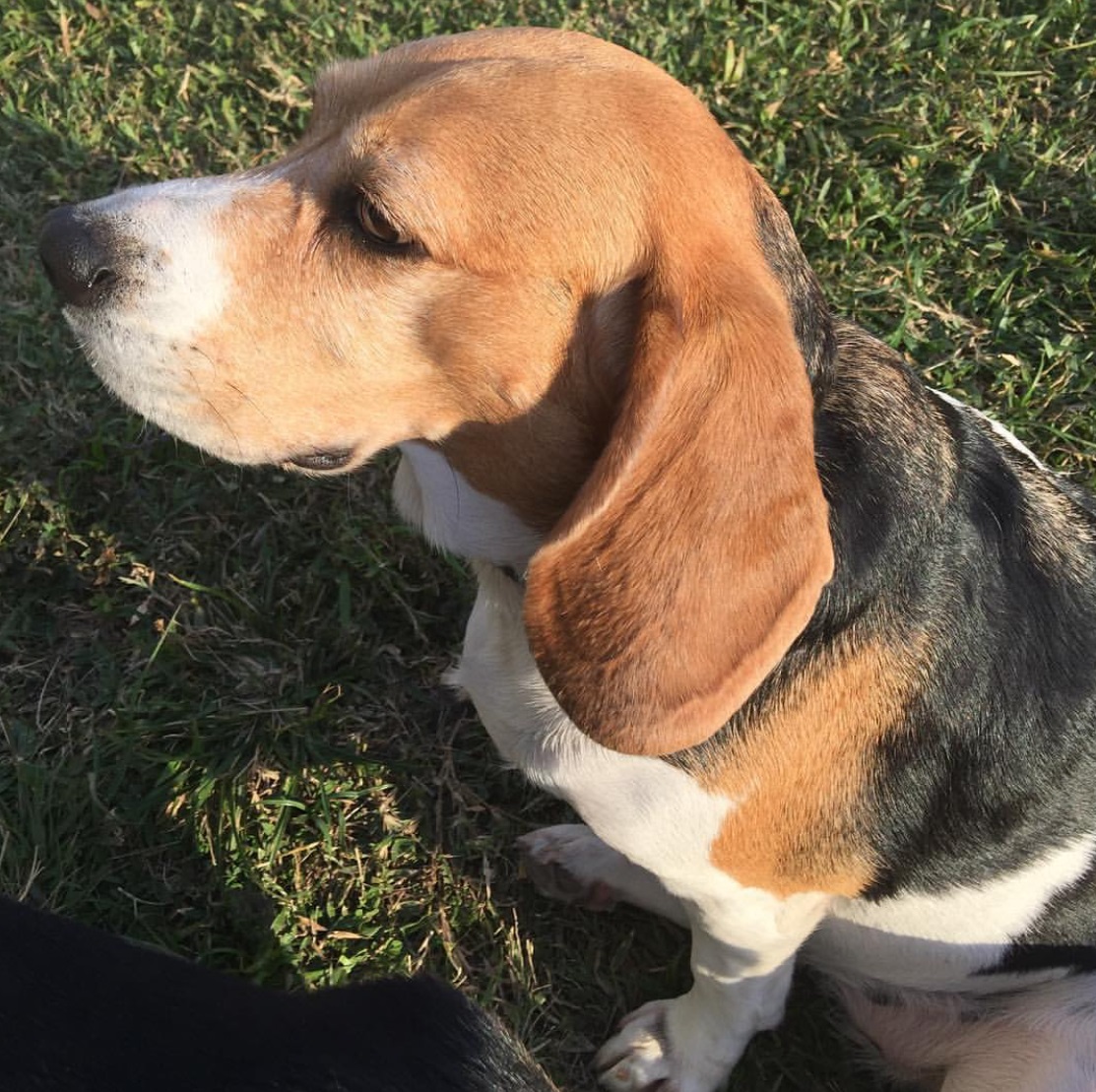
The Beagle was bred to run for hours after the piece, so it has remarkable endurance. It needs daily exercise: long walks, games and, if possible, time to explore smells, which is its favorite and most enriching activity. An hour split into several outings is usually a good starting point for a healthy adult.
Interestingly, it is not a dog that is easily exhausted or that needs to be taken to the extreme: its good physical background allows it to exercise without being exhausted, but it also does not have to be blown up. Balance is the key. Regular exercise also has an important health function, because it helps to curb the tendency to overweight, one of the most common problems of the breed.
Beyond physical wear and tear, the Beagle needs mental stimulation. Olfactory games (hiding prizes, scented carpets, searching for food) keep it happy and tired in the best way. A bored Beagle is a Beagle that barks, digs and gets into trouble.
Care: fur and hygiene
In this section the Beagle is grateful. Its hair is short, smooth, dense and quite hard, which translates into a simple maintenance. A weekly brushing is enough to remove the dead hair and keep it in good condition, increasing the frequency in moulting seasons.
The point that requires the most attention are the ears: long, falling and sticking to the face, make it difficult to ventilate the ear canal and encourage moisture to accumulate, which can lead to ear infections. They should be checked and cleaned regularly. He completes the routine with nail trimming when necessary, dental hygiene, and eye checkup, another sensitive area in the breed. Bathing is only necessary when the dog gets really dirty.
Foodstuffs
If there is one thing that defines a Beagle at the table, it is its insatiable appetite. They eat whenever food is available and are completely dependent on their owner to regulate their weight. Therefore, the most important thing in their diet is the control of rations: a complete and balanced diet, adjusted to their age, size and activity level, distributed in measured quantities.
Being overweight is one of the most common and preventable health problems of the breed, so watch your calories, moderate your rewards (discounting them from your daily ration), and avoid getting used to leftovers, no matter how much you insist on that look. Make sure that fresh water is always available and consult your veterinarian to establish a specific guideline and detect any excess weight in time.
Health and life expectancy
The Beagle is generally a robust and long-lived dog. Recent studies place its life expectancy at about 12-13 years, within the usual range for breeds of its size, and with good care many specimens exceed that figure.
Still, as all races have predispositions, it’s worth knowing:
- Overweight and obesity: the most common problem and, fortunately, the most preventable with diet and exercise.
- Hearing problems: his long, droopy ears favor ear canal infections.
- Eye problems: glaucoma, corneal dystrophy, “cherry eye” (prolapse of the third eyelid gland), distichiasis and various retinal atrophies.
- Epilepsia: may occur, although it is usually well controlled with medication.
- Hipotiroidismo and some types of dwarfism.
- Discus disorders being a chondrodystrophic breed, is prone to intervertebral disc problems.
- Beagle pain syndrome(juvenile polyarteritis): a rare vasculitis, with episodes of fever and neck pain, named for its predisposition in the breed.
- There are also other rare disorders such as neonatal cerebellar degeneration, with genetic testing available.
The good news is that hip dysplasia, common in other breeds, is rarely a problem in the Beagle. Regular veterinary monitoring and buying from responsible breeders who perform health checks are the best guarantees.
Physical appearance
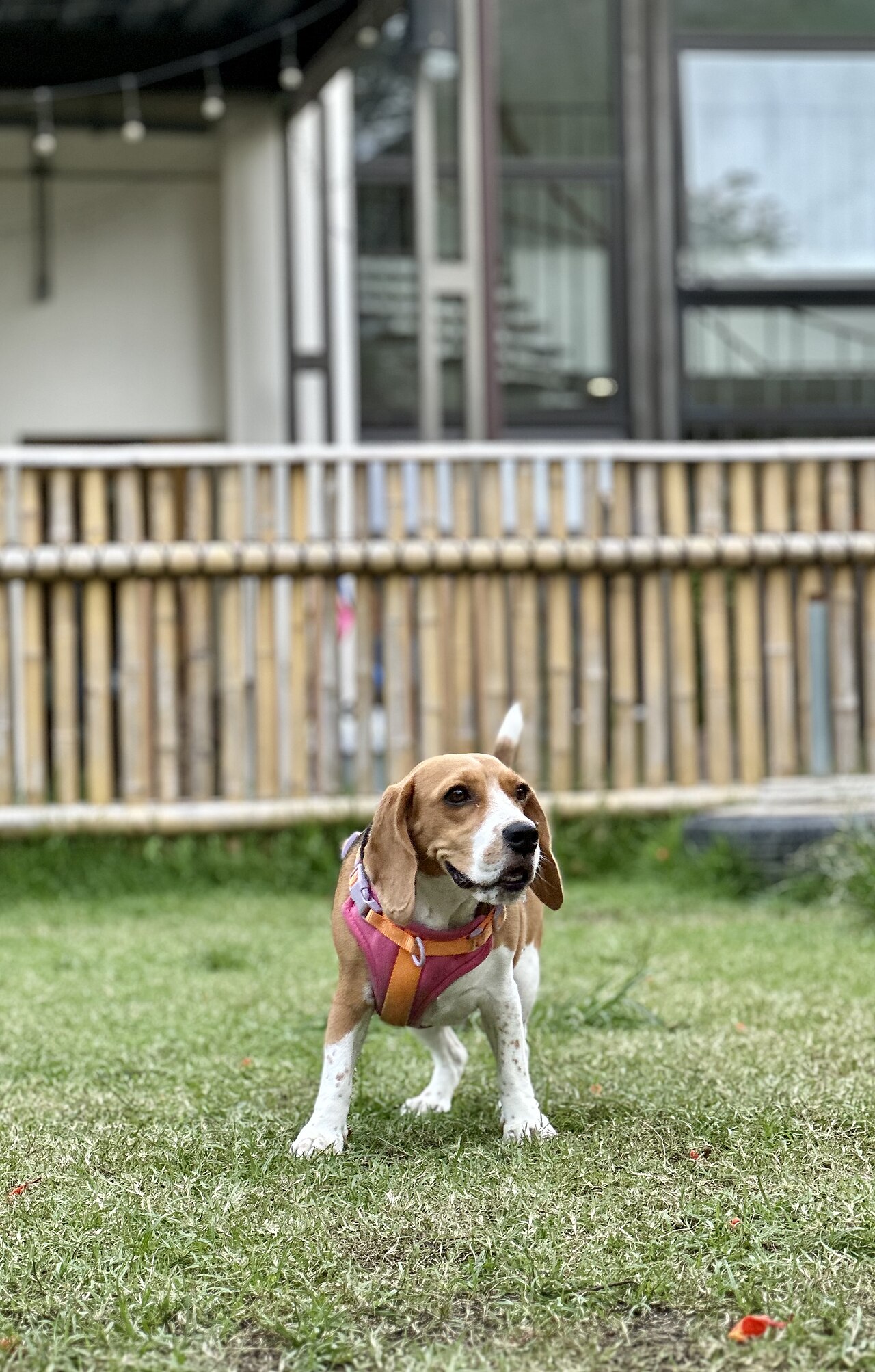
The Beagle resembles a miniature Foxhound, but with a wider head, shorter snout and shorter legs in proportion to the body. It is a small to medium-sized dog: it measures between 33 and 40 cm at the withers and weighs approximately between 8 and 16 kg, with females on average somewhat smaller than males.
It has a smooth and slightly bulbous skull, a square snout of medium length and a black truffle (sometimes liver-colored). Their eyes are large, hazel or brown, with that sweet, pleading expression so typical of hounds. The ears, long, smooth and low-inserted, curve slightly towards the cheeks and round at the tip. The neck is strong and long enough to lower the nose comfortably to the ground, and the tail – called the “stern” – is carried upright when the dog is active, with the white tip (the “flag”) selected precisely to see it best through the weeds when crawling with the head lowered.
The coat is short, smooth and hard. The most common layer is the tricolor (white with large black areas and light brown hues), but there are many varieties: bicolors on a white base (lemon, toasted, red, liver, black) and mottled or ticked patterns, such as the characteristic bluetick Beagle. It is common for tricolored puppies to be born black and white and to develop brown over time.
Origin and history
The Beagle is a British breed of scenthound, whose modern development began in Britain around the 1830s. The International Cinological Federation (FCI) classifies it in Group 6 (scenthound and scenthound type dogs), a section of small-sized hounds.
Its origins, however, are much older and somewhat diffuse. Already in ancient Greece, Xenophon described small dogs that hunted hares by smell while hunters followed them on foot. In the 11th century, William the Conqueror brought the St. Hubert and Talbot hounds to Britain, where they were crossed with greyhounds to gain speed. During the Middle Ages, “beagle” was used as a generic name for smaller hounds.
The history of the breed is dotted with curious details, such as the barely 20-23 cm pocket beagles(“pocket beagles”) that Queen Elizabeth I loved so much, small enough to carry in a saddlebag during the hunt. In the 18th century, two types lived side by side, the Southern Hound and the North Country Beagle, which were on the verge of extinction when fox hunting became fashionable. It was the Reverend Phillip Honeywood who, in the 1830s in Essex, established the pack that is considered the basis of the modern breed, while Thomas Johnson refined the breed in search of both beautiful and effective dogs. The Beagle Club was founded in 1890 and the first standard was drafted.
Curiosities
- The world ‘s most famous beagle is fictional: Snoopy, from the comic strip Peanuts, usually gets that title.
- A nose at the service of the borders:, thanks to their extraordinary sense of smell and friendly nature, are used as detection dogs for food and agricultural products banned at airports and customs around the world.
- It ‘s an elite scent . In a classic study, the Beagles located a mouse hidden in a field in less than a minute, while other breeds took fifteen or no to find it.
- Elizabeth I called her tiny pocket beagles and entertained her guests by letting them run between the plates of the royal table.
- The “reverse sneeze”: is common for a Beagle to make a sound as if it is choking or panting; it is actually just inhaling air hard and not dangerous.
- Tail with flag: the white tip of its tail is not random; it was selected so that the hunter could locate the dog among the vegetation when walking with its nose stuck to the ground.
If you are interested in the Beagle, you may want to compare its character and needs with those of other related or similar-looking hounds and tracking dogs. Basset Hound English Foxhound Harrier Bloodhound (Bloodhound)
Frequently Asked Questions About the Beagle
Is the Beagle a good dog for families with children?
Yes, it is one of the most recommended breeds for families. Its cheerful, patient, and resilient nature makes it a great playmate for children, always with the reasonable supervision that any dog requires.
Do beagles bark and howl a lot?
They tend to be vocal. Not all of them howl, but many bark at new situations and some emit the low “singing” of hounds when they pick up a smell.
Can he live in a flat?
Yes, as long as he gets enough daily exercise and stimulation, you have to take into account his vocalizations to the neighbors and spend time with him, because it’s not good to be alone for many hours.
Is it hard to train?
It is independent and its sense of smell easily distracts it, so it requires patience and perseverance. The great advantage is that it loves food: with positive reinforcement, rewards and short, fun sessions you get very good results.
How much exercise does a beagle need?
It needs daily exercise: long walks, play and, above all, opportunities to explore smells. It has a lot of stamina, but also important is mental stimulation with olfactory games. Exercise also helps prevent overweight.
How long does a beagle live?
Its life expectancy is usually around 12-13 years, and with good care many specimens outgrow it.
Why do the Beagles run away?
When your nose picks up an interesting odor, it can go into tunnel mode and disconnect from the calls, which is why you need a solid, deep fence and be cautious about releasing it into open areas.
Do you gain weight easily?
They’re very gluttonous, and they eat whenever food is available, so being overweight is one of their most common problems, so controlling rations, moderating rewards, and ensuring daily exercise is key to keeping them at their weight.