The Terrier Brasileño is the Brazilian terrier par excellence: small, agile, extremely clever and with an energy that knows no rest. Affectionately known as the fox paulistinha, he was born to hunt rats on farms and warehouses, and today he is a vivacious, watchful companion who falls in love with anyone looking for a sharp, sporty, easy-care dog. Before you fall in love with that tricolor face, you should know what the Terrier Brasileño really looks like and if it fits into your life.
Is the Brazilian Terrier for you?
The Brazilian Terrier is a strong-willed dog in a small body. It’s not a decorative pet or a couch dog: He needs activity, company and someone to enjoy his sparkling terrier. If you’re looking for a quiet, low-maintenance dog, it’s probably not your breed. If, on the other hand, you want a sporty, cheerful, always-on partner, it can be a great choice.
In favour .
- Practical size: fits on floors and cars without a problem.
- Very smart and quick to learn.
- Short hair: minimal grooming, without a hairdresser.
- Athletic and playful, ideal for active life and canine sports.
- Watchman and warner: good warning dog.
- Healthy and rustic, easy to care for.
To be taken into account
- A lot of energy: boring, barking, digging and wrecking.
- High hunting instinct: bad companion for rodents or birds.
- Barking and reactive to noises and strangers.
- He needs early and firm socialization.
- He doesn’t tolerate hard handedness or long hours of solitude.
- It’s not the ideal choice with very young children.
Character and temperament

If we had to summarize the Brazilian Terrier in three words it would be cheerful, alert and curious.. It is a lively dog that does not miss a sound or a movement: it is always on guard, investigating, chasing or asking for game. That intensity makes it a very funny companion for those who follow its rhythm, and a small whirlwind for those who expected a calm dog.
With his family he is affectionate, loyal, and very sociable, retaining his playful spirit well beyond the puppy stage. With strangers, on the other hand, he tends to be reserved and suspicious; without good socialization, he may become overly barking or even reactive. It is an intelligent and independent dog – a direct inheritance of its past as an autonomous scavenger – so it has its own criteria and does not obey “because it does”: You have to earn it.
A balanced Brazilian Terrier is the result of exercise, mental stimulation, and clear rules, not chance. The other side of the coin is that if its energy is not managed, barking, digging, and destruction appear quickly.
Coexistence: children, other pets, flat and loneliness
With children: works well with older children who understand how to treat a dog, because it is tirelessly playing. With younger children, constant supervision is appropriate: it is sensitive and can react abruptly to pulling, forced hugs or awkward handling. Teaching the child to respect their time and their space is as important as educating the dog.
With other pets: here you have to be realistic. Its rodent hunting instinct is very much alive, so it’s not compatible with hamsters, rabbits, guinea pigs or birds: will tend to chase them. You can get along with cats if you grow up with them and socialize with them consciously, but you should never trust them completely. It gets along better with other dogs when sharing a home as a puppy; with strangers it can be challenging, hence the importance of socialization.
On the floor:‘s size is not a problem and it adapts well to urban life, as long as it receives several walks and playtimes daily. In the face of loneliness: is a very attached dog that has a hard time spending many hours alone. Boredom and lack of company are the perfect recipe for barking and destruction, so it is not the ideal breed for someone who is out all day.
Education and training

The Brazilian Terrier is one of those dogs that learns right from the start… the good and the bad. Its intelligence is a double-edged sword: if you channel it well, you will have a brilliant student; if not, it will learn only all sorts of mischief. The good news is that it responds wonderfully to the positive reinforcement: prizes, play and clicker give excellent results in a very short time.
What doesn’t work with this breed is the imposition. Methods based on force or false premises of “dominance” are useless and counterproductive: the dog becomes blocked, frustrated or directly rebellious. Better short sessions, frequent and fun, with clear goals and a lot of patience. early socialization– people, dogs, noises, environments – is the most profitable investment you’ll ever make, because it prevents most adult reactivity problems.
It is good to work on self-control and barking management early, as well as a good call: With that hunting instinct, a Brazilian Terrier that does not come when called can get into trouble by chasing anything that moves.
Exercise and activity
This is an athletic, high-energy dog, and a short walk is not enough for him: he needs several outings a day, moments of intense play and, if possible, mental challenges. He loves to run, chase balls, sniff and solve problems, so canine sports – agility, obedience, sniff work – come like rings on his finger and channel his hyperactive nature into something useful.
The rule is simple: a tired Brazilian Terrier is a wonderful dog; one with accumulated energy becomes a wrecker of gardens and sofas. If you give it enough physical and mental exercise, at home it will be calm and balanced. That is probably the factor that most distinguishes a happy specimen from a problematic one.
Care: fur and hygiene
In terms of grooming, the Brazilian Terrier is the most comfortable. Its hair is short, smooth and fine, without woolly undercoat, so it does not need hairdressing or cuts. A weekly brushing is enough to keep the coat clean and shiny and remove dead hair. Of course, it is convenient to know that it changes a certain frequency, so some loose hair at home is inevitable.
Baths should be only necessary, so as not to dry out the skin. The rest of the hygiene is the usual routine of any small dog: checking and cleaning the ears(it has them half-dipped and folded, with the tip dropped), cutting the toenails when needed and taking care of the dental hygiene, a point especially important in small breeds to prevent tartar. Because of its short hair, it also enjoys protection from the intense cold in winter.
Foodstuffs
The Brazilian Terrier has no special dietary requirements, but an active sporting dog metabolism. The ideal is a quality diet, balanced and adapted to your age, size and activity level, divided into controlled rations. Being small, excesses are noticed quickly: overweight punishes your joints and diminishes your agility, so you should monitor the amount and moderate the rewards (especially if you use them a lot in training).
Fresh water always available, food tailored to your actual expenditure and periodic checks of your body weight are the best prescription.
Health and life expectancy
The Brazilian Terrier is considered a rural and generally healthy breed. In fact, its official recognition by the FCI required it to demonstrate the absence or control of genetic diseases in the population, which speaks well of its health status.
Nevertheless, the usual prevention of small and active dogs should be applied: dental health care, joint care (kneecap dislocation is a classic to watch for in small breeds), weight control and periodic eye and ear checks. With daily vaccination, deworming, exercise, and good nutrition, their life expectancy usually sits around the 12 to 14 years, as in many well-kept small terriers.
Physical appearance

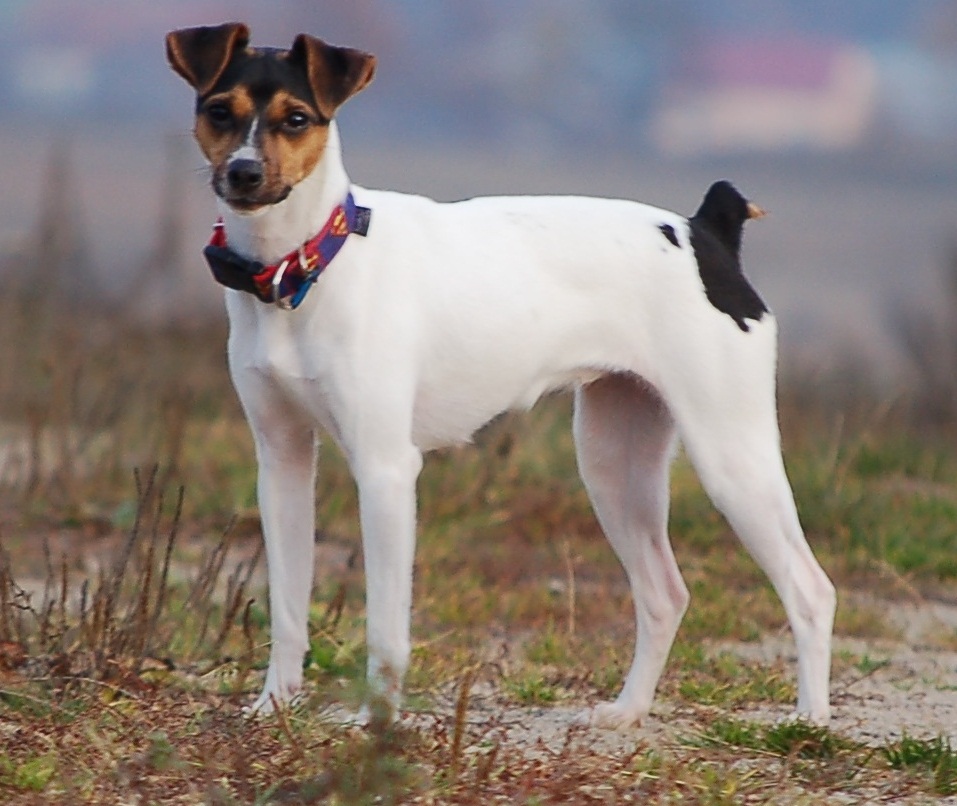
The Brazilian Terrier is a dog of light and elegant build, well balanced and athletic lines reminiscent of a stylized fox terrier. The males measure 35 to 40 cm to the cross and the females 33 to 38 cm, with a weight normally not exceeding 10 kg. The body is harmonious, with a narrow chest, moderately long neck and short back and back.
The head is triangular in shape, with a flat-rounded skull, marked stop, and a strong snout. The eyes is large and rounded, as dark as possible, with a lively and attentive expression. The ears is triangular and semi-rigid, folded with the tip dropped, a very characteristic feature.
The coat is short, smooth and thin. The color is always tricolor: white base with flaming spots (tan) and a third color that can be black, blue or brown.
Origin and history
The Brazilian Terrier is one of the few canine breeds native to Brazil and one of the two internationally recognized. It arrived in Brazilian lands between the 19th and 20th centuries and, as a good terrier, earned its living hunting rats on farms, warehouses and depots, where its effectiveness against rodents made it very valuable.
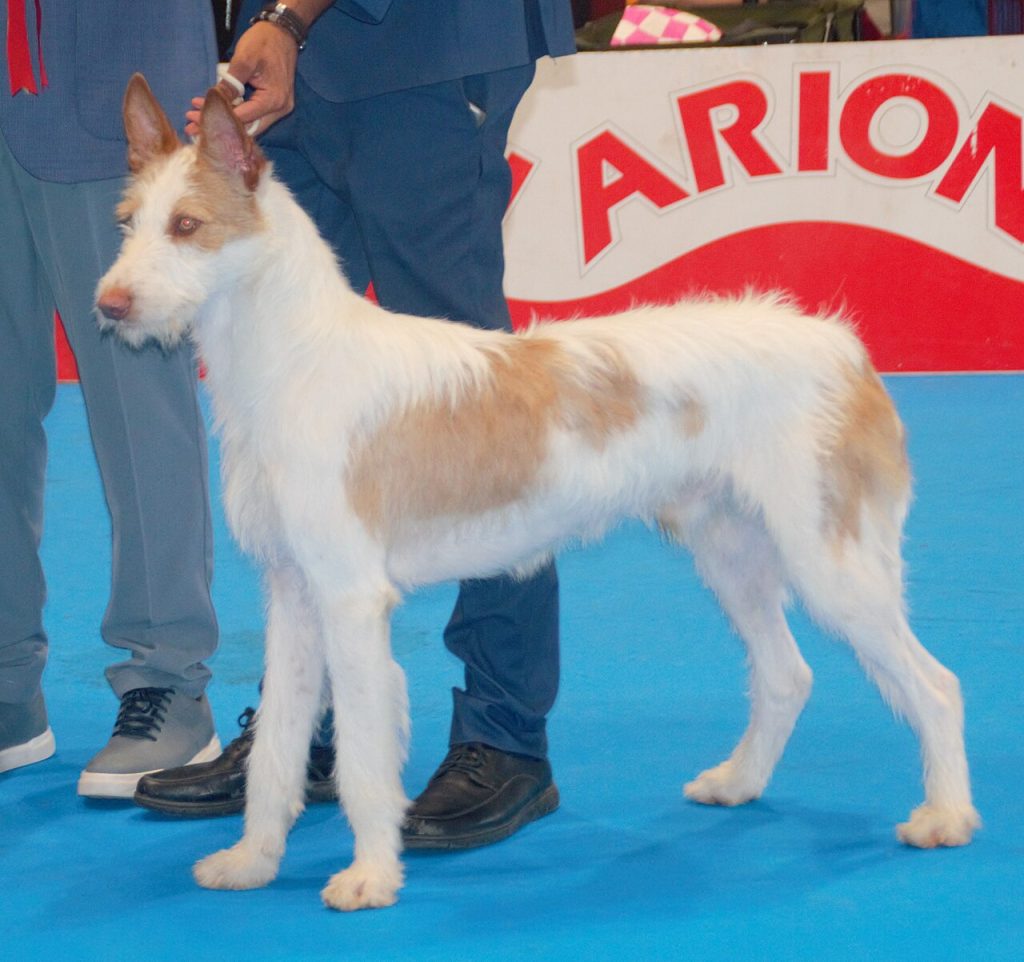
Various theories exist about its exact origin. The most official claim is that it descended from European terriers – Parson Russell, Jack Russell, and the smooth-haired fox terrier – brought by wealthy families who traveled to study in London and Paris and returned with these small dogs, which when crossed with dogs from Brazilian farms gave rise to the new breed. Another hypothesis is that they descended from rat-hunting terriers who traveled on merchant ships as rat hunters. And a third, very solid from the point of view of appearance, points to Spanish mouse breeds – such as the Andalusian and the Valencian – brought to Brazil by immigration and the former Iberian Union.
With a stable breed type since around 1920, the first attempt at recognition came in 1964, but was cancelled due to the small number of registered specimens.
Curiosities
- In Brazil it is popularly known as the fox paulistinha, for its resemblance to the fox terrier and for its historical roots in the interior of the state of São Paulo.
- It has also been called simply “fox” in Rio Grande do Sul and “Foquinho” in Minas Gerais, an affectionate diminutive derived from fox(fox).
- It is one of only two Brazilian dog breeds recognized worldwide by the FCI.
- Its resemblance to the Andalusian bodeguero mouse is so remarkable that it has fueled one of the theories about its Spanish origin.
- Despite its small size, it was a serious worker: warehouse keeper and rodent scourge rather than companion dog.
- Their playfulness does not diminish with age. Many remain puppylike well into adulthood.
If you are attracted to the Brazilian Terrier’s profile – small, smart, athletic, and vigilant – you may also be attracted to other miniature terrier or hunter-spirited breeds, such as the Yorkshire Terrier, another small one with a lot of character; the Teckel (Dachshund), a tenacious, short-legged hunter; the Beagle, a cheerful hound with a tireless nose; or the Chihuahua, a tiny companion with a huge personality.
Frequently Asked Questions About the Brazilian Terrier
Is the Brazilian Terrier a good family dog?
Yes, within his profile. He is affectionate, playful and very attached to his people, and retains that mischievous spirit throughout his life. In return, he asks for companionship, daily exercise and clear rules from a puppy. He fits better in active homes than in homes where he spends many hours alone or without stimulation.
How tall and how much does a Brazilian Terrier weigh?
It is a small-medium sized dog. The males measure between 35 and 40 cm at the withers and the females between 33 and 38 cm. The weight usually does not exceed 10 kg, moving most around 7-10 kg. It is a light, athletic dog with stylized lines.
Does the Brazilian Terrier get along with children?
With older children who know how to respect the dog, it is usually a tireless playmate. With very young children, it is always advisable to supervise: it is a sensitive terrier that can react abruptly to pulling or awkward handling. The key is to teach children to treat it calmly and give it its space.
Can he live in a flat?
Yes, as long as his needs are met. He is not a problematic size dog for a flat, but his energy and tendency to bark demand several walks and play periods a day. A well-trained Brazilian Terrier rests quietly at home; a bored one barks, scratches, and wrecks.
Do you get along with cats and other pets?
Its rodent-hunting instinct is very strong, so it is not the best choice for living with hamsters, rabbits or birds. With cats it can work if it grows up with them and socializes thoroughly, but it is not advisable to trust.
Does the Brazilian Terrier bark a lot?
It is barking by nature: it watches, warns and reacts to any noise or movement. That alert character makes it a good warning dog, but it can also become excessive barking if bored. Exercise, mental stimulation and early work on self-control help keep it at bay.
How long does the Brazilian Terrier live?
It is a rustic breed and, in general, healthy. Like many well-kept small terriers, its life expectancy is usually around 12-14 years.
Is it hard to educate?
It is very intelligent and learns very quickly, the good and the bad. With positive reinforcement (rewards, clicker, play) it gives magnificent results; with harsh or “domination” methods it blocks or becomes a disaster. It is not a dog for harsh hand, but for constancy, patience and short and fun sessions.