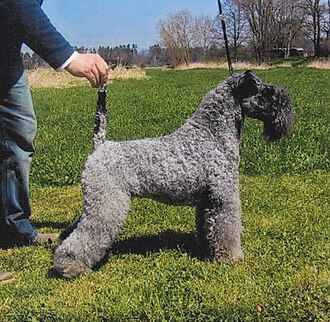
The Kerry Blue Terrier is an unmistakable Irish terrier: It’s born black and matures into an elegant blue slate coat, soft and wavy, barely loosening hair. Behind that plush appearance is a brave, cunning, strong-willed dog bred in County Kerry to hunt game, herd, and guard. If you’re looking for an active, loyal, personalized mate, the Kerry Blue Terrier can win you over, as long as you’re willing to give him constant exercise, education, and grooming.
Is the Kerry Blue Terrier for you?
Before falling in love with its blue coat, it is advisable to look at the breed realistically. The Kerry Blue Terrier is not an ornamental dog: it is a working terrier with a lot of energy, self-control and a constant need for hairdressing.
In favour .
- Barely loosens hair and produces little dandruff: one of the most recommended terriers for homes with allergies.
- Very intelligent and versatile: brilliant in obedience, agility, tracking and shepherding.
- Courageous and excellent guard, attentive to everything that happens in the house.
- Loyal and affectionate to his family; protective and kind to the children of the house.
- Medium size and flashy cloak that draws attention wherever it goes.
Against
- Stubborn and strong-willed – he needs a guide with patience and constancy.
- Compulsory hairdressing every 6-8 weeks plus frequent brushing: the coat does not take care of itself.
- Strong terrier instinct: can be dominant with other dogs and chase small prey.
- Loneliness is not good for him; boredom can become destructive or barking.
- He needs real daily exercise, not just a short walk.
Character and temperament
The Kerry Blue Terrier brings together the best and most demanding of the terrier temperament. It is a cheerful, alert and deeply attached dog to its family, with the courage and determination that is expected of a badger and fox hunter. That same self-confidence makes it a companion with an opinion: it knows what it wants and, if you let it, will try to manage the house in its own way.
With his own he is noble, affectionate and surprisingly sensitive; he enjoys human company and hates being left out. To strangers he is reserved and vigilant, which makes him an excellent guard without becoming aggressive by default. His activity level ranges from moderate to high, so he needs an equally active owner who channels that energy with exercise and mental work.
It is a very clever dog: it ranks 35th in Stanley Coren’s well-known canine intelligence rating. That head, combined with its stubbornness, means that it learns quickly but also that it quickly detects any inconsistencies on your part. Well-educated and socialized, the Kerry Blue Terrier is balanced, fun and a faithful companion for life.
Coexistence: children, other pets, flat and loneliness
- With children: is affectionate and protective of the little ones in his family. As with any energetic terrier, it is advisable to supervise play and teach children to respect their rest times.
- With other dogs: has a strong character and can be dominant, especially with dogs of the same sex.
- With other pets: their hunting instinct is very much alive; cats, rodents or birds can awaken their chase impulse.
- On the floor: adapts to living in an apartment as long as you meet its need for exercise and stimulation; without it, it may bark or become restless.
- Soledad: is a dog that can’t stand to be alone for long hours. It needs companionship and participation in family life; long abandonment favors anxiety and destructive behaviors.
Education and training
Raising a Kerry Blue Terrier is a stimulating challenge. Its intelligence allows it to assimilate commands quickly, but its independence requires training based on positive reinforcement, consistency, and short, varied sessions that don’t bore it. Harsh methods or punishment are counterproductive: they only get such a proud dog to close in on a band.
Early socialization is the most profitable investment you’ll ever make. Exposing him as a puppy to people, dogs, noises and different environments moderates his tendency to dominance and gives him security.
Set clear rules and stick to them: the Kerry is a natural negotiator and will take advantage of any cracks. If you give him a job – obedience, agility, olfactory games, tricks – you will channel his mental energy and strengthen your bond. A stimulated Kerry Blue Terrier with consistent boundaries is a polite and happy dog.
Exercise and activity
The Kerry Blue Terrier needs real daily physical activity: thinking about an hour or two divided between long walks, running and play is a good starting point. It’s not enough for it to go to the toilet; it needs to expend body and mind.
It is a fast, strong and very capable dog, with excellent results in dog sports. It enjoys agility, tracking, search and retrieve games, and even herding. Good swimmer by nature, many specimens love the water. Alternating physical exercise with mental challenges avoids boredom, the main cause of its destructive behaviors.
If you offer him an active and varied routine, you will have a balanced companion inside the house. If you leave him without stimulation, his energy will find its way into biting, barking, and mischief. In short, the Kerry Blue Terrier calmly returns all the exercise he receives.
Care: fur and hygiene

The coat of the Kerry Blue Terrier is its hallmark and also its main requirement. It is dense, soft and wavy, silkier than that of other terriers, and has the great advantage of not shedding hair, which greatly reduces dirt in the house.
Basic coat care plan:
- Cepillado: at least two or three times a week to untie knots and keep the mantle clean and airy.
- The technique of the Kerry is quite an art; it is advisable to leave it in the hands of a canine barber or learn the breeder’s pattern well.
- Baño: every few weeks or when it gets dirty, with soft products that respect its texture.
The rest of the hygiene is the usual: check and clean the ears, watch the nails, brush the teeth and check the eyes. In puppies, many breeders recommend gluing the ears around three months, when the cartilage begins to harden, so that they adopt the correct fall; ask your breeder for the right guideline.
Foodstuffs
The Kerry Blue Terrier is a medium-sized and active dog, so its diet should provide quality protein and the right energy for its activity level.A complete and balanced feed, adapted to its age, size and physical expenditure, usually covers its needs well; also work quality wet or mixed diets or home rations supervised by a veterinarian.
It divides food into two daily servings in the adult to promote digestion and avoid binge eating. It controls the quantities and adjusts according to its body condition: although it is an athletic dog, overweight punishes its joints and its general health.
If you have any questions about rations, supplements or specific needs, it is best to consult your veterinarian, who will adjust the guideline to each stage of your life.
Health and life expectancy
The Kerry Blue Terrier is, in general, a robust and long-lived breed, with a life expectancy of around 12 to 15 years; a British study from 2024 placed its median life around 12.4 years, in line with the canine average.
Nevertheless, it is useful to know the conditions that can appear in the breed:
- Espiculosis: a hair disorder associated with follicular hyperkeratosis, described exclusively in the Kerry Blue Terrier.
- Keratosis of the pads and tumors of the hair follicle: the breed shows some predisposition.
- He was diagnosed with Von Willebrand disease. is an inherited bleeding disorder.
- Degenerative myelopathy: degenerative disease of the nervous system linked to a recessive gene.
Since the population of Kerry is relatively small, responsible genetic selection is key to preventing the transmission of these diseases.Going to serious breeders who test their breeders, and keeping regular veterinary checks, is the best guarantee of a healthy dog.
Physical appearance

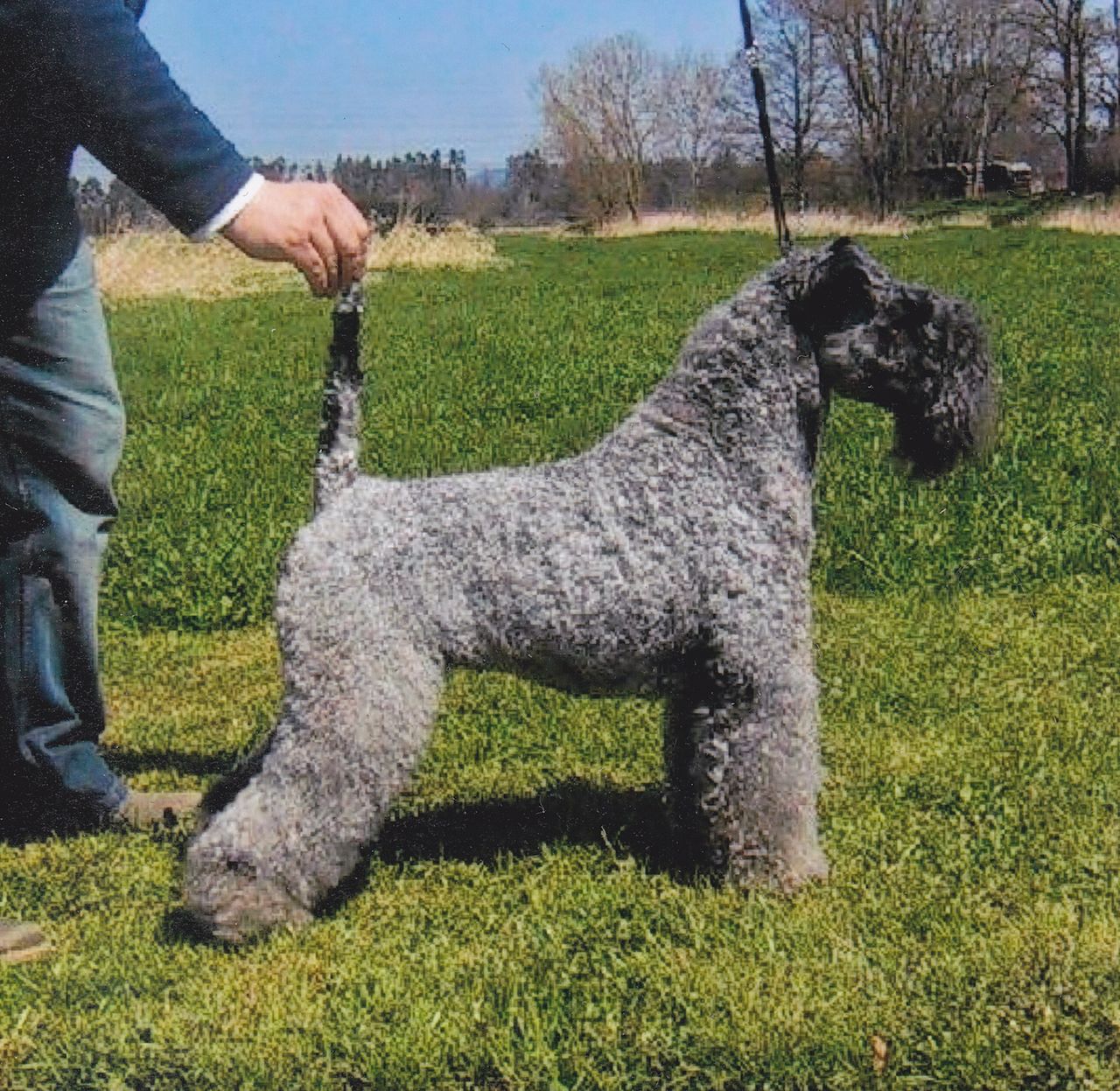
The Kerry Blue Terrier is a medium-sized dog, compact and muscular, with elegant lines and proud demeanor. Males measure about 46-48 cm at the withers and females about 44-46 cm; the weight is around 12-15 kg in males and 10-13 kg in females, although some standards allow somewhat larger specimens. The head is elongated, with a flat skull and a very characteristic attentive expression.
Their main feature is the coat: dense, soft and wavy, in any shade of blue, from slate blue to silver or grayish blue, with or without black spots on the snout, ears and extremities.
Completing its silhouette are small, V-shaped ears that drop forward, and a high insertion tail that was traditionally worn straight and erect when the dog was alert.
Origin and history
The Kerry Blue Terrier takes its name from the Irish county of Kerry, a mountainous region of southwestern Ireland where it was forged as an all-terrain farm dog. The first clear references to a blue terrier appear around 1847, described as bluish-black with darker spots and black areas on legs and muzzle. To fix its type it is believed to have been crossed with the Bedlington Terrier, to whom it owes the soft texture of its hair, and with the Bull Terrier, which contributed part of its determined character.
There is no shortage of legends about his arrival on the island. One account that their ancestors survived a shipwreck in Tralee Bay in the late 18th century and mixed with local terriers; another, even more romantic, places their origin in dogs landed by the Spanish Armada in 1588. Myth aside, the truth is that the Kerry made a living hunting deer, herding cows and sheep and guarding the house.
In the early 20th century, the breed became a national symbol. By 1924 it had grown to represent a quarter of the Irish Kennel Club records and became associated with the patriotic movement: leader Michael Collins had a famous Kerry named Convict 224 and even tried to have the breed declared the national dog of Ireland. The Dublin Irish Blue Terrier Club, whose first contest brought together supporters from both sides of the conflict, was so successful that the Irish Kennel Club was founded. American fans presented it at Westminster in 1922, and in 2000 a Kerry Blue Terrier achieved fame by winning the prestigious Crufts Best in Show.
Curiosities
- It’s born black, turns blue: the spectacular color change from puppy to adult is one of the breed’s most striking and beloved traits.
- The dog of an Irish hero: Michael Collins wanted to make the Kerry the national dog of Ireland; his specimen was called the Convict 224.
- A test of courage: in the early days of exhibitions, the Irish Kennel Club required passing a test of courage, the Teastas Mor certification, before they could compete.
- War spy:‘s dark mantle made it a perfect camouflage, and it is said to have been used for detection tasks during World War II.
- Vulnerable breed:, despite its glorious history, is today a small breed and is considered vulnerable.
- Suitable for allergies:, which barely sheds hair, is one of the first options breeders recommend to sensitive people.
If you are attracted to the terrier’s character and peculiar coat, you may want to compare the Kerry Blue Terrier with other breeds in the same family or with similar temperament. Irish Terrier Soft Coated Wheaten Terrier Bedlington Terrier Airedale Terrier
Frequently Asked Questions about the Kerry Blue Terrier
Is the Kerry Blue Terrier hypoallergenic?
It barely sheds hair and produces little dandruff, making it one of the terriers best tolerated by allergy sufferers.
How long does a Kerry Blue Terrier live?
Their life expectancy is around 12 to 15 years. A British study from 2024 placed the median lifespan of the breed at around 12.4 years, a figure very much in line with the general canine average.
Why are puppies born black and then change color?
This is normal in the breed: the puppy is born almost black and its coat gradually lighten to the characteristic blue.
Is he a good dog for families with children?
Yes. He is affectionate and protective of the children in his family. He should supervise play, socialize him from puppyhood and teach the little ones to respect their rest times.
Do you get along with other dogs and pets?
It has strong terrier instinct and can be dominant with dogs of the same sex, as well as chasing small prey.
How much exercise do you need?
He’s got medium-high energy and he’s grateful for an hour or two a day between walks, runs and games, adding mental stimulation.
Is it hard to train?
He is very intelligent (ranked 35th in the Coren ranking), but also stubborn. He responds wonderfully to positive reinforcement, short sessions and consistency, and does not do well to hard methods.
How much hair maintenance does it require?
You have to brush it two or three times a week and take it to the hairdresser every six to eight weeks. It does not change, but its hair grows continuously, so regular grooming is essential.