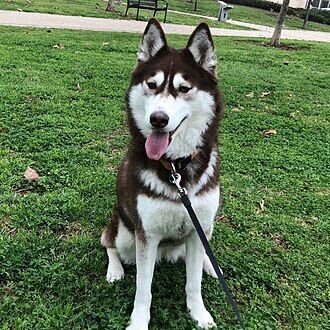
The Siberian Husky is a medium-sized, athletic and distinctive-looking sled dog bred for centuries by the Chukchi people in the extreme cold of northeastern Siberia. He combines tremendous physical endurance with a sociable, independent and very vocal character. Before you fall in love with their wolf-like appearance, understand that the Siberian Husky is, first and foremost, a hardworking athlete who needs exercise, mental stimulation, and companionship in equal parts.
Is the Siberian Husky for you?
The Siberian Husky is one of those breeds that falls in love with the photo and surprises in coexistence. It is affectionate, clean and not aggressive, but also a Nordic sled dog with an energy and independence that do not fit into any home. Before taking the step, honestly review these pros and cons.
In favour .
- Very sociable and friendly, even with strangers.
- She’s great with kids when she socializes well.
- Resilient, healthy and rarely aggressive.
- Clean, almost no dog smell and very careful with his grooming.
- Ideal for active people, mountaineers or sportsmen.
To be taken into account
- He needs a lot of daily exercise; he gets bored easily.
- Loneliness is fatal. It leads to separation anxiety.
- Born to run: dig, jump and learn to open fences.
- Strong prey instinct with cats and small animals.
- It sheds a lot of hair on the moles and is very vocal (whoops).
Character and temperament
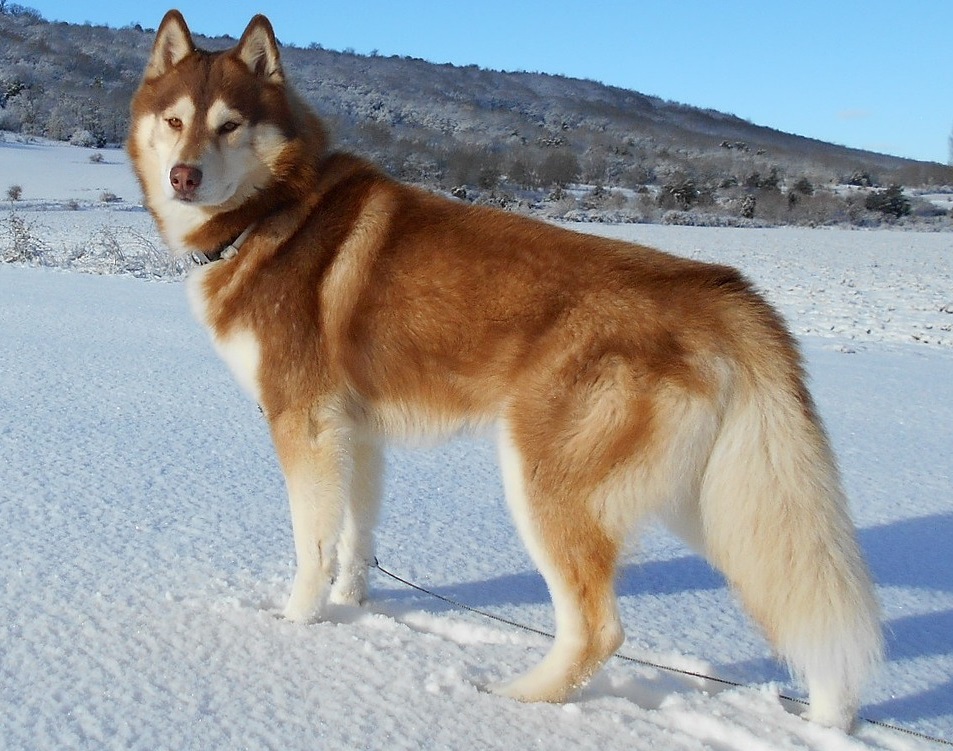
If we had to sum up the character of the Siberian Husky in one word, it would be sociable. It is an open, cheerful and not at all suspicious dog: it hardly serves as a watchdog, because it tends to greet anyone enthusiastically.
The Husky retains many traits of primitive communication, which is sometimes confused with dominance or bossiness. The reality is different: He was raised to make decisions on his own in the face of danger on the ice, so he has a very high capacity for initiative. He’s not a stubborn dog, he just doesn’t obey “because he does”: He needs a reason to motivate himself. He who seeks a dog that is submissive and obedient to every command will take a beating; he who knows how to appreciate an intelligent and personable companion will gain an extraordinary friend.
It is also a very expressive dog. Instead of barking, the Husky howls, growls and emits a whole repertoire of “conversations” that can become surprisingly similar to human speech. What is almost never lacking is joy: well cared for, it is a balanced, playful and deeply attached dog to its family.
Coexistence: children, other pets, flat and loneliness
- With children: is excellent. It is patient, tolerant and feels special devotion for the little ones in the house. As with any dog, it is advisable to supervise play with very young children.
- Their pack nature makes them enjoy canine company and usually get along well with other dogs.
- With cats and small animals: is delicate. It retains a strong prey instinct, so coexistence with cats, rabbits or rodents requires early socialization and much caution.
- On the floor: possible, but demanding. You can live in an apartment if you get a lot of daily exercise; otherwise, boredom translates into wrecking and howling.
- In the face of loneliness:‘s great weakness is that it severely complains of being alone for long hours and develops separation anxiety easily, not the ideal breed if you spend the day away from home.
Education and training
Training a Siberian Husky is an exercise of patience and constancy rather than imposition. It responds very well to positive reinforcement and fatal to methods based on force or confrontation.
Early socialization is key. A well-socialized Husky puppy grows into a balanced adult with excellent character; neglect is the source of most behavior problems. Calling and self-control should be worked on from the beginning, although it must be assumed that leashless reliability in open spaces will always be limited by its running and running instinct.
Forget also the myth of the “dominant” dog that must be subdued. The Husky does not seek to lead the household; it seeks a motive for collaboration. Make it fun, be consistent, and you will have a brilliant pupil.
Exercise and activity
Here is the heart of the breed. The Siberian Husky was bred to travel long distances pulling a sled at a steady pace, so its need for exercise is very high and non-negotiable. A couple of short walks a day is not enough: it needs to run, explore and expend real energy.
Long nature walks are his favorite plan, but where he really shines is in drag and drop sports. The mushing(sledding shot) is its original discipline, and there are viable variants without snow: the canicross(running tied to the dog), the bikejoring(with bicycle) or the skijoring(dog towed cross-country skiing). Any one of them channels his instinct and leaves him happy and tired.
As important as physical exercise is the mental stimulation: smelling games, problem-solving toys, and learning new skills. A boring Husky is a destructive Husky; a well-stimulated one is a quiet companion at home.
Care: fur and hygiene
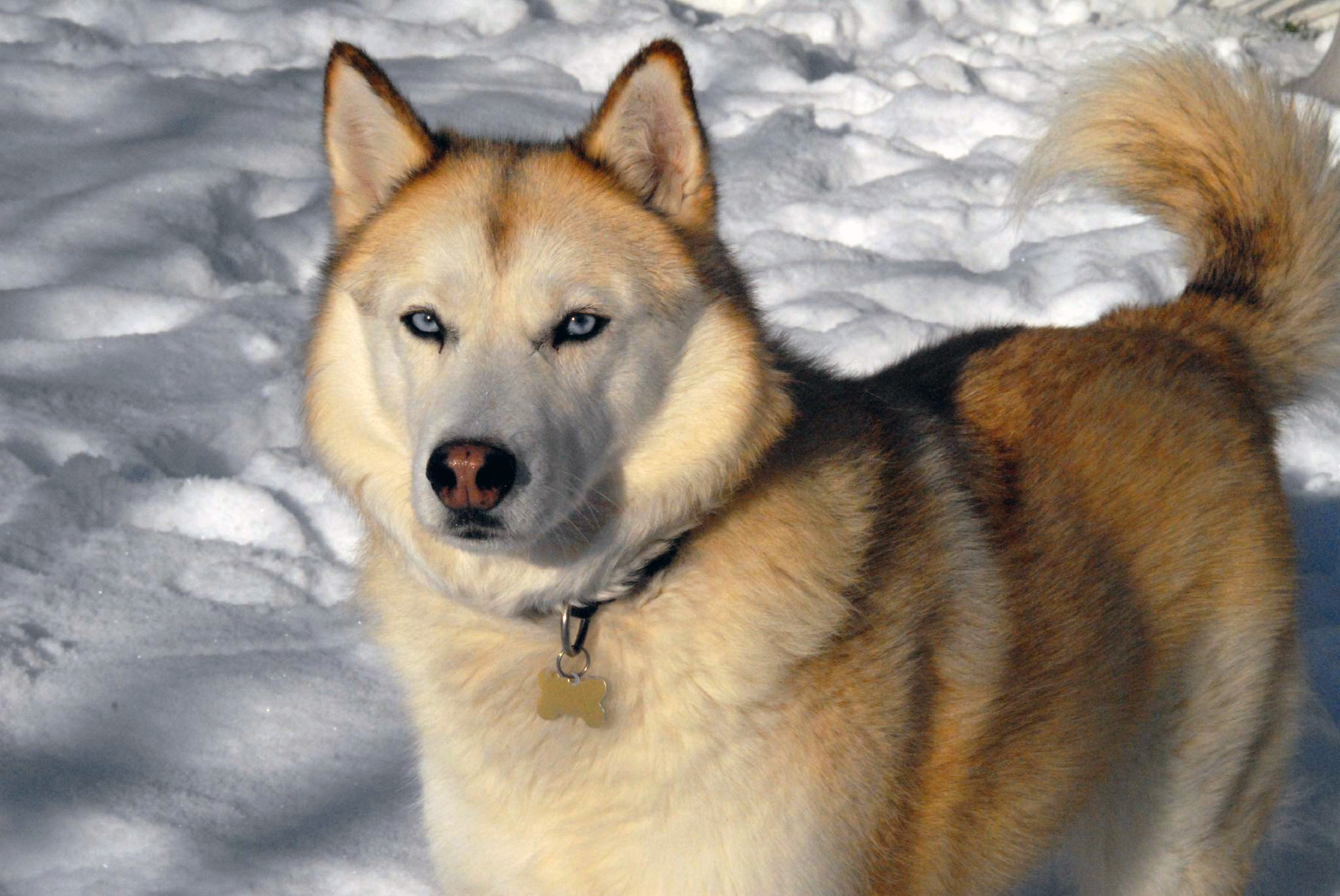
The Husky’s double coat is its hallmark and also its main maintenance requirement. It has a woolly and dense undercoat under an outer layer of straight guard hair, a combination that protects it from extreme temperatures, able to withstand between -50 and -60 °C. That same coat reflects the heat in summer, so you must never shave: you would ruin its natural thermoregulation.
Weekly brushing is sufficient most of the year, but twice a year, in spring and autumn, the Husky makes large moults in which he releases the undercoat in bunches. In those weeks, he’ll brush daily to control the hair rain around the house. The good news is that it’s a naturally clean dog with virtually no body odor, and it’s groomed meticulously almost like a cat. That’s why baths should be occasional, only when it’s really dirty. Complete the routine with basic nail, ear and tooth care.
Foodstuffs
The Siberian Husky is surprisingly efficient with food: it makes good use of nutrients and usually needs less than you would expect for its activity level. The key is to adjust the ration to its actual energy expenditure, because a Husky with lots of food and little exercise gets fat and can develop digestive problems.
He is also a selective diner: it is not uncommon for him to get tired of food or to reject food without further drama (he will rarely eat out of gluttony). A complete, high-quality diet, based on age, sex, and activity, is the wisest thing to do. In stages such as growth, gestation or lactation, adequate vitamin and mineral intake is especially important for proper development. If you have any doubts about quantities or supplements, it is best to consult your veterinarian and avoid excesses.
Health and life expectancy
Overall, the Siberian Husky is a robust and long-lived breed. A British study from 2024 placed its average life expectancy around 12 years, in line with the average of purebred dogs.
The most characteristic health problems are mostly of genetic origin. These include eye defects(juvenile cataracts, corneal dystrophy, glaucoma and progressive retinal atrophy), seizures and congenital laryngeal paralysis. A notable advantage over other medium and large breeds is that the hip dysplasia is rare in the Husky. As always, the best prevention is to go to responsible breeders who perform health checks on the breeders and maintain regular veterinary checks, especially of the eyes.
Physical appearance
The Siberian Husky is a medium-sized, light and harmonious dog, whose wolf-like silhouette is deceptive: much of its volume is, in fact, fur.
It belongs to the spitz family and has its classic features: upright, triangular ears, a thick tail that curls over the back and an awakened expression. Their almond eyes can be brown, amber, blue or even black, and heterochromia (one eye of each color, or one eye with two tones) is relatively common. As for the coat, few breeds have so much variety: From pure white to solid black, through gray, silver, coppery red, sand, sable, pinto and striking agouti, almost always with white markings and very characteristic facial antifaces.
Origin and history
The Siberian Husky was born in northeastern Siberia, where the chukchi people developed it over millennia as a sled dog and companion. It wasn’t a sheepdog: The Chukchi raised him to pull light loads at a steady pace and over enormous distances, as efficiently as possible, and to sleep with his family providing warmth in the frigid Arctic nights. DNA analysis confirms that we’re dealing with one of the oldest canine breeds, with a lineage going back thousands of years.
In the early 20th century, during the gold rush, these dogs came to Nome (Alaska) as draft animals and soon excelled in long distance races against much larger dogs. His moment of glory came in the winter of 1925: A diphtheria epidemic threatened Nome and, with the airfield blocked by the storm, several sled teams were relieved to carry the serum through hundreds of miles of ice. Dogs like Togo and Balto, from the legendary musher Leonhard Seppala, became heroes. Many of the Huskies registered in North America today are descended from those Siberian imports of the 1930’s.
Curiosities
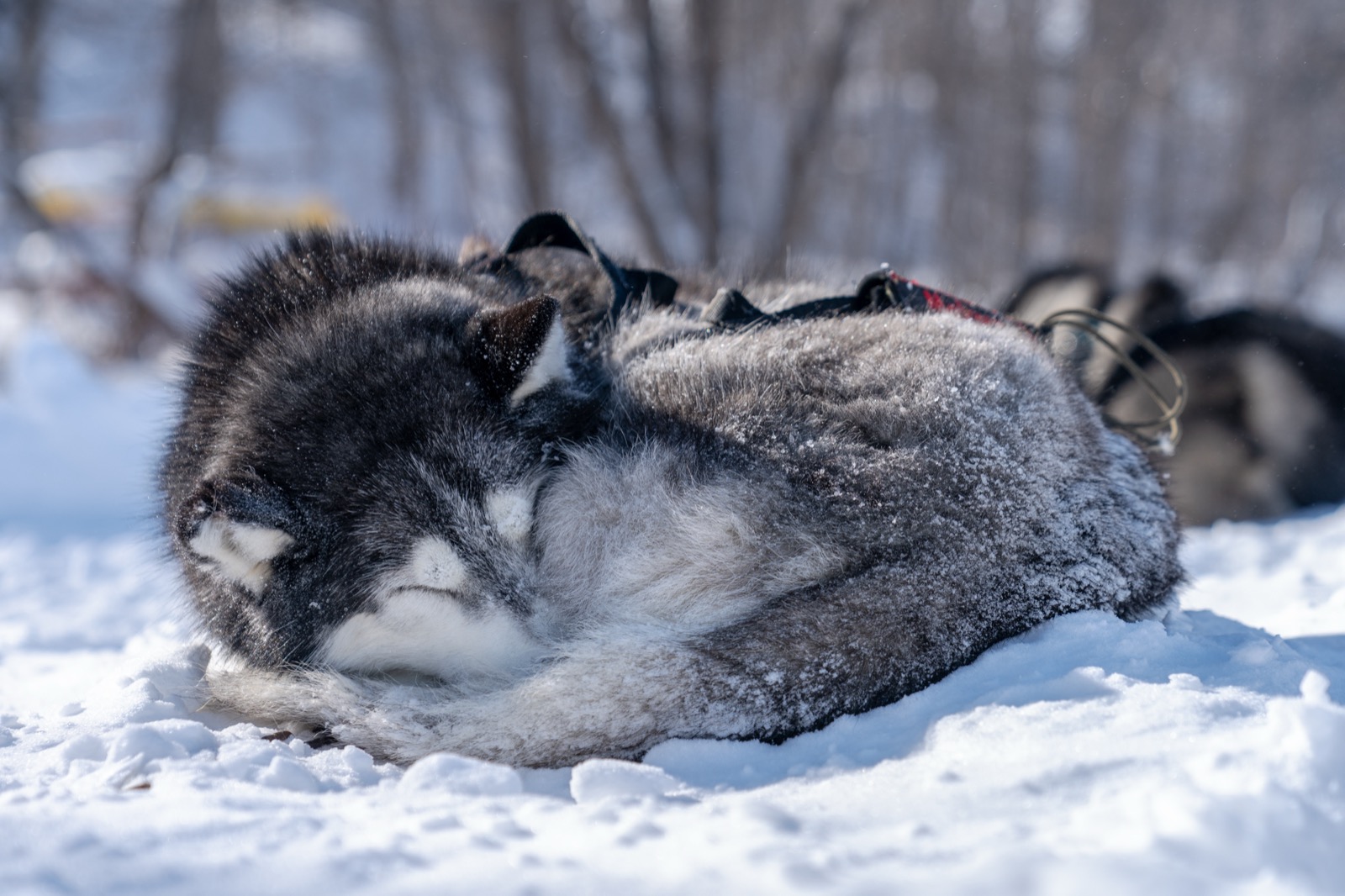
- The “Siberian swirl”: for sleeping is curled up and covers the snout with the bumpy tail, thus conserving heat in the middle of cold.
- He talks in his own way: barks almost nothing; it howls and “talks”, and many mimic sirens or intonations of human speech.
- Nose of winter: some specimens are cleared of the truffle in the cold months, a harmless phenomenon known as “snow nose”.
- Balto and Togo’s feat in 1925 inspired movies and a statue in Central Park.
- Not to be confused with Malamute: the Alaskan Malamute is much larger and more powerful; the Husky is lighter and faster.
- The mini version: the Alaskan Klee Kai was created looking for a dog with his appearance but company size.
If you are drawn to the world of Nordic dogs and sledding, you will be interested in comparing the Husky with related breeds: the robust Alaskan Malamute, the always smiling Samoyedo, the miniature version that is the Alaskan Klee Kai and another classic spitz type such as the Akita Inu.
Frequently Asked Questions About the Siberian Husky
Is the Siberian Husky a good dog for beginners?
It is not the easiest choice. Its independence, its very high need for exercise and its tendency to escape make it demanding. A very committed, active and willing to train beginner can have a happy Husky, but it is not a breed for those who are looking for a comfortable and obedient dog without effort.
How much exercise does a Siberian Husky need?
A lot: at least one or two hours a day of intense activity, combining running or shooting sports with mental stimulation. A couple of short walks are not enough and a bored Husky ends up destroying the house.
Can a Siberian Husky live in a flat?
Yes, as long as you get plenty of exercise outdoors every day, space is less important than physical and mental wear and tear, and without that expenditure of energy, on a floor you will tend to howl and destroy from boredom.
Why do Huskies howl instead of bark?
It’s a legacy of their primitive communication and their herd life — howling worked to coordinate at a distance — they bark very little, but they’re very vocal: they howl, they growl, and they even mimic sounds like sirens or human speech.
Does the Siberian Husky shed a lot of hair?
It has a double coat and, although the rest of the year the weekly brushing is enough, twice a year it performs large mouldings in which it releases the undercoat in bunches.
Can you let a Husky loose without a leash?
Its running and running instinct is very strong, and it rarely achieves a fully reliable call in open spaces. The safest thing is to release it only in fenced areas and always work the call from a puppy.
How long does a Siberian Husky live?
Their life expectancy is around 12 years on average, and with good care they usually reach 12 to 14 years of age.
Does the Siberian Husky get along well with children and other dogs?
It is affectionate and patient with children and enjoys the company of other dogs because of its pack nature. More careful with cats and small animals, as it retains a strong prey instinct.