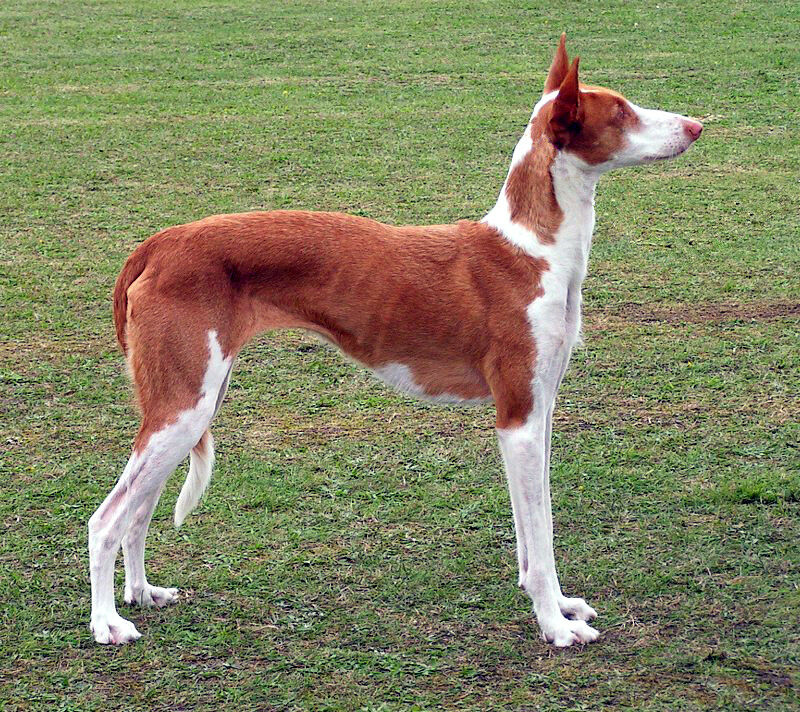
The Podenco Ibicenco(in Catalan and eivissenc) is a Spanish hunting dog, elegant and athletic, originally from the island of Ibiza. It combines enormous and always erect ears, amber eyes and a grey-haired grey body with an alert, sensitive and playful character.
Is the Power of Ibiza for you?
The Ibizan Poodle is not a dog for any household. It is a rabbit hunter made to run, jump and solve problems on its own, and that marks both its virtues and its demands.
It suits you if…
- You want a healthy, long-lived dog with few hereditary diseases.
- You like to exercise and you can give it a run and a game every day.
- You’re looking for a clean, almost odorless, easy-to-maintain companion.
- You value a dog that’s sensitive, affectionate and good with children and other dogs.
- You have a very fenced-in garden or safe areas to let it out.
Think about it if…
- You can’t guarantee high fences. He’s an escapist who jumps and climbs.
- You expect blind obedience; it is independent and somewhat stubborn.
- You have rabbits, ferrets or small cats: their prey instinct is strong.
- You spend a lot of hours outside and he can’t accompany you or discharge energy.
- You dream of walking always without a leash through open places without fences.
Character and temperament

Those who live with an Ibizan Podenco usually describe it with one word: clown. It is an alert, active and very expressive dog, who enjoys entertaining his family with impossible jumps and explosive runs around the room. Behind this theatrical vein is an intelligent hunter, able to solve situations by himself, and that same cunning is sometimes translated into a certain headache.
It ‘s a sensitive dog . It perceives the tone of voice and the mood of its people, and it comes down with the hard methods. Although it retains a point of independence inherited from generations of pack hunting, it is affectionate and strongly attached to its people. At rest it is quiet inside the house; it is enough that you have spent energy before. It’s not a dog that barks for barking, but it does warn when something seems odd, making it a good watchdog without becoming a burden.
On Stanley Coren’s obedience intelligence scale, he ranks in the middle, but that figure doesn’t do justice to his true talent: problem solving. He opens locks, jumps fences, and tinkers to get what he wants. Underestimating him is the most common mistake first-time owners make.
Coexistence: children, other pets, flat and loneliness
- With children: is a sensitive dog and generally very good with children. Its tolerance and playfulness make it a good family companion, always with the usual supervision and respect in any dog-child coexistence.
- With other dogs: is used to hunting in packs, usually gets along well with other dogs and enjoys canine company.
- With cats and small animals:‘s prey instinct is very strong; it can learn to live with a cat it has grown up with, but rabbits, ferrets, rodents or birds are a difficult temptation to control.
- On the floor: can live on the floor if provided with plenty of daily exercise. It is clean, quiet at home and manageable in size for its height. What it does not forgive is the lack of activity.
- Soledad: tolerates being left alone if he’s well exercised and has his routine, but he’s not a dog to spend long hours locked up and bored.
Education and training
Educating an Ibizan Powerhouse is an exercise in patience and positive reinforcement. It responds very well to training when using rewards, play, and short, motivational sessions, and is completely blocked by punishment methods: if you push it, it simply disconnects. The key is to make it believe that obeying is its idea.
Early socialization in puppies is highly recommended so that they can handle stimuli, noises and encounters with people and other animals well. It’s good to work from the beginning on two things that their nature makes difficult: the called(recall) and chase impulse control. Even with a good job, it must be assumed that in the face of a dam, your instinct can win over your voice; therefore, safety never depends on training alone but also on fences and enclosures.
Exercise and activity

This is the section that more adoption decisions should determine.The Podenco Ibicenco is a natural athlete who needs a good dose of daily exercise: three short walks at a human pace are not enough for him.He needs to run, smell and, above all, release his explosiveness.
He jumps incredible heights from a standing position, climbs and is a true escapist, so any free run has to take place in a fenced and safe area. Outside of a closed enclosure he cannot be trusted loose: as soon as he crosses an interesting trail, he can jump out and take time to return. Activities he loves and that channel his energy:
- Free racing in enclosed and secure areas, where he can sprint at pleasure.
- Lure coursing(bait racing), a discipline in which the race shines.
- Smell games and tracking, combining physical and mental exercise.
- Long walks and hiking, always with the leash or long well controlled.
Care: fur and hygiene
There are two varieties of hair: the lisa , please .(short), which is the most common, and the it’s tough.(wire), somewhat rougher and abundant.
A weekly brushing is enough to remove dead hair and keep the coat healthy; the hard hair variety appreciates a somewhat more frequent brushing. It’s a clean dog with practically no body odor. Bathing should be occasional, only when you get really dirty, so as not to dry out your skin. As in any breed, it is advisable to take care of the basic routine: check and clean their large ears, check the length of their nails and maintain good dental hygiene. Its short hair and low-fat skin make it sensitive to cold, so in winter it will appreciate shelter and shelter.
Foodstuffs
The Podenco Ibicenco is a skinny dog by nature, with marked bones and athletic silhouette; its elongated figure should not be confused with excessive thinness.
Due to their deep breast construction, the usual precautions should be applied in dogs of this type: Split food into two servings a day and avoid strenuous exercise just before and after meals. Always keep fresh water available, monitor your body condition – your ribs should be felt without protruding – and adjust your rations according to your energy expenditure. Any change in diet is best done gradually.
Health and life expectancy
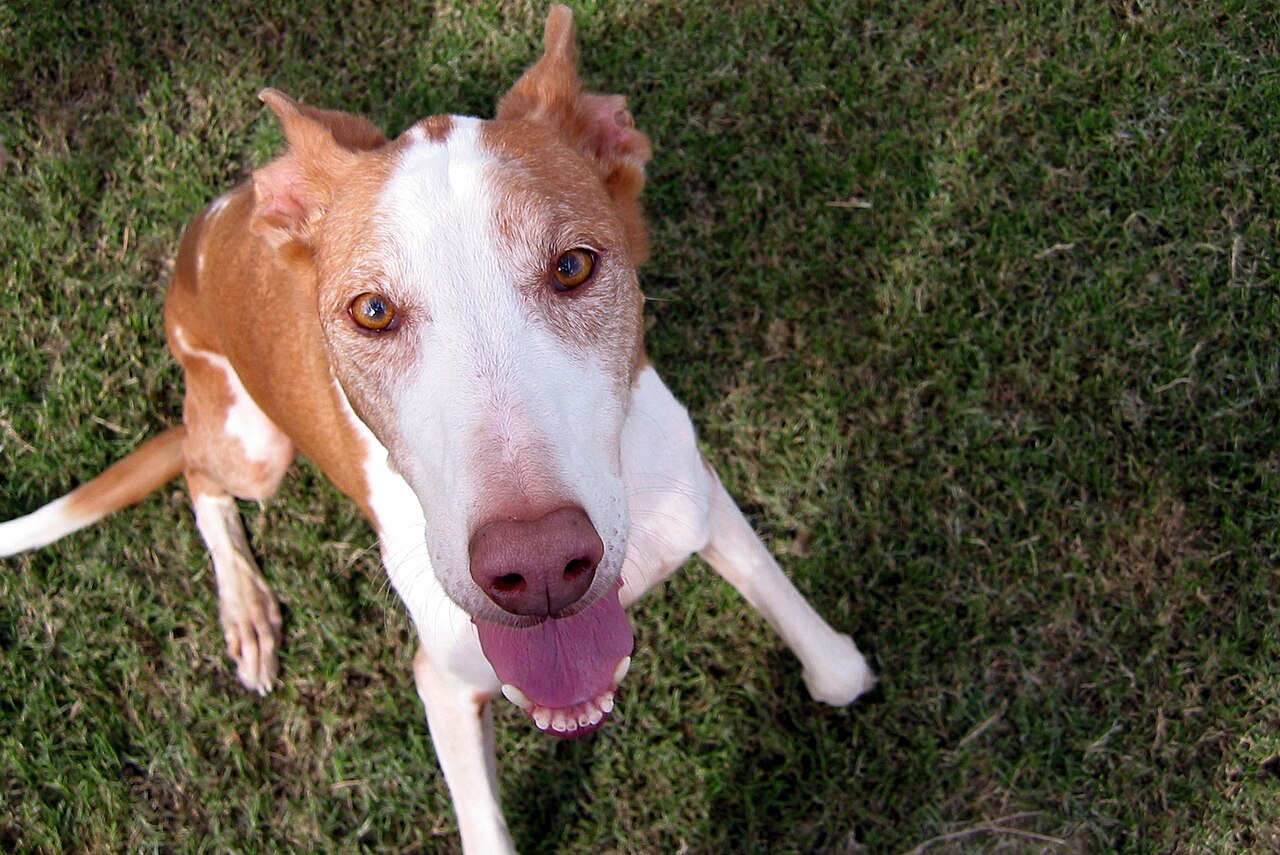
One of the great strengths of the breed is its robustness. As a good Podenco type dog, the Ibicenco rarely suffers from hereditary diseases and enjoys an enviable overall health.
Among the minor conditions attributed to him are seizures and allergies. In much rarer cases, axonal dystrophy, cataracts, retinal dysplasia, and deafness may occur. Therefore, eye tests (CERF type) and hearing tests (BAER type) are recommended for breeding dogs. There is one important clinical detail that every owner should know and discuss with their veterinarian: The power of the Ibicenco is sensitive to anesthesia with barbiturates, something to keep in mind before any intervention. With regular veterinary checkups, vaccination, deworming and an active life, it is a dog that usually gives little scare.
Physical appearance
The Podenco Ibicenco is the living image of functional elegance. Slim and athletic in shape, it moves with an elastic trot that covers a lot of ground. Despite its graceful air, it has good bone and is a resistant and rustic dog.
Its most distinctive feature is the ears: large, broad at the base and always erect, very mobile, which frame a long, thin head. The neck is long and slender; the eyes, of a striking amber color, conveys an alert and intelligent expression. The nose, ears, eyelid edge, and pads have a characteristic fleshy or light brown hue, rather than the usual black in other breeds.
As for the mantle, it is presented in the smooth and hard hair varieties, in red (lionate) and white colors, either each separately or combined in beautiful bicolors. About the size, it ‘s the biggest of the bunch: the males measure approximately 60 to 72 cm at the withers and the females between 57 and 67 cm, with weights ranging from 20 to 29 kg, the males being significantly larger than the females.
Origin and history
The Podenco Ibicenco takes its name from the island of Ibiza, in the Balearic Islands, where it has been bred for centuries as a hunting dog, especially rabbit.
For a long time it was attributed, like all puddles, a legendary origin in ancient Egypt: Their resemblance to the dogs depicted in pharaonic reliefs fueled the idea of a millennial lineage that arrived from the eastern Mediterranean. However, modern genetic studies s have nuanced that romantic theory: DNA analysis indicates that the breed was formed relatively recently from other European hunting breeds, and that it is no more “primitive” than most of them. Within its group, the Ibicenco shares type and function with breeds such as the Pharaoh Hound, the Etna Cirneco, the Portuguese Podengo or the Canarian Podenco, and is the largest of them all. The Federación Cinológica Internacional places him among the primitive type dogs. The American Kennel Club fully recognized it in 1979.
Curiosities
- King of the vertical jump. is capable of jumping to amazing heights from a standing position, without a runway, an ability that allows it to hunt through vegetation and requires very high fences.
- He hunts with three senses. Unlike hares that hunt only by sight, the Ibicenco combines sight, hearing and smell, and works on any type of terrain.
- Shoals of females. In traditional hunting, mostly female packs are formed, because the female is considered a better hunter.
- Flesh color, not black. Clear nose, eyelids and pads give it that recognizable “Egyptian dog” look.
- A curious belief. According to writer Norman Lewis, it was considered bad luck on the island to sacrifice a dog that was no longer wanted; instead, it was released elsewhere on the island for adoption.
If you’re attracted to this canine because of its blend of elegance, energy and health, you may be interested in other related breeds, whether primitive hunters or fast hares. Check out the Pharaoh Hound, its closest relative; the curious and also primitive Basenji; or two purebred runners like the Greyhound and the Whippet, who share with the ibex that passion for racing.
Frequently asked questions about the Ibiza Powerhouse
Is the Ibizan Podenco a good family dog?
Yes. It is a sensitive, affectionate dog and, in general, very good with children and other dogs. It fits well in active families that can give it the daily exercise it needs and that assume its independent character.
How much exercise do you need a day?
He’s an athlete who needs to run and recharge every day, not just short walks.
Can you walk loose without a leash?
It has a strong prey instinct and is an escapist that jumps and climbs; outside a fenced enclosure it can go out after a trail and take a long time to come back.
Is it easy to educate?
He is intelligent but independent and somewhat stubborn, responds very well to positive reinforcement, rewards and short sessions, and completely rejects methods of punishment.
How long does an Ibizan Podenco live?
Their life expectancy is about 12 to 14 years, and they are a healthy breed with few hereditary diseases, which contributes to their good longevity.
Do you need a lot of hair care?
Both the smooth-haired and the hard-haired variety require little maintenance – a weekly brushing, occasional bathing, and basic hygiene of ears, nails, and teeth.
Does he adapt to living in a flat?
Yes, as long as you get enough daily exercise. Inside the house, it is quiet and clean; what is worse is boredom and lack of activity, not the space itself.
Is there something important to tell the vet?
Yes: the Podenco Ibicenco is sensitive to anesthesia with barbiturates, a detail to be taken into account before any intervention.