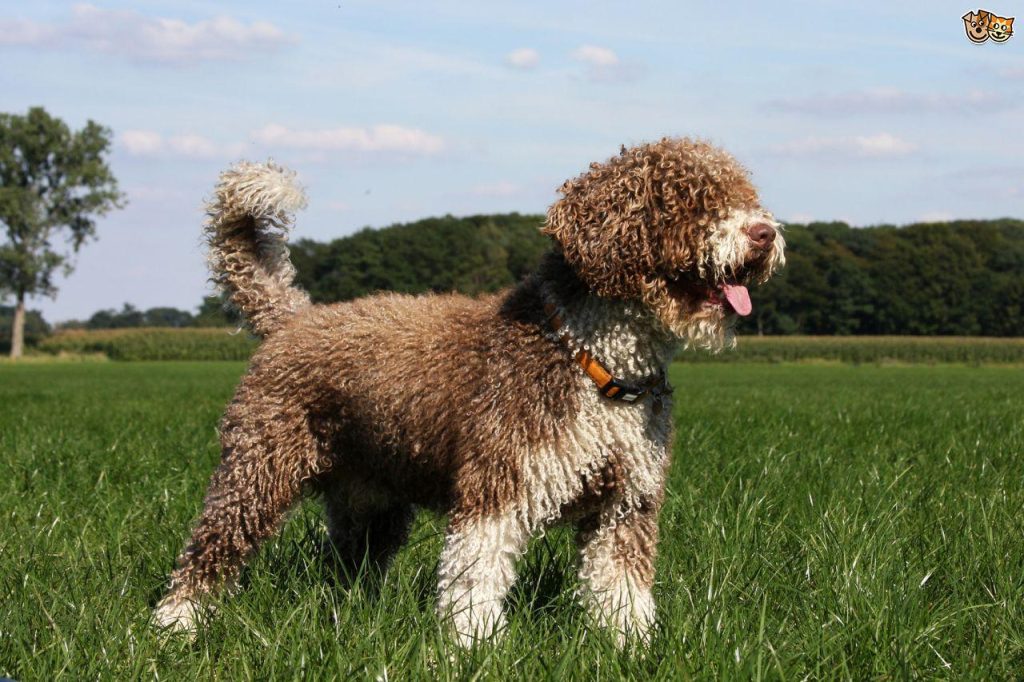
The Cantabrian water dog is one of Spain’s lesser-known canine jewels: a water dog native to the Cantabrian coast, curly-coated and impervious, bred for centuries to work side by side with fishermen. Smart, cheerful, tireless in the water and deeply attached to his family, today he is above all an excellent companion. In this guide, you’ll find everything you need to know before you move in with him.
Is the Cantabrian Water Dog for you?
Before you fall in love with its curly face, be honest: the Cantabrian Water Dog is a working dog with a lot of energy and needs for activity and grooming that do not fit into any home.
It’s a good fit if…
- You like the outdoors and you can give him plenty of daily exercise.
- You live near the sea, rivers or lakes and you’d enjoy swimming together.
- You want a dog that’s smart and very trainable for sports or payroll.
- You’re looking for a close-knit, sociable, balanced family partner.
- You don’t mind brushing and trimming a curly coat regularly.
Maybe it’s not your breed if…
- You lead a sedentary life or spend many hours away from home.
- You want a zero grooming dog with no hair maintenance.
- You’re looking for an easy-to-find specimen. It’s a very rare breed.
- You’re not attracted to mentally stimulating an active, awake dog.
- It bothers you that the dog gets wet and dirty working or playing.
Character and temperament
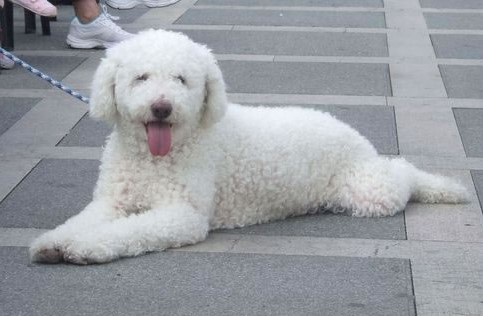
The Cantabrian Water Dog has an unusual combination: it is both calm at home and a whirlwind when it comes to work. Relaxed and serene in appearance, it transforms as soon as it enters a chore or approaches the water, showing a contagious vivacity and enthusiasm.
By temperament, the standard especially values courage, willingness to work, liveliness and, above all, enjoyment of water. Shyness and aggressiveness are considered defects and are not inherent in the race: A good specimen is sociable, balanced and self-confident. That stability, coupled with its strong attachment to humans, is what has made it an excellent companion dog today, as well as the tireless port worker it was for centuries.
Coexistence: children, other pets, flat and loneliness
It is a dog designed to live in close contact with its people. With children it is usually patient and playful, as long as the coexistence is supervised and its rest times are respected.
As for the floor, its medium-small size and its quiet character inside make it viable, provided it meets your daily exercise need: Without that exhaust valve, an active dog gets frustrated. It also does not do well with the extended loneliness; bred to always work alongside people, it prefers to accompany and can suffer if left for many hours alone and without stimulation. It is, in short, a dog for present and active families.
Education and training
Few breeds are so grateful for training. The Cantabrian Water Dog is alert, attentive and willing to collaborate, with remarkable ease in assimilating orders and work routines. It responds wonderfully to positive reinforcement, short, varied sessions, and games that combine obedience and charging. Its historical work aboard – carrying cables, catching fish, transmitting messages between ships – demonstrates the extent to which it is capable of learning complex tasks.
Early socialization with different people, dogs, and environments is the best investment for consolidating that balanced character. For his intelligence, he’s grateful to go beyond basic obedience: Canine sports, olfactory work, agility or, of course, water exercises allow you to expend your head and body at once. A mentally stimulated Cantabrian Water Dog is a calm and happy dog.
Exercise and activity
There are no shortcuts here: We’re dealing with a working dog with a high energy level. He needs several daily outings, long walks and opportunities to run, play and, if possible, swimming, which is his star activity. Water is not for him a summer whim, but an almost instinctive need: An exceptional swimmer and diver, he finds in it the best way to release energy without punishing the joints.
In addition to physical exercise, you may want to give your child mental challenges: smart toys, collectibles and search games, or little tasks that mimic your old job. A well-supplied individual is balanced and quiet at home; a bored, spending-free individual may become restless or develop annoying behaviors. Thinking about daily activity is, with this breed, an essential part of care.
Care: fur and hygiene
The mantle of the Cantabrian Water Dog is its mark of identity and also its main demand for care. It is a curly all over the body hair, with thick curls and the same length in the head and ears as in the rest, with a abundant undercoat and a waterproof external and internal layer that protected it from the cold of the Cantabrian.
To keep it manageable and loose the most practical thing is to wear it rather short and work it regularly: unplugging, trimming and checking sensitive areas. It doesn’t comb like a straight hair. Pay special attention to the ears– as a good water dog, it is advisable to dry and monitor them after baths to prevent otitis – and to the skin, which is thin and flexible. Proper baths and good drying of the curl complete the routine.
Foodstuffs
There is no “special” diet for the breed beyond common sense: a complete and balanced diet, adjusted to its medium-small size, its age and, above all, its high energy expenditure.
Divide your food into two portions, control your weight – excess weight affects your joints and performance – and always keep fresh water available, especially after exercise. Any dietary changes should be made gradually, and it is best to adjust the amount and type of food with your veterinarian, who knows your dog’s characteristics.
Health and life expectancy
The Cantabrian Water Dog comes from a ancestral and rural population, selected for centuries for its functionality in a harsh environment, which has historically favored resistant dogs. However, since it is a very rare and recently recognized breed, there are no large health studies or official longevity figures published; out of caution, we avoid giving unverified data.
As a guideline, similar-sized water dogs usually enjoy a long life if well cared for. In practice, the most relevant care is that of any water dog: monitoring of the ears for moisture, skin and coat care, weight control and periodic veterinary checks, in addition to vaccination and deworming schedule. Working with a responsible breeder who takes care of the genetic diversity of this small population is the best guarantee of future health.
Physical appearance
It is a harmonious and well proportioned dog, medium-sized with a tendency to small, well slumped and muscular, which transmits agility without losing rusticity.
- Height at the cross: males 42 to 45 cm; females 40 to 43 cm.
- Peso: males 15 to 17 kg; females 12 to 14 kg.
- Pelo: curly all over the body, thick, with abundant undercoat and waterproof layers.
- Color: white, truffled, black or brown lips and eyelids; may be depigmented or spotted.
This lighter silhouette and lower elevation is precisely what distinguishes it from its relative, the Spanish Water Dog: when both shared registration, most Cantabrian specimens were outside the Spanish standard for their smaller size, a weighty argument to recognize them as their own breed.
Origin and history

The Cantabrian Water Dog is a ancestral canine population from the north of the Iberian Peninsula, with origins that seem to be shared with those of the Barbet. Its social, cultural and historical roots in the villages of the Cantabrian Sea are enormous, especially along the coast of Cantabria, with presence also in eastern Asturias and western Biscay. Genetic studies consider it the oldest water dog population on the peninsula and, along with the Barbet, one of the oldest in the world.
For generations, his life was spent aboard trainer ships and on docks: It picked up fish that fell into the water or escaped from nets, was able to detect shoals of surface fish, carried the cables between boats or to the dock for mooring, transmitted messages between boats, monitored docked fishermen, cleared holds and even assisted shipwrecked people in storms. Since the middle of the 20th century, new fishing technologies have diminished its prominence and boarded dogs have become rare, although they remained numerous in ports as companion dogs.
A census by the Government of Cantabria counted 1,216 specimens in February 2009, and finally, on March 22, 2011, the Breeds Committee of the Ministry of the Environment listed it as an independent autochthonous breed, officially separating it from the Spanish Water Dog.
Curiosities
- Lifeguard with four legs: was launched into the sea to rescue shipwrecked people and drive them to shore during storms.
- Fish detector: was able to locate schools of fish swimming close to the surface, a very valuable aid to fishermen.
- Among the oldest in the world: genetics places it, along with the Barbet, among the oldest existing water dog populations.
- A race young and very old at the same time: officially recognized only in 2011, but with centuries of history behind it.
- Born diver: not only does nothing; it dives with ease, something uncommon in the canine world.
Related breeds
If you are attracted to the Cantabrian Water Dog, you will probably enjoy meeting other water dogs and reclaimers with an aquatic vocation. We recommend that you take a look at the Caniche (Poodle)– genetic relative of water dogs – , the impressive Terranova, great swimmer and lifeguard, and two water collectors par excellence, the Labrador Retriever and the Golden Retriever.
Frequently asked questions about the Cantabrian Water Dog
Is the Cantabrian Water Dog an officially recognized breed?
It was listed as an independent indigenous breed by the Breeds Committee of the Ministry of the Environment of Spain on 22 March 2011. It is not recognized by the International Cinological Federation (FCI), so it is a national breed in the process of consolidation, different from the Spanish Water Dog, in which it was previously included.
What color is the Cantabrian Water Dog?
The standard describes the white coat, with truffle, black or brown lips and eyelids and skin that may appear depigmented or spotted.
Is he a good family dog with kids?
Yes. It is an intelligent, cheerful and very attached to its people dog, with good character for coexistence. It enjoys shared activity and usually gets along well with children as long as the relationship is supervised and the dog has its daily exercise covered. Shyness and aggressiveness are not typical of the breed.
How much exercise do you need?
It is a working dog accustomed to fishing, with high energy. It needs long walks, play and, if possible, swimming or gainful employment. Without sufficient physical and mental activity, it can become bored and develop undesirable behaviors.
Is it hard to take care of your hair?
Its coat is curly and impermeable, with abundant undercoat, tends to become flabby in plates or cords if it grows too much. To keep it loose it is best to wear it rather short and brush/cut regularly.
Can you have it on one floor?
Yes, as long as he’s guaranteed plenty of daily exercise. He’s medium-sized with a tendency to small, quiet at home when he’s well spent, but he’s not a dog for a sedentary life or for spending long hours alone without stimulation.
How is it different from the Spanish Water Dog?
Genetic studies place it as a population of its own, as close to the Spanish Water Dog as the Barbet and the Caniche, and in fact as the oldest water dog population on the peninsula.
Do you like water and swim well?
He’s the essence of the breed: an extraordinary swimmer and diver, bred for centuries to work in and out of the water on the Cantabrian coast.