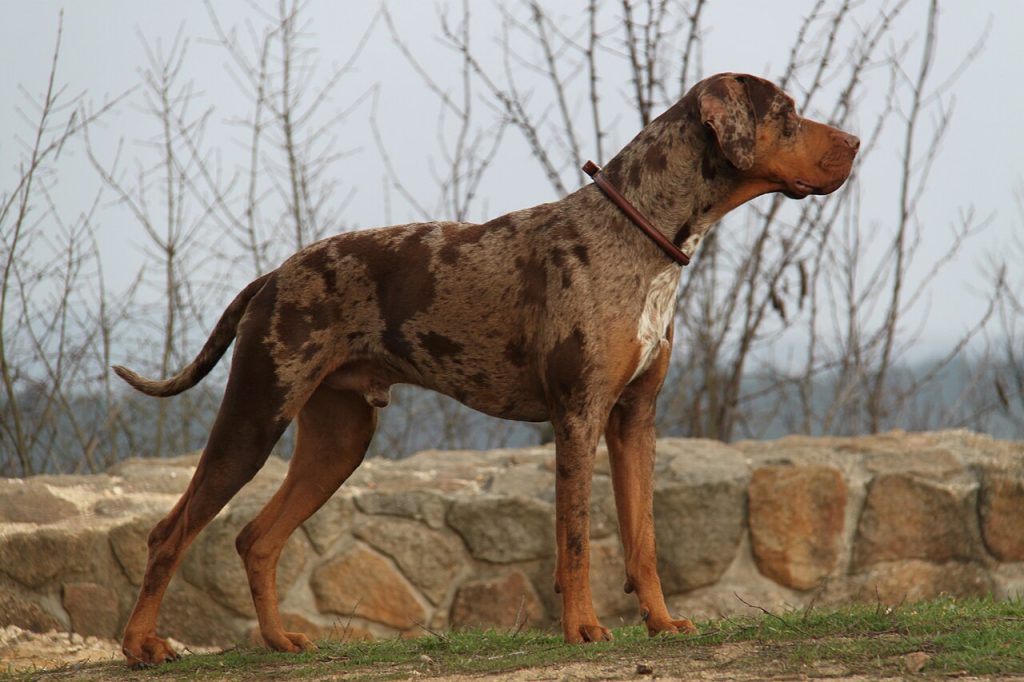
The Leopard dog of Catahoula(Louisiana Catahoula Leopard Dog) is the only official dog of the state of Louisiana and one of the most unique and spectacular working canines in North America. Famous for its spotted leopard-like coat and its eerie blue or two-colored eyes, it is a versatile, hardworking dog that is deeply loyal to its family. It’s not a pet for just anyone: Behind that beauty is a farm dog with centuries of instinct that needs a steady hand, plenty of exercise and purpose.
Is the Leopard Dog of Catahoula for you?
Before you fall in love with their look, be honest: The Catahoula Leopard Dog is a high-octane working dog, bred for generations to hunt wild boars in swamps and drive cattle. It shines with active and experienced owners, and frustrates those looking for a quiet couch dog. Here’s the straightforward summary.
In favour .
- Versatile and versatile dog: hunting, herding, guarding and tracking.
- Smart and very dedicated to his owner’s work.
- A natural keeper, brave and watchful.
- Low-maintenance short coat.
- Rustic, hardy and adapted to extreme climates.
- Loyal and protective of his family.
Against
- Very high exercise needs; not suitable for sedentary life.
- Independent and stubborn – not a breed for beginners.
- Strong hunting instinct and territoriality.
- He can be dominant with other dogs.
- Distrustful of strangers; demands intense socialization.
- Risk of deafness/visual problems at irresponsible merle x merle crossings.
Character and temperament

The Catahoula Leopard Dog is, first and foremost, a dog of character. Self-confident, alert, and strong-willed, it was molded to make decisions on its own as it faced a wild boar or pressured cattle, and that independence is still very much present in today’s domestic dog. He ‘s not a submissive dog who obeys just to please . He needs to understand why he’s doing things and respect who’s leading him.
To his family he is deeply loyal, affectionate and often surprisingly sensitive. He forms intense bonds and enjoys participating in everything his people do. That devotion turns into a very strong protective instinct: He is a serious guardian who warns of anything new and remains reserved, even suspicious, of strangers. It doesn’t bark on a whim, but when it does, you should pay attention.
It is also an intense, vigilant dog with almost inexhaustible energy. Bored or without a job to do, it channels that intensity in a destructive way. The happy Catahoula Leopard Dog is the one with a daily purpose, a consistent owner and clear boundaries from puppyhood.
Coexistence: children, other pets, flat and loneliness
Within its family, the Catahoula Leopard Dog is usually tolerant and protective of children, especially if it grows up alongside them. However, due to its size, strength and energy, it is advisable to always supervise the game with the smallest and teach children to respect the dog.
With other dogs, it’s complicated. It is a dominant or territorial breed, especially among individuals of the same sex, so introductions should be done calmly and socialization should begin early. Their high hunting instinct also makes cats and small animals a challenge: Many well-socialized Catahoulas live with them, but never trust a dog with such a predatory instinct.
On the floor, let’s be clear: it’s not its natural habitat. It tolerates loneliness much worse than other breeds and a Catahoula that spends hours alone and locked up gets bored, frustrated and lazy. It fits much better in a house with fenced-in land, with a present and active family that integrates it into its daily life.
Education and training

Training a Catahoula Leopard Dog is both rewarding and demanding. He’s very smart and he learns fast, but his independence means he won’t do something just because you ask him to. You need motivation, consistency, and a leader you can trust. Positive reinforcement, short and varied sessions and a clear routine work much better than toughness, which with this breed is often counterproductive and damages the bond.
Socialization is the most important pillar. From puppyhood he must know people, dogs, noises, environments and different situations so that his natural distrust does not lead to fear or reactivity. A well socialized Catahoula is safe and balanced; one isolated can become overly suspicious.
It is good to establish rules from the first day and keep them. This race tests the limits and respects who is fair but firm. If you give him structure, training and mental work, you will have a brilliant companion; if you let him decide, he will take the lead of the house.
Exercise and activity
There’s no margin here: the Catahoula Leopard Dog is a very high-energy dog that needs intense daily exercise. We’re talking about a minimum of one to two hours of real physical activity, more mental stimulation, every day of the year. A quiet walk around the block doesn’t even serve as a snack.
He loves activities that combine body and mind: long walks and runs, hiking, tracking games, recovery of objects, agility, canicross or herding and hunting tasks if you have access to them.
The key is to give it a purpose. A Catahoula Leopard Dog whose body and mind are satisfied is a calm and pleasant dog at home. Without that exhaust valve, its energy turns into furniture bites, digging, leakage and barking. It’s not a bad dog: it’s a working dog that lacks work.
Care: fur and hygiene
In the maintenance section, the Leopard Dog of Catahoula is grateful. Its coat is short or of medium length, of a single layer, smooth and glued to the body, which translates into a moderate moult and very little hairdressing work. A weekly brushing to remove the dead hair and distribute the natural fat of the skin is enough most of the year.
Bathrooms are reserved for when you really get dirty, which with a field dog can be often. The rest of the care is the usual: checking and cleaning your ears to prevent infection, trimming your nails if they don’t wear out on their own with activity, and maintaining dental hygiene with regular brushing. After the field days, it is advisable to inspect the skin and pads for ticks, spikes or wounds.
Foodstuffs
As a muscular, active and medium-sized dog, the Catahoula Leopard Dog needs a high-quality diet, rich in protein and adjusted to its huge energy expenditure. A working or very active specimen burns much more than a sedentary dog, so the ration must be adapted to its actual level of activity, age and physical condition to keep it fibrous and not overweight.
Ideally, food should be divided into two daily servings instead of one, a recommended practice in deep-breasted dogs to reduce the risk of digestive discomfort, and avoid strenuous exercise just before and after eating. Fresh water is always available, especially if you work or exercise in the heat. If you have any questions about quantities, type of diet or supplements, it is best to consult your veterinarian.
Health and life expectancy
The Catahoula Leopard Dog is, in general, a rustic and robust dog, the result of generations of selection for its ability to work and not for aesthetics.
When two merle specimens are crossed, part of the litter is born ‘double merle’, with an excess of white and a high risk of deafness (single or bilateral) and serious eye defects, including blindness. That’s why responsible breeders never cross merle with merle. Choosing a puppy from a serious breed, one that controls the hearing and vision of its breeders, is the best guarantee of health.
In addition to this, it is advisable to monitor hip dysplasia, typical of athletic breeds of its size, and keep up-to-date with veterinary checks, deworming and vaccination.
Physical appearance

The Catahoula Leopard Dog is a medium-sized, athletic and muscular dog, with a rectangular silhouette body somewhat longer than high. It imparts power and agility in equal parts: It’s built to move fast and tirelessly through rough terrain. Males measure approximately 56-66 cm at the withers and females between 51-61 cm, with a weight usually ranging, depending on the specimen and sex, between 16-43 kg.
The head is broad and strong, with a powerful and slightly sharp snout, muscular neck, and medium-inserted ears that fall together. The tail is long and curved. But what really distinguishes the breed is its coat: a short or medium coat, of one layer, appearing in a multitude of patterns and colours. The most iconic is the merle – blue or red – that creates the speckled leopard-like shape that gives the breed its name. Deep colours are preferred and predominantly white coat is discouraged. Add to this her unforgettable look: eyes that may be blue, brown, amber or green, often one of each color or with several shades within the same iris.
Origin and history
The Catahoula Leopard Dog takes its name from Catahoula Parish, Louisiana, where it was forged as an all-terrain farm dog. Although their exact origins are debated, the most widespread theory places the beginning of their lineage in the mid-18th century, when French settlers crossed local dogs with Beauceron-type dogs brought from Europe. Other versions add the contribution of dogs brought with the Spanish explorers and native dogs of the continent, from whom they would have inherited part of their rusticity and mottled appearance.
Regardless of the mixture, the result was a multifunctional dog perfect for the harsh life of the American Southeast: it hunted bears, cougars, and, above all, wild boars in the swamps, drove cattle, and guarded property.
The official recognition came late but with honors. On July 9, 1979, Governor Edwin Edwards signed legislation declaring the Louisiana Catahoula Leopard Dog the official dog of the state of Louisiana, in recognition of its historical significance. The United Kennel Club recognized it on January 1, 1995 with that name, and in 1996 the American Kennel Club incorporated it into its Foundation Stock Service. Both records give it a herding dog designation, although its tradition is eminently hunting.
Curiosities
- It’s been the official dog of the state of Louisiana since 1979, an honor very few races hold.
- The name “leopard” does not come from any feline kinship, but from its mottled leopard type produced by the merle gene.
- It has a unique way of grazing: the AKC describes how it creates a “dog fence” surrounding the herd so that its owner can manage it within that circle.
- Their “crystal” or two-colored eyes are so distinctive that they have fueled all sorts of local legends in Louisiana.
- In addition to hunting and herding, it has been used as a tracking dog and in search and rescue duties.
- It was on the verge of extinction in the mid-20th century, until several passionate breeders rescued and consolidated the breed.
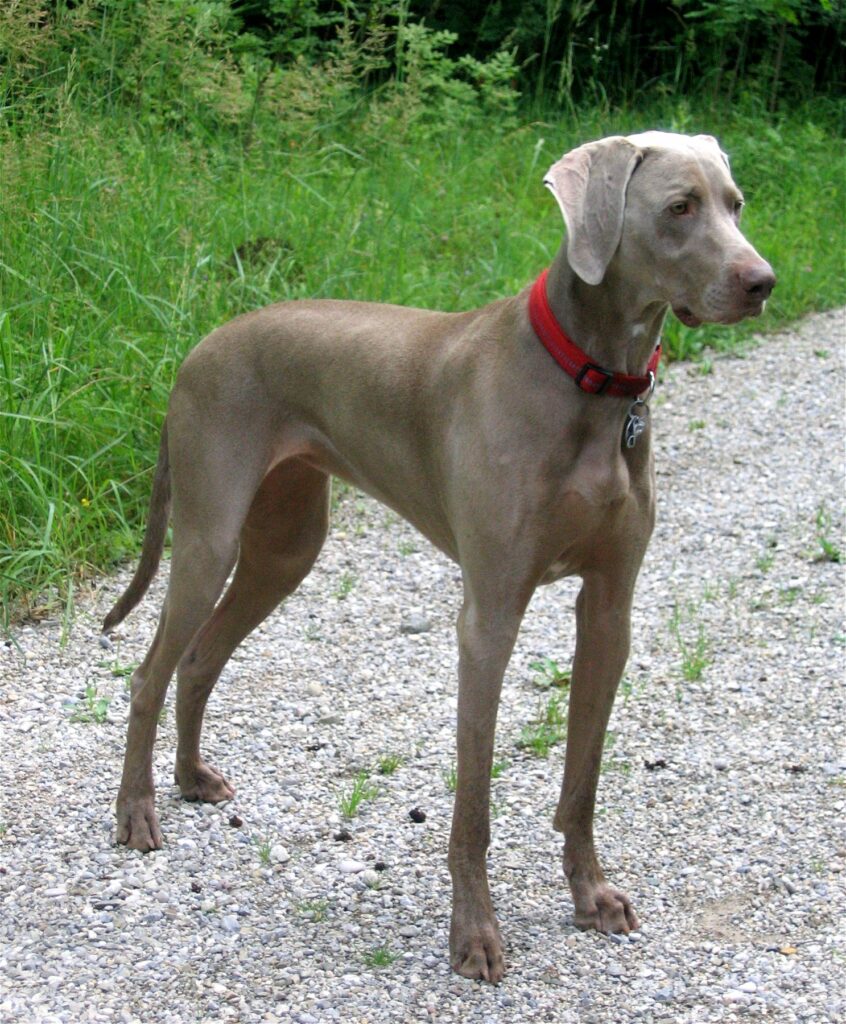
If you are attracted to the profile of the Catahoula Leopard Dog but want to compare yourself to other energetic and intelligent working breeds before deciding, take a look at the Pastor Australiano, another merle-coated herding dog; the tireless Border Collie, a reference in intelligence and obedience; the athletic hunter Arm of Weimar; or the flashy and athletic Dálmata.
Frequently Asked Questions about the Catahoula Leopard Dog
Is the Leopard Dog of Catahoula an aggressive dog?
It is not an aggressive dog by nature, but it is independent, territorial and very protective of its family and territory. With strangers it is usually reserved or suspicious, which makes it an excellent natural guardian. Early, extensive and constant socialization is what makes the difference between a balanced dog and another overly suspicious.
How long does a Catahoula Leopard Dog live?
Its life expectancy is around 10 to 14 years. It is a rustic breed and not prone to problems if it comes from a responsible breed; the main hereditary risks are concentrated in deafness and eye defects linked to the crossing of two merle specimens.
Can he live in a flat?
It is not their ideal environment. The Catahoula Leopard Dog is a very energetic working dog that needs space, intense exercise and a mental task. It can adapt to a floor only if its family guarantees it several hours of daily outdoor activity, but it fits much better in a house with fenced terrain.
Why do many people have blue eyes or two different colors?
The merle gene, responsible for its mottled coat, can also lighten the iris and give blue, amber, green or even one eye of each color (heterochromia), as well as ‘crystal’ eyes with blue and brown sectors in the same iris.
Is it a good breed for someone with no experience?
Honestly, it is not the best first breed. Its independent character, its strong instinct and its need for a consistent leader require experience and perseverance. A very involved first-time owner, with time and advice, can achieve this, but whoever is looking for an easy and compliant dog should look at other breeds.
Do you get along with children and other animals?
With the children of his own family he is usually loyal and tolerant, especially if he grows up with them, although for energy and size it is advisable to supervise the game with the smallest.
How much exercise do you need a day?
At least one to two hours a day of actual physical exercise, in addition to mental stimulation. Long walks, running, tracking games, dog sports or herding tasks come as a marvel. A bored and unspent Catahoula becomes destructive and vocal.
Do you lose a lot of hair?
Its coat is short or medium and single-layered, so moulting is moderate and maintenance, simple.