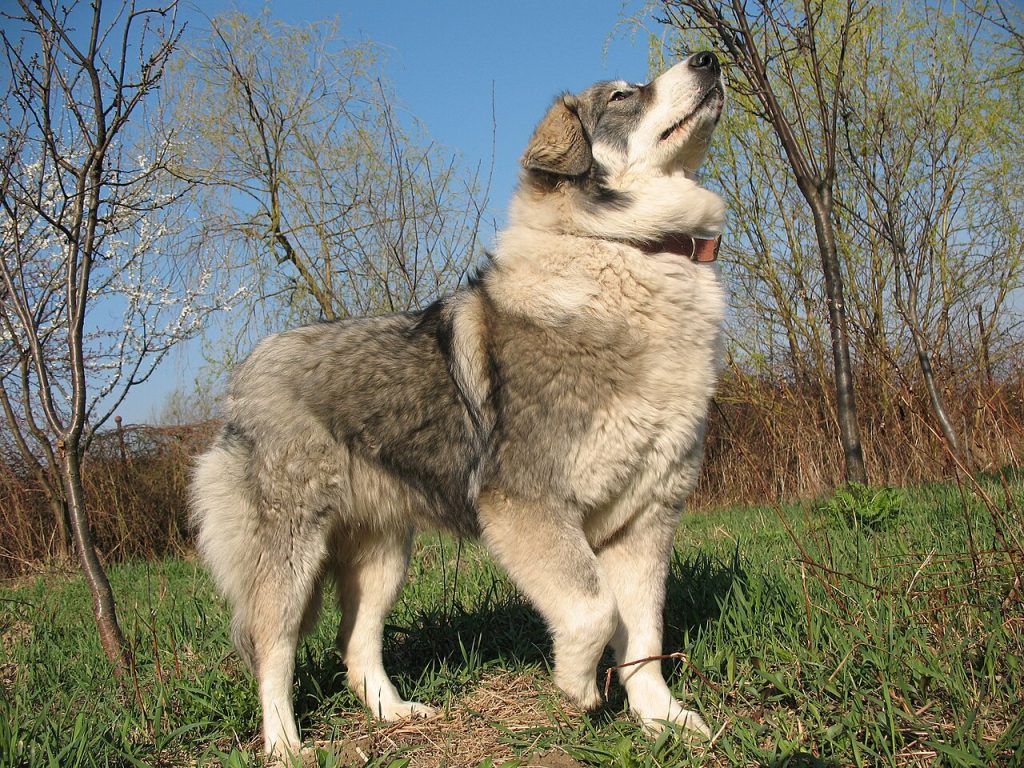
The Romanian Shepherd of the Carpathians is a large, sober cattle guard dog with unwavering loyalty, forged over centuries in the Carpathian mountains to protect herds from wolves and bears. Balanced, courageous and surprisingly calm at home, the Carpathian Romanian Shepherd is a born keeper who asks for space, a judgmental owner and early socialization to show his best.
Is the Roman Shepherd of the Carpathians for you?

Before you fall in love with its wolf-like demeanor and serene look, be honest: the Carpathian Romanian Shepherd is a working dog with a very marked guarding instinct. It shines in the hands of those who understand a large, independent and protective dog, and is complicated in homes that are looking for a submissive and low-maintenance companion.
It suits you if…
- You live in a house with a fenced-in plot, ideally in a rural or semi-rural setting.
- You’re looking for a reliable, deterrent guard, not a show dog.
- You have experience or are willing to work on socialization and education consistently.
- You value a quiet dog at home, balanced and very attached to his family.
- You can offer him daily exercise and tolerate him changing his hair and barking as a warning.
Maybe it’s not your breed if…
- You live in a small apartment or without easy access to open spaces.
- It’s your first dog and you don’t want to invest time in driving and socializing.
- You get a lot of unknown visitors and you’re bothered by a territorial dog.
- You’re annoyed by the hair, the mud, or a dog that decides for himself sometimes.
- You spend a lot of hours out and you can’t keep her company or activity.
Character and temperament
The FCI standard portrays it with few but very accurate words: a self-confident, courageous, obedient and loyal dog, wary of strangers but without unjustified aggression. That phrase sums up its essence well. The Carpathian Romanian Shepherd is not a nervous or explosive dog; it is a cold-headed guard dog that observes, evaluates and only reacts when it perceives a real threat.
On a day-to-day basis, he surprises with his balance. Inside the house he tends to be quiet, almost phlegmatic, able to spend hours lying watch from behind bars. That calm coexists with constant surveillance: any strange noise or presence sets it on alert and prompts it to warn you with a deep, deep bark. It is a dog that think for yourself., direct heritage of centuries defending herds away from the shepherd, and that independence must be understood more as a criterion than as stubbornness.
With his family he is deeply affectionate and loyal, although without the sticky effusivity of other breeds. He forms strong bonds, protects his own instinctively and is wary of the unknown until he checks that there is no danger.
Coexistence: children, other pets, flat and loneliness

With children: within his own family is usually patient, protective and caring, especially with the little ones of the household whom he considers “his flock”.
With other pets:‘s origin as a livestock guardian plays in its favor. Raised alongside other animals, it protects them as part of its pack. With unknown dogs of the same sex it can show territoriality, so introductions should be done calmly and on neutral ground; early socialization is the best investment.
On the floor: is not his type. It is a dog designed to guard large areas, and a small space frustrates it. It works much better with a house and fenced plot. If it lives in a city, it needs plenty of daily exercise and a lot of presence, and yet its tendency to bark as a warning can clash with community life.
In the face of loneliness: tolerates lonely mice better than highly dependent breeds, but it is not designed to spend the whole day isolated. If it is bored or feels neglected, it can become barking or destructive. It is, above all, a dog that wants a task and a family to take care of.
Education and training
Educating a Carpathian Romanian Shepherd is an exercise in patience and consistency rather than imposition. It is intelligent and learns quickly, but its instinct pushes it to make decisions on its own, so it does not respond well to harsh methods or mechanical repetition.
The absolute priority during the first year is socializing: gradually and positively exposing him to people, other dogs, noises, environments and different situations. It depends on this that his guardian instinct is channeled into a safe and discriminating dog, and not into an overly suspicious one.
It is not the ideal breed for a first-time owner who seeks obedience in competition. It is a magnificent companion for those who value an autonomous and reliable dog, with whom you work a relationship of trust. Short, varied and motivating sessions give better results than long and monotonous ones.
Exercise and activity
Despite its size, it is not a dog of overwhelming energy or endless runs. Its activity level is medium: it needs daily quality movement – long walks, exploration of the terrain, time outdoors – but it also values the hours of vigilant calm.
He enjoys hiking in the countryside or the mountains, where he can use his sense of smell and observe the environment. Mental work – search games, simple routines, exploring new areas – balances him as well as the physical. During the puppy and growth stage, avoid high-impact exercise(jumping, stairs, forced running) is suitable to protect joints that are still forming.
Care: fur and hygiene
The Carpathian Romanian Shepherd wears a two layers designed to withstand the harsh climate of the mountain: a rough, straight outer hair, of medium-long length, and a dense inner coat that insulates from cold and moisture.
Maintenance is reasonable for a dog this size. A brushed a couple times a week. is enough to keep the mantle healthy and knot-free most of the year. The exception is the seasonal mowing, in spring and autumn, when it sheds abundant undercoat and should be brushed almost daily to remove dead hair. He doesn ‘t need frequent baths . His cloak stays fairly clean and too much bathing dries out his skin.
As with any breed, complete hygiene with regular ear checks, cutting or wearing of nails, and dental care.
Foodstuffs
It needs a complete and balanced diet, adjusted to its large size, age and activity level. The most sensible thing is to choose a quality food designed for large breeds and divide the daily ration into two meals instead of one, a recommended practice in dogs with deep chest to reduce the risk of gastric dilation-torsion.
During growth, puppies of large breeds require a controlled supply of energy, calcium and phosphorus: too much speeds up development and can damage joints. Follow the manufacturer’s or veterinarian’s instructions and do not overfeed. In adults, monitoring weight is key: Overweight hurts your hips and knees. Water always fresh and available, especially after exercise.
Health and life expectancy
The Carpathian Romanian Shepherd is a rustic and robust breed, the result of centuries of natural selection under demanding conditions and with little forced selective breeding.
Like any large dog, it is advisable to pay attention to the problems specific to its size, especially hip and elbow dysplasia, and gastric dilation-torsion(swelling), which affects deep chest breeds. Choosing responsible breeders who perform joint tests, maintain an adequate weight, dose the puppy’s exercise and divide the food into several servings are the best preventive measures. Regular veterinary checks and daily vaccination and disinfection complete the picture.
Physical appearance

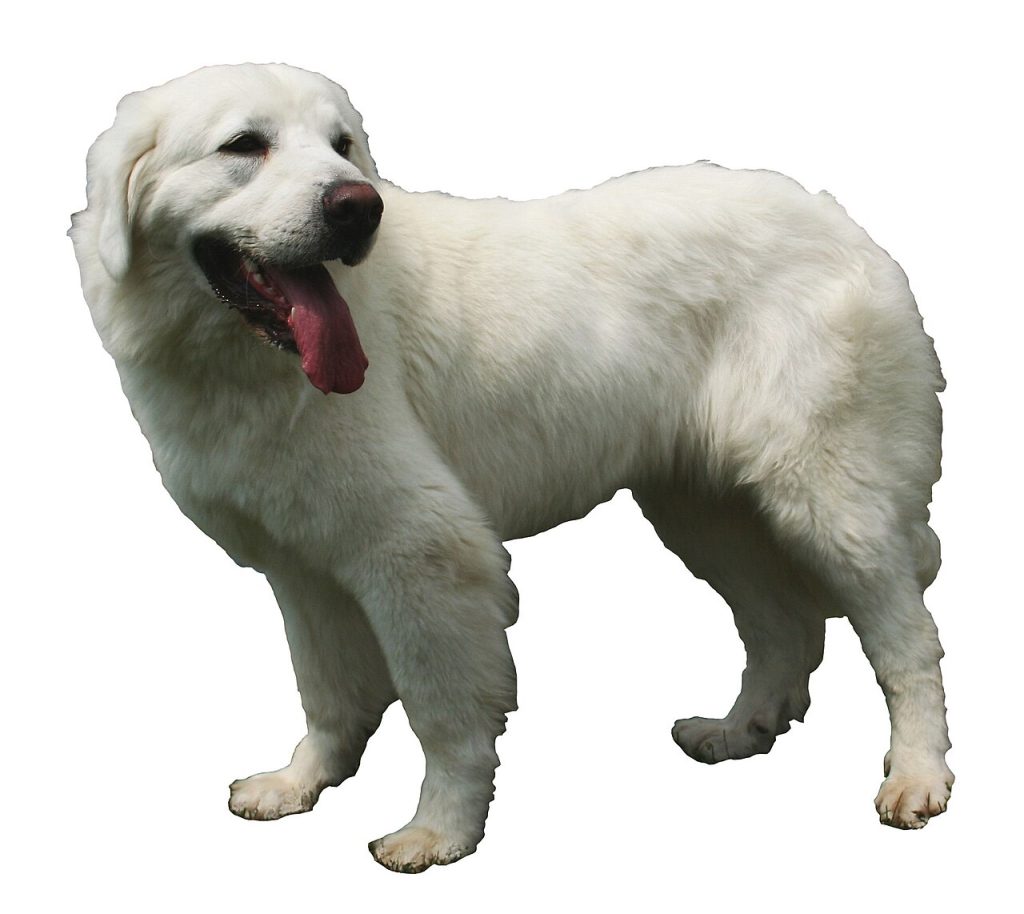
It is a large, sturdy and well muscled dog, rectangular in build and vigorous in appearance but never heavy. It transmits strength and agility in equal parts, with a sober image reminiscent of that of a large and calm wolf.
The head is moderately wide, with a slightly marked stop and middle-inserted ears that fall glued to the cheeks. The expression is serene and attentive.
The most characteristic feature is its coating. The background color ranges from lion-grey to wolf gray (“lupizat”), usually with a darker shading or coat and often white areas on the chest and extremities.
Origin and history
The Carpathian Romanian Shepherd has its roots in the mountains of the Carpathians, in Romania, where for centuries it accompanied shepherds as a cattle guard dog. His function was clear and hard: protect herds from the region’s big predators – wolves and bears – in rough terrain and harsh climate. There was no standard: Each herder raised their dogs according to their needs, and it was that continuous work that shaped a resilient, balanced and efficient breed.
The formal recognition came late. In 1979, a canine exhibition in Bucharest brought together 18 Carpatin-type specimens, a first step towards setting the standard. In 1998 a group of enthusiasts founded the breed club, later renamed as the National Carpathian Shepherd Breeders Club, which identified in the area of Rucăr (Argeș County) the ancestors of the current specimens. Following a conference in Bistrița in 2003, the FCI approved its provisional approval on 6 July 2005 in Buenos Aires, and the the final one came in 2015 recognition (FCI standard no. 350). It is also listed in the American Kennel Club’s Foundation Stock Service as “Romanian Carpathian Shepherd”.
Curiosities
- Its original Romanian name is Ciobănesc Românesc Carpatin, which literally translates as “Romanian shepherd dog of the Carpathians”.
- It is one of the three Romanian shepherd breeds recognized by the FCI, along with the Mioritic and the Bucovina; each developed in a different region of the country.
- Despite its role as a guardian against wolves and bears, its lion-grey undercoat gives it a reasonable resemblance to the wolf itself.
- It is not an attack dog, but a deterrent: its strategy is to warn, impose presence and defend only if the threat is real.
- It is still a relatively rare breed outside Romania, making it a rare choice even among mountain dog lovers.
If you are attracted to this large, serene, protective guardian profile, you may be interested in comparing the Carpathian Romanian Shepherd to other breeds of similar cut. Take a look at Pastor Alemán, another versatile and protective shepherd; the imposing San Bernardo, quintessential mountain giant; the rustic Mastín, a large guardian; and the noble Terranova, another colossus of balanced character.
Frequently Asked Questions About the Carpathian Romanian Shepherd
Is the Carpathian Romanian Shepherd a good family dog?
Yes, within its profile. It is deeply loyal and protective of its family nucleus, patient and calm inside the house, and is usually careful with the children in the house. It is not, however, a dog for everyone: it needs an owner with experience, space and time, because its guardian instinct and independence require socialization and management from a puppy.
How tall and how much does a Carpathian Roman Shepherd weigh?
It is a large dog. According to the FCI standard, males measure between 65 and 73 cm at the withers (ideal 70 cm) and females between 60 and 68 cm (ideal 65 cm).
Is the Carpathian Shepherd aggressive?
Not for nothing. The standard describes it as suspicious of strangers but without unwarranted aggression. It’s a serious watchdog that warns and discourages, not a nervous or reactive dog. With proper socialization, it distinguishes well between a normal visit and a real threat.
How long does a Carpathian Roman Shepherd live?
As a large mountain and country dog, its orientation life expectancy is around 12-14 years, a remarkable longevity for its size.
Does he adapt to living in a flat?
It is not its ideal environment. It is a dog bred to guard large areas in the mountains, so it functions much better in a house with a fenced plot. It can live in a city if it is guaranteed plenty of daily exercise and stimulation, but the lack of space and its tendency to bark as a warning make it unsuitable for small apartments.
Do you need a lot of exercise and skin care?
It needs good quality daily activity (long walks, exploration, mental work), although it is not a hyperactive dog of constant runs.
Do you get along with other dogs and pets?
With good early socialization it coexists without problems with the animals with which it is reared, as a result of its origin as a herd guardian.