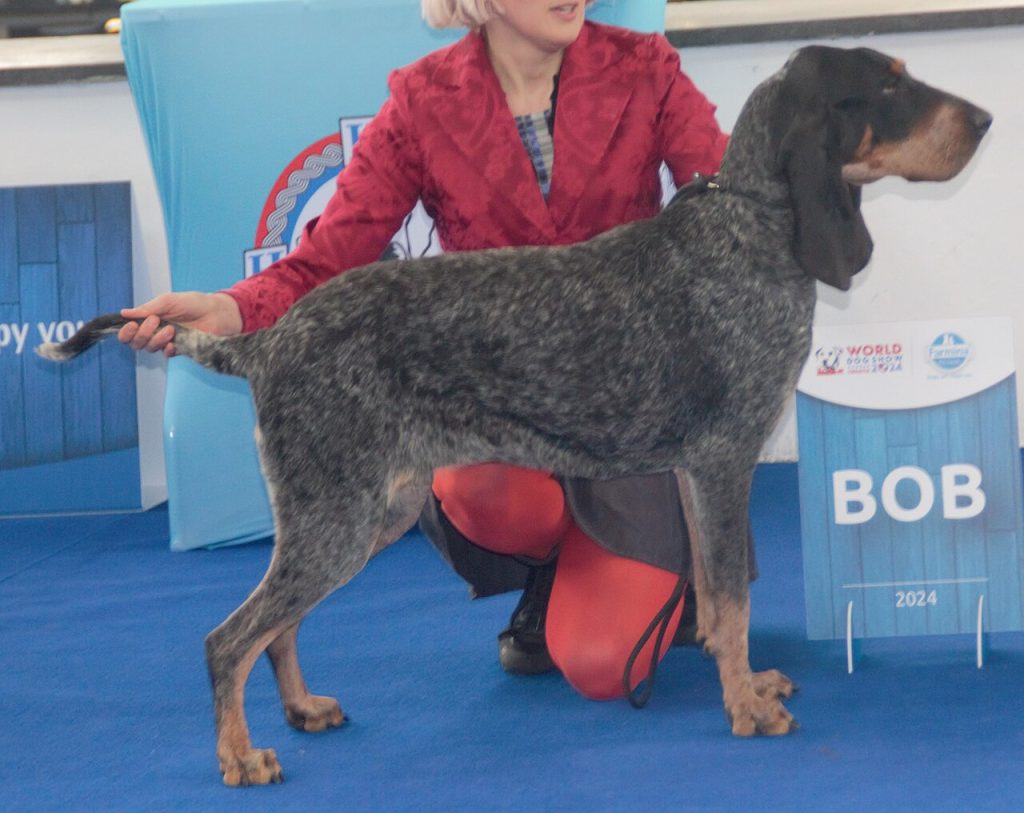
The The great blue hound of Gascony(in French, The Grand Bleu of Gascony) is one of the oldest and most stately hounds in France: a large pack dog with a deep voice and a prodigious sense of smell, with that characteristic white coat dotted with black that, viewed from afar, appears tinged with slate blue. Raised for centuries to track wolves, wild boars and deer, today it is still primarily a tracker with a calm and noble temperament, more thought for the countryside and life in a pack than for the living room of a house.
Is the Big Blue Hound of Gascony for you?

Before you fall in love with its elegant demeanor and serene look, you should be honest: the Gascony Blue Hound is a working dog with very marked needs. It fits wonderfully with hunters and very active rural families, and quite badly with whom to look for a couch mate for a small apartment. Here you have the honest summary.
In favour .
- Quiet, noble and balanced temperament within the house.
- Excellent with other dogs: sociable by herding vocation.
- Extraordinary sense of smell and great endurance for tracking work.
- Short hair with minimal maintenance.
- Rustic breed and generally very healthy.
- Deep and melodious voice, unmistakable.
Against
- He needs a lot of exercise and space; he suffers on floors.
- Independent and guided by smell: the call is its weak point.
- Strong hunting instinct: watch out for cats and small animals.
- He can howl loudly if he’s bored.
- Large size (up to 50 kg): eat and occupy accordingly.
- Uncommon outside hunting environments: difficult to find.
Character and temperament
Inside the house, the Great Blue Hound of Gascony is disconcerted by its calmness. The standards speak of a dog that must transmit “quiet strength and nobility”, and it is: calm, not barking without reason and kindly treatment.
It is a independent dog, used to making decisions at a distance from the hunter while following a trail. This autonomy makes it reliable in the field but less “sticky” than a retriever: it loves you, but does not live to please you every second.
Coexistence: children, other pets, flat and loneliness
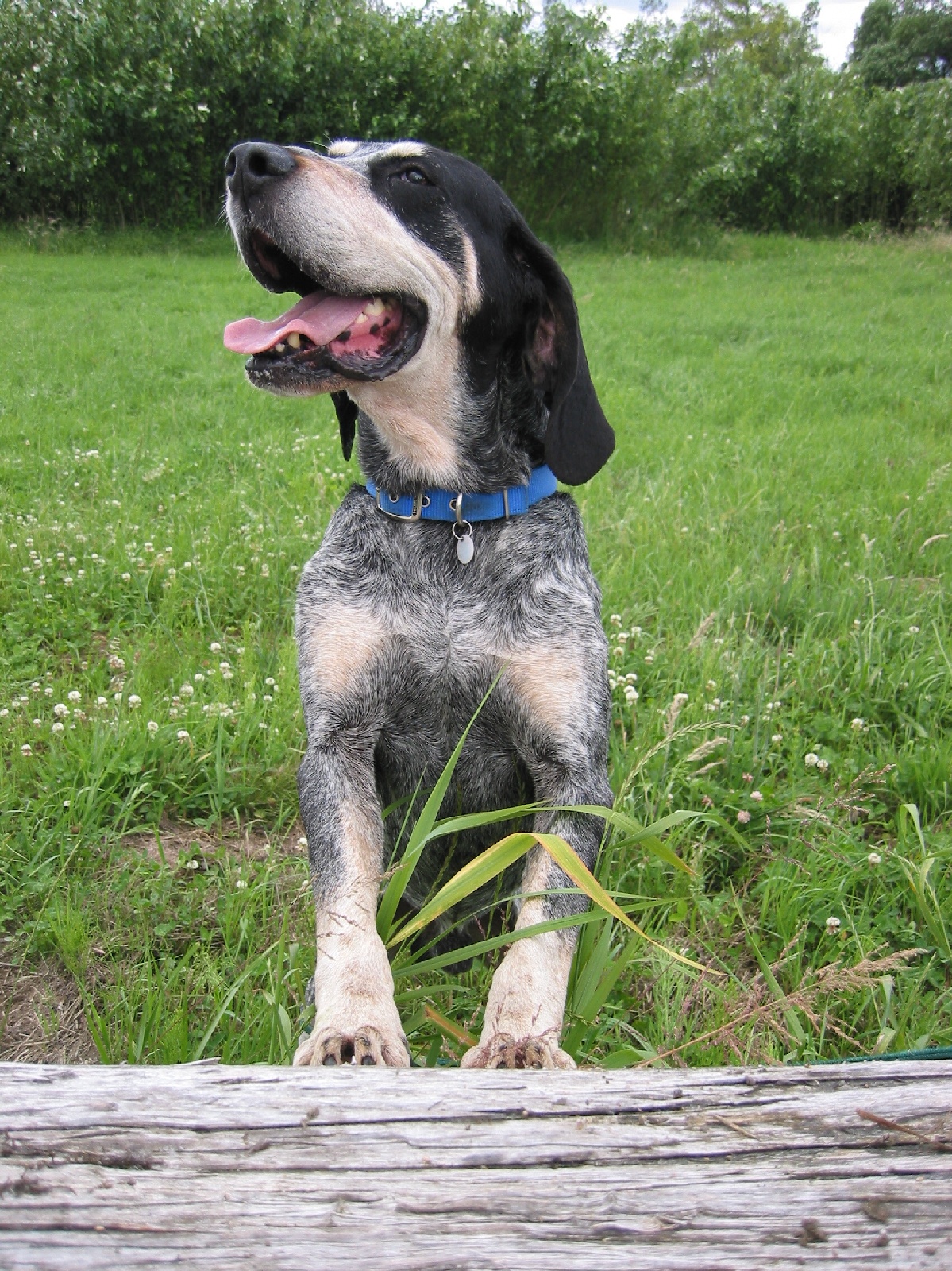
With children:‘s calm and tolerant nature makes it a good family companion, always with the logical supervision that a dog over 40 kg requires when playing with the smallest.
With other dogs: stands out here. Being a pack dog, the canine companion not only tolerates it, enjoys it; it coexists smoothly with other dogs and even prefers them.
With cats and small animals: caution, their tracking and chasing instincts can go off in front of a running cat, early socialization helps, but it doesn’t erase genetics.
Floor and solitude: two of its greatest challenges. It needs space and, above all, companionship and activity. A Gascony Blue Hound alone for many hours in a small apartment is an unhappy dog who probably expresses it by howling.
Education and training
Educating a greyhound is an exercise in humility and patience. The Great Blue Hound of Gascony is intelligent, but its intelligence is practical and olfactory, not blind obedience. When its nose catches an interesting trail, the rest of the world – including your voice – goes into the background.
It works well with positive reinforcement, short motivational sessions and a constant guide who doesn ‘t fall into punishment (counterproductive in a sensitive and noble race). called is the pending subject: dedicate time to it as a puppy and assume that, in open spaces without fences, the long leash is your best ally. Early socialization with people, environments, and other animals is essential for a balanced adult.
Exercise and activity
It is not a fast or explosive dog – in the field it is described as a rather slow and conscientious worker – but it has enormous stamina and has been bred to spend hours following a scent.
Mental exercise counts just as much as physical exercise. Crawling games, searching for hidden food, or any activity that puts your nose to work keeps you satisfied and avoids boredom. Without that expenditure, you have excess energy that often ends up in howling and destructive behavior.
Care: fur and hygiene

Her hair is short, dense and smooth, so a weekly brushing is enough to remove dead hair and keep it shiny.
The real point of concern is their long and sloping ears: they are not well ventilated, so they are prone to moisture and otitis, especially if the dog gets wet or works in the field. Check and clean them regularly.
Foodstuffs
Like all large, active dogs, the Gascony Blue Dog needs a quality diet tailored to its size, age, and activity level. A working dog that goes out hunting spends a lot more than one that lives a quiet family life, and the diet must reflect this to avoid both thinness and overweight.
It is a sensible measure in large and deep-breasted breeds to reduce the risk of gastric dilation-torsion, and helps not to leave you hungry. Avoid strenuous exercise right after eating and always have fresh water available.
Health and life expectancy
Good news: the Gascony Great Blue Hound is a rustic and healthy breed. It is not documented to have particularly frequent hereditary diseases or unusual health problems, which is logical in a dog forged by generations of selection based on real work and endurance.
This does not mean to be unconcerned. Like any large dog with drooping ears, ear infections must be watched, weight controlled and watched, out of the prudence of breeds of its size, for articulate health and gastric torsion risk. With good care, its life expectancy is around 10 to 12 years.
Physical appearance
The Gascony Great Blue Hound is a great and mighty. dog, the classic pack hound in its oldest version: long, stocky and muscular body, long legs, slightly bulbous head, long and sloping ears, and dangling lips that give it that characteristic hound expression.
The lifted goes from 65 to 72 cm at the withers (the females somewhat smaller) and the weight moves between about 36 and 50 kg. Its most recognizable feature is the mantle: white mottled black, which together produces that bluish gray or slate hue that gives the breed its name. It has black spots on both sides of the head, a white area at the top of the skull with a small black oval inside, and “eyebrow-like” fire marks over each eye. The ensemble conveys calm, strength and nobility.
Origin and history
The origins of the Great Blue Hound of Gascony are lost in the French Middle Ages. His ancestors were contemporaries of the legendary saint-Hubert hound and the ancient hound of southern England. Already in the 14th century, the Count of Foix kept a pack, and at the end of the 16th and beginning of the 17th century King Henry IV of France also kept his own. The present breed descends from that very ancient type of large hunting dog which is also the common ancestor of numerous hound breeds.
His influence on cynology is enormous. After the French Revolution it was used to revitalize the old saintongeois, giving rise to the gascon saintongeois, and is considered the direct ancestor of the American Bluetick Coonhound. He also participated in the creation of the British Dumfriesshire Hound; in fact, in Britain the native jasper-blue hounds are still called “frenchies” in his honor. It was formerly used for hunting wolves, wild boars and deer; today, when working, it is mainly used for hunting hares.
Curiosities
- In 1785, General Lafayette gave a pack of seven copies to George Washington, who compared his melodious voices to the bells of Moscow.
- Today there is more copies in the United States than in France, the breed’s country of origin.
- The Bluetick Coonhound, one of the most popular hunting breeds in the United States, is a direct descendant of this hound.
- The adjective «gran» does not refer so much to the size of the dog as to the category of pack intended for big game.
- His deep and loud howling is so distinctive that it’s as much a part of his identity as the color of his coat.
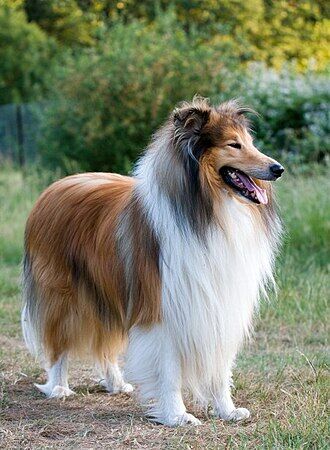
If you are attracted to this profile of noble and hardworking hound, you may be interested in other breeds of scent and trail with a similar character. You can compare the Gascony Blue Hound with the Bloodhound, the tracker par excellence; with the classic Basset Hound, a cousin with short legs and very long ears; with the popular and sociable Beagle; or with the elegant Collie if you are looking for a large-sized working dog.
Frequently asked questions about the Gascony Blue Hound
Is the Big Blue Hound of Gascony a good dog to live in a flat?
It’s not their ideal habitat. The Gascony Great Blue Hound is a large (65-72 cm and up to 50 kg) pack dog bred for centuries to hunt for hours in the open air. It needs a lot of space, long daily walks and, above all, the ability to use its sense of smell. On a small floor and without enough exercise, you tend to get bored, howl and gain weight. It can adapt to a house with a large garden and an active family, but it is not a breed designed for sedentary urban life.
Why is it called the “Great” Blue of Gascony if the color is not really blue?
The “blue” is an optical effect: the coat is white mottled with black and, when seen together, gives a bluish-grey or slate tint.
Do you get along with children and other dogs?
With other dogs, very well: it is a pack dog by nature and enjoys canine company. With children it is usually tolerant and calm due to its noble and serene temperament, although due to its size and energy it is convenient to supervise the game with the smallest. With cats and other small animals you have to be careful: its very strong hunting instinct can be activated.
Is it easy to train?
It has remarkable practical intelligence, but it’s independent and highly olfactory, so it’s not the most obedient breed in the classical sense. When it picks up a trace, it can disconnect from commands. She responds well to positive reinforcement, short sessions, and patient, constant guidance. On-call recovery (“comes when I call”) is its weak point: in open areas it is advisable to keep it with a long strap.
How much exercise do you need a day?
Enough. It’s an endurance dog designed to work for hours following a trail. It needs at least one or two long walks a day and, if possible, free sniffing in safe environments. Without that physical and mental expense, it becomes frustrated. It’s not an explosive or fast dog, but a background dog: it prefers sustained jogging to short runs.
Do you have serious health problems?
It is a rustic and generally healthy breed; no particularly frequent hereditary diseases have been documented. Like all large dogs with long and fallen ears, it is advisable to watch the ears (otitis), control the weight and, as a precaution for large breeds, be attentive to the joints and the gastric torsion.
How much does it cost to keep her fur?
Very little. She has short, dense, smooth hair that hardly needs a weekly brushing to remove dead hair. Baths only when she gets really dirty. Maintenance focuses more on checking and cleaning her long ears and taking care of her nails and pads if she works or walks a lot in the field.
Is this a rare breed?
In Europe it is uncommon outside French hunting circles, but interestingly there are more specimens in the United States than in France. It arrived there very early: in 1785 General Lafayette gave a flock of seven specimens to George Washington, who compared their melodious voices to the bells of Moscow.