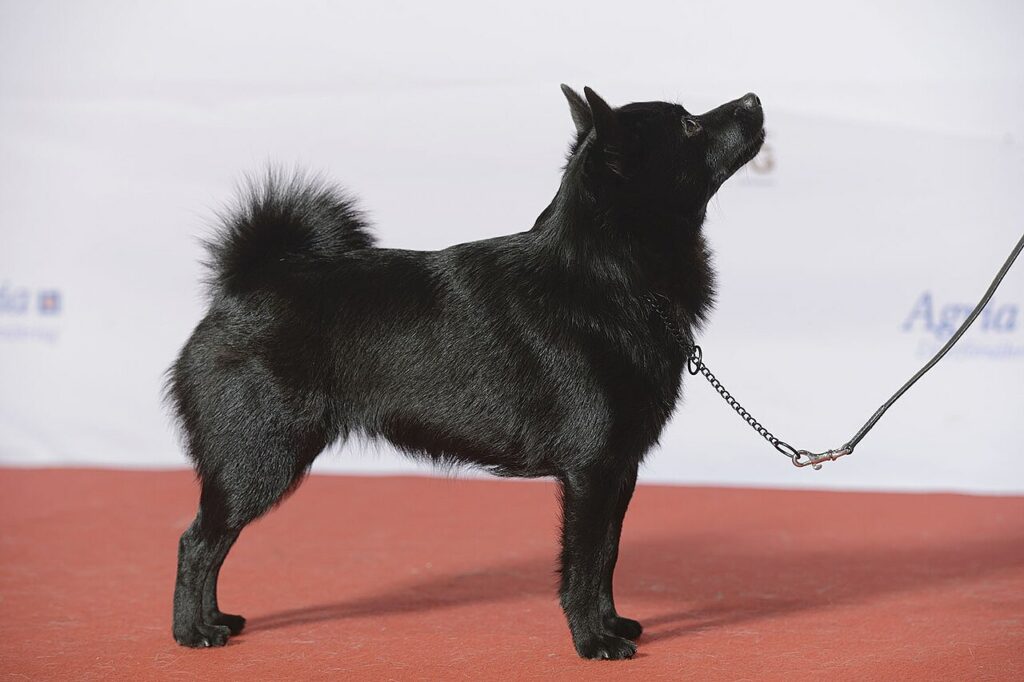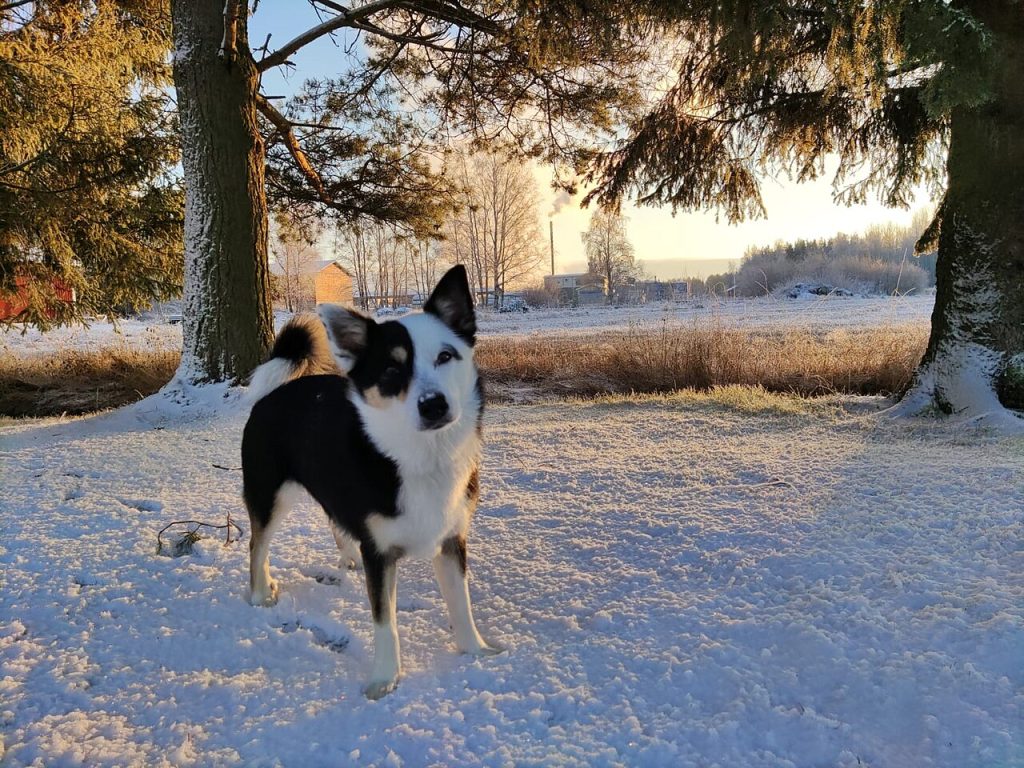
The Icelandic Shepherd(in Icelandic Islenskur fjárhundur and other) is the only breed of dog native to Iceland and one of the very few dogs whose ancient origin is proven by documents and archaeology. It is a small to medium-sized, cheerful, hardy and tremendously sociable Nordic spitz, bred for over a thousand years to herd sheep and horses in the harsh Icelandic landscape. If you’re looking for a loving, barking, energetic companion who wants to be with you at all hours, the Icelandic Shepherd deserves to be known.
Is the Icelandic Shepherd for you?
Before you fall in love with her fox face and her curled tail, you better be honest: The Icelandic Shepherd is a herding dog with a lot of energy and an almost physical need for company. It’s not an ornamental dog or an ideal candidate for someone who spends the day outdoors. In return, he is one of the most loyal, sweet, and adaptable companions there is. These boxes sum up where it shines and where it can give you war.

In favour .
- Cheerful, affectionate and very close to his family.
- Excellent with children and sociable with other dogs.
- Intelligent and eager to learn: easy to motivate.
- Handled size (9-14 kg) and very cold resistant.
- Healthy and long-lived, with a life expectancy of 12 to 15 years.
- Versatile working dog: shepherding, agility, obedience.
To be taken into account
- It barks quite a bit: it’s their natural way of warning and working.
- He needs daily exercise and mental stimulation; he soon gets bored.
- He suffers from loneliness: it is not good to spend hours alone.
- He loses hair, with two intense transplants a year.
- Rare breed outside the Nordic countries: low availability.
- His herding instinct can lead him to chase moving things.
Character and temperament
The Icelandic Shepherd is first and foremost a optimistic dog. His facial expression always seems smiling and that impression does not deceive: It is a balanced, curious and lively breed, without a trace of aggression or timidity. Icelandic breeders have for centuries selected dogs to work side by side with the shepherd, and that close bond has become the most defining trait of the breed’s character: He wants to be with you, participate in whatever you do and earn your approval.
It ‘s a alert and expressive dog . He barks easily, not out of nervousness but because barking was part of his job: warned of the coming of birds of prey that threatened the sheep and helped move the flock. That instinct is still alive, so you’ll have an enthusiastic watchdog to announce any news. It is not, however, a watchdog in the classic sense: He’s too friendly with strangers to intimidate anyone.
With his family he is affectionate to the bone, very tolerant and with remarkable patience. He is sensitive to the tone of voice and emotions of people, which makes him an attentive companion but also a dog that does not respond well to harsh methods. Treat him with kindness and calm firmness and you will have a dog that will do almost anything to please you.
Coexistence: children, other pets, flat and loneliness
With children: is one of its great virtues. The Icelandic Shepherd is patient, playful and robust, an ideal playmate for families with children. As with any dog, it is advisable to teach the little ones to respect their rest times and monitor first contacts, but their balanced temperament makes coexistence usually great.
With other pets:‘s sociable nature extends to other dogs, with whom it usually gets along very well. Being a herding dog and not a hunting dog, its predatory instinct towards cats or other small animals is moderate; raising it from puppyhood alongside them, coexistence is perfectly viable.
On the floor: by size could live in an apartment, but its energy and, above all, its tendency to bark are a factor to consider in a building with neighbors. It is perfectly happy in a flat as long as it gets the exercise and stimulation it needs and that it works on barking control from a puppy. Where it really enjoys is in a house with a garden or land.
In the face of loneliness: here is its most delicate point. The Icelandic Shepherd was bred to work glued to people and needs company. Spending many hours alone on a daily basis causes boredom, anxiety and barking, and can lead to destructive behaviors. It is a breed for homes where someone is present a good part of the day, or where walks, day nurseries or the company of another dog are organized.
Education and training
It is a intelligent, attentive and eager to please dog, a combination that makes it relatively easy to train for a constant owner. It learns quickly and genuinely enjoys work sessions, especially if you pose them as a game. It responds wonderfully to positive reinforcement: rewards, caresses and a cheerful voice. Coercive methods, on the other hand, block it and damage its confidence.
Two priorities since puppyhood. The first, the socializing: Although it is naturally friendly, early exposure to people, dogs, noise and diverse environments strengthens its balance. The second, the control of barking: since the barking comes on its own, it is advisable to teach it from the beginning a command to “be quiet” and not to reinforce the barking unintentionally with attention. It also helps to channel their shepherding instinct into permissible activities.
For his energy and head, the Icelandic Shepherd stands out in dog sports: agility, obedience, rally, flyball and, of course, herding.
Exercise and activity
This is an Icelandic Highland herding dog, able to move freely over rough terrain for hours. Translated into domestic life: it needs real daily exercise, not a short walk of commitment. It has at least an hour long activity spread over several outings, combining walking, running and play.
But just as important as physical exercise is the mental stimulation. An Icelandic Shepherd who just walks and doesn’t think gets bored; an Icelandic Shepherd who solves olfactory games, learns tricks or plays a sport comes home satisfied. Interactive toys, nose work and short training sessions are great allies in tiring that awake mind.
It is also an excellent outdoor adventure companion: hiking, hiking, running or simply exploring the countryside.
Care: fur and hygiene
The Icelandic Shepherd has a dense and climate-resistant double coat, in two varieties: short hair and long hair. Both are of reasonable maintenance but require consistency. A weekly brushing keeps the hair healthy and knot-free for almost the whole year; in the long hair variety it is advisable to brush a couple of times a week.

The big difference comes with the two seedlings per year, in spring and autumn, when the dog releases the undercoat intensely for a few weeks. In those seasons you will need to brush it daily to remove the dead hair and prevent it from ending up all over the house. Outside of moults, hair loss is moderate but constant: it is not a hypoallergenic breed.
The rest of the hygiene is the usual: bathing only when it is really dirty (its coat has some self-cleaning capacity), checking and cleaning of ears, trimming nails every few weeks and a good dental hygiene routine.
Foodstuffs
The Icelandic Shepherd has no exotic dietary needs: a complete and quality food suitable for its size, age and, above all, its activity level suits it well.
As a medium to small dog with an athletic build, watch your weight is suitable: Obesity overloads your joints and shortens your life. Measure the rations, control the rewards (very useful in training, but you have to deduct them from the daily total) and adjust the food according to your body condition. Divide your food into two servings a day and always have fresh water available, especially after exercise.
If you have any questions about the type of diet, quantities, or supplements, it is wise to consult your veterinarian, who will evaluate your dog’s specific needs.
Health and life expectancy
Overall, the Icelandic Shepherd is a rustic, healthy and long-lived dog, with a life expectancy of approximately 12 to 15 years. Its origin as a working breed in a demanding environment has favored a functional and resistant dog. That said, it is a breed that was on the brink of extinction and is today bred from a reduced genetic basis, so responsible breeding programs and genetic variety are especially important.
As with many breeds, there are some conditions to watch for, including orthopedic problems such as hypoplasia of the hip and elbow, as well as eye conditions such as cataracts and progressive retinal atrophy. A serious breeder performs the health tests recommended for breeders. With regular veterinary checkups, vaccination, deworming, good nutrition and adequate exercise, most of these dogs enjoy a long and active life.
Physical appearance
The Icelandic Shepherd is a small to medium-sized, muscular and well-proportioned nordic spitz, slightly longer than tall. The males measure around 45 cm high at the cross and the females a few centimeters shorter; the usual weight is between 9 and 14 kg.
The head is triangular in shape, with a somewhat bulbous skull, well-developed snout, and very expressive erect and mobile ears, reflecting its mood.
The coat, double and weather-resistant in texture, comes in two varieties, short and long, both with abundant undercoat. The range of colours is wide: Lionish tones ranging from almost white and cream to reddish brown, plus black, chocolate and gray. They almost always wear white markings, often extensive, and light specimens may wear a black mask on the face. A detail appreciated by the standard are the other, of circular cross-section on the rear legs.
Origin and history
Few races can boast of such a well-documented origin. The Icelandic Shepherd descends from dogs that the viking settlers brought to Iceland from 874 onwards, coming from the same ancestral stock that gave rise to the Norwegian Buhund and the Swedish Vallhund. For more than a millennium, isolated on the island, he specialized in gathering and driving sheep and horses through rugged terrain, becoming a key piece of Icelandic rural life.
Thanks to medieval trade, the “Icelandic dog” became known in Europe. It appears described already in 1492, the naturalist John Caius mentions it in 1570 and even William Shakespeare cites it in Enrique V, around 1599.

The story almost ended badly. By the end of 19th century, roundworm epidemics and other diseases wiped out more than 75% of the population, to the point that the importation of dogs to the island was banned. In the late 20th century, the breed was once again on the brink of extinction. Their salvation came thanks to the efforts of breeders inside and outside Iceland: the Icelandic Kennel Club was founded in 1969, in 1994 the Icelandic parliament (Alþingi) declared it the country’s part of the cultural heritage, and in 1996 an international cooperation was born to protect it.
The Federación Cinológica Internacional (FCI) was officially recognized as a breed in 1972, and the American Kennel Club recognized it in 2010.
Curiosities
- It’s the the only breed of dog native to Iceland, a national symbol protected by law since 1994.
- His barking isn’t a flaw: it was part of the job, warning of birds of prey s attacking the lambs.
- Breeders especially appreciate the other, of circular cross-section on the hind legs, a traditional trait of the breed.
- It is related to other Nordic spitz such as the Norwegian Buhund, the Swedish Vallhund and bears resemblance to the Shetland Shepherd and the Welsh Pembroke Corgi.
- It appears cited in classical European literature, no less than in a work by Shakespeare.
- It survived two near-extinction episodes; its existence today is the result of careful genetic rescue.
If you are attracted to the Icelandic Shepherd because of its cheerful nature, herding instinct, and its Nordic spitz type, you may be interested in other related breeds, such as the Welsh Pembroke Corgi, another small shepherd with Nordic roots; the Shepherd of Shetland, a similarly sized hairy shepherd; the Samoyedo, a white spitz bred for the cold; or the fast and intelligent Border Collie, another large herding dog.
Frequently Asked Questions About the Icelandic Shepherd
Does the Icelandic Shepherd bark a lot?
Barking was part of their herding job (they warned of birds of prey and helped move the flock), so they tend to announce anything new.
Is he a good dog for families with children?
Its patient, playful, and balanced nature, along with its manageable size and robust build, make it a great companion for children, always with the usual supervision and respect for the dog.
How much exercise do you need a day?
At least one hour of daily activity divided into several outings, combining walking, running and play, plus mental stimulation.
Can he live in a flat?
It can, thanks to its medium-small size, but there are two conditions: to cover its high need for exercise and to work on barking control so as not to disturb the neighbors.
How much hair does she let loose?
It has a double coat and loses hair moderately during the year, with two intense mouldings (spring and autumn) in which it releases a lot of undercoat.
How long does an Icelandic Shepherd live?
Its life expectancy is about 12 to 15 years. It is a rustic and long-lived breed; with good nutrition, exercise and regular veterinary checkups, it usually enjoys a long and active life.
Is it a rare breed or hard to find?
Yes, it is rare. It was twice close to extinction and today there are estimated to be only about 5,000 recorded in the world, concentrated mainly in the Nordic countries. Outside that area it may require patience and resort to specialized breeders.
Do you get along with other dogs and pets?
It is very sociable with other dogs and, being a herding dog and not a hunting dog, its instinct towards cats and small animals is moderate.