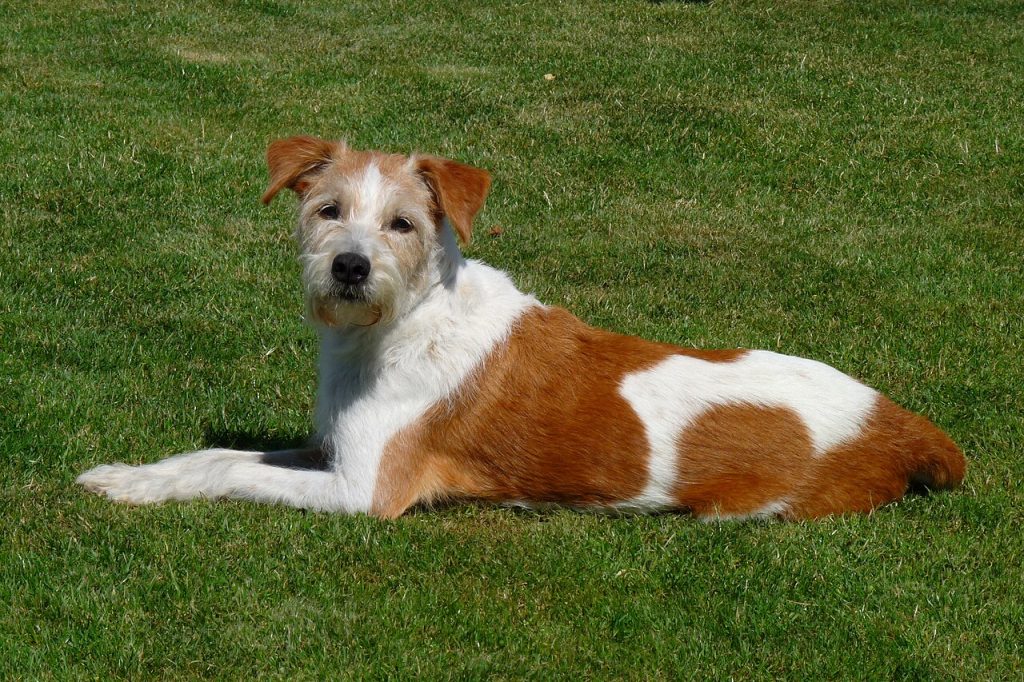
The Kromfohrländer is one of Germany’s most unusual and unknown companion breeds: a small-to-medium-sized, white-coated dog with brown spots, cheerful character and a loyalty to his family that strokes the purebred.
Is the Kromfohrländer for you?

The Kromfohrländer is not a dog for everyone, and that is precisely part of its charm. It was bred from the beginning as companion dog, not as a working, guard or sport dog, so its vital priority is to be with its people.
In favour .
- Very loyal, affectionate and devoted to his family.
- Manageable size (small to medium), comfortable on the floor with daily exercise.
- Balanced and pleasant temperament, not aggressive.
- Intelligent and sensitive: learns fast with good treatment.
- Healthy overall, without the extreme deformities of other races.
- Warning: bark at the unknown without being a compulsive barker.
To be taken into account
- Rare breed: hard to find, with waiting lists.
- Prolonged loneliness is bad for her; she needs company.
- Sensitive: does not tolerate harsh methods or stressful environments.
- Dense coat that requires regular brushing.
- You can be reserved with strangers until you gain confidence.
Character and temperament
If we had to sum up the Kromfohrländer in one word, it would be comrade. It is a very pleasant, loyal and affectionate dog of nature, which weaves a close bond with its family and wants to participate in everything that happens at home. It is not a distant or independent dog: its happiness comes from being close to its own.
He is alert, attentive and quite sensitive to the mood of the people around him. That sensitivity, which makes him a wonderful companion, also means he suffers from stress, screaming, and loneliness. With strangers you usually show something reserved at first: observes, evaluates and warns with barking, but is rarely an aggressive dog. Once someone enters your circle of trust, they become open and sociable.
It also retains a hunting dog point of its origins: it is curious, likes to trace with the nose and responds well to games that awaken its instinct.
Coexistence: children, other pets, flat and loneliness

With children:‘s gentle nature and manageable size make it a good family dog. It enjoys play and the company of the little ones as long as they learn to respect it. As with any dog, supervision and some basic rules of coexistence prevent scares.
With other pets: is well socialized from puppyhood, cohabits with other dogs without problems. With cats and small animals it is advisable to keep in mind its latent hunting instinct and introduce the presentations gradually and controlled.
On the floor: adapts perfectly to a floor. It is not a noisy or destructive dog by nature, as long as it has its daily dose of exercise and stimulation.
The Kromfohrländer is a companion dog, and prolonged loneliness can lead to anxiety, barking or unwanted behavior. It is not the ideal breed for homes where no one is around most of the day.
Education and training
Raising a Kromfohrländer is, in general, rewarding. It is intelligent, attentive and wants to please, a combination that greatly facilitates learning. It quickly learns home routines, calling and basic obedience exercises when dealing kindly and consistently.
The key lies in its sensitivity: it responds wonderfully to the positive reinforcement– rewards, cheerful voice, play – and closes in with harshness, screaming or punishment. A dog so attached to people is motivated above all to please and have fun with its guide, so short, varied and fun sessions give better results than mechanical repetition.
Early socialization is especially important in a breed somewhat reserved about the unknown. Exposing a puppy to people, dogs, noises and different environments, always in a positive way, makes him a safe and balanced adult.
Exercise and activity
The Kromfohrländer has a need for moderate and very reasonable exercise. With some 30 to 40 minutes daily of physical activity it covers the minimum, although it appreciates more movement and, above all, variety. It is not an extreme endurance athlete, but it is an agile, alert and eager dog.
He is comfortable with sniffing walks, seek-and-bring games, nose games and activities that combine body and head. For his intelligence, the mental stimulation is as important as the physical: a bored Kromfohrländer is an unhappy dog. Disciplines such as gentle level agility, tracking or playful obedience games fit very well with his profile.
Care: fur and hygiene

The Kromfohrländer’s coat is dense, with a soft undercoat, and the hair measures between 3 and 7 cm. There are two varieties: hard hair(Rauhaar), rough-textured and bearded, and straight hair(Glatthaar), soft and attached to the body. In both cases regular brushing – several times a week – keeps the coat clean, unknotted and in good condition, and helps control loose hair.
The hard-haired variety may need some punctual hair adjustment to preserve its characteristic appearance, while the plain hair is somewhat easier to maintain.
The rest of the hygiene is the usual for any dog: checking and cleaning the ears, monitoring the growth of the nails and taking care of dental hygiene with brushes or specific products.
Foodstuffs
As a small to medium-sized dog, the Kromfohrländer does not have high dietary requirements, but a complete and balanced diet, adapted to its age, weight and activity level, is recommended.
Control of the weight is important: A dog so attached to his family receives rewards and bites easily, and excess weight takes a toll on joints and overall health. Adjusting rations, distributing food in appropriate portions, and using head prizes (better if they are part of exercise and play) help keep you fit. Fresh, clean water should always be available.
Health and life expectancy
The Kromfohrländer is, as a whole, a fairly healthy breed. It does not have the extreme anatomical deformities of other breeds, which plays into its well-being and an active life into old age, something common in dogs of its size well cared for.
As with any breed with a genetic base from a few founding specimens, responsible breeding and selection of healthy breeders are key to maintaining their long-term health, which is why it is so important to go to serious breeders, linked to breed clubs, who work with health controls and ensure genetic diversity.
Beyond breed specificities, the health of a Kromfohrländer is based on the usual: regular veterinary checks, a daily schedule of vaccination and deworming, proper nutrition, correct weight and regular exercise.
Physical appearance
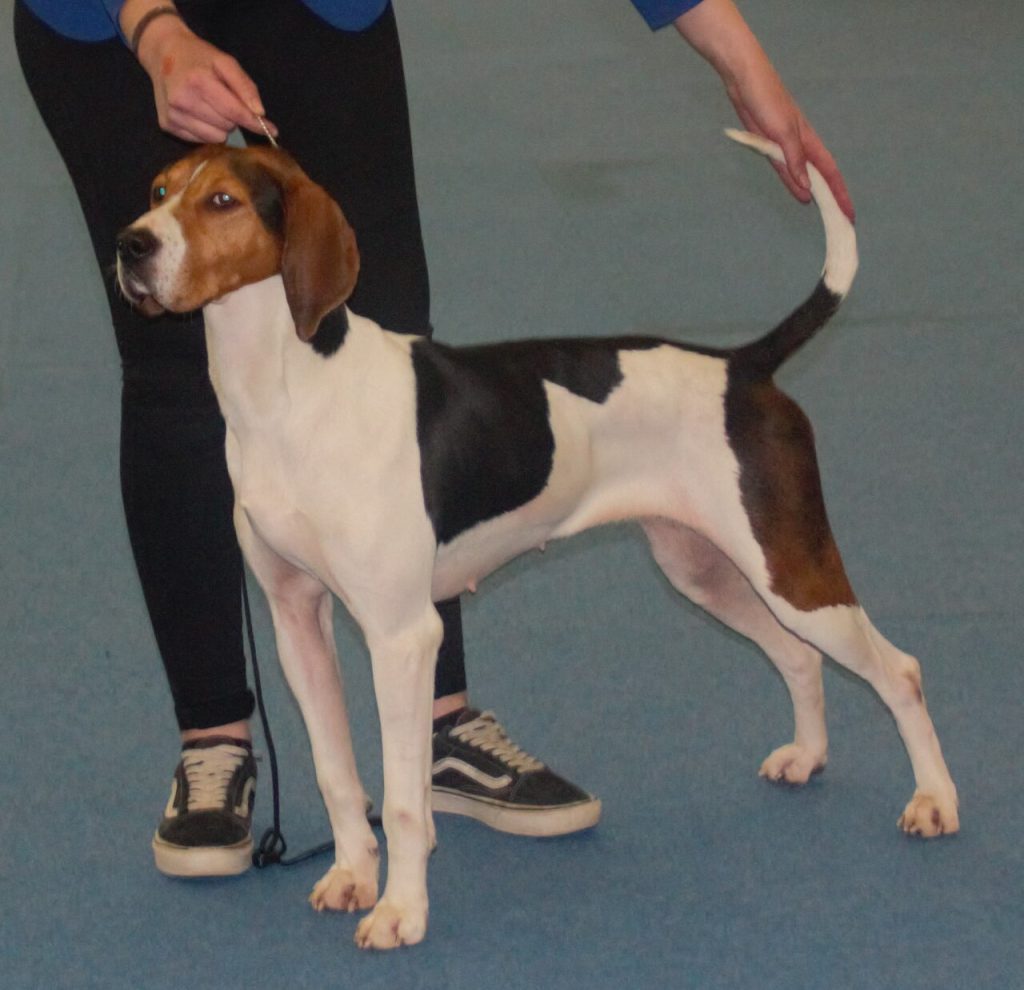
The Kromfohrländer is a medium size dog, harmonious and well-proportioned, whose silhouette vaguely recalls a cross between a collection dog and a beagle.
Its most recognizable feature is the coat: white background with brown spots ranging from light brown to reddish, tan or very dark brown. On the head, the brown forms two symmetrical spots that include and surround the ears and extend toward the eyes and cheeks; on the body it may appear as a saddle or as one or several irregular spots. The hair, dense and with soft undercoat, measures between 3 and 7 cm and is present in the two already mentioned varieties, hard and smooth hair.
Origin and history
The Kromfohrländer is a modern breed, born in the Siegerland region, in North Rhine-Westphalia (Germany), in the years following the end of World War II. His story has something of a lucky accident. In 1945, during the Allied occupation of Germany, a young dog brought from France by American troops was lost or abandoned in the Hilchenbach area near Siegen.
He was welcomed by Ilsa Schleifenbaum, a former concert pianist, who named him Peter and mistook him for a Grand Griffon Vendéen. Peter’s fortuitous crossing with a neighbor’s dog – an older, pedigreeless female Fox Terrier named Fiffi – resulted in a litter of puppies that resembled each other far more than usual in a crossbreed and did not resemble any other breed. A Siegen veterinarian advised repeating the crossing, and several more litters were born.
Schleifenbaum set out to establish these dogs as a breed and founded the from Wellersberg breed; his friend Otto Borner launched a second breed, from Lenneberg. In 1955 the Kromfohrländer was recognized by the Verband für das Deutsche Hundewesen and accepted by the International Kennel Federation (FCI), and was presented that same year at an international exhibition in Dortmund. Shortly thereafter the breed also took root in Finland – thanks to breeder Maria Åkerblom – which became its second major nucleus, and later reached Switzerland, Denmark, the Netherlands and the United States.
Curiosities
- It is one of the few German breeds born without any planned crossing: it all started with a random mating between two half-breeds.
- Its name comes from the Krumme Furche(“twisted groove”), a place on the Ginsberger Heide where the founding family had their summer residence; in Siegerland dialect it became “Krom Fohr”.
- The entire breed descends, in practice, from Peter and Fiffi and a few initial layers.
- In a few years Finland registered more Kromfohrländer puppies than Germany itself.
- It is still a scarce breed: in Germany an average of about 200 puppies are born a year, barely 0.25% of all registered dog births.
If the Kromfohrländer has conquered you but you want to compare yourself to other loyal, balanced and manageable-sized companion dogs, take a look at these related breeds: Beagle, Cocker Spaniel, Caniche and Welsh Corgi Pembroke.
Frequently asked questions about the Kromfohrländer
The Kromfohrländer is a weird dog?
Yes. It is a small breed even in its native Germany: between 2008 and 2022 an average of about 200 puppies were born per year throughout the country, barely 0.25% of the total registered canine births. Outside Germany, Finland is its second largest breeding nucleus. Finding a puppy usually involves a waiting list and contacting breed clubs.
How long does a Kromfohrländer live?
As it is a small-to-medium breed and without the extreme deformities of other breeds, it usually enjoys a long life for a dog of its size.
Are there two types of Kromfohrländer?
The standard recognizes two varieties of hair: the hard-haired (Rauhaar), with beard and longer hair on the nose and face, and the straight-haired (Glatthaar), with soft hair attached to the body.
Does the Kromfohrländer adapt to living in a flat?
It adapts well to a floor as long as it is guaranteed daily exercise and companionship. It is not a dog that endures long days of solitude: it is bred precisely as a companion dog and needs to be part of family life. With walks, play and mental stimulation, it is a quiet companion inside the house.
How much exercise does the Kromfohrländer need?
With about 30 to 40 minutes of physical exercise a day, it covers the basics, although it appreciates more activity and variety. It does well with walks, search games and activities that combine movement with head use.
Is the Kromfohrländer good with children?
His gentle, loyal, and affectionate temperament makes him a good family dog, including being with children who know how to treat him with respect.
Does the Kromfohrländer shed a lot of hair?
Its coat is dense, with soft undercoat, and requires regular brushing to keep it clean and free of knots, especially in the hard-coated variety.
Where did the name Kromfohrländer come from?
The Schleifenbaum family had a summer residence in an area of the Ginsberger Heide called Krumme Furche (‘crooked furrow’); in the Siegerland dialect it went to ‘Krom Fohr’, and hence the name of the breed.