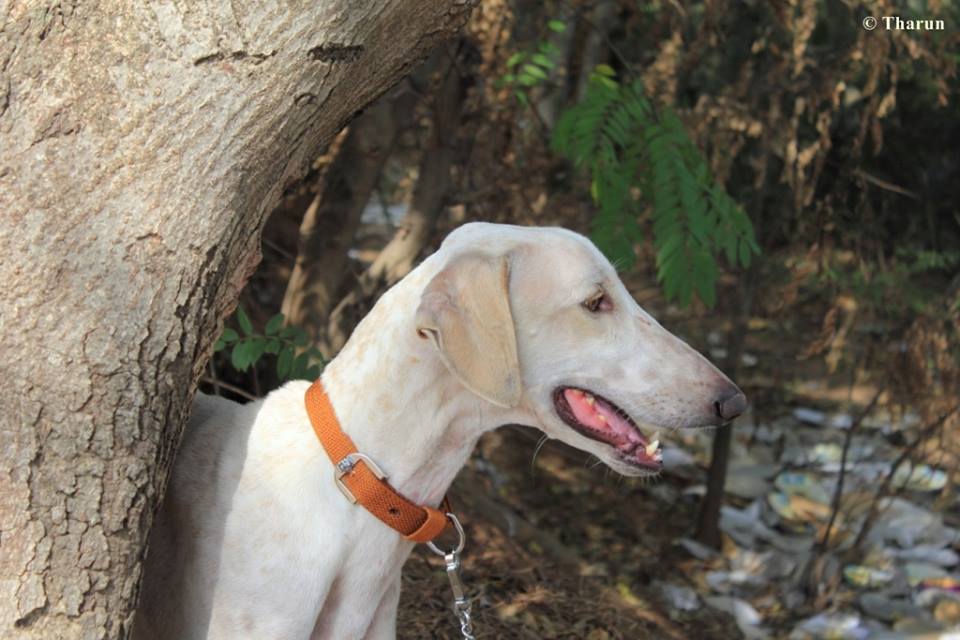
The Mudhol Hound is an Indian hare with sharp lines and extraordinary speed, bred for centuries on the Deccan Plateau to hunt on sight over dry, open ground. Also called Caravan Hound, it is one of India’s most iconic native dogs: A rustic greyhound, reserved with strangers and deeply loyal to his family, made to run, watch and accompany rather than please everyone. If you’re looking for an athletic, sober, easy-to-maintain companion, the Mudhol Hound deserves a thorough look before you decide.
Is the Mudhol Hound for you?

The Mudhol Hound is not a dog for everyone. It is a working hare with a strong hunting instinct, which needs space to gallop and a family that values its independent temperament and somewhat distant. In return, it offers a calm character at home, minimal maintenance and a quiet loyalty to its owners.
In favour .
- Athletic and resistant: ideal for active people who run, walk a lot or practice dog sports.
- Short coat and very easy to care for, with little smell and discreet mucus.
- Rustic and healthy, with few documented hereditary diseases.
- Quiet and clean indoors; not usually a compulsive barker.
- Natural watcher: warns and distrusts strangers without being normally aggressive.
- Very loyal and attached to his family once the bond has been established.
Against
- Strong prey instinct: can chase cats, small animals and run after moving stimuli.
- Reserved and independent; not the typical dog that constantly seeks approval.
- He needs plenty of exercise and free gallop; he suffers locked up without relief.
- Unreliable recall if something moves: requires safe areas to release it.
- Not tolerant of cold because of his thin body and fine hair.
- Breed scarce outside India: hard to find and with limited breeders.
Character and temperament
The Mudhol Hound is first and foremost a hare: It shares with greyhounds and other sighthounds that characteristic observant, sensitive and somewhat aristocratic dog temperament. At home he tends to be serene, quiet and unpretentious; he likes to rest and conserve energy when there is nothing to chase. Outside, it becomes: As soon as it detects movement, its brain fires up and the hunter it carries inside appears.
It is a reserved with strangers dog. It is not usually effusive or rushes to greet anyone; it keeps distances and observes before trusting. That caution makes it a good warner, without becoming a guard of bite. With its family, on the other hand, it develops a deep and discreet attachment, more of quiet company than constant display of affection.
Independence is another defining trait. It was bred to make decisions at a distance while chasing prey, so it’s not programmed to constantly look at its human for directions. This doesn’t mean it’s stupid — it’s very intelligent — but its obedience must be earned with respect and motivation, not imposed.
Coexistence: children, other pets, flat and loneliness
With children: The Mudhol Hound can get along well with children in the family, especially if it grows up with them and socializes from a puppy. It is patient and does not seek conflict, but due to its reserved nature it is not the most tolerant dog to noise, pulling or rough treatment. It works better with older children who respect their space and their moments of rest.
With other pets: here is its delicate point. Its prey instinct is high, so cats, rabbits and other small animals can be seen as something to chase, especially if they run. With other dogs it usually gets along well, especially with hare of similar size. Coexistence with cats is possible if they grow up together, but it is never advisable to trust completely with other small animals.
On the floor: Paradoxically, a hare can live on the floor because it is quiet and sleepy indoors. The key is not the square footage, but daily exercise: if you give it its ration of galloping and long walks, it will be a serene dog indoors. Without that relaxation, not even the best garden will save it from frustration.
Soledad: is reasonably tolerant of being alone for a few hours if it is well exercised and has a comfortable place to curl up.
Education and training
Training a Mudhol Hound requires understanding its hare mentality. It does not respond well to harshness or mechanical repetition; it shuts down or disconnects. Instead, it learns quickly when it finds meaning and reward in what you ask. It works with positive reinforcement, short sessions, appetizing rewards and a lot of patience.
early socialization is critical: I expose the puppy to people, noises, surfaces, other dogs and various situations as a puppy to soften his natural distrust and prevent him from becoming overly fearful or reactive as an adult.
The most difficult point is the call (recall). When a hare starts chasing something, it stops hearing. That is why it is not advisable to release it in open areas without fences near roads or wildlife. Train the call from a puppy, in controlled environments, and assume that it will never be as reliable as a shepherd dog. A good muzzle-basket and enclosed canine areas are your allies.
Exercise and activity
This is a medium to high energy dog with a very specific need: to run. It is not enough to walk; it needs to be able to gallop at full speed on a regular basis in order to be physically and mentally balanced. A sighthound that just walks around the apple on a leash ends up frustrated.
The ideal is to combine daily long walks with free running sessions in safe and fenced spaces: enclosed fields, wide canine areas or private grounds. Sports that take advantage of their instinct – such as lure coursing(bait chase) or canicross– are perfect for channeling their energy. After a good breather, you will be a calm and satisfied dog for the rest of the day.
Watch out for exercise in puppies – their joints are still forming, so dose the impact and avoid extreme runs until the skeleton matures.
Care: fur and hygiene

The maintenance of the Mudhol Hound is one of its great attractions: it has a short and smooth coat that hardly requires care. A weekly brushing with a rubber glove is enough to remove the dead hair and keep the coat shiny.
There is a more hairy variety, the Pashmi Hound, with more marked fringes on the ears, tail and lower body; this variant needs a bit more brushing to avoid tangles, but is still simple to maintain compared to long-haired breeds.
The rest of hygiene is basic for any dog: checking and cleaning the ears, cutting the nails if they don’t wear out on their own, brushing their teeth regularly and bathing them only when they are really dirty, as their fine skin doesn’t need frequent baths.
Foodstuffs
As a good greyhound, the Mudhol Hound has a skinny and muscular build in which it is normal to intuit the last ribs; its slender figure should not be confused with pathological thinness.
A quality diet, adjusted to their age, weight and activity level, covers their needs. Highly active dogs or athletes require a higher energy intake and sufficient protein to recover muscle. Divide the ration into two servings and, as with any deep-chested dog, avoid intense exercise just before and after eating to reduce the risk of gastric torsion.
Water is always fresh and available, especially after running sessions, and you adjust the amounts by watching your body condition rather than relying on the scale alone.
Health and life expectancy
The Mudhol Hound is a rustic and robust breed, the result of centuries of natural selection and functional in a harsh climate.
This being said, it shares the precautions of hares: due to its low body fat percentage, it is sensitive to anesthesia, something that every veterinarian should take into account before an operation.
With basic care, good nutrition, adequate exercise and regular veterinary checkups, the Mudhol Hound’s life expectancy is around 10-15 years old, a usual range in hares of its size.
Physical appearance
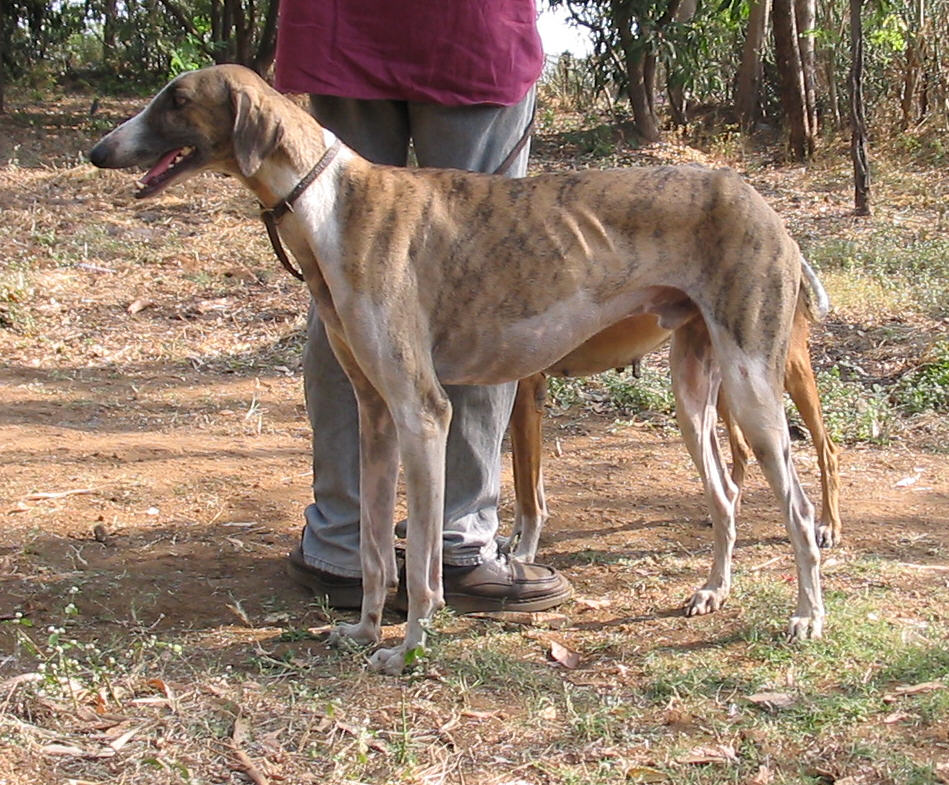
The Mudhol Hound is the imprint of the greyhound: a sleek, aerodynamic dog built for speed. of medium to large size, it features a slender, athletic body, with a deep chest, recessed belly, and long, jagged limbs that betray the runner.
The head is long and narrow, with a sharp snout and oval eyes of attentive and somewhat distant expression. The ears are hanging and of medium insertion. The neck is long and muscular, ideal for lowering the view to the ground and crossing the horizon.
The coat is short and smooth in the classic variety – the most common – and somewhat longer in the Pashmi Hound.
Origin and history
The Mudhol Hound takes its name from the locality of Mudhol, in Bagalkot district of Karnataka state in southern India. It is a dog native to the Deccan Plateau, encompassing parts of Karnataka, Maharashtra and, to a lesser extent, Telangana. For generations, local tribes – known as Bedar or Berad – used these hares to hunt in plain sight in the dry, open terrain of the region.
The key figure in its modern history is Shrimant Rajesaheb Malojirao Ghorpade from Mudhol(1884-1937), ruler of the principality of Mudhol, who is credited with the rescue and revaluation of the breed. Observing how tribal hunters used these dogs, he applied selective breeding to recover the type of Mudhol royal hare. On a trip to England in the early 20th century, the Maharaja presented a pair of these dogs to King Jorge V, a gesture that helped popularize the breed.
The breed is recognised by Indian kennel clubs: the Kennel Club of India registers it as Caravan Hound and the Indian National Kennel Club as Mudhol Hound, two names for the same dog.
Curiosities
- The Indian Army has taken an interest in the Mudhol Hound for surveillance and border protection tasks, acquiring specimens for testing at the Remonta Veterinary Corps in Meerut.
- A dog on a stamp: in 2005, the Mudhol Hound was one of four Indian breeds to appear on a series of postage stamps issued by the Ministry of Communications of India to celebrate the country’s canine heritage.
- The royal gift: the pair that the Maharaja of Mudhol gave to King George V of England gave international exposure to this local breed.
- Two names, one dog:“Mudhol Hound” and “Caravan Hound” designate the same breed; the latter name alludes to the caravans and movement along the routes of the Deccan.
- The Pashmi variant: the longest haired specimens, with fringed ears and tail, are known as Pashmi Hound and are especially prized for their print.
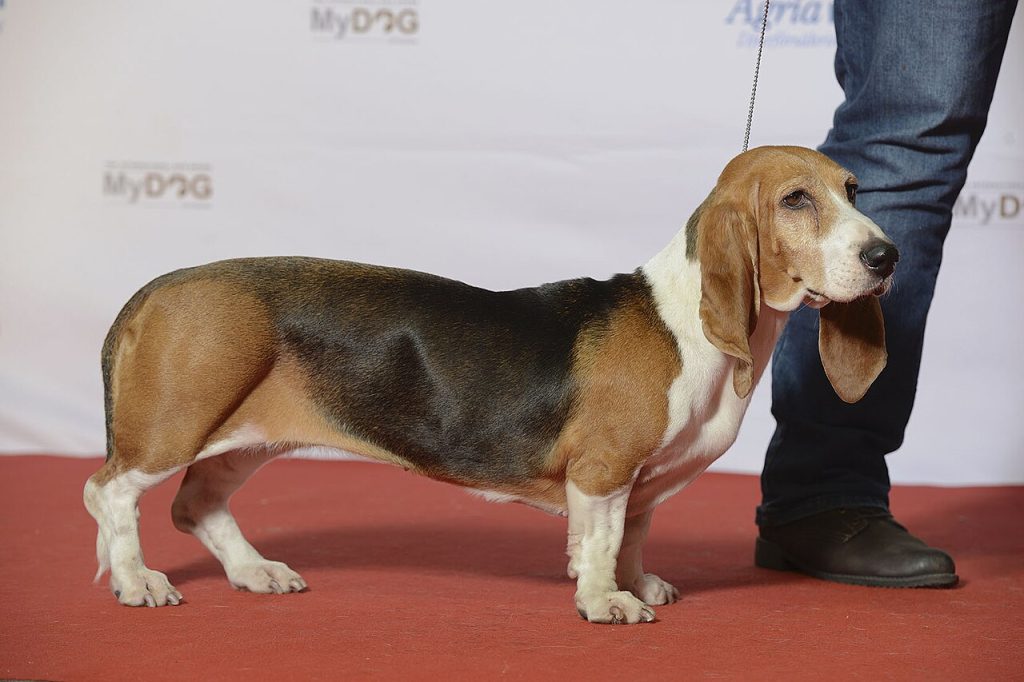
If you’re attracted to the Mudhol Hound’s profile – an athletic, reserved, easy-maintaining greyhound – you’ll surely enjoy meeting other dogs and sighthounds of similar temperament. We recommend that you take a look at the sleek Greyhound, the agile Whippet, the tracker Basset Hound and the unmistakable Dálmata, another dog of great endurance and historical link to movement and routes.
Frequently Asked Questions about the Mudhol Hound
Is the Mudhol Hound a good family dog?
It is loyal, quiet at home and clean, but reserved with strangers and independent. It works best with owners who value an athletic dog and somewhat aloof rather than one who is clingy and sociable with everyone.
How much exercise does a Mudhol Hound need?
It is a medium-high-energy dog that needs long walks daily and, above all, to be able to gallop freely in safe areas. Without that running relief, it becomes frustrated. Sports such as lure coursing or canicross are wonderful for it.
Can he live in a flat?
Yes, as long as it gets enough exercise outdoors. Inside it’s a quiet, sleepy dog, typical of hares. It’s not the square footage that counts, but the daily gallop; with that covered, it adapts well to life on the floor.
Do you get along with cats and other small animals?
With caution. Its prey instinct is strong and it can chase small animals that move. Coexistence with a cat is possible if they grow together and socialize, but it is never advisable to trust completely, especially with small animals from others.
Is it hard to train?
It is intelligent but independent, so it requires patience and positive reinforcement. It does not respond to harshness. The biggest challenge is the call: when it chases something it stops listening, so it is not advisable to release it without a fence near roads or wildlife.
How long does a Mudhol Hound live?
It is a rustic and healthy breed; its life expectancy is around 10-15 years with good care.
What’s the difference between the Mudhol Hound and the Caravan Hound?
None: they are two names for the same breed. The Kennel Club of India registers it as Caravan Hound and the Indian National Kennel Club as Mudhol Hound.
Is it easy to find a Mudhol Hound outside India?
Not much. It’s a breed very attached to its home region in Karnataka, where hundreds of families breed it. Outside India it’s rare and breeders are scarce, so getting a specimen may require patience and research.