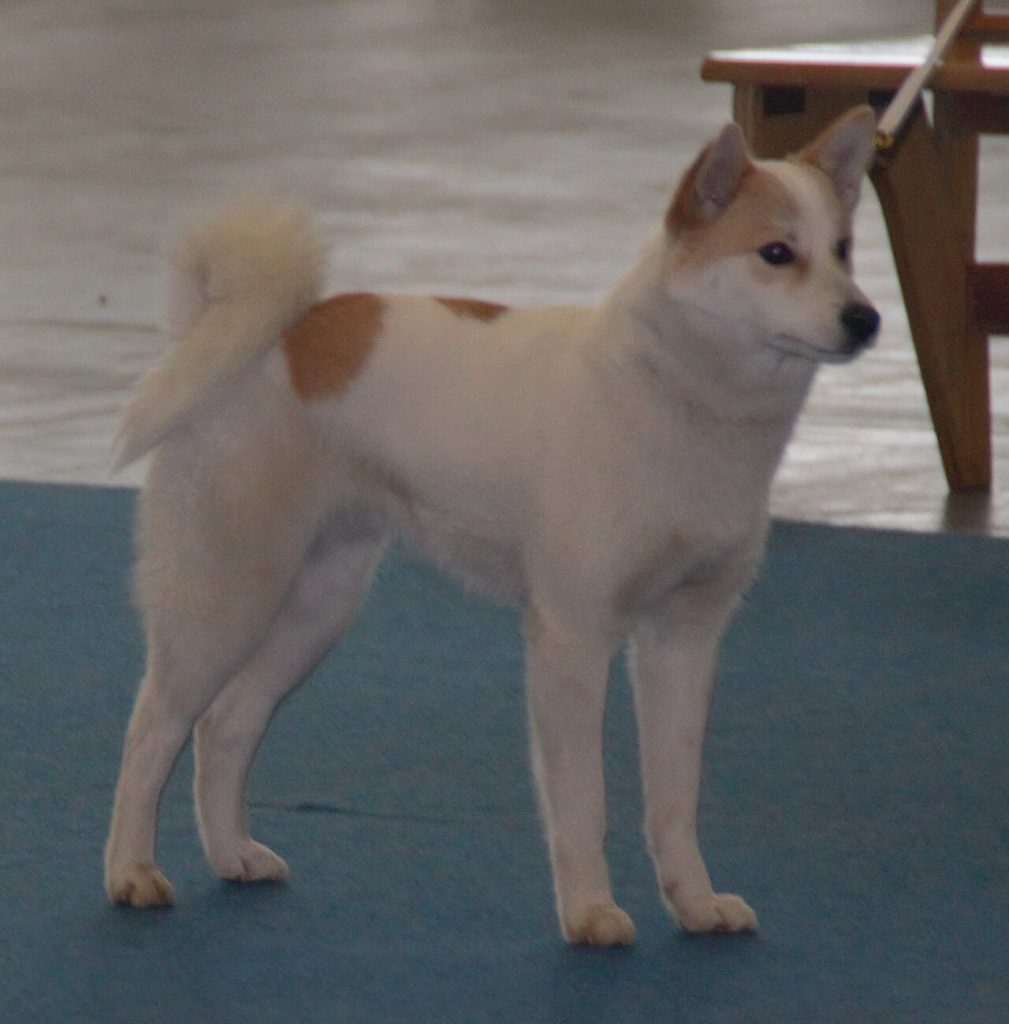
The Norrbottenspets is a small- to medium-sized Nordic spitz-type dog bred for centuries as a tireless hunter in northern Sweden. Cheerful, alert and surprisingly resilient, it’s one of those little-known breeds outside Scandinavia who fall in love with their balance: manageable size, affectionate nature with his family and iron health. If you’re looking for an active, athletic companion with a hunter’s instinct, the Norrbottenspets deserve a thorough introduction.
Is the Norrbottenspets for you?

The Norrbottenspets is a versatile dog, but not for everyone. Before you fall in love with her wide-eyed face and pointy ears, be honest about what she needs. It is a breed hunter, with a lot of energy and a very sharp instinct; it shines in active families that can give you daily exercise, mental stimulation and quality time. In the hands of a sedentary person, such an intelligent and energetic dog can become destructive and barking out of sheer boredom.
Points in favour
- Comfortable size (11 – 15 kg): easy to handle and transport.
- Excellent health: it was the race with the lowest morbidity in a large Swedish study.
- Very smart and learns fast if education is motivating.
- Loving and loyal to his family, good companion dog.
- Hair that’s taken care of by itself most of the year, little smell.
- Rustic and hardy, adapted to the extreme cold.
Points to Consider
- It needs a lot of exercise: without it, it gets bored and destroys.
- Strong hunting instinct: it will chase prey and bark at the trail.
- He does not tolerate being overwhelmed or disturbed by children.
- Independent and stubborn: not a dog of blind obedience.
- Rare breed outside Scandinavia: difficult to find.
- Seasonal mould abundant twice a year.
Character and temperament
If we had to describe the Norrbottenspets in three words, they would be clever, energy and that ‘s funny .. It’s an alert dog that wants to understand what’s going on around it, that investigates every scent and every noise, and that needs a busy brain as much as a tired body.
With his family he is affectionate, sociable and close. He likes to participate in the life of the house and be close to his own; he is not a distant dog. However, it inherits from the Nordic spitz type a point of independence and remarkable self-will: Think before you obey and decide if the offer is worth it. It’s not stupid stubbornness, but the mindset of a hunter used to making decisions alone in the woods, away from his guide.
The Norrbottenspets have a generally balanced and stable temperament and a low tolerance for being disturbed: It’s not a dog that stoically tolerates ear-pulling or rough play. Well socialized as a puppy, it is gentle and trusting; mismanaged, it can become reactive or overly barking. As a good barking hound, it uses its voice frequently, something to keep in mind if you live in an apartment with neighbors nearby.
Coexistence: children, other pets, flat and loneliness

With children: the Norrbottenspets can be a great companion for families with older children who can respect it. His weakness is that he tolerates little that oppresses him: very young children who do not yet control the force or understand the dog’s signals may be uncomfortable. With supervision, clear rules (nothing to disturb the dog when it rests or eats) and children brought up in respectful treatment, coexistence is good and loving.
With other pets:, raised with other dogs, usually gets along well and enjoys canine company. With cats and small animals, on the other hand, you have to be careful: their strong hunting instinct can be activated in front of a running prey.
On the floor: by size fits perfectly in an apartment, but its energy and tendency to bark make it more suitable for homes with a garden or for owners who are very committed to daily exercise.
Soledad: is a clingy dog who does not do well with prolonged loneliness. Left for many hours alone and without activity, boredom translates into wrecking and barking. It is not the ideal breed for someone who spends the whole day outside the house without alternatives of company or entertainment.
Education and training
The Norrbottenspets are very intelligent and learn easily, but their independent nature demands intelligent training by the guide. Forget hard or repetitive methods: He gets bored and disconnects. What works is positive reinforcement, short and varied sessions, and making the work interesting and rewarding. A dog that has fun training is cooperative; one that gets bored makes up his own plans.
Early socialization is key: the more people, dogs, environments, noises and situations you know as a puppy, the more balanced and confident you will be as an adult.
It’s a dog that enjoys activities that combine head and body: playful obedience, sniffing games, tracking tracks, adaptive agility. Channeling its energy and intelligence into specific tasks not only keeps it balanced, but strengthens your bond.
Exercise and activity
There’s no half-measures here: the Norrbottenspets needs substantial daily exercise. It’s an athletic and tireless hunter, bred to spend whole days crawling through the woods, and that engine needs to burn. A short walk around the block isn’t even far enough. Think long walks, country walks, runs, hunting games and activities that stimulate its smell.
The rule is simple: A well-trained Norrbottenspets is a calm and well-behaved dog at home; one who does not expend his energy becomes nervous, barking and destructive. The mental stimulus counts as much as the physical. Smell games, food puzzles, and tracking exercises tire him out in a way that a simple walk won’t. If you like hiking, trail running, or outdoor sports, he’s the perfect companion.
Care: fur and hygiene

The good news is that this coat is fairly easy to maintain most of the year – a weekly brushing is enough to remove dead hair and keep it clean and healthy.
The exception is the seasonal seedlings, twice a year (spring and autumn), when it releases the undercoat abundantly. In those periods it must be brushed much more often, even daily, to remove all the loose hair and prevent the house from filling up.
The rest of the hygiene is the usual: checking and cleaning the ears to prevent infection, cutting the nails when they don’t wear out on their own, brushing your teeth regularly and bathing only when really needed, so as not to damage the natural protection of your coat.
Foodstuffs
As a small-medium and very active dog, the Norrbottenspets needs a complete and balanced diet, adjusted to its actual activity level. A specimen that hunts or does a lot of sport burns many more calories than one that lives as an urban companion dog, so the ration must be adapted in each case to keep it at an ideal weight, neither thin nor overweight.
It serves both a quality feed and a well-formulated diet, always proportionate to its size, age and energy expenditure. Break your food into two servings a day, check for sweets (especially if you use them a lot during exercise), and make sure that fresh water is always available, especially after exercise. If you have any questions about quantities or specific diet, your veterinarian is the best advisor.
Health and life expectancy
A large Swedish study that reviewed over 200,000 insured dogs in 1995 and 1996 found that the Norrbottenspets had lower morbidity of all, both pure and mixed breeds. It is simply one of the healthiest breeds in existence, the result of centuries of functional selection in a harsh environment where only strong specimens survived and reproduced.
As it is a rustic breed, with a genetic base that has never been over-exploited commercially, it is relatively free from the hereditary diseases that affect more popular breeds. Even so, no race is exempt from risk: responsible breeders should be contacted to ensure the health of their breeders, to keep the vaccination and deworming schedule up to date and to carry out regular veterinary checks. With such basic care, good exercise, and proper nutrition, it is a long-lived, healthy dog.
Physical appearance
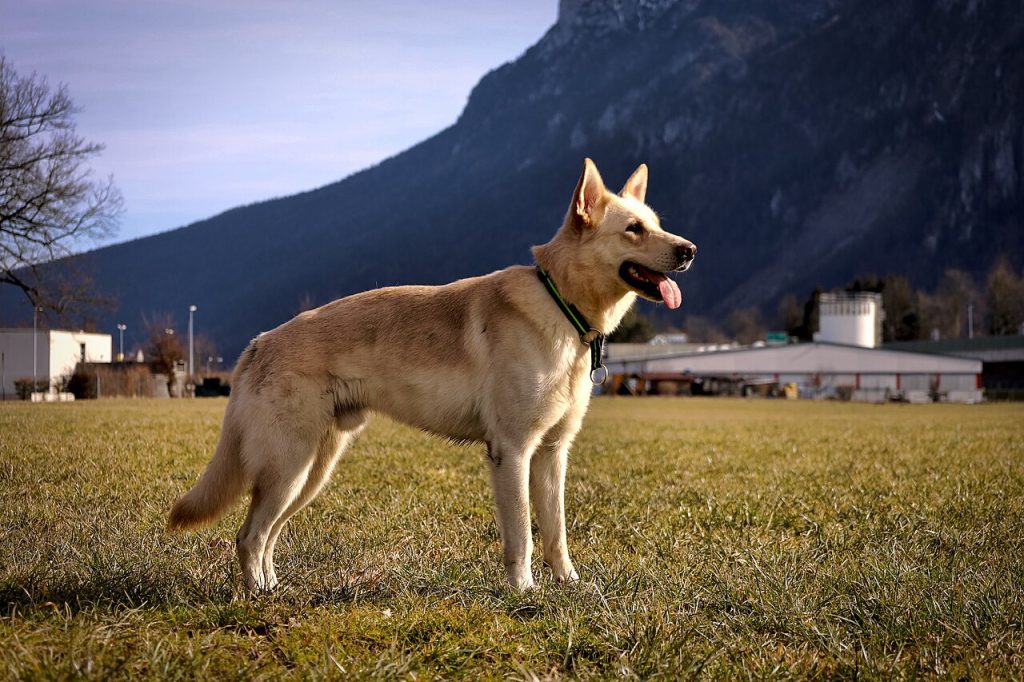
The Norrbottenspets is a small-medium, compact and robust spitz type dog, slightly smaller than the Finnish Spitz, with which it is closely related.
The head is wedge-shaped, with erect and moving ears, and a lively, awake expression. The tail, long, is held high and curled over the back, an unmistakable feature of the Nordic spitz. The coat can be presented in any color, although the most common – and what marks the standard – is the white with yellow or red spots; you can also see combinations with cream, brown or black. Overall, it conveys an image of a dog that is balanced, agile and functional, without exaggeration.
Origin and history
The Norrbottenspets takes its name from the Norrbotten region, in northeastern Sweden, together with “spets”, the Swedish spelling of “spitz”. It is also known as Norrbottenspitz, Nordic Spitz or, in Finnish, Pohjanpystykorva. Its exact origins are lost in time; it is believed to have arctic and Germanic spitz blood in its ancestry. It is the Swedish equivalent of the Finnish Spitz and the Russian Karelian-Finnish Laika: For centuries they were the same type of dog that was only separated into different breeds when the canine clubs in each country recognized them separately.
For generations it was an indispensable dog of the farms and hunters of northern Scandinavia. However, it was on the brink of extinction in the 20th century: on 1948 the Swedish Kennel Club declared it extinct. It wasn’t until the 60s that enough specimens were found to re-consider the living breed and relaunch their breeding. It never achieved the international fame of the Finnish Spitz or the Norwegian Buhund, and today remains rare outside Scandinavia, although in Sweden, with renewed interest in native breeds, it enjoys notable popularity.
Curiosities
- It was officially declared extinct in 1948 and “resurrected” in the 60s thanks to the few copies that remained in remote farms.
- It is such a versatile hunter that it has been used with game birds, deer, elk and even, occasionally, bears.
- There are numerous stories of Norrbottenspets that they scared the bears away. attacked their owners.
- Thanks to their fine sense of smell and endurance, many specimens have been trained as search and rescue dogs.
- It was the breed with the lowest morbidity in an entire Swedish veterinary study of over 200,000 dogs — a health record.
- It is a close relative of the Finnish Spitz, the national dog of Finland.
If you are attracted to this agile, hunting dog, you may be interested in other spitz-type or working breeds with a similar profile, such as the Samoyedo, another white-coated Nordic spitz; the Husky Siberiano, a tough, athletic spitz; the Akita, a robust spitz of Japanese origin; or the versatile Chow Chow, another spitz-type breed with a strong personality.
Frequently asked questions about Norrbottenspets
Is the Norrbottenspets a good family dog?
Yes, in the right family. He is affectionate and loyal to his family and enjoys home life, but needs plenty of exercise and tolerates little bother. He fits in better with active families and with older children who can respect him.
How long does a Norrbottenspets live?
It’s an exceptionally healthy breed — it was the one with the lowest morbidity in a large Swedish study of over 200,000 dogs — which translates into long-lived dogs.
Does the Norrbottenspets bark a lot?
Yes, it tends to bark. It is a barking hunting dog that uses its voice frequently, especially if it is bored or lacks exercise. With early socialization, a lot of activity and specific work of barking control can be managed.
Does he adapt to living in a flat?
He can live in an apartment if the owner agrees to give him several long walks a day, plenty of mental stimulation, and work on the barking.
How much exercise do you need?
It is an athletic and untiring hunter that needs considerable daily exercise: long outings, field trips, runs and olfactory games.
Is it hard to educate?
It is very intelligent and learns quickly, but has an independent character that requires motivational training. It works with positive reinforcement, short and varied sessions; it does not respond well to harsh or repetitive methods.
Do you get along with cats and other animals?
It usually gets along well with other dogs, especially if it is bred with them. With cats and small animals you have to be careful because of their strong hunting instinct; coexistence from puppyhood helps, but it is advisable not to rely entirely on small prey.
Do you lose a lot of hair?
For most of the year, no: a weekly brushing is enough. But it changes the undercoat abundantly twice a year (spring and autumn), and in those periods it must be brushed almost daily to control hair loss.