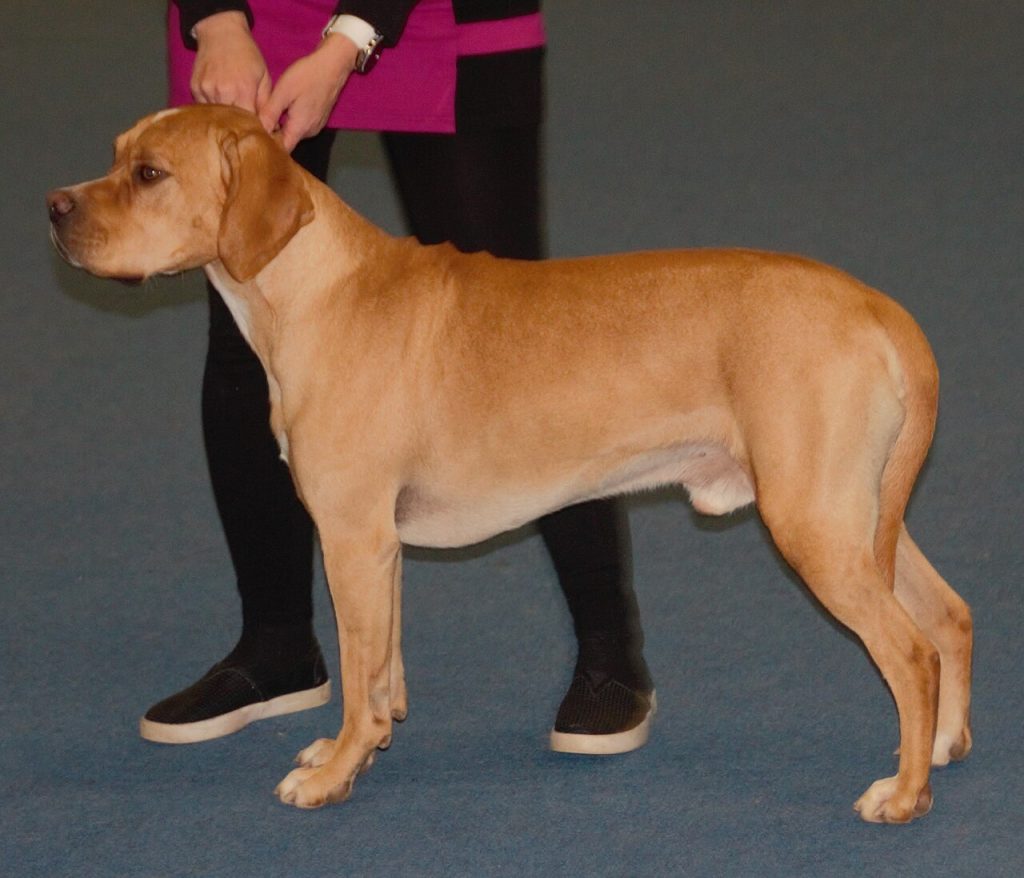
The Perdiguero Portugués is one of the oldest sample dog breeds on the Iberian Peninsula: a red partridge hunter of medium size, elegant and balanced temperament, which combines an exceptional smell with a docile and very close-knit family character.
Is that the Portuguese Perdiguero for you?

The Portuguese Perdiguero is a dog designed to move. Before deciding, it is advisable to be honest with the time and space at your disposal: this breed does its best with active owners, who go out into the field and enjoy a dog awake, loving and with a prodigious nose. In return, it requires exercise, company and a coherent education from puppyhood.
Points in favour
- Docile, balanced and very attached to his family.
- Smart and easy to train positively.
- Sociable with children and other dogs.
- Short hair, easy to maintain.
- Rustic breed and usually healthy.
- Smell and endurance exceptional for the field.
To be taken into account
- He needs plenty of daily exercise; he gets bored in inactivity.
- Strong hunting instinct: watch out for small animals.
- It’s not ideal for small apartments or sedentary people.
- Sensitive: Does not tolerate harshness or prolonged loneliness.
- Rare breed outside Portugal, hard to find.
Character and temperament
The temperament of the Portuguese Perdiguero is one of its great assets. It is a docile, quiet at home and very sociable dog, which forms an intense bond with its family and rarely shows aggression. In the field it changes completely: it transforms into a tireless, focused and courageous hunter, capable of working for hours with an admirable delivery.
It is a sensitive and intelligent dog, very attentive to the emotions of its guide. This finesse makes it pleasant to be around, but also implies that it does not tolerate shouting or harsh methods well: it responds much better to kind treatment and consistency.
Coexistence: children, other pets, flat and loneliness

With children: is usually an excellent companion for younger children, patient and playful, always under the reasonable supervision that is recommended with any dog.
With other pets: lives comfortably with other dogs, with whom it tends to get along well. With cats and small animals you have to be more careful, because their strong hunting instinct can be awakened; good early socialization helps a lot.
On the floor: is not its ideal habitat. It can adapt if given plenty of exercise, but enjoys the outdoors and crawling, so a house with a garden or access to the countryside feels much better to it.
Soledad: is a clingy dog who doesn’t like to spend long hours alone. If left too long without companionship or stimuli, he may get bored and develop undesirable behaviors. He needs to feel part of the pack.
Education and training
Training a Portuguese Perdiguero is rewarding: it is intelligent, willing to collaborate and highly motivated to please. It learns quickly and responds wonderfully to positive reinforcement, with rewards, caresses and play.
It is advisable to work from the beginning the call and control of the hunting instinct, because as soon as it catches a trace it can disconnect from the environment. Positive education, without punishments, is the one that works best with this sensitive breed: harshness only makes it close or frightened. Smell work and search games are also a great way to stimulate it mentally.
Exercise and activity
This is the most demanding chapter. The Portuguese Perdiguero was bred for working long hours in the fields, and that heritage is noticeable: he needs a lot of physical and mental exercise every day. At least one or two hours a day of intense activity – running, long walks, sniffing games – to keep him happy and balanced.
A well-exercised dog of this breed is calm and pleasant at home; one who does not expend his energy is bored, frustrated and may become destructive.
Care: fur and hygiene

Here the Portuguese Perdiguero is very grateful. His hair is short, dense and rough, without undercoat, which translates into a simple maintenance. With a weekly brushing is enough to remove the dead hair and keep the coat healthy and shiny; in moult season it may be convenient to brush it a little more often.
Bathing is only necessary when it has become really dirty, something common in a dog that works outdoors. Special attention is paid to the examination of ears, which should be kept clean and dry to prevent infections, especially if it is wet or walks among weeds.
Foodstuffs
As an active, medium-sized dog, the Portuguese Perdiguero needs a quality and balanced nutrition, with a good protein intake that supports its musculature and energy expenditure.
It is advisable to divide the ration into two daily intakes and monitor the weight to avoid both thinness and overweight. In deep-breasted dogs such as this one it is prudent avoid strenuous exercise just before and after eating, as a precautionary measure against digestive problems. Fresh water always available, very especially on working days in the field.
Health and life expectancy
The Portuguese Perdiguero is a rustic and generally healthy breed, the result of work-oriented selection rather than aesthetics.
As with almost all medium and active breeds, it is advisable to be aware of osteoarticular disorders such as hip dysplasia, and because of its type of ears, ear infections, which are prevented by good hygiene.
Physical appearance
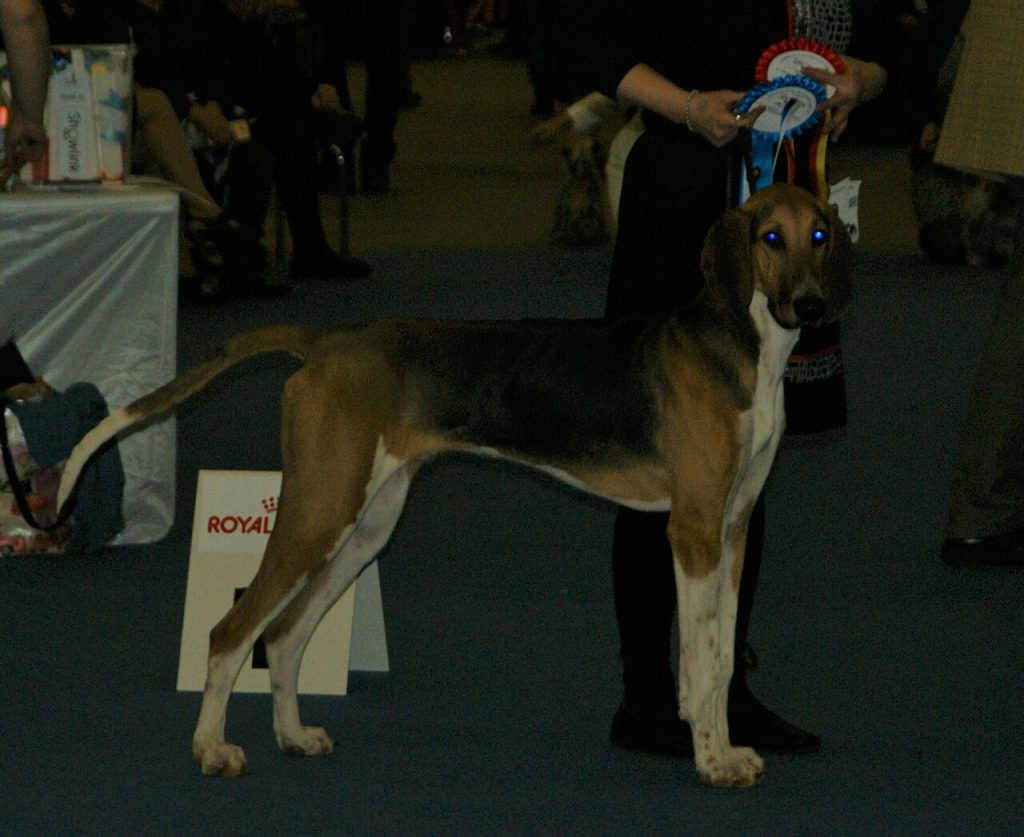
The Portuguese Perdiguero is a medium size, harmonic and noble appearance dog, with a solid build but no weight. Males measure between 54 and 60 cm at the cross and females between 50 and 56 cm. Weight is around 20 to 27 kg in males and 16 to 22 kg in females.
Its most characteristic feature is the head, of serious and friendly expression, with a square skull and a marked snout that give it an unmistakable look. The ears are hanging, thin and soft. The coat is short, dense and rough, without undercoat, thinner and softer on the head and ears. The color is yellow, light to dark, with or without white spots on the head, neck, chest, lower legs and tail tip.
Origin and history
The Portuguese Perdiguero is a native of Portugal breed with very ancient roots. It is considered one of the historical Iberian show dogs, linked for centuries to the hunting of the red partridge, activity that gives it its name (“perdigueiro”).
The the first breed standard was drafted in 1939, in an effort to fix and preserve its characteristics after centuries of functional breeding among hunters. The It was finally accepted by the Fédération Cynologique Internationale (FCI) in 1955., giving it international recognition within Group 7, that of the show dogs. Despite this recognition, it has always been a race of modest censuses: In 2006, for example, there were about 1,800 females listed in the book of genesis, a figure that reflects how minority it is.
Curiosities
- Its name in Portuguese is Perdigueiro Português, in direct reference to the partridge, its prey par excellence.
- It is considered one of the oldest show dogs of the Iberian Peninsula, with a history linked to the nobility and the Portuguese hunters.
- The city of Torres Vedras, in Portugal, has a monument dedicated to the Portuguese Perdiguero, proof of the appreciation he awakens in his country.
- Its yellow fur and no undercoat make it easy to recognize and very practical to maintain.
- Outside Portugal it is a rarity: it is rarely seen as a companion dog, making it a little-known gem among the sample breeds.
If you’re attracted to the Portuguese Perdiguero’s profile as a docile and hardworking show dog, you may also be interested in other hunting breeds and similar temperament samples. Pointer Vizsla Weimaraner Cocker Spaniel
Frequently Asked Questions about the Portuguese Perdiguero
Is the Portuguese Hound a good family dog?
Although primarily a hunting dog, the Portuguese Perdiguero has a reputation for being docile, sociable and very attached to its people, which makes it a good family companion whenever it gets the daily exercise it needs.
How much exercise does the Portuguese Perdiguero need?
It is a sample breed bred to work long hours in the field, so it needs at least one or two hours a day of intense physical activity: running, sniffing, and exploring.
How long does a Portuguese Perdiguero live?
As a medium and rustic breed, its life expectancy is usually around 12-14 years. It is a generally healthy dog; having a regular veterinary check-up, taking care of its weight and keeping it active helps it grow up healthy.
What color is the Portuguese Perdiguero?
Its coat is yellow, in a range ranging from light yellow to dark (lionish and orange tones), with or without white spots on the head, neck, chest, lower legs and tail tip.
Can the Portuguese Perdiguero be kept on the floor?
It is not ideal. It can adapt to a floor if it is guaranteed plenty of daily exercise, but it is an active dog that enjoys the outdoors and crawling. A house with a garden or easy access to the countryside fits its needs much better than a small apartment.
Is it easy to train the Portuguese Perdiguero?
Yes. It is intelligent, attentive to its guide and highly motivated to please, which facilitates training with positive methods. It responds well to reinforcement with rewards and play; it should be socialized and educated from puppyhood to channel its enormous hunting instinct.
Does the Portuguese Perdiguero shed a lot of hair?
Its short hair and no undercoat make the muzzle moderate and easy to maintain. A weekly brushing is enough to remove the dead hair and baths only when it is really dirty.
Is the Portuguese Perdiguero a rare breed?
Yes, outside Portugal it is rare. It is a Portuguese national breed with small numbers, closely linked to the hunting of the red partridge.