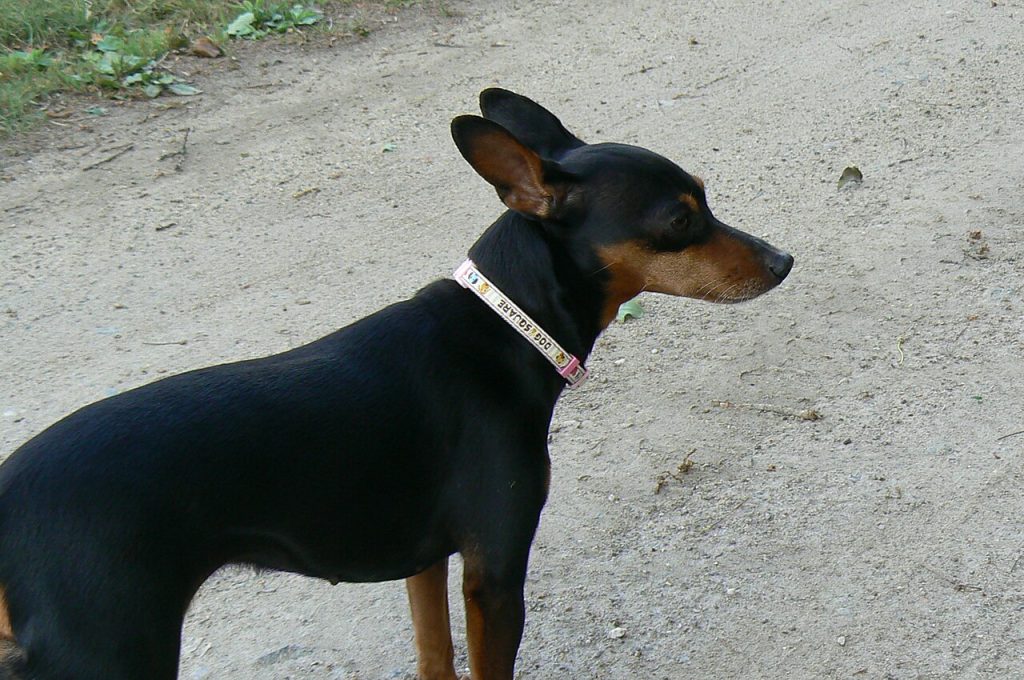
The The Prague Mouse(in Czech Pražský Krysařík) is probably the smallest breed dog in the world by standard: a Czech hunting dog barely 20 to 23 cm at the withers that was a companion of kings and today is an excellent companion dog, elegant, alert and surprisingly calm for its size. It is rarely seen outside the Czech Republic, but those who know it discover a miniature dog with a huge character, very attached to his family and quite easy to train. In this comprehensive guide you will find everything you need to know about the Prague Mouse before sharing your life with him.
Is the Prague Mousetrap for you?
The Prague Mouse is a companion dog par excellence: small, clean, quiet, and very adaptable to living on the floor. But its tiny size demands respect and care, and its strong attachment to people means that it is not a dog to be left alone for many hours. Before you decide, weigh what it brings against what it demands.
In favour .
- Minimum size: ideal for floors and small spaces.
- Intelligent and eager to please; learns easily.
- Very quiet for a small dog; not usually barking.
- Short hair that barely needs maintenance.
- Loving, loyal and very close to his family.
- Long-lived and generally robust in health.
To be taken into account
- It is fragile: thin bones are easily fractured by falls or stomping.
- He suffers from loneliness; it is not good to spend many hours alone.
- Sensitive to cold because of his size and short hair.
- Rare breed outside the Czech Republic and Slovakia: puppies difficult to find.
- It requires supervision with very young children and large dogs.
- I’m prone to tartar if I don’t take care of my mouth.
Character and temperament
If anything defines the Prague Mouse, it is the disproportion between its size and its personality. It is a lively, active and full of character dog, which needs solid and trusting relationships with people.
As a pet, it is described as obedient, loyal, affectionate and very affectionate. It is remarkably intelligent and responds well to consistent treatment.
It retains the hunting instinct that gave it its name: it has a highly developed sense of smell and hearing and a remarkable impulse to prey, so it can go after mice, rats or squirrels.
Coexistence: children, other pets, flat and loneliness
With children: is an affectionate and playful dog, but its fragility marks the coexistence. With older children who understand that it is not a toy, it can be an excellent companion; with very young children, constant supervision is advisable, because a fall, a squeeze or a stomp can cause a serious fracture.
With other pets: usually lives well with other dogs and, socialized since puppyhood, also with cats. Two fronts must be watched: its prey instinct towards rodents and small animals, and its fragility in front of large or abrupt dogs, which can injure it unintentionally during play.
On the floor: is one of the dogs best adapted to living in apartments and indoors full-time. Its minimal size, low noise level and cleanliness make it ideal for city living.
In the face of loneliness: here is its weak point. It is a dog that lives for and for its people; it needs human attention and does not like to spend many hours alone. In homes where it is accompanied a good part of the day it shines; in empty houses all day it can develop anxiety.
Education and training
Because of its need for human attention and its desire to please and impress its owner, the Prague Mouse Dog responds very well to basic training and commands. It is a brilliant dog, capable of learning numerous tricks and tasks, and many owners claim that it easily learns to use the sandbox or toilet tray, which reduces the need for constant outings.
The key to success is to establish a relationship of mutual trust and respect from the beginning. It is a dog somewhat sensitive to criticism, so it responds much better to positive reinforcement and reward-based training than to harsh methods. Worked consistently, it is an easy dog to train despite its small size.
Beware of the classic “small dog syndrome”: its size makes it willing to do anything, and so bad habits appear. Treating it like the dog it is, with clear and consistent rules, is the best way to have a balanced companion.
Exercise and activity
It is an active and alert dog, but its exercise needs are moderate and very manageable. It loves to go out for a quiet walk, play to find the ball and participate in games that stimulate its mind. Combining daily walks with playtime at home covers its physical needs abundantly.
Despite its size, it is a dog suitable for canine sports: it can be trained in agility, obedience, freestyle or tracking if it is treated consistently.
Care: fur and hygiene
There are two varieties of coat: short hair, which is smooth, shiny and dense, and long hair, with fringes on the ears, extremities and tail.
A point not to be overlooked is the dental hygiene. This breed is prone to accumulating tartar, which causes bad breath and can lead to periodontitis, and to the retention of baby teeth. Regular tooth brushing and veterinary checkups to remove plaque are a fundamental part of their care.
Due to its size and short hair, it is sensitive to cold: in winter it appreciates a coat for walks and a warm and sheltered place at home.
Foodstuffs
As a miniature dog, the Prague Mouse Dog needs small but quality rations. A food formulated for mini breeds, with good protein intake and croquettes of size suitable for its tiny mouth, is the best choice.
Very small dogs can be prone to sugar drops, especially puppies, so it is usually recommended to divide the food into several servings a day instead of just one. Since this breed may have gastrointestinal problems, sudden changes in diet and leftovers should be avoided, and any signs of digestive problems should be reported to the veterinarian. Fresh water always available.
Health and life expectancy
The Prague Mouse is considered one of the canine breeds without significant health problems, with a life expectancy between 12 and 14 years.
- Dental and gum diseases: tends to form tartar, which promotes bad breath and periodontitis, and retention of baby teeth, which sometimes need to be extracted.
- Fractures of the bones: due to its small size and thin bones, metacarpal and forearm fractures are common after falls or blows.
- Dislocation of the patella: common in small breeds, congenital and hereditary.
- Gastrointestinal disorders including: different digestive disorders are relatively common.
The best prevention is good dental hygiene, care for your joints, avoiding jumps and falls from heights, and regular veterinary check-ups.

Physical appearance
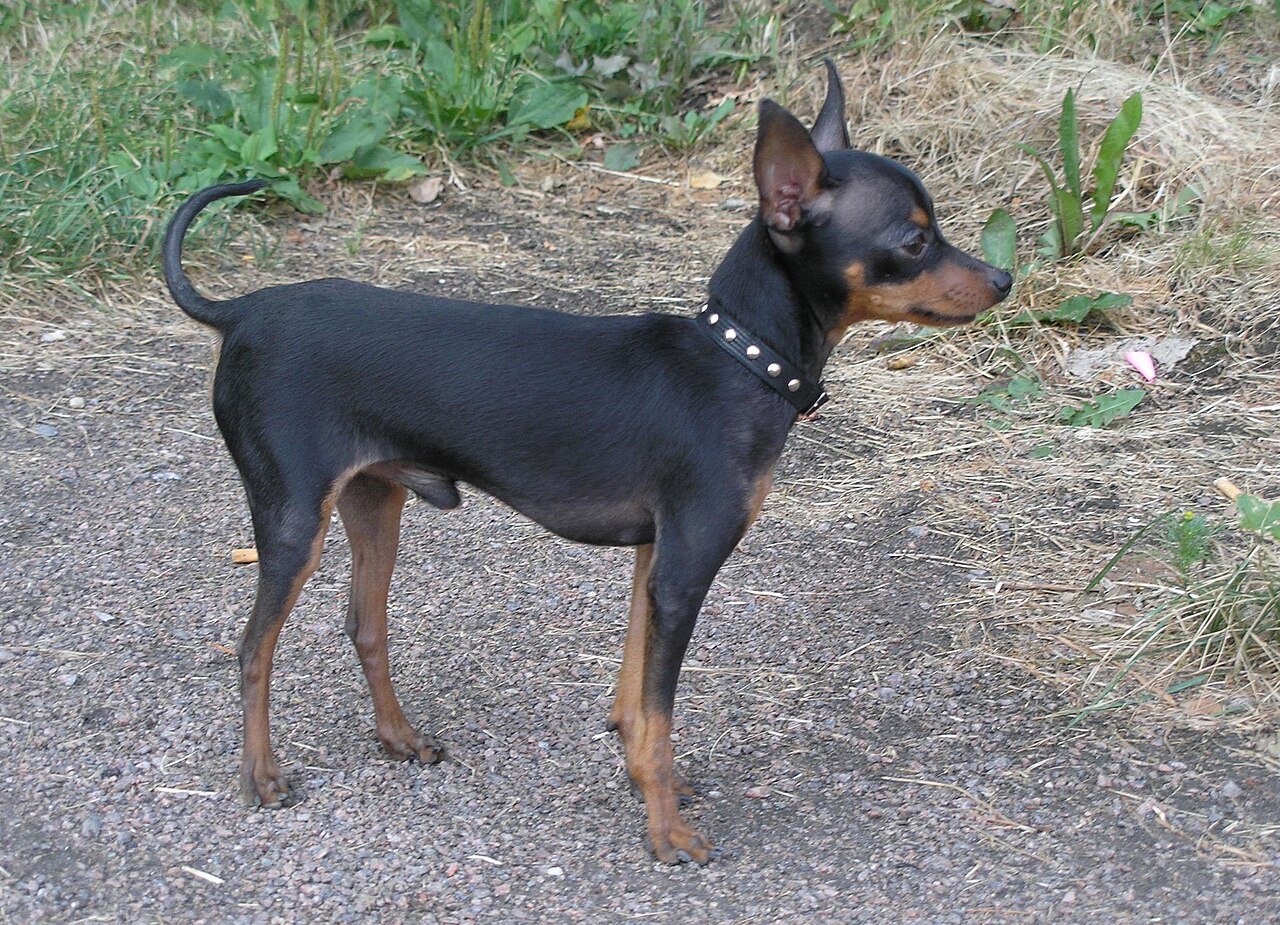
The Prague Mouse Dog is a miniature dog of elegant and slender appearance, often confused with the Chihuahua and the miniature Pinscher, although it has its own identity. It is the smallest dog breed in the world in terms of standard, because its maximum allowed height to the cross is 20 cm lower than the minimum height of the miniature Pinscher (Chihuahuas, on the other hand, are measured by weight and not by height).
- Altura: from 20 to 23 cm at the cross (the ideal round those values).
- Peso: between 1.5 and 3.5 kg, although the usual is around 2.6 kg.
- Manto: short, smooth, shiny and dense hair, or variety of long hair with fringes.
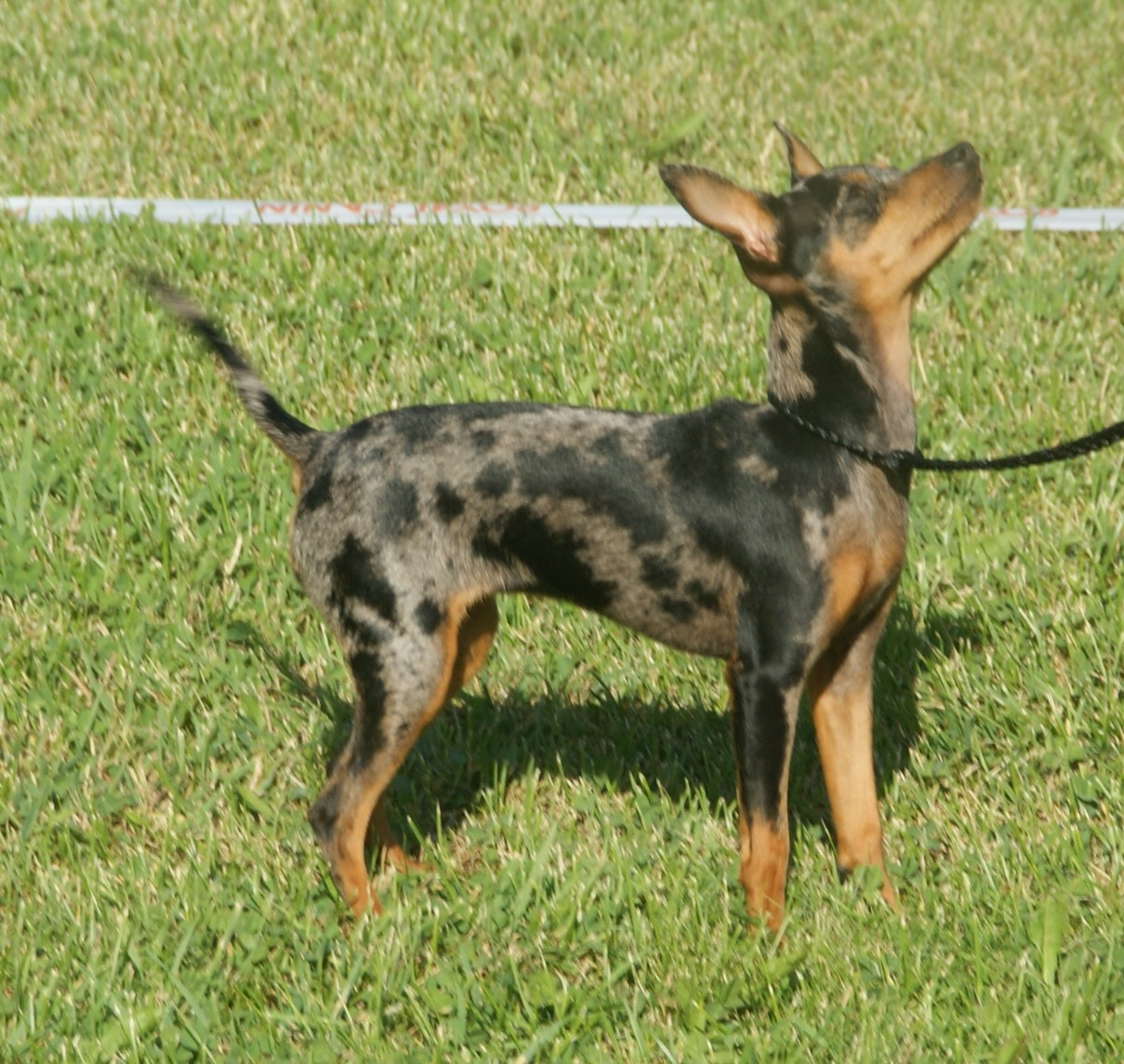
- Colores: the most common and original is black and fire; brown and fire, blue and fire, lilac and fire, yellow, red and merle are also supported.
Thin pear-shaped head, erect, triangular ears, dark, expressive eyes, and a tail that completes its graceful silhouette.
Origin and history
The Prague Mousetrap comes from the República Checa, and Czech breeders claim that other(cazarrats) are one of the oldest Czech breeds. The first mentions of these dogs appear in the writings of the historian Einhard, between the 8th and 9th centuries. Polish chronicler Gallus Anonymus tells of the beloved Cossacks of King Bolesław II the Generous (1058-1081), who imported two from Bohemia to Poland.
Its history is linked to European royalty. It is said that Charles IV of Luxembourg gave three cazarratas as a gift to King Charles V of France during his visit in 1377, and these dogs appear in chronicles alongside Wenceslaus IV, Rudolph II and other rulers. At a time when there were no cats in Europe, these tiny dogs protected the properties of the nobility from rodents. Legend even says that in royal homes they were allowed to walk on tables during meals to taste the food and protect their owners from potential poisoners.
With the decline of the Czech state, the cazarratas ceased to be exclusive to noble houses and spread to peasant and bourgeois households, and even to popular rat fights in Europe, before ending up as a companion dog in salons. Its popularity waned in the 19th century when the miniature Pinscher became fashionable. The breed experienced a renaissance in the 1980s, when Czechs and Slovaks re-bred it: in 1980 the first Pražský Krysařík was recorded in the book of origins. Finally, on 2019 the FCI officially recognized the race.
Curiosities
- It is considered the smallest breed of dog in the world by standard, thanks to its extremely low maximum height at the withers.
- Its name, other, literally means “catcher of rats”: it retains a very fine sense of smell and hearing and is still an excellent rodent hunter.
- It was a king’s dog: it appears in chronicles alongside monarchs of Bohemia, Poland and France.
- There are only about 6,000 recorded in the world, and the litters are usually just 1 to 3 cubs.
- Until the late 20th century it lived almost exclusively within the borders of the Czech Republic and Slovakia; today there are small populations in Scandinavia, Russia, the USA, Australia and Japan.
- Many learn to use the sandbox like a cat, which is unusual for a dog.
If you are attracted to this miniature dog but want to compare it to other breeds of small size or similar temperament, check out the Chihuahua, with whom it is so often confused; the Teckel, another small hunter full of character; the sleek Yorkshire Terrier as an urban lap dog; or the Whippet, which shares that graceful, slender silhouette in a larger format.
Frequently Asked Questions About the Prague Mouse
How tall and how much does a Prague Mouser weigh?
It measures between 20 and 23 cm at the withers and weighs 1.5 to 3.5 kg, although the most common is around 2.6 kg. It is the smallest breed of dog in the world according to the standard for its maximum allowed height.
How long does the Prague Mouse live?
It is considered a breed without significant health problems, although with the typical predispositions of miniature dogs.
Is he a good dog for the floor?
Yes, it is one of the dogs best adapted to living in an apartment: it is tiny, very quiet and clean, and it adapts perfectly to living indoors.
Does the Prague Mouse bark a lot?
Unlike many small dogs known for barking, the Prague Mouse is noted for being a calm, quiet dog, which makes it very comfortable for community living.
Do you get along with children and other pets?
It is affectionate and playful, but due to its fragility, supervision with very young children is appropriate. With other dogs and socialized cats it usually coexists well; its prey instinct towards rodents must be monitored and protected from large or abrupt dogs.
Is it hard to educate?
Not particularly. He’s intelligent and very eager to please, so he learns easily if you treat him with consistency and positive reinforcement. Many even learn to use the sandbox. He’s sensitive to criticism, so harsh methods are discouraged.
What colours is the Prague Mouse?
The most common and original color is black and fire. Other varieties are also accepted: brown and fire, blue and fire, lilac and fire, yellow, red and merle.
Is it an easy breed to find?
No, it is a rare breed: there are only about 6,000 registered in the world, with litters of just 1 to 3 pups, and until recently it lived almost exclusively in the Czech Republic and Slovakia.