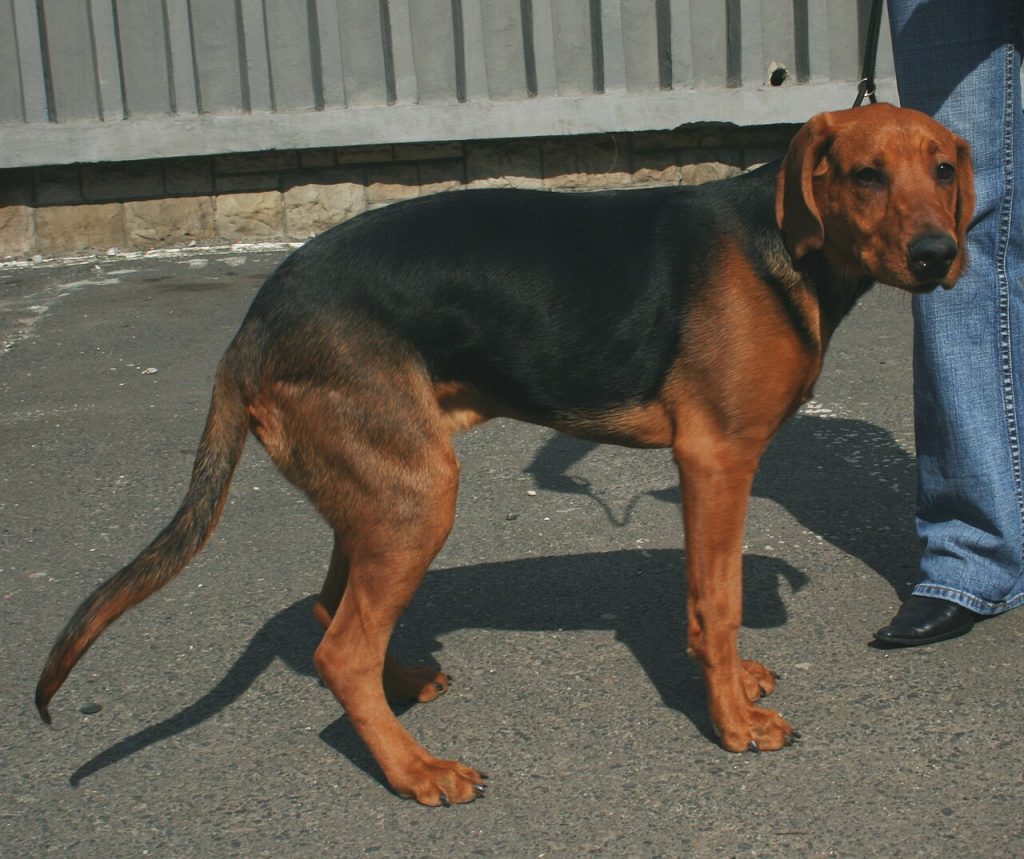
The Schillerstövare is a medium-sized, sleek and athletic Swedish hound, bred to track and chase fox and hare for hours through the snowy forests of Sweden. Black fur and fire, lively temperament and amazing endurance, the Schillerstövare is first and foremost a working hunting dog: a tireless companion for anyone looking for a long-distance runner or a four-legged athlete, rather than a couch dog.
Is the Schillerstövare for you?

Before you fall in love with their appearance and sweet look, you should understand what kind of dog the Schillerstövare is. It’s not just a companion breed: He’s a purebred hound with strong instincts and needs. It fits wonderfully with hunters, long-distance runners, mantrailing or canicross enthusiasts and very active families living in the countryside. On the other hand, it can be exhausting for someone who is sedentary, has little time, or is looking for a quiet indoor dog.
Points in favour
- Balanced, lively and sociable, without aggression.
- Exceptional physical endurance – a perfect companion for sport and hunting.
- Short coat of very simple maintenance.
- Rustic and healthy breed, with no prominent hereditary diseases.
- Intelligent and thoughtful, he’s very attached to his people.
- Good temper with children and other dogs.
Points to Consider
- He needs a lot of daily exercise; he gets frustrated without it.
- Strong hunting instinct: unreliable loose around wildlife or cats.
- The so-called slope: follow the trail and disconnect from the guide.
- Powerful hound voice; can give voice when tracking.
- It’s not a floor dog or for sedentary people.
- Rare breed outside the Nordic countries, hard to come by.
Character and temperament
The breed standard describes the ideal temperament of the Schillerstövare as lively and attentive, and that definition sums up its essence well. It is an alert, curious, energetic dog that is alert to everything around it without becoming nervous or suspicious. At work he is tenacious, courageous, and has a remarkable hunting instinct; at home, when he has spent his energy, he is affectionate, quiet, and very close to his family.
It’s not a one-person dog: gets along well with all members of the household and enjoys company. Of course, it drags along the independence typical of hounds. He’s used to working at a distance from the hunter, making his own decisions about the trail, and that shows in his day-to-day: He obeys when he understands why, but he’s not a submissive dog who waits for orders. Understanding that mixture of docility and autonomy is key to living with him.
Coexistence: children, other pets, flat and loneliness
With people, the Schillerstövare is a friendly and sociable dog. It usually gets along well with children, with whom it shares energy and playfulness, always under the reasonable supervision that any dog of this size deserves.

Their hunting instinct is strong and authentic: cats, rabbits, rodents or chickens can awaken in them the impulse to chase.
As for the floor, we ‘ve already said: It’s not his medium. He can adapt if you give him the exercise he needs, but a shut-in, boring Schillerstövare is an unhappy dog who will look for undesirable exhaust valves. And the loneliness isn’t doing well either. It’s a social dog that suffers if it spends too many hours alone, something that can translate into howling, wrecking, or anxiety. He needs company and an active routine.
Education and training
Training a Schillerstövare is an exercise in patience and motivation rather than imposition. It is an intelligent and attentive dog, able to learn quickly, but its independence and its orientation to smell make it not always willing to collaborate. It works very well with positive reinforcement: prizes, play and a cheerful voice yield much more than toughness, which only gets it to close.
The early socialization is essential: The more people you know about your puppy (people, dogs, noises, environments), the more balanced you will be as an adult. The great workhorse is the called. When a hound catches an interesting trail, its brain goes into “hunting mode” and the rest of the world disappears, including its owner. Working the lap from a very young age, in controlled environments and with very high-value rewards, is essential; even so, many specimens will never be 100% reliable loose in the open field.
Exercise and activity
Here’s the heart of this breed. The Schillerstövare was selected for running for hours tracking prey through rough terrain, and that endurance is still intact. It needs a lot more than a couple of short walks: we’re talking one or two long hours of intense activity a day, and the more varied, the better.
He loves long runs, tracking, sniffing games and any canine sport that combines body and head: You know, canicross, mantrailing, cross country. For a hunter, he’s a first-rate working dog. For those who don’t, you need to supplement that function with exercise and constant mental stimulation. A well-exercised Schillerstövare is calm and happy at home; one who does not expend his energy becomes a problem.
Care: fur and hygiene
In this section the Schillerstövare is appreciated. Its hair is short, hard and attached to the body., without wool or undercoat apparatus, which makes it very easy to maintain. A weekly brushing is enough to remove the dead hair and keep the cloak clean and shiny; in times of mud you can brush a little more often.
The rest of the care is the basics of any dog: checking and cleaning the hanging ears regularly (they ventilate less and can accumulate dirt), controlling the cutting of nails, taking care of the dental hygiene and keeping up with deworming, especially if you spend a lot of time in the mound.
Foodstuffs
Being an athletic and very active dog, the Schillerstövare needs a quality and energy-efficient food. In hunting seasons or intense sports, its caloric needs rise significantly, while in rest periods it is advisable to adjust the rations so that it does not gain too much weight.
A balanced diet, rich in protein from a good source and adapted to its age, size and activity level, is ideal. As with all dogs with relatively deep breasts, it is prudent to avoid vigorous exercise just before or after eating.
Health and life expectancy

The Schillerstövare is a rustic and healthy breed. No particular hereditary diseases or extraordinary health problems have been documented associated with the breed, something uncommon and which speaks well of its functional selection, always oriented to work and endurance above extreme aesthetics.
This does not mean that it is free from general care: periodic veterinary checkups, vaccination, deworming and weight control are just as important as in any other dog.
Physical appearance
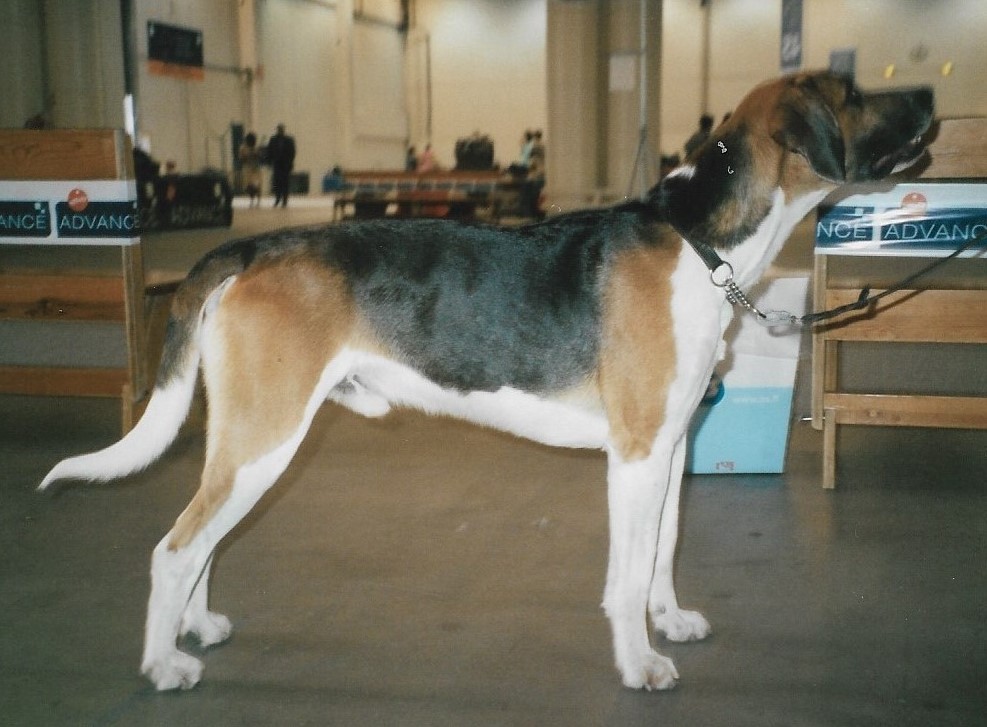
The Schillerstövare is a medium to large size hound, of light, dry and athletic build, designed for speed and endurance.
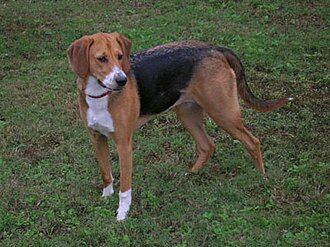
His identification number is black and fire: body of cinnamon or lions with a characteristic black mantle covering the back, like a saddle. The hair is short, hard and attached to the body.. The the ears are dangling., wide and of moderate length, and the the tail is long. and is worn in line with the back when the dog runs. The head is noble and the expression, attentive. The standard penalizes defects that make running difficult, such as poor angulation between the scapula and the arm or limited back movement, in addition to the “crushed” face or distant character: Everything in this race is designed to work well in the field.
Origin and history
The history of the Schillerstövare is that of a hunting dog forged in northern Europe. Its roots go back to the southern Germany, where Swiss hounds were crossed with the English Harrier, resulting in a fast and hardy type of hound that would come to Sweden.
The breed takes its name from Per Schiller (1858-1892), a Swedish farmer who introduced these dogs at the sweden’s first dog show, in 1886, where they drew attention for their quality. The The Swedish Kennel Club officially recognized the breed in 1907. Since then, the Schillerstövare has established itself as one of the favourite hunting dogs of the Nordic countries. Internationally it is recognized by the Fédération Cynologique Internationale (FCI) with the number 131, and in 2006 it was also recognized by the United Kennel Club in the United States, in addition to several minor registries and hunting clubs.
Curiosities
- Its name translates into English as Schiller Hound, i.e. “Schiller sausage”, in honor of the farmer who made it known.
- Despite its Swedish name, its ancestors come from southern Germany: a mixture of Swiss hounds and the British Harrier.
- It is one of the most prized Swedish hounds for hunting fox and hare, tasks for which it was specifically selected.
- It is a pure functional breed: its standard prioritizes efficiency on the field over beauty, and penalizes any trait that hinders the race.
- Outside Scandinavia it is a very rare breed, making it a real rarity for dog lovers in Spain.
If you are attracted to the Schillerstövare because of its energy and hardworking nature, you may be interested in other tracking and hunting dog breeds with which it shares instinct and needs. You can take a look at the Beagle, a dog with a portentous nose and more manageable size; the Basset Hound, another dog with exceptional smell; the unmistakable Bloodhound, the quintessential tracker; or the fast Greyhound if what catches your eye is endurance and speed in the race.
Frequently asked questions about the Schillerstövare
Is the Schillerstövare a good dog for living in a flat?
It’s not their ideal environment. The Schillerstövare is a Swedish hunting dog bred to run for hours tracking fox and hare, and needs a lot of daily exercise. It can live on a floor if you guarantee it long walks, runs and stimulation, but it fits much better in a house with land and in the hands of active people or hunters.
Does the Schillerstövare bark or howl a lot?
As a good hound, it has a powerful voice and a natural tendency to give a voice when following a trail. At home it is not a compulsive barker, but if it is bored or senses an interesting smell it can vocalize. Sufficient exercise and not leaving it alone for too long greatly reduce this behavior.
Do you get along with children and other dogs?
Yes. It is a lively, sociable and balanced dog that usually gets along well with children and other dogs, especially if it socializes from a puppy.
How long does a Schillerstövare live?
With good nutrition, exercise and veterinary care, a Schillerstövare usually lives for around 12 to 14 years.
Is it easy to train the Schillerstövare?
It is intelligent and attentive, which helps, but it is also independent and very guided by smell, something typical of hounds. It responds well to positive reinforcement and short, motivating sessions. The call is the most difficult point: when following a trail, it tends to disconnect from the guide, so it is advisable to work hard and patiently.
How much exercise do you need a day?
We’re talking about a long-distance hunter with tremendous endurance. He needs at least one or two long hours of intense activity a day: running, long walks, tracking or dog sports. Without that physical and mental wear and tear, he becomes frustrated and can become noisy or destructive.
Does the Schillerstövare lose a lot of hair?
Her hair is short, hard, and attached to her body, which is very easy to maintain. She loosens her hair moderately and only brushes it once a week to keep it clean and shiny.
Is it a rare breed outside Sweden?
Yes. The Schillerstövare is very popular as a hunting dog in Sweden and the Nordic countries, but outside it is a rare breed. It is recognized by the FCI (number 131) and other registries, although it is difficult to find in Spain and much of Europe.