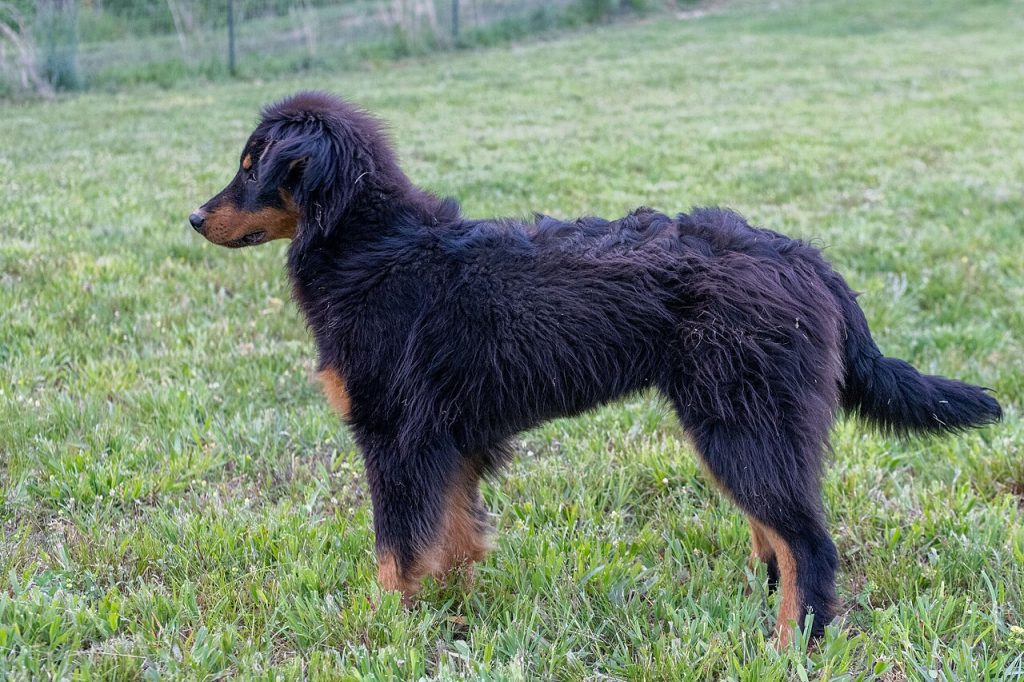
The English Shepherd is one of those dogs whose name puzzles you: Despite being called “English Shepherd”, it is a farm breed born and forged in Estados Unidos. Descended from collies brought to the New World by British and Irish colonists, the English Shepherd is a versatile, smart, loyal and deeply family-bound herding dog bred for generations to run an entire farm: herding sheep and cows, guarding the pen, hunting rats and, in the evening, lying by the fireplace. If you’re looking for a hard-working, well-balanced, high-headed companion, here’s one of the most versatile and lesser-known breeds on the continent.
Is the English Shepherd for you?
The English Shepherd is a working dog of body and soul. That makes him an extraordinary companion for the right person or family, and a source of frustration for anyone looking for a quiet couch dog. Before you fall in love with his intelligent gaze, be honest with yourself about the pace of life you can offer him.
It suits you if…
- You live in the country, in a house with land or you lead a very active life.
- You want a very smart dog, capable of learning almost any task.
- You’re looking for a loyal partner, “of one family”, always looking out for you.
- You enjoy training, dog sports or working with livestock.
- You value a natural guard dog, alert but not aggressive.
- You can keep him company. He hates spending the day alone.
You better think about it if…
- You spend many hours away from home and there’s no one with him.
- You live in a small apartment with no easy access to the outside.
- You don’t feel like spending time each day exercising and mentally stimulating.
- You want an independent dog that’ll “entertain itself”.
- You don’t like your hair at home or brushing regularly.
- It’s your first dog and you don’t have time to channel that much energy.
Character and temperament

If we had to sum up the English Shepherd in one word, it would be it ‘s sensible .. It is not a nervous dog or an automaton that fires reflexes without thinking; it is a worker who evaluates the situation and decides. This intelligence with its own criteria makes it fascinating and, at the same time, demanding: it needs a guide to give meaning to its day.
It is a very attached to his people dog. The farm breed selected dogs that wanted to be close to the farmer, attentive to every gesture, and that trait remains intact. The typical English Shepherd follows you from room to room, watches you from a distance while you work, and turns away to please.
He also inherits a strong the guardian instinct . It is neither an attack dog nor a boastful barking dog, but it is alert, territorial with judgment and wary of strangers until it checks that there is no threat. Well socialized, he is a balanced watchdog: He warns, observes and relaxes as soon as he understands that everything is in order. Add to this a shepherding and controlling instinct that can surface with children, other animals, or even bicycles, and you have the portrait of a dog that is always “on call”.
Coexistence: children, other pets, flat and loneliness
With children: The English Shepherd is usually an excellent family dog, patient and protective of the little ones in his house. It is convenient, of course, to monitor his shepherding instinct: some specimens try to “catch” children who run by giving them touches.
With other pets: is raised on farms alongside cattle, cats, chickens and other dogs, and tends to get along well with everyone if it grows up among them.
On the floor: is not his ideal habitat. An English Shepherd can live in a city if you guarantee him several long outings, intense exercise and daily mental stimulation, but he leaves at a disadvantage in front of a house with land. Without a job to do, he looks for his own: barking, watching the window, controlling everyone who passes by.
Soledad: is probably its most delicate point. This breed is not made to be left alone for long hours. Isolation causes anxiety, barking and destructive behavior. If you work out all day and no one accompanies you, this is not your dog.
Education and training
Here it shines. The English Shepherd is one of the easiest dogs to train out there — if you know how to motivate it. It learns fast, remembers what it learns, and enjoys solving problems. Its willingness to collaborate — the famous “biddability” of farm dogs — makes positive reinforcement work wonderfully.
The keys to this breed:
- It starts soon. Early socialization with people, noises, animals and environments defines a balanced adult.
- Give him a job. Advanced obedience, agility, shepherding, searching, tricks… you need to use your head, not just your body.
- Be consistent and fair. is a sensitive dog; harshness turns it off.
- It channels instinct. Redirects their tendency to graze and watch towards games and concrete tasks.
A bored English Shepherd is a dog that invents occupations, and you rarely like them.
Exercise and activity
We’re talking about a high farm dog with energy and remarkable endurance. It doesn’t just need a short walk around the block: it needs real movement and, above all, purpose. A realistic routine includes long walks, runs, active play and, ideally, some activity that gets its mind working.
It fits wonderfully in sports and disciplines such as agility, obedience, flyball, canicross, shepherding tests or search and rescue work. For an active family in the countryside, it is the ideal companion for walks, hiking and outdoor life. The rule is simple: the more body and head you spend during the day, the more quiet and pleasant it will be at home.
Care: fur and hygiene

The English Shepherd wears a double coat, with an outer coat of medium to long hair (straight or wavy) and a subcoat that insulates it from cold and moisture.
Maintenance is eligible:
- Cepillado: once or twice a week is enough in the regular season to avoid knots and distribute the natural fat.
- Baño: only when you really need it, its coat gets less dirty than it looks, and the mud usually only falls off when it dries.
- Ears, nails and teeth: checks your ears after you’ve been out in the field, cuts your nails when they ring when you walk, and keeps your teeth clean regularly.
If you’re looking for a dog that “doesn’t shed hair” you should rule out this breed: mute, and quite, twice a year.
Foodstuffs
As a medium-sized, active dog, the English Shepherd needs a complete and balanced diet, adjusted to its actual energy expenditure.
Some sensible guidelines: divides food into two servings instead of one; chooses high-quality food with a good protein ratio to maintain muscle strength; constantly monitors weight (you should notice the ribs without seeing them) because being overweight punishes your joints; and adjusts the amounts according to age, activity, and time of year. In puppies, it controls growth too quickly. If you have any questions about specific rations or diets, your veterinarian is the best reference.
Health and life expectancy
The English Shepherd is, as a general rule, a rustic and healthy dog. Having always been bred as a working animal and not as an exhibition dog, its genetic stock remained broad and functional, which translates into a robust breed and not prone to extreme problems.
As with any breed, it is advisable to know the conditions to be monitored and to require breeders to undergo appropriate testing. In herd-type dogs of its size, the classic checkpoints are hip and elbow dysplasia, certain hereditary eye problems and sensitivity to certain drugs associated with lines of collie ancestry. Regular veterinary checkups, good nutrition, adequate exercise, and the usual preventive care (deparasitization and daily vaccination) are the best recipe for a healthy adult.
Physical appearance
The English Shepherd is a medium size dog, of balanced build and natural appearance, without exaggerations.
- Altura: between 46 and 58 cm at the withers, approximately.
- Peso: about 18 to 29 kg. Males are usually clearly larger than females.
- Cabeza: proportionate, with attentive and friendly expression, and ears that usually wear half-dropped.
- Double Manto:, straight-haired, wavy or even curly, short and smooth on face, skull and front of legs, with fringes on extremities and tail.
As for the colour, the breed wears four traditional combinations: black and white, black and fire, sword and white and tricolor(black, white and fire).
Origin and history

The history of the English Shepherd begins, paradoxically, far from England. Its ancestors were the collies of different types that the first settlers from Great Britain and Ireland brought with them to the New World. From that common trunk emerged, by different paths, today’s famous breeds such as the Border Collie, the Long-haired collie and the Pastor Australiano; the English Shepherd is, in a way, the American cousin who stayed on the farm.
And he worked on it. During the 19th century and much of the 20th, these dogs were a staple of family farms in the eastern states of the United States. The United States Their function was not just one, but all of them: Shepherded sheep and cattle, guarded property, kept rats at bay, and served as faithful companions. He was the quintessential all-terrain farm dog, valued for his actual utility rather than his pedigree.
United Kennel Club (UKC) records specimens of the breed from 1927. Interestingly, he originally named it the “American Farm Shepherd”, a name much more faithful to its origin, and it was not until 2003 that it was officially renamed the English Shepherd. The breed is not recognized by the American Kennel Club or the FCI, and retains that character of an authentic working dog, bred to serve rather than compete.
Curiosities
- A very American Englishman: Despite its name, the English Shepherd is an American breed from head to toe.
- Change of name: until 2003 was officially known as the “American Farm Shepherd”, a designation that better described his role.
- Distinguished kinship: shares ancestry with the Border Collie, Collie and Australian Shepherd.
- Dog of a thousand trades: in one day could graze, watch, hunt rats and keep the family company.
- Own herding style: works “up close” and judiciously, without the hypnotic, intense gaze of the Border Collie.
- Rare outside the U.S.: remains uncommon in Europe, making it an almost unknown gem for many sheepdog lovers.
If you are attracted to the hardworking nature and versatility of the English Shepherd, you will be interested in meeting his relatives and other equally brilliant herding breeds: the tireless Border Collie, the multifaceted Pastor Australiano, the sleek Collie and the intelligent Shepherd of Shetland.
Frequently Asked Questions about the English Shepherd
Is the English Shepherd the same as the Old English Shepherd (Bobtail)?
No, they are completely different breeds. The English Shepherd is a medium-sized American farm dog descended from collies, while the Bobtail or Old English Sheepdog is a large and very hairy British breed. They only share some confusion over the name.
Is he a good dog for families with children?
Yes, he is usually an excellent family dog – patient, loyal, and protective of his own.
Can he live in a flat?
It’s not ideal. It can adapt if you guarantee it plenty of daily exercise and mental stimulation, but it’s a high-energy farm dog that enjoys space and having a job.
How much exercise do you need?
It needs real daily movement (long walks, running, play) and, above all, mental activity. It shines in dog sports such as agility, obedience or shepherding tests. The more you spend body and head, the calmer it will be at home.
You lose a lot of hair and it’s hard to take care of?
It has a double coat and moults intensely twice a year. With a brushing once or twice a week (daily in moult season) is enough. It does not need professional hairdressing, but it is not a breed for those who do not want hair at home.
Is it recognized by the FCI or the AKC?
No. The English Shepherd is not recognized by the FCI or the American Kennel Club. It has been registered by the United Kennel Club (UKC) since 1927, originally under the name “American Farm Shepherd”.
How is it different from the Border Collie?
They share common ancestry, but the English Shepherd is more versatile and less obsessive, shepherds closely and with judgment, without the fixed, hypnotic gaze of the Border, and is usually a more complete farm guardian.
How long does an English Shepherd live?
It is a rustic and long-lived dog for its size. Its life expectancy is usually around 12-15 years with proper care, balanced feeding and regular veterinary checkups.