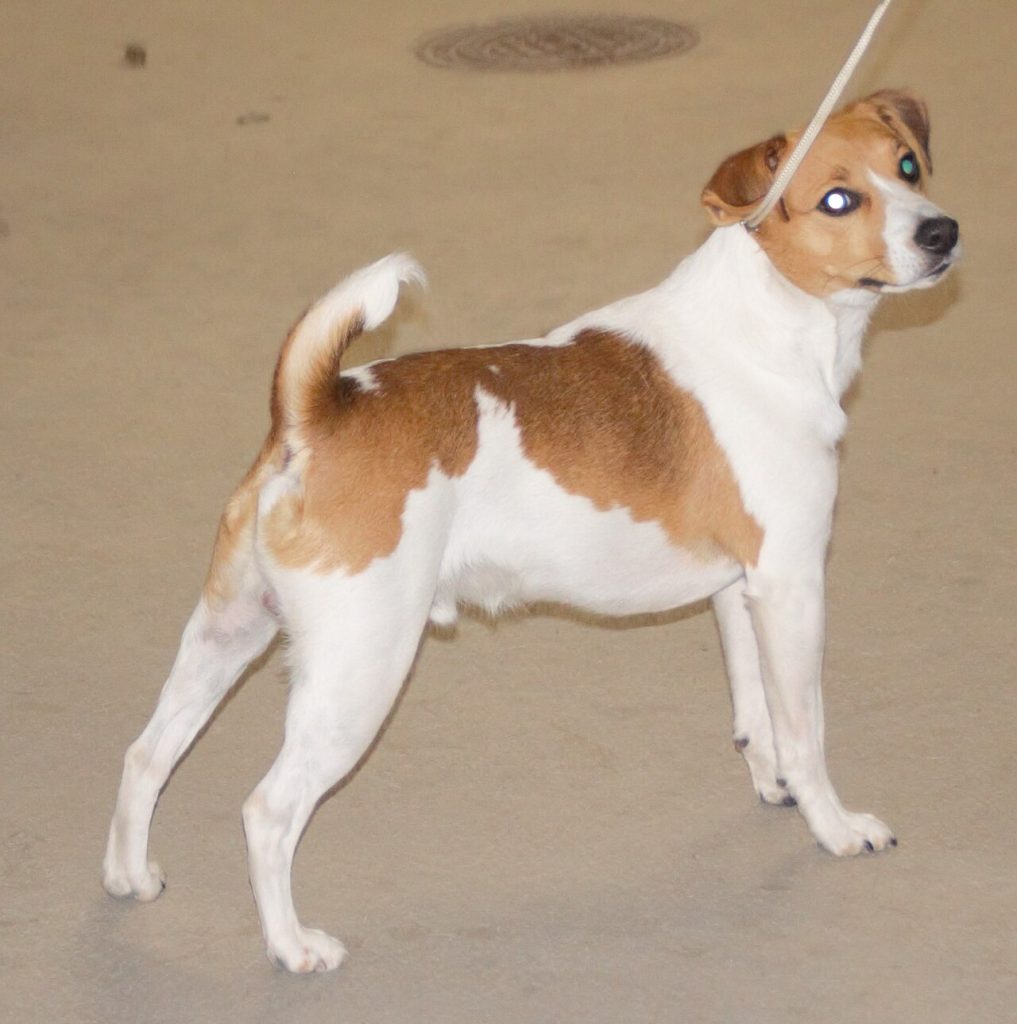
The Danish and Swedish farm dog(in Danish and Swedish, Dansk/svensk gårdshund) is a small, lively and surprisingly versatile dog that for centuries was the all-terrain of Scandinavian farms.
Is the Danish-Swedish Farm Dog for you?

Before you fall in love with his waking face, it’s good to know what kind of dog you’re engaging. The Danish and Swedish Farm Dog is a farm dog converted into a family pet: She needs activity, companionship, and an owner who appreciates her independent but caring nature. It’s not a decorative dog or a permanent couch dog; it’s a small athlete with a terrier head and a family dog heart.
In favour .
- Comfortable size and practical for home or flat.
- Very healthy, rustic and long-lived.
- Short coat, easy to maintain.
- Intelligent and willing: he learns fast.
- Loving and loyal to the whole family.
- Multipurpose: shines in dog sports.
To be taken into account
- He needs daily exercise and mental stimulation.
- Strong hunting instinct for small animals.
- Warn him by barking if he’s not polite.
- He doesn’t like prolonged loneliness.
- Rare breed: restricted breeders.
- Your terrier side can be a little stubborn.
Character and temperament
The Danish and Swedish farm dog brings together the best of both worlds. On the one hand, he has the sweetness and affection of a pet dog: is gentle, quiet at home and devoted to his family, with whom he seeks constant contact. On the other hand, it retains the sparkle, courage, and determination of its British pinscher and hunting terrier ancestors, giving it that sharp, resolute point of a dog so beloved by those who already know it.
It’s a cheerful, curious dog and very attentive to what’s going on around it. This vigilance inherited from his work on the farm makes him a good warning dog – warning of visitors and of anything new – without becoming aggressive or nervous. Well socialized, friendly with people and rarely shy or frightened. His emotional balance is one of his great attractions: It combines energy when you play with the ability to relax and lay down beside you when the day calms down.
Of course, it is not a dog that is content to stare out the window. It needs to feel part of family life and have something to do. Bored or ignored, it may become insistent, barking, or seeking its own entertainment, usually at the expense of your shoes or the garden.
Coexistence: children, other pets, flat and loneliness

With children: is an excellent playmate. Its medium-small size, its resistance and its patient character make it ideal for families with children, always within mutual respect: you have to teach the little ones not to disturb it when it rests and to treat it with care.
With other pets: usually gets along well with other dogs, especially if it socializes from a puppy. With cats it can coexist without problems if they are raised together. The important nuance is its hunting instinct: it was for generations a top mouse hunter, and that impulse is still alive. Hamsters, rabbits, birds or loose rodents can awaken its predatory side, so it is advisable to monitor and separate.
On the floor: is perfectly adapted to apartment living due to its size and cleanliness. The condition is clear: it is not a sedentary dog. If it lives on the floor, it needs frequent outings and physical and mental relaxation to be calm inside.
In the face of loneliness: is a very social dog that does not enjoy spending long hours alone. It tolerates loneliness better if it is accustomed to it gradually from puppyhood and is left with interactive toys, but whole days without company are not his thing and can lead to anxiety or destructive behavior.
Education and training
Training a Danish and Swedish Farm Dog is, in general, a rewarding experience. It is an intelligent, observant dog with a great desire to please, a combination that accelerates learning. It responds especially well to positive reinforcement – rewards, play, caresses – and to short, dynamic and varied sessions, which fit with its alert mind and working dog attention.
Early socialization is the key piece: exposing him as a puppy to people, dogs, noises, environments and different situations ensures a safe and sociable adult. It is also good to work on calling and controlling your chase instinct early, because your hunter’s past may lead you to run after a cat or a squirrel. Teaching him early on how to respond well to the call and reinforcing his attention to you will prevent many scares.
His terrier heritage occasionally shows up in the form of stubbornness or wanting to do things his way. He is not a difficult dog, but responds poorly to harsh methods: gentle firmness, consistency, and patience yield much better results than imposition.
Exercise and activity
Here is the key to understanding this breed. The Danish and Swedish farm dog was bred to work from sunrise to sunset on the farm, and that energy is still inside of him. He needs a medium to high level of exercise: ideally, combine one or two daily walks of good duration with moments of play, running and, above all, mental stimulation.
It’s a dog that excels in canine sports. His agility, speed and intelligence make him shine in disciplines such as agility, flyball, tracking, nose work or obedience tests. These activities not only keep him fit, but they channel his head and strengthen the bond with you. Search games, food puzzles, and scent challenges are a great resource for days when you can’t go out as much.
A well-exercised Danish and Swedish farm dog is a calm, balanced and happy indoor dog. One who is bored, on the other hand, will find a way to expend his energy on his own, and you will rarely like the result.
Care: fur and hygiene

The owner of a Danish and Swedish farm dog is grateful for the simplicity of its maintenance. Its coat is short, hard, smooth and attached to the body, designed to withstand the weather without much care. A weekly brushing is enough for almost the whole year to remove the dead hair and keep the skin healthy; during seasonal moults it is advisable to increase the frequency to control the fall.
He doesn ‘t need frequent baths . with bathing him only when he’s really dirty is enough, since his hair repels dirt pretty well. The rest of the hygiene is routine for any dog: check and clean your ears to prevent infection, brush your teeth regularly to maintain dental health, and cut your nails when they don’t wear out on their own with exercise. You should also watch your pillows and eyes, especially after you go out in the field.
Foodstuffs
The Danish and Swedish farm dog is not a particularly demanding dog with food, but as a good active dog it appreciates a quality diet well adjusted to its energy expenditure. Ideally it is to offer it a complete and balanced food, adapted to its age (puppy, adult or senior), to its size and to its actual level of activity, divided into one or two daily intakes.
Since it is a small, muscular dog, it is advisable to monitor rations to avoid being overweight, which is one of the few health problems that can really affect it and that burdens its joints. Sweets are a great tool for training, but they have to be counted in the daily ration. Fresh water always available and weight monitoring complete the basic care. If you have any doubts about the quantity or type of diet, it is best to consult your veterinarian.
Health and life expectancy
One of the great virtues of the Danish and Swedish farm dog is its robustness. Being a native, functional breed and never selected for extreme traits, it retains a healthy genetics and a rustic constitution that translates into few hereditary problems and a remarkable longevity. Most specimens enjoy an active life around 11 to 14 years, and many reach full fitness into old age.
It is not a breed marked by specific serious diseases, which differentiates it from many more manipulated breed dogs. Still, like any dog, it can present common problems and should be kept up-to-date with veterinary checkups, vaccinations, and deworming. Weight control, dental hygiene, and a good exercise routine are the best allies in keeping you healthy. Going to responsible breeders who perform the recommended health tests is the safest way to start from a puppy with a good genetic foundation.
Physical appearance
The Danish and Swedish Farm Dog is a small, compact dog, but never clicks: It conveys agility, restrained strength and harmonious proportions. According to the FCI standard, it measures between 30 and 39 cm to the cross, with a body slightly longer than high (the ratio between the height to the cross and body length is 9 to 10) and an approximate weight of about 7 to 12 kg. It is essentially a rectangular, athletic, well-muscled dog.
The head is rather small and triangular in shape, with a well-marked stop !(the depression between forehead and muzzle) and an alert and friendly expression. The ears are of high insertion, folded or semi-submerged. The tail can present itself in three ways: long, semi-short or naturally short (stump tail). The coat is short, hard and smooth, and its hallmark is the colour: white always predominates, dotted with one or several spots that can be black, brown (liver), fire color or tricolor combinations. Each specimen looks like this, a unique pattern.
Origin and history
The Danish and Swedish Farm Dog is an ancient breed and native to the Øresund environment, the strait that separates the Danish island of Zealand from the southern tip of the Scandinavian Peninsula. On both sides of that arm of the sea, in Denmark and in the Swedish region of Scania (Skåneland), these dogs lived and worked on farms for centuries as true all-terrainers: They guarded the house and the cattle, hunted rats and other animals, helped with minor hunting and collaborated in managing the herd.
It is thought to have originated from the confluence of pinscher-type dogs and British-bred hunting terriers, a mixture that explains both its silhouette and character. Historically it was also known as Danish Pinscher(Danish pinscher). With the industrialization of Denmark starting in the 1870s, its traditional function was disappearing and its population began to decline, to the point that the breed was on the brink of extinction in the eighties of the twentieth century.
Their salvation was a joint effort: the canine clubs of Denmark and Sweden collaborated to recover the breed and, in 1987, it was officially recognized in both countries. In 1989 he performed for the first time at the World Dog Show. Most recently he crossed the Atlantic: The American Kennel Club incorporated it into its Foundation Stock Service in 2011 and finally recognized it officially in 2025. Nevertheless, it is still a relatively uncommon breed outside Scandinavia.
Curiosities
- Despite its name and its historical classification as a “Danish pinscher”, the FCI places it in Group 2 within the pinscher type, although its appearance and work also recall terriers.
- It is a shared breed between two countries: neither only Danish nor only Swedish.
- Their tail can be born naturally short (stumped) without any intervention, a genetic variation peculiar to the breed.
- It was on the brink of extinction in the 1980s and owes its survival to cross-border collaboration between the Danish and Swedish canine clubs.
- No two dogs are alike: The pattern of spots on the white background is unique in each dog, almost like a fingerprint.
If you are attracted to the Danish and Swedish farm dog because of its mix of manageable size, energy, and balanced character, you may also be interested in other small and medium-sized breeds that are just as alert and versatile. You can take a look at the Border Collie, a reference in canine intelligence and sports; the sociable and playful Beagle; the industrious Pembroke Welsh Corgi, another big little farm dog; or the sleek and athletic Whippet.
Frequently asked questions about the Danish and Swedish farm dog
Is the Danish and Swedish farm dog a good family pet?
Yes. It is a balanced, affectionate and very attached dog who enjoys family life and gets along well with children when they grow up together and their rest times are respected. Its manageable size and sociable character make it an excellent family companion, provided it receives the exercise and companionship it needs.
How long does a Danish and Swedish farm dog live?
It is a rustic, long-lived breed. Most live to be about 11 to 14 years old, and it is not uncommon for some to exceed that with good nutrition, regular exercise, and regular veterinary checkups.
Does he bark a lot?
He has a warning instinct inherited from his past as a farm guardian, so he barks to announce what catches his eye, but he is not a compulsive barker.
Does he adapt to living in a flat?
Yes, as long as it meets its need for daily exercise and mental stimulation. It is a small and clean dog, comfortable indoors, but active: on a floor it needs several outings a day and play. It is not a garden dog to be left alone; it wants to be with its family.
Is he an easy dog to train?
It is quite alert, attentive and loves to collaborate with its person, which facilitates learning. It responds wonderfully to positive reinforcement and to short and varied sessions. Its terrier side may emerge in the form of punctuated headbanging, but with patience and constancy it learns quickly.
Do you need a lot of exercise?
It needs a medium to high level of exercise. With one or two long walks a day, moments of play and some mental work, it is satisfied. It especially enjoys dog sports such as agility, flyball or crawling, where it shows its agility and intelligence.
Do you lose a lot of hair?
Its coat is short and easy to maintain. It loosens its hair moderately, with a couple of more marked seasonal mouldings. A weekly brushing is sufficient for most of the year to keep the house clean and the coat in good condition.
Do you get along with other dogs and cats?
In general, it is sociable with other dogs and can live well with cats if it grows up with them. However, it retains a strong hunting instinct towards small animals (rodents, birds), inherited from its work as a mouse hunter, so it is advisable to supervise it with pets such as hamsters or rabbits.