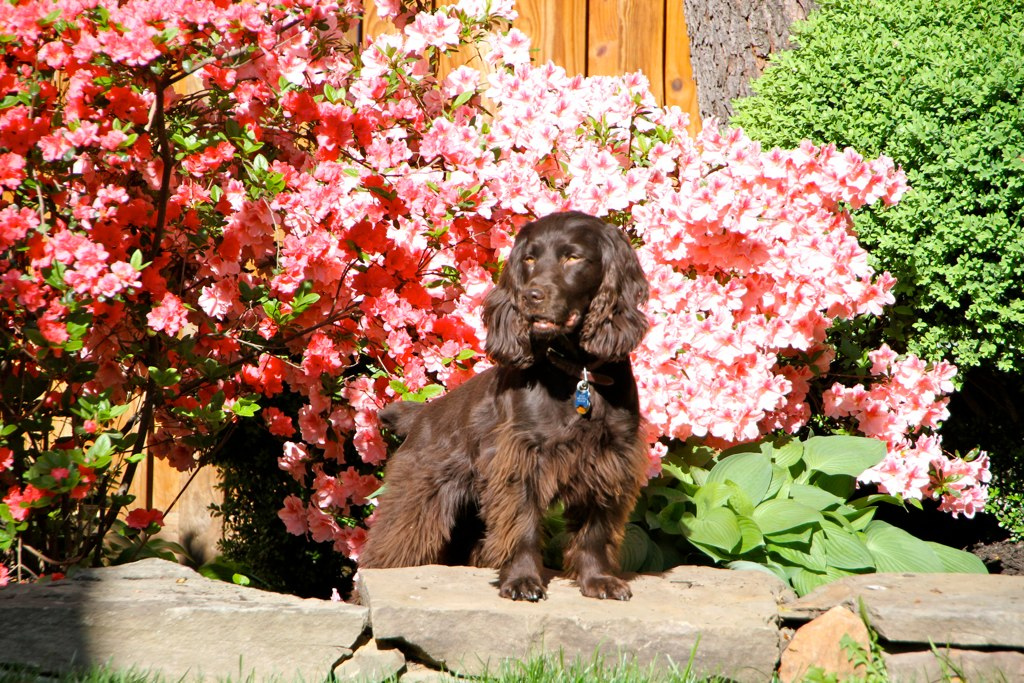
The Boykin Spaniel is a medium-sized collector spaniel, born in the swamps of South Carolina in the early 20th century to hunt wild turkeys and ducks without stumbling the canoe. Behind that chocolate fur and those amber eyes is a dog relentless in the countryside and surprisingly tender at home: sociable, docile and very close to his family. If you’re looking for a sporty, balanced, manageable-sized companion, the Boykin Spaniel deserves a thorough introduction.
Is the Boykin Spaniel for you?
The Boykin Spaniel is a hunting dog adapted to family life, but it is still an athlete with a hard-to-turn off engine. It works wonderfully with active people and sportsmen who enjoy the outdoors, and may be frustrated with sedentary owners who are looking for a couch dog. Before you decide, weigh what it offers and what it demands.
Points in favour
- Sweet character, sociable and very people-oriented.
- Excellent with children and other dogs.
- Medium size and manageable, easy to transport.
- Very intelligent and eager to please: he learns fast.
- Multipurpose: hunting, dog sports, hiking, water.
- Moderate maintenance coat, no great aesthetic requirements.
Points to Consider
- It needs a lot of daily exercise; bored, it becomes destructive.
- He’s very attached. Long-term loneliness is bad for him.
- Genetic predisposition to exercise-induced collapse (EIC).
- Health to be monitored (hip, heart, eyes).
- He loves water and mud. Get ready to clean.
- Rare breed outside the United States: few breeders in Europe.
Character and temperament

If we had to sum up the Boykin Spaniel in one word, it would be nice guy .. It is a friendly, stable and deeply social dog, bred to work side by side with its hunter and not to lose its nerve in the boat or in the field. That same serenity takes it home: it rarely gets angry, is not aggressive and tends to get along well with everyone.
The Boykin enjoys having a mission – picking up a ball, tracking a scent, swimming to a toy – and is highly motivated by interaction and play. It is alert, curious, and likes to be in the middle of family action; isolation feels fatal.
It is also a dog that seeks affection without concealment: it seeks contact, follows you around the house and thanks you for your attention.
Coexistence: children, other pets, flat and loneliness
With children: The Boykin Spaniel is one of the most recommended hunting breeds with children. It is patient, tolerant and extremely stable around them, although its energy and enthusiasm should be monitored with the youngest to avoid pushing in full play.
With other pets: usually gets along very well with other dogs and, socialized since puppyhood, also with cats.
On the floor:‘s medium size makes it viable in an apartment, but only if you cover its exercise needs. It is not a quiet indoor dog by nature: without enough physical and mental activity, a floor is too small for it.
Soledad: here is his Achilles heel. The Boykin is so attached that long absences weigh on him, and he may develop separation anxiety, barking or destructive behaviors.
Education and training
Few breeds make it as easy to train as the Boykin Spaniel. It is very intelligent, learns quickly and, above all, do you want pleases: that combination of brain and will makes it a model learner. It responds wonderfully to positive reinforcement – rewards, play, praise – and shuts down to harsh methods, which it does not need at all.
Its origin as a collection dog gives it a natural predisposition to bring objects and work with the guide, which greatly facilitates basic commands and obedience exercises. It harnesses that intelligence with short, varied and motivating sessions: boredom is its worst enemy and an unoccupied Boykin finds only in what to entertain itself, almost never for good.
Early socialization is key even if it is a factory sociable dog: exposing him as a puppy to people, noises, surfaces, other animals and diverse environments consolidates that balance that characterizes him.
Exercise and activity
The Boykin Spaniel is primarily a working dog, and its energy level is high. It needs plenty of daily exercise: long walks, running, charging games and, if possible, swimming, one of its favorite activities. It calculates at least one or two hours of intense physical activity a day to keep it healthy and mentally satisfied.
It shines especially in disciplines that combine body and head: hunting trials, agility, obedience, rally, mantrailing or any game of seek and bring.
However, there is an important health nuance: part of the breed has exercise-induced collapse (EIC), so it is advisable to know the dog’s genetic status and dose the effort in very hot conditions.
Care: fur and hygiene

The coat of the Boykin Spaniel is of medium length, smooth to moderately wavy, with soft fringes on the ears, chest, belly and legs.
If your dog is out in the field, its soft coat tends to get caught in spines, twigs, and curls, so check it and, in many cases, trim it regularly to make it easier to clean.
It is the ears, long and fallen, that demands the most attention: being such a watery dog, they retain moisture and can become infected. Check and clean them frequently. Complete the routine with nail trimming, dental hygiene and baths only when necessary.
Foodstuffs
The Boykin Spaniel needs a complete and quality diet, adjusted to its medium size and, above all, to its high level of activity. A working dog or a very athletic dog will burn much more energy than a companion Boykin, and the ration must reflect this to maintain an ideal weight without overloading it.
Split food into two daily servings and watch the scale: although it is an athletic dog, overweight punishes its joints and aggravates problems such as hip dysplasia.
As always, the ideal is to have your veterinarian choose the food and quantities according to your dog’s age, weight and actual activity, and to review the diet throughout his life.
Health and life expectancy

The Boykin Spaniel is, in general, a robust and long-lived dog, with a life expectancy that is usually around 14-16 years. However, like any breed, it carries some hereditary predispositions that should be known and, above all, prevented by responsible breeders who perform genetic tests.
The most characteristic and worrying condition is exercise induced collapse (EIC): a part of the breed does not properly produce the proteins needed to sustain prolonged muscle exertion in hot conditions, which can lead to episodes of collapse and even be fatal.
Other problems monitored in the breed are hypoplasia of the hip– whose prevalence has been steadily declining thanks to selection – , elbow dysplasia, certain hereditary heart disease(such as pulmonary stenosis), eye diseases (including Collie’s eye anomaly), knee dislocation, degenerative myelopathy and endocrine disorders such as hypothyroidism. Before breeding, breeders should undergo tests for hip, heart, eye, kneecap, CIE and myelopathy, and an annual eye exam is recommended.
Physical appearance
The Boykin Spaniel is a medium, compact and muscular spaniel, only slightly taller than the English Cocker Spaniel but clearly heavier and wider in body.
Its most recognizable feature is the colour: a uniform coat in shades of brown, from liver to dark chocolate, accompanied by expressive eyes ranging from bright golden to dark amber.
The ears are long, slender and well populated with hair; the expression, sweet and attentive. Traditionally its tail was amputated leaving about a third of its length, although this practice is banned or in disuse in many countries.
Origin and history
The story of the Boykin Spaniel began around 1900 in Spartanburg, South Carolina, when a small street spaniel fell in love with a banker, Alexander L. White, on his way to church.
In Boykin’s hands, that pedigreeless dog became an exceptional collector of turkeys and waterfowl, and the basis of a new breed that would bear his name. To determine the type, several breeds – including the Chesapeake Bay Retriever, Springer Spaniel, Cocker Spaniel, American Water Spaniel, and some sample breeds – were crossbred in search of a dog small enough to board boats used in the Wateree River swamps.
The Camden area was a tourist and hunting destination, and that helped the Boykin become known throughout the country. In 1977 the Boykin family founded the Boykin Spaniel Society, which opened its book of origins in 1979. The breed was recognized by the United Kennel Club in 1985 and later by the American Kennel Club, which admitted its breed club as a benchmark in 2007. Today it is a dog fully integrated into American canine love, although it remains uncommon outside North America.
Curiosities
- Official dog of a state The Boykin Spaniel is the official dog of South Carolina, and September 1 has been celebrated there as “Boykin Spaniel Day” since 1984.
- “The dog that won’t sink the boat”: its compact size was selected precisely to fit in the small canoes of swamp hunters without unbalancing them.
- A breed with a last name: is one of only two American breeds named after the family that created them.
- From street kid to legend: the entire breed descends, according to tradition, from a single stray dog named Dumpy.
- All-terrain fighter: serves as much as a collector in water as lifting birds on land, and even tracking wounded parts.
If the Boykin Spaniel’s balanced character and passion for collecting have won you over, you may be interested in other related breeds. Its closest relative in spirit is the Cocker Spaniel, who participated in its creation; great water collectors include the Labrador Retriever and Golden Retriever; and if you’re looking for another versatile and athletic hunting dog, check out the Vizsla.
Frequently Asked Questions About the Boykin Spaniel
Is the Boykin Spaniel a good family dog?
Yes. It is one of the most recommended hunting spaniels as a family dog: friendly, stable, very good with children and other dogs, and deeply attached to its people. It needs, of course, daily exercise and companionship to show its best version.
How much exercise does a Boykin Spaniel need?
It is a high-energy working dog that requires at least one or two hours a day of intense activity: long walks, running, charging games and swimming. Without enough physical and mental wear and tear, it tends to get bored and develop destructive behaviors.
How long does a Boykin Spaniel live?
Their life expectancy is usually around 14 to 16 years, a remarkable longevity for their size. Good nutrition, adequate exercise, veterinary checks, and responsible breeding with genetic testing help them reach that range in full shape.
What is exercise-induced collapse in this breed?
It is a hereditary disorder present in part of the breed: the dog does not produce well the proteins needed to sustain prolonged muscle exertion with heat, which can cause episodes of collapse and even be fatal.
Does the Boykin Spaniel shed a lot of hair?
It has a moderate mutilation. Brushing a couple of times a week controls the dead hair well and avoids knots, intensifying it in times of change of mantle.
Does he adapt to living in a flat?
It can, thanks to its medium size, but only if you meet its high daily exercise needs. It is not a quiet indoor dog by nature: without sufficient physical activity and companionship, an apartment becomes too small for it.
Is it easy to train?
He is intelligent and eager to please, with a natural predisposition to charge and to work with the guide. He responds very well to positive reinforcement and to short and varied sessions; hard methods are unnecessary and counterproductive.
Is it okay to stay home alone?
Because he is so attached, long absences weigh heavily on him and he may develop separation anxiety, barking, or destruction.