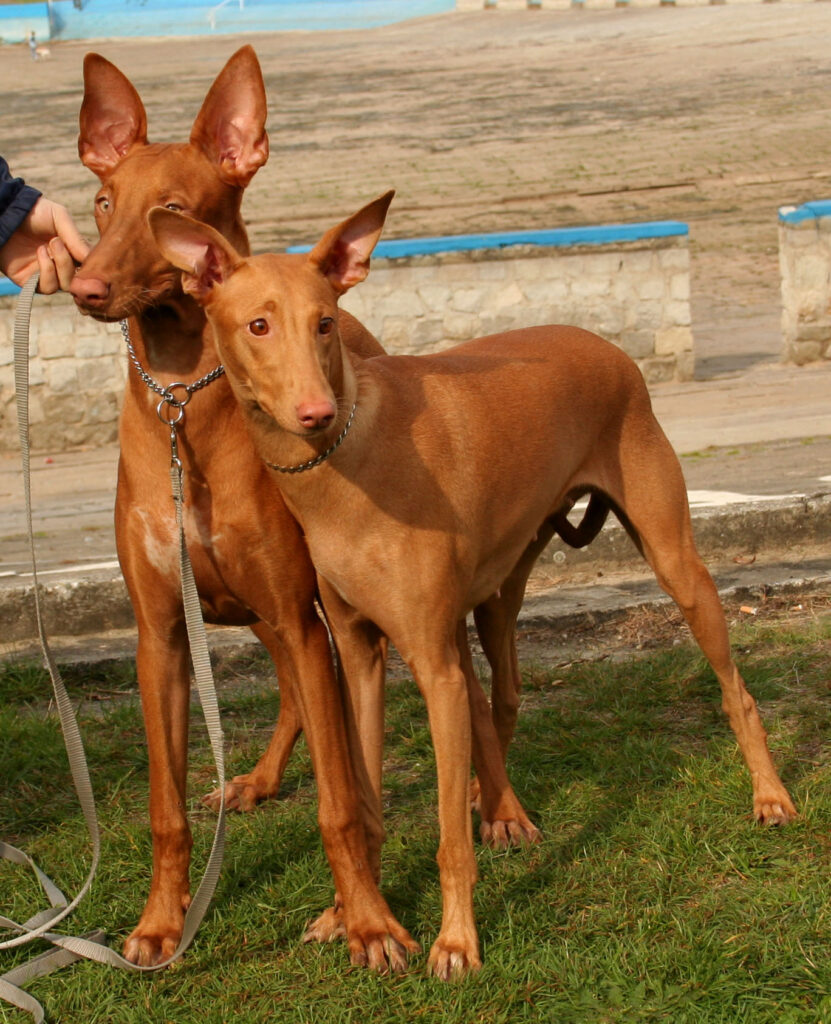
The Podenco Faraónico(Pharaoh Hound, Kelb tal-Fenek in Maltese) is an elegant, athletic and luminous rabbit hound, native to the island of Malta, of which it is the national dog. Behind its Egyptian statue air is a rustic, sensitive and surprisingly affectionate hunter.
Is pharaonic power for you?
The mighty pharaoh is not a dog for everyone. He is a primitive hunter in the body of a greyhound: he needs to run, he thinks for himself and he has a very sharp chase instinct. In return, he gives you a clean companion, quiet at home, affectionate and easy to maintain. Before you fall in love with his image, look both ways.
In favour .
- Clean, no dog smell and very short hair: hardly any stains and hardly any brushing.
- Loving and loyal to his family; very attached to his reference person.
- Athletic and healthy, with a long life expectancy (11-14 years) and few hereditary problems.
- Quiet and quiet inside the house; rarely barks for no reason.
- Intelligent and sensitive, without falling into aggression.
To be taken into account
- High hunting instinct: difficult to release without a fence and unreliable with small animals.
- He needs real daily exercise, including space to gallop.
- Independent and sensitive: does not obey “because yes” and sinks with harsh methods.
- Short hair and little body fat: it’s cold and needs a coat in the winter.
- He jumps and climbs fences; a badly fenced garden does not contain him.
Character and temperament
The Pharaoh Power has a very characteristic double face. Out in the field, he’s a focused, fast and determined athlete, able to track and chase prey with astonishing intensity. At home, however, he is kind, playful, lively, and deeply loyal to his human, to whom he shows his unreserved affection. That is why it is prized in Malta both as a companion dog and for its hunting value.
It is a cheerful and expressive dog, with a clownish point that surprises those who only know its serious silhouette. At the same time, it is sensitive and can be somewhat shy or reserved before strangers and new situations, especially if it has not had a good puppy socialization. It is not a nervous or barking dog, but it is very attentive to everything that moves: its hunter mind never completely shuts off.
As a good podunk, he maintains a marked independence. He is neither servile nor bent on pleasing; he cooperates with you when he understands that it is worthwhile.
Coexistence: children, other pets, flat and loneliness
- With children: is usually a good companion for families with children, playful and tolerant, always with normal supervision and teaching the little ones to respect their space.
- With other dogs: sociable and compatible with other dogs, especially if raised with them.
- With cats and small animals: here is its big “but”. It is a rabbit hound with a very strong chase instinct; rabbits, rodents and birds are not a good combination, and with cats it only works if they have been bred together and with a lot of management.
- On the floor: can live on the floor because it’s quiet and clean inside, but then daily exercise outside is negotiable.
- Soledad: is very attached and does not take long absences well. Spending too many hours only creates boredom, anxiety and possible destruction. He needs a family present.
Education and training
Raising a Pharaoh Power is an exercise in patience and intelligence, not strength. It is a quick learner, but its independence causes it to question senseless commands and to become distracted when a hunting stimulus appears. Positive reinforcement, with rewards, play and short, fun sessions, yields results far superior to any coercive method, which can also block such a sensitive dog.
The early socialization is the best investment: The more a puppy learns about people, dogs, noises and different environments, the more balanced and confident he will be as an adult. It ‘s a good idea to work the called from the beginning , knowing that it will never be 100% reliable with a rabbit in sight: That’s why loose walks should only be done in fenced or safe spaces. Gradually teaching him to be alone and giving him mental stimulation (smell games, activity toys) completes the foundation of a good education.
Exercise and activity
This is an athlete who was born, raised for generations to track and chase rabbits through the rocky terrain of Malta. He needs plenty of daily exercise: a couple of leisurely walks are not enough for him. The ideal is to combine long walks with galloping free sprints in a safe, enclosed place, where he can stretch himself and burn his energy.
He loves activities that combine speed and instinct: The lure coursing, the scent games and the search exercise are perfect for him. A well-exercised and mentally stimulated Pharaoh Powers is a calm and happy dog at home; a bored and confined one can become restless and destructive. Of course, you should protect your body from the cold: With such short hair and so little grease, she’s grateful for a coat on hard winter days.
Care: fur and hygiene
If there’s one simple thing about this dog, it’s its upkeep. Its coat is fine, short and shiny, with hardly any undercoat, so brushing is reduced to a weekly check with a glove or a soft brush to remove the dead hair and bring out the shine. It sheds very little and doesn’t have the typical “dog smell”, which makes it very comfortable indoors.
Baths should be punctual, only when you get really dirty, so you don’t dry out your skin. The rest of the hygiene is the basic routine of any dog: checking and cleaning the ears (large and erect, they are well ventilated but should be monitored), cutting nails regularly and maintaining dental hygiene. Because of their thin skin and low fat cover, attention must be paid to protection against cold and also against scratches or cuts on steep terrain.
Foodstuffs
The Pharaoh’s Poodle is a thin dog by nature, with a dry build and long musculature: You don’t have to look fat, and it’s normal to feel your last ribs. The food should be of good quality and adapted to your activity level, age and weight, divided into one or two servings per day. A hunting or very active dog needs more energy than one who lives in quiet companionship.
It is advisable to avoid overweight, which punishes its joints and reduces agility to a dog designed to run, but also extreme thinness. As with any breed with relatively deep breasts and an active temperament, it is wise not to do strenuous exercise just before or after meals and to always keep fresh water available. When in doubt about specific rations or diets, it is best to consult your veterinarian.
Health and life expectancy
One of the great virtues of the breed is its robustness. The Podenco Faraónico is a rustic dog, with very little genetic predisposition to hereditary diseases, the result of having been developed as a functional working animal rather than as a product of exposure.
That doesn’t mean it’s indestructible. Its short hair and low body fat make it sensitive to cold and humidity, so it should be sheltered in winter. As with many lean and primitive breeds, it is recommended to maintain an adequate weight, care for the skin and follow the schedule of vaccinations, deworming and veterinary checks. Choosing a responsible breeder, with healthy and well-socialized dogs, is the best starting guarantee.
Physical appearance
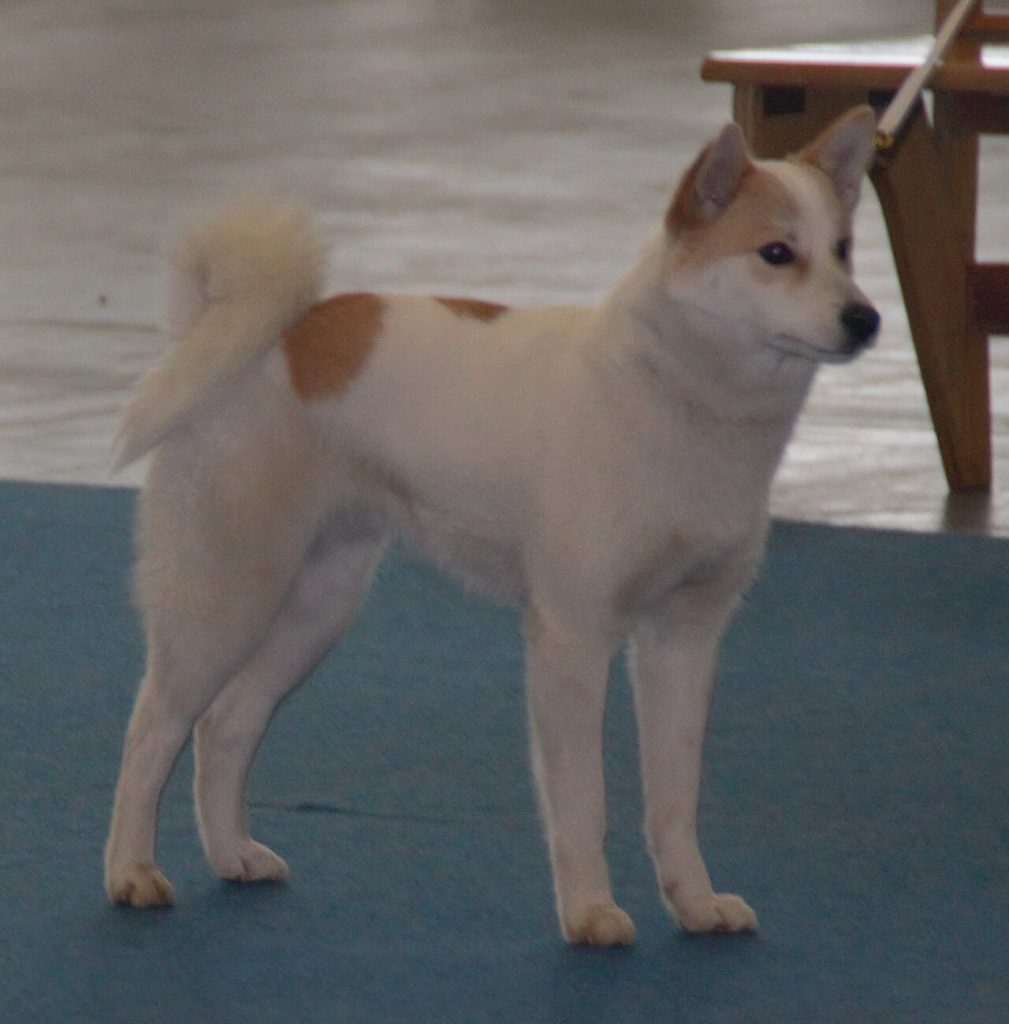
The Podenco Faraónico is the very image of functional elegance: haughty, slender and athletic, with clean and dry lines. The head is long and finely chiseled, almost triangular in shape and with a very soft stop, topped by some large, erect and highly mobile ears. Its amber eyes give it an intelligent and attentive expression, in perfect harmony with the tone of its fur.
The body, with its long musculature and compact belly, transmits speed even at rest. The tail, long and pointed, carries it low when calm and curves upward when animated. The hair is short, fine and shiny, in shades ranging from lionskin and cinnamon to reddish-brown; the white tip of the tail is admitted, while white spots on the back or sides are considered a defect in exposure. In terms of size, males measure approximately 55-63 cm at the withers and weigh about 21-26 kg, and females between 52-61 cm and about 20-25 kg.
Origin and history
The Podenco Faraónico comes from the island of Malta, where it has been known for centuries as Kelb tal-Fenek, literally “rabbit dog”. It is the Maltese national dog and the only canine breed in Malta with international recognition.
Its English name and popular legend suggest that it descended from the dogs depicted in the tomb paintings of ancient Egypt, thousands of years old. However, modern genetic studies have largely dismantled that romantic story: the race would not be of such ancient origin, but a relatively recent development. In fact, analyses indicate that it was genetically differentiated from the Sicilian Cirneco dell’Etna probably no more than a couple of centuries ago, and a 2023 study of Mediterranean rabbit hounds found that the Kelb tal-Fenek is, of its group, the most genetically distant of the Egyptian dogs.
In historical records there are early mentions of these Maltese rabbit dogs, highly valued as early as the 17th century. The international projection of the breed is, however, modern: The first litter born outside Malta was born in the UK in 1963, when the Fédération Cynologique Internationale accepted the breed under the name “Pharaoh Hound” under British sponsorship. The Kennel Club of the United Kingdom approved its standard in 1974. Within the FCI it is classified in Group 5, that of Spitz type and primitive type dogs, along with other Mediterranean poodles.
Curiosities
- When He blushes: is happy or excited, its ears and nose turn bright pink. It is one of the few dogs that literally “blushes”.
- Y “sonríe”: many specimens wrinkle their noses in what appears to be a genuine smile when greeting their people.
- Team hunting and night hunting: traditionally goes out hunting at dawn, releasing pairs of male and female that track by smell; when they find the rabbit they give a high-pitched bark that alerts the rest.
- Very fine ear: in ferret hunting, a bell is tied to the ferret and the dog is able to hear it several meters under the rock, patiently waiting for the rabbit to leave.
- Misleading name: despite being called “the pharaoh’s”, genetics says it doesn’t directly descend from the dogs of Ancient Egypt.
- The national symbol: is so beloved in Malta that it has appeared on the country’s coins and stamps.
If you are attracted to the Pharaoh’s Power, you will surely enjoy meeting other breeds of elegant hunters and primitive dogs that are related or similar in character. Take a look at the Podenco Ibicenco, its closest Mediterranean relative; the Basenji, another primitive dog with strong instinct and independence; the stylized Saluki, the quintessential hunting hare; and the fast Whippet, perfect for anyone looking for a short-haired athlete and affectionate treatment.
Frequently Asked Questions about Pharaoh Power
Is the Pharaoh Power a good family dog?
Yes. It is affectionate, loyal, playful, and quiet indoors, which makes it an excellent companion for active families. It needs presence, exercise, and gentle treatment; in return, it gives itself completely to its people.
How much exercise do you need a day?
He’s an athlete who needs long walks, longer periods of free running at a gallop in a safe, confined space, and mental stimulation.
Do you get along with children and other pets?
The problem is with small animals: because of their strong hunting instinct, rabbits, rodents, and birds are not compatible, and with cats it only works if they have been raised together.
Can he live in a flat?
You can, because inside the house it’s clean and quiet. The condition is to take him out to really exercise every day. He feels a little more comfortable with space, but the deciding factor is the daily activity, not the square footage.
Is it true she blushes?
Yes, it’s one of their hallmarks – when they’re happy or excited, their ears and nose turn bright pink, as if they’re blushing.
Is it really from Ancient Egypt?
Modern studies indicate that the breed is not of such ancient origin, but a relatively recent development from Malta, separated from the Sicilian Cirneco probably a couple of centuries ago.
How long do you live and what health problems do you have?
It is a very healthy breed, with little predisposition to hereditary diseases, and lives on average between 11 and 14 years.
Is it easy to train?
It’s intelligent but independent and sensitive. It learns fast with positive reinforcement, short sessions and a lot of patience, while hard methods block it. The call will never be fully reliable with a prey in sight, so be careful when releasing it.