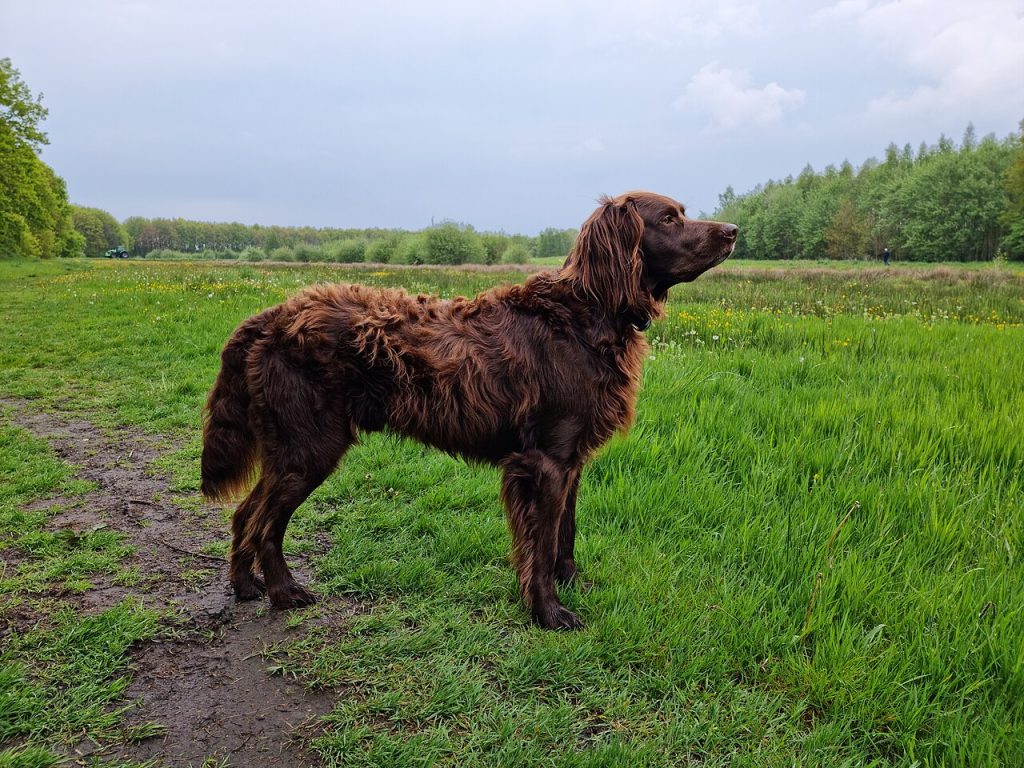
The Long-haired German Shepherd(German: Deutsch Langhaar) is one of Germany’s great versatile hunting dogs: Elegant, athletic and with a wavy coat that distinguishes it from its short-haired and hard-haired relatives. Brought up to track, show and collect both on land and water, today he is also a loyal, loving and surprisingly sensitive family companion, provided he is given the exercise and work he carries in his blood.
Is the German Longhair Braco for you?

Before you fall in love with her kind eyes and wavy hair, you should be honest: The German Longhair Braco is, first and foremost, a working hunting dog. His version of “good morning” includes running, swimming and using his head for hours. For the right person or family it is an exceptional companion; for a sedentary home, it can become a frustrated and difficult-to-manage animal. Here are the two sides of the coin.
It suits you if…
- You are a person or family very active: hiking, running, cycling, swimming or dog sports.
- You’re looking for a affectionate, sociable and good with kids and other dogs.
- You feel like training and working with your dog: mantrailing, obedience, collections, hunting.
- You have space and, above all, daily time to take him out into the field.
- You value a smart and willing. dog, easy to motivate.
Think about it if…
- You pass many hours out.: he’s very attached and suffers from loneliness.
- Either you’re living a quiet and indoor life or you’re looking for a couch dog.
- It’s your first dog and you don’t have time to train and exercise every day.
- You don’t like the hair or the mud: he loves water and loosens moderately.
- You live in a small floor with no possibility of frequent long exits.
Character and temperament
If anything defines the German Longhaired Pointer it is the combination of sports energy and sweetness. It is a kind, gentle and intelligent breed, deeply attached to its family and with a remarkable bonding ability. It is not a distant or independent dog: it wants to be with you, participate in what you do and, if it can, give you a hand in the task.
That same sensitivity has a counterpart. It is a emotionally connected dog that can suffer from separation anxiety when left alone for too long. It needs a “job” to do and does not adapt well to a sedentary life; a bored Longhaired German Shepherd is a frustrated dog, and a frustrated dog seeks his own occupations (rarely the ones you would like).
With people it is open and friendly, without the marked distrust of other breeds. Its instinct is not guard or defense, but hunting and cooperation: alert, yes, but oriented to collaborate rather than protect. Well socialized, it is a balanced, stable and very pleasant dog to have around.
Coexistence: children, other pets, flat and loneliness

With children: is one of its great virtues. It likes to play with the little ones and is usually patient and affectionate. Due to its size and energy, it is convenient to supervise the game with very young children and teach it from puppyhood to moderate its enthusiasm, but as a family dog it is difficult to overcome.
With other dogs: is very sociable and, in general, cohabits without problems with other dogs. With cats and small animals you have to be careful: its strong hunting and gathering instinct can be activated before small prey, so coexistence is built with early introductions and control.
On the floor: is not ideal, but it is not impossible. You can live in an apartment if you compensate for the lack of space with lots of daily exercise. What you really need are not square meters, but long trips to the country and an active life.
In the face of loneliness: is his Achilles heel. Very attached to his family, it’s not good to be alone for many hours. If your pace of life involves long and frequent absences, this breed is probably not the most suitable, unless you can organize yourself not to leave him alone for too long.
Education and training
Here the German Longhaired Pointer shines. It is smart and very willing to please., a combination that makes it learn fast and enjoy training. It responds wonderfully to positive reinforcement, rewards, and short, varied, motivational sessions. Harsh or coercive methods are counterproductive with such a sensitive dog.
The key is not in his ability, but in channel your energy and your instinct. A German Longhair Braco with no mental occupation will seek his own. That’s why he performs so well in disciplines that combine head and body: obedience, mantrailing, collecting, hunting trials, agility or any sport that gives him clear goals.
The early socialization is fundamental: the more people, dogs, environments and stimuli you know as a puppy, the more balanced you will be as an adult.
Exercise and activity
There are no half-measures: this is a high energy dog bred to work full days in the field. It needs at least one to two hours a day of intense activity, and is grateful for much more. A quiet walk around the block does not do it any good; for it that is just warming up.
He loves to run, and above all he is passionate about the water: he was selected to collect parts also in aquatic environments, so swimming is one of his greatest pleasures. Ideal activities: hiking, running or accompanying cycling, swimming, collecting games, tracking and dog sports. Combining physical exercise with the mental stimulation is the perfect formula to have a calm and happy dog at home.
Care: fur and hygiene

The coat of the German Longhaired Braco is average length(about 3 to 5 cm in body), dense, slightly wavy and with a two layers that includes undercoat. It is a firm and shiny hair, neither silky nor curly. It requires moderate maintenance: a brushed two or three times a week keeps the hair free of knots and helps control the baldness, which intensifies in spring and autumn (in those times, it is better to brush daily).
He does not need frequent baths; just wash him when he is really dirty, which will happen often if you let him enjoy the mud and water. Pay attention to the ears, which due to their sloping shape retain moisture and are prone to otitis: Check and dry them thoroughly after each bath or dive. Complete the routine with cutting the toenails, the regular dental hygiene and checking pads and fringes after field trips.
Foodstuffs
As a medium to large-sized and very active dog, the German Longhaired Pointer needs a a complete and quality diet, adjusted to its age, weight and, very especially, to its actual activity level.
Daily split the food in two. is appropriate instead of just one: In addition to keeping energy stable, it’s a sensible measure in large, deep-breasted breeds to reduce the risk of digestive problems. Avoid strenuous exercise just before and after eating. Watch your weight regularly: He’s an athlete, and he needs to stay lean and muscular, never overweight, to take care of his joints long-term.
Health and life expectancy
The German Longhaired Pointer is a rustic and functional breed, selected for over a century for its performance in the field rather than for aesthetics, which generally translates into healthy and hardy dogs.
As with almost all large and athletic breeds, it is advisable to keep in mind the typical conditions of the group: The hip and elbow dysplasia, typical of working dogs of this size, and ears‘s problems stemming from their drooping ears and their fondness for water. Choosing responsible breeders who perform health tests on breeders, keep the dog at his weight, give him adequate exercise and go for regular veterinary checkups are the best guarantees of a long and healthy life.
Physical appearance
The German Longhaired Pointer is a medium size model dog, muscular, elegant and sporty in appearance.
The height to the cross is between 58 and 66 cm, with an ideal of 63 to 66 cm in males and 60 to 63 cm in females; the average weight is around 30 kg in both sexes. Its most characteristic feature is the medium-length coat, wavy and with fringes on the ears, limbs and tail. As for the colour, the range is wide: solid brown; brown with white spots or patches; dark ruano with dark brown patches; light ruano with pale brown patches; white mottled with small brown patches; or brown and white, with or without mottling. The ears are sloping and of good length, and the expression, gentle and intelligent, faithfully reflects his character.
Origin and history
The German Longhaired Pointer was born in Alemania as a versatile hunting dog, a close relative of the German Shorthaired Pointer, the German Hardhaired Pointer and the Great Münsterländer.
The turning point came in 1893, when the Club Langhaar was founded by Friedrich von Schorlemer-Alst, who in 1897 wrote the standard on which the modern Langhaar is based.
Today it is still, above all, a working dog prized by hunters. In Germany, between 2010 and 2024, an average of about 509 puppies were registered per year, modest figures that keep it as a relatively rare breed outside of hunting circles.
Curiosities
- Its German name, Deutsch Langhaar, literally means “long-haired German”, in direct contrast to the Kurzhaar(short hair) and the Drahthaar(hard hair).
- It is one of the few sample dogs that he really enjoys the water.: was selected to collect parts also in aquatic environments, and swimming is one of its greatest pleasures.
- It is part of the select group of german versatile hunting dogs s, bred not for a single task but to do it all: search, show and collect.
- Despite its elegance, it was always selected prioritizing the function on the aesthetics, which has helped to keep it as a healthy and balanced breed.
- It is relatively rare: outside Germany and hunting environments, it is difficult to see, making it a little-known gem among show dogs.
If you are attracted to the German Longhaired Pointer but want to compare with other versatile and active hunting and dog breeds, take a look at these relatives and kin: the Vizsla, the Weimaraner, the Pointer and the ever versatile Labrador Retriever.
Frequently Asked Questions about the German Longhaired Pointer
Is the German Shorthair a good family dog?
Yes. It is a kind, gentle and very attached breed to its people, which especially enjoys playing with children and gets along well with other dogs. Its weak point is not character, but energy: it will only be a good family dog if the family is active and gives it the exercise and mental work it needs daily.
How much exercise do you need a day?
As a versatile hunting dog bred to work for hours, it needs at least one to two hours a day of intense activity: running, swimming, collecting, tracking or dog sport.
Does he get along with children and other dogs?
Generally very well. It is sociable with other dogs and affectionate and patient with children. Like all large and energetic dogs, it is advisable to supervise play with the smaller ones to avoid pushes and teach it to control its enthusiasm from puppyhood.
Can he live in a flat?
It’s not his ideal environment. He can adapt to a flat if he goes out a lot and gets plenty of exercise, but he fits much better in a house with a garden and, especially, with owners who take him out into the countryside often. What he really needs are not square footage, but long exits and a task to do.
Are you suffering from separation anxiety?
If you are going to be alone for many hours a day on a regular basis, it is important to get used to it gradually, to stimulate it and, if possible, not to leave it alone for too long.
How much hair does it shed and what care does the mantle need?
Its hair is medium-length (about 3 to 5 cm), dense and with undercoat, so it loosens moderately throughout the year and more in moults.
Is it easy to train?
Yes, it is intelligent and very willing to please, which makes the job much easier. It responds wonderfully to positive reinforcement and to short, varied sessions. Its challenge is not ability but channeling its energy and hunting instinct: it needs a constant owner who gives it clear goals.
How long does the German Shorthair live?
As a large and functional dog breed, it usually enjoys a life expectancy of around 12 to 14 years. Adequate weight, regular exercise, good nutrition and regular veterinary checkups are the best tools to accompany it healthy throughout its life.