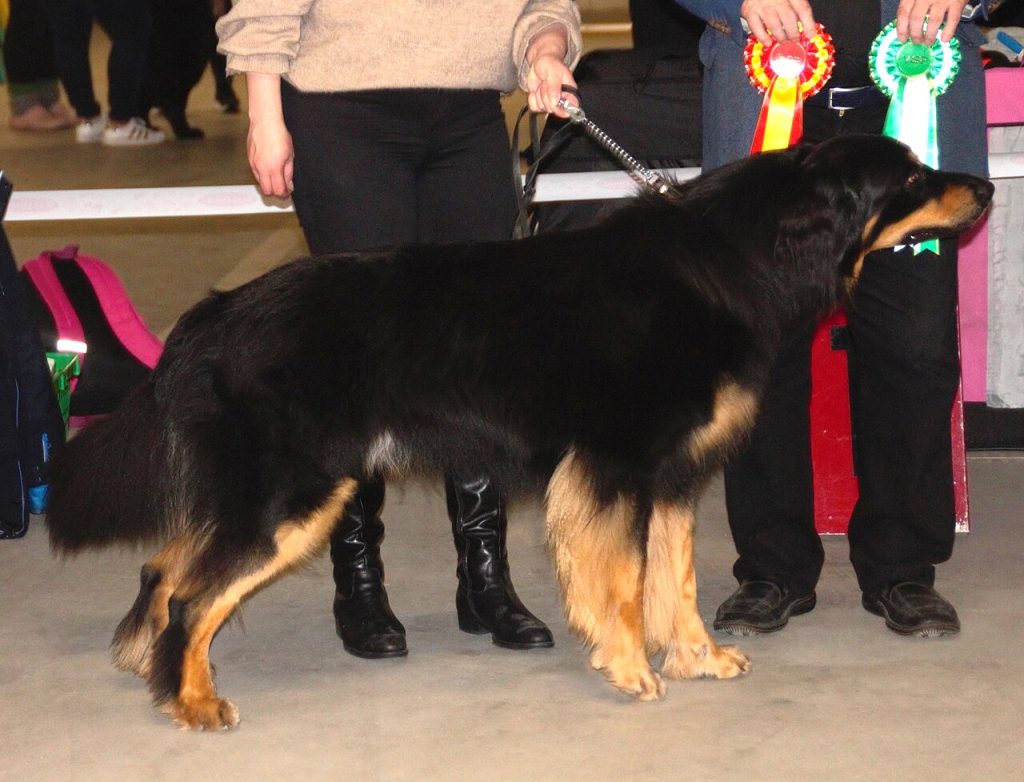
The Hovawart is a medium to large-sized German dog, guarded by nature and of extraordinary loyalty to its family. With its long black, black and fire or blond coat, it combines the elegance of a mountain dog with the cool head of a born worker. If you are looking for a balanced, protective and characterful companion, the Hovawart is a breed that deserves to be thoroughly known before you decide.
Is the Hovawart for you?

The Hovawart is not a dog for everyone. It is a working guard that needs an engaged owner, with time to educate it and daily activity to offer it. In return, it delivers a fidelity and balance that are difficult to match. Before you fall in love with its pattern, contrast its lights and shadows.
In favour .
- Natural guardian, protective and territorial without being aggressive by default.
- Very loyal and attached to his family; enjoys being with his people.
- Intelligent and versatile: brilliant in tracking, obedience and search and rescue.
- Balanced and temperate when he’s well socialized.
- Good with the kids in the house and physically tough.
To be taken into account
- It matures slowly and is independent: it demands constancy.
- He needs daily exercise and mental stimulation; he gets bored easily.
- It’s not the best choice for first-time owners or sedentary.
- Their guardian instinct requires early and serious socialization.
- Rare breed: it may be difficult to find responsible breeders.
Character and temperament
The Hovawart’s temperament revolves around one word: It’s about balance. It is a self-assured dog, quiet at home and attentive to everything that happens around it. His name says it all: comes from Middle High German hova(“farm, yard”) and warts(“guardian”), i.e. “guardian of the farm”. That surveillance instinct is still very much present: He observes, evaluates and decides, and only acts when he thinks there’s a motive.
With its family it is affectionate, loyal and surprisingly sensitive; it perceives the mood of people and seeks their company. With strangers it is reserved but not nervous: it is not a dog that barks at anything, but keeps its distance until it values the situation. This combination of sweetness towards its owners and firmness in the face of the unknown is the essence of the breed.
It is also an independent dog with its own criteria. It does not obey out of blind submission, but because it trusts its guide. That is why it works so well with consistent owners and fails with those who improvise or are harsh. Its maturity comes late, sometimes around three years, so you have to be patient with the “big puppy” that remains for quite some time.
Coexistence: children, other pets, flat and loneliness

With children. The Hovawart is usually an excellent companion for the little ones in the house. It is patient, caring and develops a strong sense of protection towards them. As with any large dog, it is advisable to monitor play with very young children and teach them to respect their rest times.
With other pets. If it grows up with other dogs or cats, coexistence is calm. Its guardian instinct is directed more towards people than to pets.
On the floor. can live on the floor if it is compensated with plenty of exercise and not left too alone. However, it feels more fulfilled in a house with a garden to patrol its territory.
Soledad. is a strongly bonded dog that does not do well with prolonged loneliness. Spending many hours alone daily can lead to anxiety, barking or destructive behaviors.
Education and training
The Hovawart is intelligent and quick to learn, but its independent nature makes education demand method and constancy rather than speed. It responds wonderfully to positive reinforcement (rewards, play, kind voice) and very poorly to harshness or shouts, which only get it to close or distrust.
Early socialization is non-negotiable in this breed. A puppy that knows people, noises, other dogs and varied environments in its early months becomes a confident adult who knows how to distinguish a real threat from a mere visitor.
It is advisable to establish clear rules from the beginning and maintain them. As it matures slowly, one must dose patience and not expect a one-year-old Hovawart the head of an adult. The disciplines where it most enjoys and best channels its energy are obedience, tracking and searching activities; there it demonstrates why it is a first-rate working dog.
Exercise and activity
As a good working dog, the Hovawart has a medium-high energy that must be spent every day. A short walk to the block is not enough: it needs between one and two hours of daily activity, combining long walks, controlled running, play and, above all, mental stimulation.
It is a dog that excels exceptionally in search and rescue, tracking and work activities. Harnessing that talent with olfactory games, mantrailing, or dog sports not only keeps him fit, but also strengthens your bond and prevents boredom, the main cause of his unwanted behavior. It is an ideal companion for active people who like hiking or outdoor sports.
Care: fur and hygiene

The Hovawart’s coat is long hair, attached to the body, slightly wavy and with very little inner layer, more abundant on the chest, belly and back of the legs. This structure makes its maintenance relatively simple for a long-haired dog: Brushing twice a week is enough to avoid knots and remove dead hair. It is advisable to increase the frequency of spring and autumn seedlings.
Bathing should be occasional, only when it is really dirty, so as not to damage the natural fat that protects its skin. As with all breeds, it is necessary to check and clean the ears regularly, monitor the condition of the teeth with proper brushing or biters and cut the nails when they do not wear out on their own.
Foodstuffs
The Hovawart needs a quality and balanced diet, adapted to its medium to large size, age and activity level. An adult’s needs are easily met by a good-quality complete feed or a well-formulated ration, divided into two meals a day. Puppies of large breeds must grow up without haste: an excess of energy or calcium accelerates growth and impairs joint development.
As a deep-breasted dog, it is advisable to avoid intense exercise just before and after eating and not offer large amounts of food at once, as a precaution against digestive problems that can affect dogs of this size. Monitoring your weight is essential: A few extra pounds overload your joints and shorten your life. Always adjust the amount to the actual expense of the dog and consult your veterinarian if in doubt.
Health and life expectancy
The Hovawart is, as a whole, a rustic and healthy breed, the result of a careful recovery program in the 20th century. Its life expectancy is usually between 10 and 14 years, a good figure for a dog of its size.
The most relevant is hip dysplasia, a common joint problem in large dogs that serious breeders control by X-raying the breeders. Maintaining an adequate weight and avoiding overwork during growth are also good ways to protect your joints. An annual veterinary check-up, daily vaccination and deworming, and good nutrition are the best recipe for healthy old age. Acquiring the puppy from a responsible breeder, who selects for health and temperament, makes a huge difference.
Physical appearance
The Hovawart is a muscular working dog, of medium-large size and slightly elongated silhouette: its length is between 110 and 115% of the height at the withers.
The head is powerful, with a straight nasal cavity and a snout similar in length to the skull. The eyes are oval, medium to dark brown, and the ears are triangular and hanging, reaching approximately the height of the corner of the mouth. The pigmentation of the face is black.
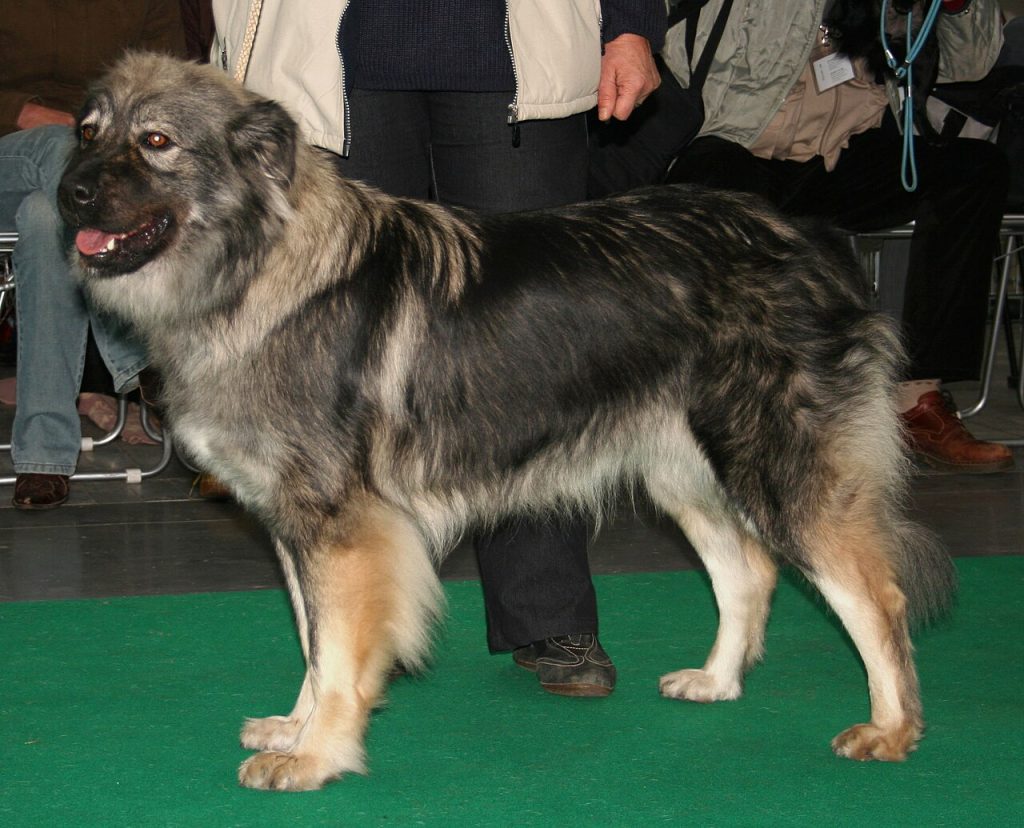
The standard recognizes three equally valid color varieties: black, black and fire(black with well-defined gold marks) and blonde(uniform gold).
Origin and history
The Hovawart is a German breed with very ancient roots: It dates back to at least the 13th century, when farm guardian dogs with this name were already mentioned in the Black Forest region in southwestern Germany. During the Middle Ages it was a prized guard dog for farms and cattle, but after that period its popularity declined. More modern breeds, such as the German Shepherd, gradually displaced them until they were almost extinct in the early 20th century.
Their salvation came about 1915, when a group of enthusiasts, led by zoologist Kurt Friedrich König, decided to reclaim the breed. They began looking for dogs on the Black Forest farms and König launched a careful breeding program, crossing those specimens with Kuvasz, Newfoundland, German Shepherd, Leonberger, a Bernese Boyer and an African hunting dog. The effort paid off in 1922, when the first Hovawart litter was registered in the German breed registry.
Work continued and in 1937 the German Canine Club officially recognized the breed. World War II almost ruined everything: Many Hovawarts were used in the war effort and perished, so that by 1945 only a few remained. In 1947, Otto Schramm and other enthusiasts founded a new club in Coburg, which still exists today. Finally, in 1964 the German Kennel Club recognized the Hovawart as the seventh working breed in the country.
Curiosities
- Its name literally means “guardian of the farm”, from the Middle High German words hova(farm) and warts(guardian).
- It was on the brink of extinction in the early 20th century and recovered thanks to a breeding program started around 1915 from Black Forest farm dogs.
- In its reconstruction intervened such varied breeds as the Kuvasz, the Newfoundland, the Leonberger, the German Shepherd and the Bernese Boyero.
- It stands out exceptionally in search and rescue, tracking and canine work, where its sense of smell and temperament are at their best.
- It is a relatively rare breed outside of Germany, so seeing a Hovawart on the street is not uncommon.
- It matures very slowly: it can behave like a puppy until about three years of age.
If you are attracted to the Hovawart’s profile as a balanced guard and working dog, you may also be interested in other breeds with similar lines: the Pastor Alemán, the great worker who almost made him disappear; the robust Rottweiler, another guard of German origin; the imposing Terranova, present in his family tree; or the versatile Dóberman, defender par excellence.
Frequently asked questions about Hovawart
Is the Hovawart a good family dog?
Yes. The Hovawart is an excellent family dog as long as it is socialized and educated well from puppyhood. It is loyal, balanced and very attached to its people, with a strong protective instinct that makes it a natural guardian of the home. It is not a dog to be tied in a garden: it needs to live within the family nucleus.
How long does a Hovawart live?
The Hovawart’s life expectancy is usually between 10 and 14 years, a good longevity for a dog of its size. Proper nutrition, regular exercise, veterinary checkups and a correct weight help it reach the end of its life healthy.
Does the Hovawart need a lot of exercise?
Yes, it is a medium-high-energy working dog. It needs at least one or two hours daily of activity divided between long walks, play and mental stimulation. It loves tracking, obedience and searching activities; a bored Hovawart can become destructive or barking.
Is it hard to educate the Hovawart?
It is not difficult, but it is demanding. It is intelligent and learns quickly, although it has an independent character and matures slowly. It responds very poorly to harsh methods: you have to work on positive, with constancy, clear boundaries and a lot of early socialization. It is not the ideal dog for someone who has never had a dog.
What colours can the Hovawart be?
The standard recognizes three coat varieties: black, black and fire (black with gold markings) and blond (uniform gold).
Does the Hovawart get along with children and other dogs?
In general, yes. With the children of the family it is usually patient, careful and protective. With other dogs the coexistence is good if it has been socialized, although some males can be dominant. Its protective instinct makes it appreciate who comes into the house.
Can the Hovawart live on one floor?
It can adapt to a flat if it gets enough daily exercise and is not left alone for too many hours, but it is more comfortable in a house with a garden where it can watch its territory.
Does the Hovawart shed a lot of hair?
Its long hair with little inner layer is kept well with a brushing a couple of times a week, which avoids knots and reduces hair around the house.