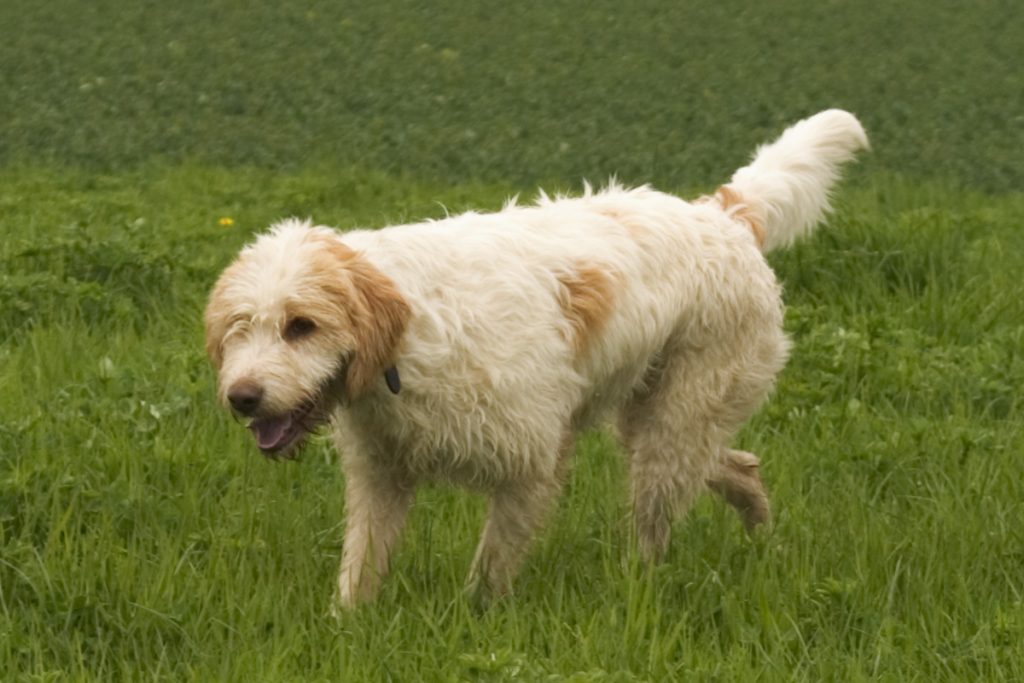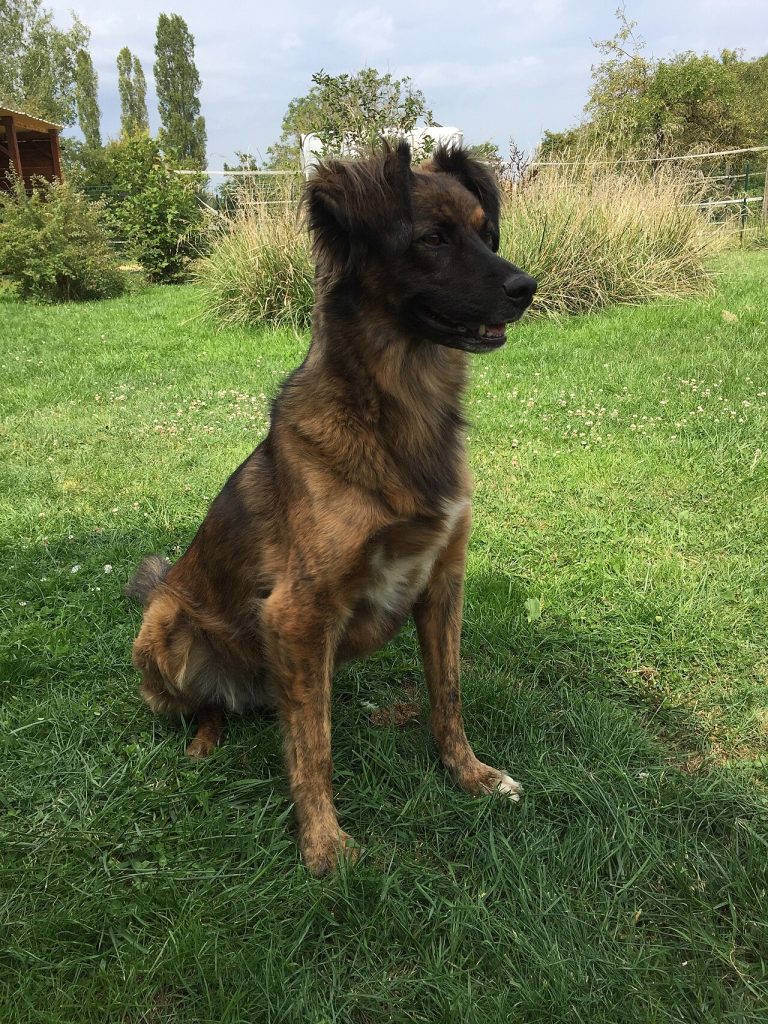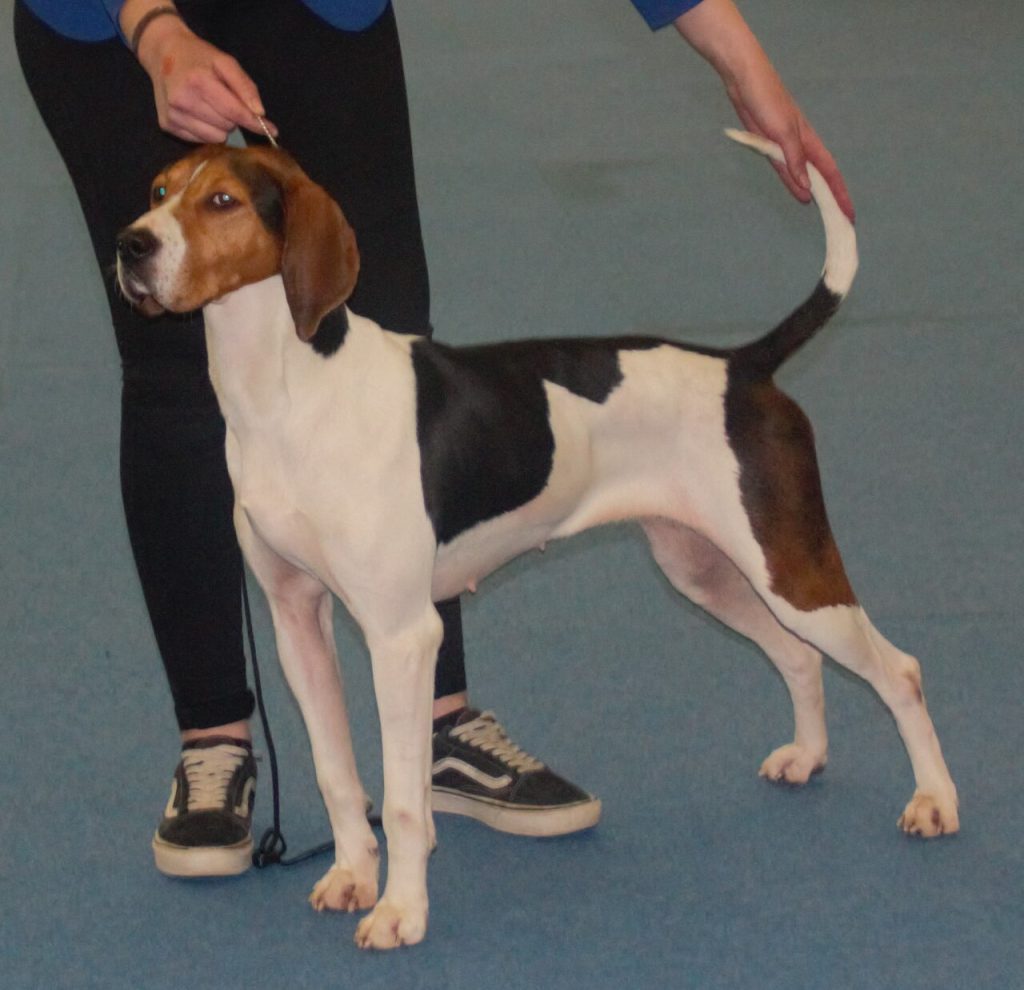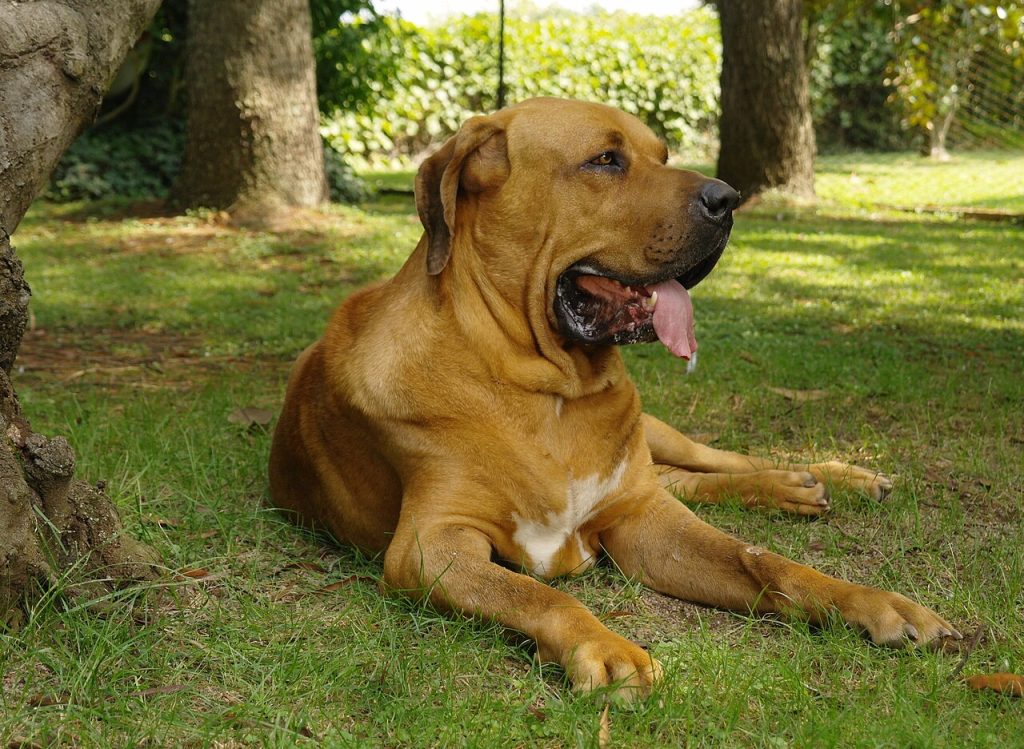
The Fila Brasileño(Fila Brasileiro) is one of the most imposing and controversial molose guards that exist: a large, mastiff-like dog, born on plantations and cattle ranches in Brazil. Faithful to the end to his family and deeply suspicious of strangers, he embodies a centuries-old Brazilian folk saying: “faithful as a row”. It is not a dog for everyone, and in several countries it is listed as potentially dangerous. This guide explains, with verified data, what the Brazilian Fila really is like and if it fits you.
Is Brazilian Row for you?
Before you fall in love with their legendary demeanor and loyalty, be very honest: the Brazilian Fila is a strong-tempered guard dog, with a natural aversion to strangers that is part of its official standard. It requires an owner with experience, space, time and legal responsibility.
In favour .
- Extreme loyalty and devotion to his family; the proverb “faithful as a row” was born of this breed.
- Exceptional guardian: strong instinct for protection and quick reaction to threats.
- Docile and affectionate inside doors, with his own and with the children of the house.
- High endurance and astonishing agility for its enormous body mass.
- Short coat and easy to maintain.
Against
- Intense distrust of strangers: not a sociable dog with visitors or in public spaces.
- Considered potentially dangerous in Spain and many countries (insurance, registration, muzzle, mandatory belt).
- Giant size and tremendous strength – dangerous in inexperienced hands.
- He needs firm and constant socialization and education from puppyhood.
- Not for small apartments or first-timers.

Character and temperament
If there’s one thing that defines the Brazilian Fila, it’s the duality of their character. With his family he is a devoted, calm, and surprisingly docile dog; with strangers he is cautious, reserved, and dissuasive. This distrust of strangers is not a race defect: It’s a trait that’s been selected for centuries and explicitly enshrined in their standard, where traditionally it’s been spoken of as “shyness” and now as “aversion” to strangers.
Their protective instinct is probably the most pronounced of the entire group of molluscs. The Row doesn’t bark for pleasure: When it senses an intruder in its territory, it acts with a speed that impresses such a large animal. At the same time, he’s a dog who needs to be close to his people. Locked up, ignored or chained, a Fila develops frustration and can become unpredictable; in a balanced environment, with serene leadership and daily contact with his family, he shows his more noble and affectionate side.
It is essential to understand that their loyalty does not equate to blind obedience or social docility.The Brazilian Fila thinks for itself and decides for itself when to intervene.So early socialization and responsible management are not optional: they are the difference between a balanced guardian and a serious problem.
Coexistence: children, other pets, flat and loneliness
With the children in the family the Fila is usually affectionate, patient and protective. Having said that, we are talking about a dog that can exceed 50 kg, so the interaction with small children should always be supervised, not because of the dog’s malice, but because of its size and strength. Children have to learn to respect it and not invade their resting spaces.
A Fila does not naturally accept strangers into the home; it can even tolerate a visit only if accompanied by its owner.
With other pets can coexist, especially if it grows up with them, although its guardian instinct and dominant character require caution with dogs of the same sex and with animals outside the family nucleus.
On the floor is not its habitat: it is a large, heavy and territorial dog, designed to live in farms and houses with fenced terrain. In the face of loneliness does not tolerate emotional abandonment; a Fila separated from its family suffers and becomes more difficult to manage.

Education and training
Educating a Brazilian Fila is a serious undertaking that begins on the first day he arrives home. The absolute priority is early socialization: exposing him in a controlled and positive way to people, environments, noises and situations during his puppy stage so that he learns to distinguish the normal from the threatening without reacting with excessive distrust.
The training must be based on positive reinforcement, consistency and calm and firm leadership. The Fila respects those who convey security, not those who shout or punish; harsh methods are counterproductive and dangerous with a breed of this size and temperament.
It is not a breed recommended for first-time owners. Its combination of size, strength, guarding instinct and independent character requires prior experience with large dogs or the accompaniment of a professional.
Exercise and activity
The Brazilian Fila is a working molossus with a powerful physique: for generations it accompanied the boyeros and troperos on long journeys driving cattle, and participated in the large-scale hunting of large prey.
It needs moderate and constant daily exercise: long walks, space to move, and activities that keep it mentally and physically balanced. It is not a hyperactive or extreme sports dog, but it does require an exhaust valve for its energy and instinct.
During the puppy’s growth it is advisable to dose the exercise so as not to strain some joints that are still being formed, something especially important in large and heavy breeds like this one.
Care: fur and hygiene
One of the few simple facets of the Fila is its maintenance. its coat is short, dense, smooth and well attached to the body, so with a weekly brushing to remove dead hair is sufficient under normal conditions. it does not require a hairdresser or sophisticated care.
Where you do need to pay attention is in your characteristic skin: Thick and loose, it forms a pronounced flap in the neck that sometimes extends to the chest and abdomen. It is advisable to check and dry the neck folds well to avoid moisture and skin problems. Their large, dangling ears should also be inspected and cleaned regularly. Complete hygiene with regular nail trimming and dental cleaning.
Foodstuffs
As a giant-sized dog, the Brazilian Fila needs a quality diet well suited to its size, age and activity level. Ideally, a feed or diet formulated for large or giant breeds, divided into several servings per day to reduce the risk of gastric dilation-torsion, a problem to which large deep-chested dogs are more prone.
Weight control is key: overweight punishes the joints of an animal that already supports a lot of body mass. During the puppy phase it is especially important not to overfeed or force too fast growth, to protect bone and joint development.

Health and life expectancy
As with most large and giant breeds, the Brazilian Fila is prone to joint problems typical of its size, especially hip and elbow dysplasia.
Its broad and deep chest places it, like other large molossus, in the group of breeds with a higher risk of gastric torsion, so fractional feeding and resting guidelines after meals are recommended.
Regular veterinary checkups, proper weight, sensible exercise, and good nutrition are the best ways to keep it healthy. As with any breed of giant dog, its life expectancy is shorter than that of small dogs, so it is wise to check with the breeder about the health history of the parents before acquiring a puppy.
Physical appearance
The Brazilian Fila is a Dogo-type mollusk, with a powerful bone structure, rectangular and compact set, but harmonious and well proportioned. Despite its large body mass, it transmits a concentrated and easily noticeable agility.
According to the international standard (CBKC/FCI), the males measuring 65 to 75 cm to the cross and the females 60 to 70 cm. The minimum weight is 50 kg for males and 40 kg for females. The head is large and heavy, with a deep snout; the ears are large, thick and hanging or folded backwards, changing position depending on the dog’s mood.
The the coat is short, dense, soft and shiny.. The supported colours s include solid tones (leon, gold, and black – the latter only in the CBKC/FCI standard -) and stripes on a uniform background (dark, black, gray, or gold stripe). It can feature a black mask and small white markings on the chest, legs, and tail tip.
Origin and history
The Fila Brasileño is a breed originating in Brazil, considered to be the first Brazilian breed internationally recognized by the FCI, around the 1960s. Its name comes from the Portuguese verb folding(“to hold, grab, grip”): a dog in a row is a hunting dog, one that “bites and does not let go”.
It is believed to be descended from European dogs brought to Brazil during the colonial era, with little or no influence from native South American dogs. There are several theories about its origin: one links it to the crossing of the English Mastiff, former bulldog and San Huberto dog (Bloodhound); another, based on history and genetic studies, links it to the Spanish Mastiff and to Portuguese breeds such as the Dog de Castro Laboreiro. The official standard itself avoids fixing a historical version as there is no consensus.
Historically it was a working dog on large plantations and cattle ranches: It protected the bands of flag-bearers and troopers from attacks by beasts such as jaguars and pumas, helped guide livestock, and, in a dark chapter of its 18th-century slavery history, was used to recapture runaway slaves. Dr. Paulo Santos Cruz, considered the “father of the breed”, promoted its recognition and drafted the standard that went into effect in 1954.
The modern history of the Fila is marked by strong controversy. In the 1970s and 1980s the breed experienced its heyday, but the accusation of crosses with other breeds (German dog, English Mastiff, Neapolitan Mastiff) registered as pure ranks also arose. From there, a division was born that lasts: On the one hand, the standard of the CBKC, affiliated to the FCI and the most popular in the world; on the other, clubs such as the CAFIB, which defend the old phenotype of the “pure line” and do not accept, for example, the black color that the FCI does support.
Curiosities
- The Brazilian proverb “faithful as a row” was born precisely from this breed, a centuries-old symbol of loyalty to the owner.
- He is also known as boyar head(“boyer’s head”), for his role driving cattle.
- Its way of moving is reminiscent of that of cats. It uses an ambling gait, or “camel step”, by moving both legs to the same side at the same time, producing a characteristic sideways swing.
- Despite its enormous weight, it can gallop very fast and make sudden changes of direction thanks to its molosoid joints.
- It superficially resembles the Bloodhound by its dangling ears and thick skin, but it is much larger, stronger and bulkier.
- In Spain and in countries such as the United Kingdom, Australia, Norway or Turkey it is subject to strong legal restrictions; in several it is prohibited or requires court permission.
If you’re attracted to the Brazilian Fila for its guarding nature and moose-like demeanor, you may be interested in other breeds of comparable temperament and presence. You can explore the Cane Corso, another guard moose of great character; the Mastín Inglés, a giant related to its possible origins; the Rottweiler, guard par excellence; or the Bloodhound, with which it shares some air through its ears and skin.
Frequently Asked Questions about Fila Brasileiro
Is the Brazilian Fila a dangerous dog?
It has a very marked guarding instinct and a natural aversion to strangers that is collected in its standard. In Spain and in several countries it is listed as potentially dangerous, with legal obligations for its tenure. With socialization, education and a responsible and experienced owner it is a balanced guard; in inexperienced or mistreated hands, it is a real risk.
What legal requirements do you have in Spain?
Since the dog is considered potentially dangerous, the owner must comply with requirements such as registering the dog in the municipal register of potentially dangerous dogs, taking out liability insurance and wearing a leash and muzzle in public places.
Is he good with kids?
With children in his own family he is usually affectionate, patient and protective. However, given his size and strength, interaction with small children should always be supervised, and children should be taught to respect their resting spaces.
How tall and how much does a Brazilian Fila weigh?
According to the international standard, males measure between 65 and 75 cm at the withers and females between 60 and 70 cm. The minimum weight is 50 kg in males and 40 kg in females, which places it among the giant sized breeds.
Is he fit to live in a flat?
It is not ideal. It is a large, heavy and territorial dog, designed for farms and houses with fenced terrain. It needs space, daily exercise and constant contact with its family; confinement and solitude harm it and make it more difficult to manage.
Is it good for a first-time owner?
The combination of size, strength, guarding instinct and independent nature requires prior experience with large dogs and firm and calm handling.
Why is there so much controversy about the “purity” of the Fila?
In the 1970s and 1980s it was accused of introducing crosses with other breeds (German dog, English mastiff, Neapolitan) in specimens registered as pure ranks.
Is it hard to take care of your fur?
No, it has short, dense, soft hair that needs only a weekly brushing, but its thick, loose skin does require attention – its neck folds need to be checked and dried thoroughly, and its large, dangling ears need regular cleaning.