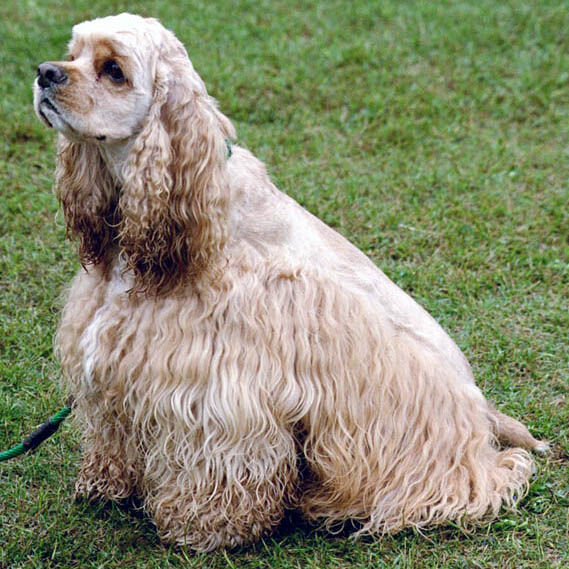
The Cocker Spaniel is one of the world’s most beloved family companion hunting dogs. Cheerful, affectionate and with that tail that never seems to stop, it combines manageable size, sociable character and intelligence. In this comprehensive guide we tell you what the Cocker Spaniel really is like, what it needs and if it fits you before you take the step.
Is the Cocker Spaniel for you?
The Cocker Spaniel is a versatile breed that adapts well to family life, even on the floor, as long as it is given exercise and companionship. It is not a dog for those who spend the day outside or for those who are looking for an independent companion: it needs to be with its people and spend time caring for its hair. Before you decide, review its lights and shadows.
In favour .
- Affectionate, cheerful and very family-oriented.
- Medium size and manageable, floor-valid.
- Smart and easy to educate positively.
- Sociable with children, dogs and other pets.
- Active and playful, good companion for the field.
To be taken into account
- Her hair requires frequent brushing and trimming.
- Long ears prone to otitis and infections.
- He doesn’t like prolonged loneliness.
- He tends to get fat if he’s overfed.
- He needs daily exercise; he’s not a sedentary dog.
Character and temperament

If anything defines the Cocker Spaniel, it is its joy. It is not without reason that it is known as the ⁇ merry spaniel ⁇ (the merry spaniel) for that tail that moves without rest. It is a lively, sensitive and deeply sociable dog, which enjoys being part of the family and participating in everything that happens at home.
It tends to bond very closely with its people, and often chooses a reference person, usually the one who cares for and feeds it. That devotion is wonderful, but it has its counterpart: He suffers when he’s left alone too long. It is also an intelligent and attentive dog, which is stressed by loud noises and rough treatment, so it responds much better to calm and positive reinforcement.
Well socialized, the Cocker is balanced, confident and not aggressive. It is advisable to expose him from puppy to people, environments, noises and other animals to grow confident.
Coexistence: children, other pets, flat and loneliness
- With children: is excellent. It is patient, playful and enjoys the company of children. It is useful to teach the little ones to respect their rest times and not to treat it in a harsh way.
- With other dogs and pets: is very good if it has been socialized early, its hunting origin makes it retain tracking instinct, so with birds or small animals supervision is advisable.
- On the floor: adapts perfectly to a floor whenever it receives its daily walks and playtimes. It is an indoor dog that wants to be close to its family, not in the isolated garden.
- In the face of loneliness: is his weakness. He doesn’t tolerate long hours alone and may develop anxiety. If you work outside, get him used to it gradually and leave stimuli.
Education and training
The Cocker Spaniel is one of the easiest dogs to train. In the well-known canine intelligence scale of Stanley Coren, it ranks 18th in the group of breeds with excellent work capacity and obedience. It learns quickly, loves to please and connects immediately with its guide.
The key is in the method: Positive reinforcement, rewards, play and short, fun sessions. Harsh treatment or yelling is counterproductive, because it’s a sensitive dog that gets stuck under pressure. Socialization works from the beginning, inhibition of the bite on the puppy, the call and staying alone little by little. His hunting instinct can also be channeled through scent and search games, which keep him mentally satisfied.
Exercise and activity

Don’t be fooled by its appearance: the Cocker Spaniel is, first and foremost, a hunting dog with medium-high energy. It needs to spend it daily to be happy and balanced. The ideal is one or two good walks a day, supplemented with playtime, loose runs in safe areas and, above all, a lot of sniffing.
It is a dog that loves water, the countryside and tracking, so activities such as mantrailing, search games or simply exploring new environments fill it up tremendously. Mental stimulation is as important as physics: a bored and unruly Cocker can become destructive or barking.
Care: fur and hygiene

The Cocker’s coat is one of its hallmarks and, at the same time, its most demanding care. The hair is smooth and silky, with a soft inner layer clinging to the skin and abundant fringes on the ears, chest, belly and legs. To keep it nice and without knots, it must be brushed frequently, almost daily in the areas of freckles, and trimmed periodically (dog hair every few weeks or stripping in the line of work).
The critical point is the ears: long, lobular and densely populated, they trap moisture and dirt and are prone to otitis. Check and clean them regularly, and dry them thoroughly after bathing or swimming. It completes the routine with dental care (periodontal disease is very common in the breed), nail cutting and monitoring of the skin, which in some specimens is sensitive to irritation.
Foodstuffs
The Cocker Spaniel tends to gain weight easily, especially if it is overfed or spends a lot of time inactive. Therefore, it is advisable to adjust the rations to its age, weight and activity level, divide them into several takes and limit the prizes. Obesity is one of the most common health problems of the breed and is behind many joint and metabolic ailments.
A high-quality diet, rich in animal protein and rich in fatty acids, zinc and copper, also helps to keep their hair and skin in good condition, which is important in a breed so attached to its coat.
Health and life expectancy
The Cocker Spaniel is a robust dog, with a life expectancy that is usually between 12 and 14 years. Like all breeds, it has a predisposition to certain problems that should be known and prevented:
- External ear very common because of the shape and size of their ears.
- Periodontal disease is characterised by: one of the most common ailments; take care of your dental hygiene.
- Obesidad: clear tendency to gain weight; controls diet.
- Eye problems: cataracts and progressive retinal atrophy (degeneration of rods and cones due to mutation of the PRCD gene).
- Sordera: affects a small percentage of individuals.
- Impact on anal glands, skin allergies and chronic hepatitis, to which the breed is somewhat more prone.
Choosing a responsible breeder who tests breeders, keeps vaccinations and deworming up to date, monitors weight and goes for regular veterinary checkups are the best guarantees of a long and healthy life.
Physical appearance
The Cocker Spaniel is a medium-sized, compact, strong and well-balanced dog, with an athletic and cheerful air. The males measure about 39 to 41 cm to the cross and the females about 37 to 39 cm, with an approximate weight of 12 to 16 kg. The body is proportionate, with a well-developed chest and a slight slope from the back to the tail.
The head is pretty and well shaped, with a square snout and a large truffle. They stand out for their large but not leaping eyes, usually dark brown in color, with that intelligent and docile expression so characteristic. The ears are long, lobular, low-inserted and covered in silky fringes. The coat, smooth and silky, supports a wide variety of colors: single coloured (black, liver/brown, red or gold) and multicolored or ruano (ruano blue, ruano liver, ruano orange, etc.). Only a small amount of white on the chest is permitted in the case of monochrome specimens.
Origin and history
The Cocker Spaniel is a breed originating from Inglaterra, encased in Group 8 of the FCI (collector dogs, hunting hounds and water dogs).
During the 19th century, the large spaniel family began to be divided into breeds according to their size and function. Smaller birds specialized in lifting and scaring small birds, especially the woodcock, hence the name ⁇ cocker ⁇ . It was customary for cockers and springers to be born from the same litter and separated by weight. The British Kennel Club officially recognized the Cocker Spaniel as a breed in 1892, separating it from the Springer shortly thereafter. From this English cocker later derived its cousin, the American Cocker Spaniel, bred with a smaller size and a shorter snout.
Curiosities
- It is nicknamed Merry spaniel(Joyful Spaniel) for its perpetually moving tail.
- Its name comes from the schoon (woodcock), the bird it helped to lift in the hunt.
- It is one of the most successful Crufts races, with seven Best in Show wins between 1928 and 2009.
- It ranks 18th on the Stanley Coren canine intelligence scale.
- From the English Cocker Spaniel descends the American Cocker Spaniel, now considered a distinct breed.
- It is famous for giving litters of very variable size, some of the most disparate among all breeds.
If you like the Cocker Spaniel, you will surely enjoy meeting other breeds in the same family or with a similar character. Check out English Springer Spaniel, its larger close relative; American Cocker Spaniel, its American-born cousin; the stylish Field Spaniel; and the endearing Cavalier King Charles Spaniel, another spaniel ideal as a companion dog.
Frequently Asked Questions About the Cocker Spaniel
How long does a Cocker Spaniel live?
The life expectancy of the Cocker Spaniel is usually between 12 and 14 years. Recent veterinary studies in the UK point to averages between 11 and 13 years. With good nutrition, exercise, weight control and regular veterinary checkups it is easy to reach the high end.
Is the Cocker Spaniel good with children and other pets?
Yes. Well socialized from puppyhood, the Cocker Spaniel usually gets along very well with children, other dogs and other pets. It is a cheerful and sociable dog. Children should be educated to treat it gently, because the breed is stressed by loud noises and abrupt handling.
How much exercise does a Cocker Spaniel need?
It is a medium-high-energy hunting dog that appreciates one or two good walks a day, playtime and sniffing, and possibly loose runs in safe areas.
Does the Cocker Spaniel need a lot of hair maintenance?
Yes, their silky coat with fringes requires frequent brushing (ideally almost daily) to avoid knots, as well as periodic trimming.
Is it true about the cocker fury syndrome?
Studies have been published linking certain coat colors with greater aggressiveness, especially in unicolored specimens.[citation needed] However, the idea of a “fury syndrome” specific to the breed is widely discussed and often considered a myth.[citation needed] With socialization, positive upbringing and good handling, the vast majority are balanced and affectionate dogs.
Can you stay home alone for long?
It is not ideal. The Cocker Spaniel is very attached to his family, creates close bonds and does not tolerate prolonged loneliness. Spending too many hours can only cause him anxiety. If you work outside, it is advisable to accustom him gradually and leave him stimuli.
Is it easy to train a Cocker Spaniel?
Yes. It is intelligent and is among the highest rated breeds in obedience (ranked 18th on the Stanley Coren scale). It responds very well to positive reinforcement and very poorly to harsh treatment.
How tall and how much does a Cocker Spaniel weigh?
The males measure approximately 39-41 cm at the withers and the females 37-39 cm. The weight is around 12-16 kg. It is a medium-sized, compact, strong and well-balanced dog.