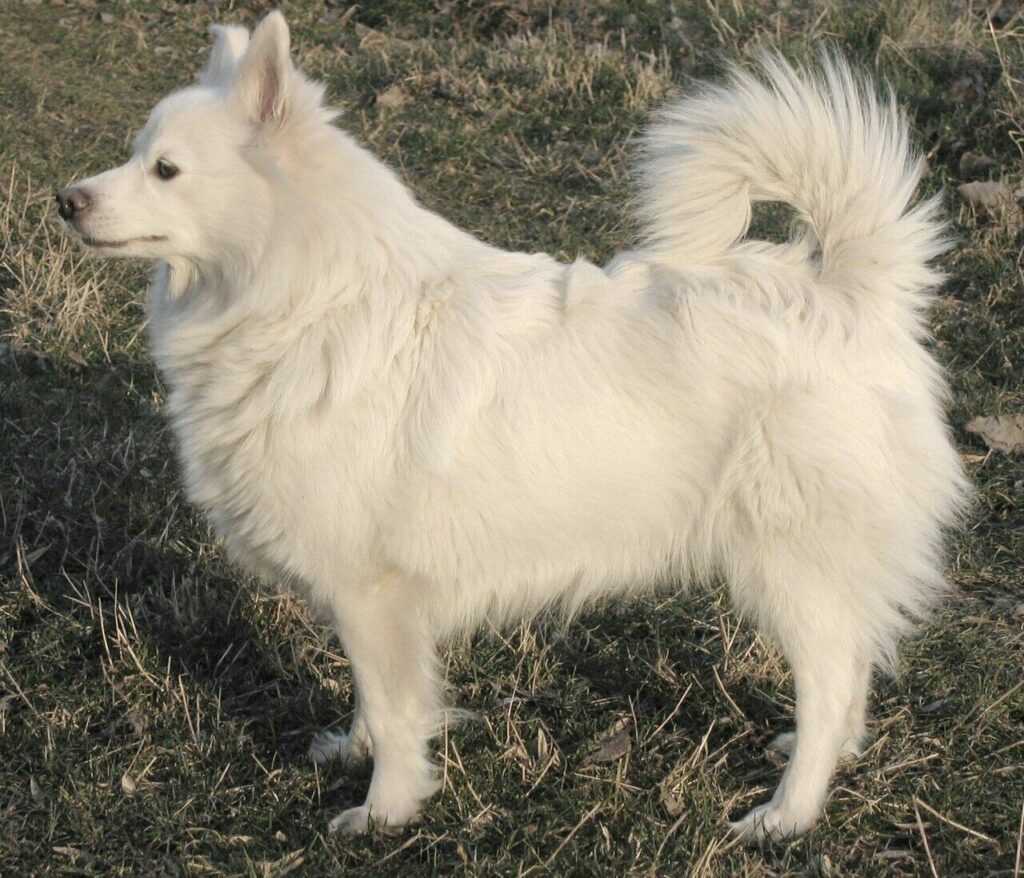
The Pomeranian is a toy dog with lush fur, fox face and character much larger than its size. He weighs barely two to three pounds, but he lives with the conviction that he is the guardian of the house. A direct descendant of the rugged Nordic Spitz, it is today one of the world’s most popular companions. In this guide you will find everything you need to know before sharing your life with a Pomeranian.
Is Pomerania for you?
Before you get carried away by that stuffed face, you should look at the breed realistically. The Pomeranian is a lovely and adaptable dog, but also physically fragile, barking and with a fur that requires maintenance. Here’s an honest summary to decide if it fits you.
In favour .
- Minimum size: ideal for flooring and for carrying almost anywhere.
- Very attached, affectionate and always attentive to his family.
- Smarter and smarter: learns tricks and routines easily.
- Excellent warning dog: warns of any movement.
- Tall and generally tough for his size.
- It needs little exercise in quantity, easy to cover.
To be taken into account
- He tends to bark a lot if he’s not trained as a puppy.
- Double coat that requires frequent brushing and seasonal changing.
- Fragile: thin bones and delicate joints; beware of falls and abrupt children.
- It can become dominant or suspicious without early socialization.
- Prone to dental and knee problems typical of toy breeds.
- He doesn’t tolerate prolonged solitude very well.
Character and temperament
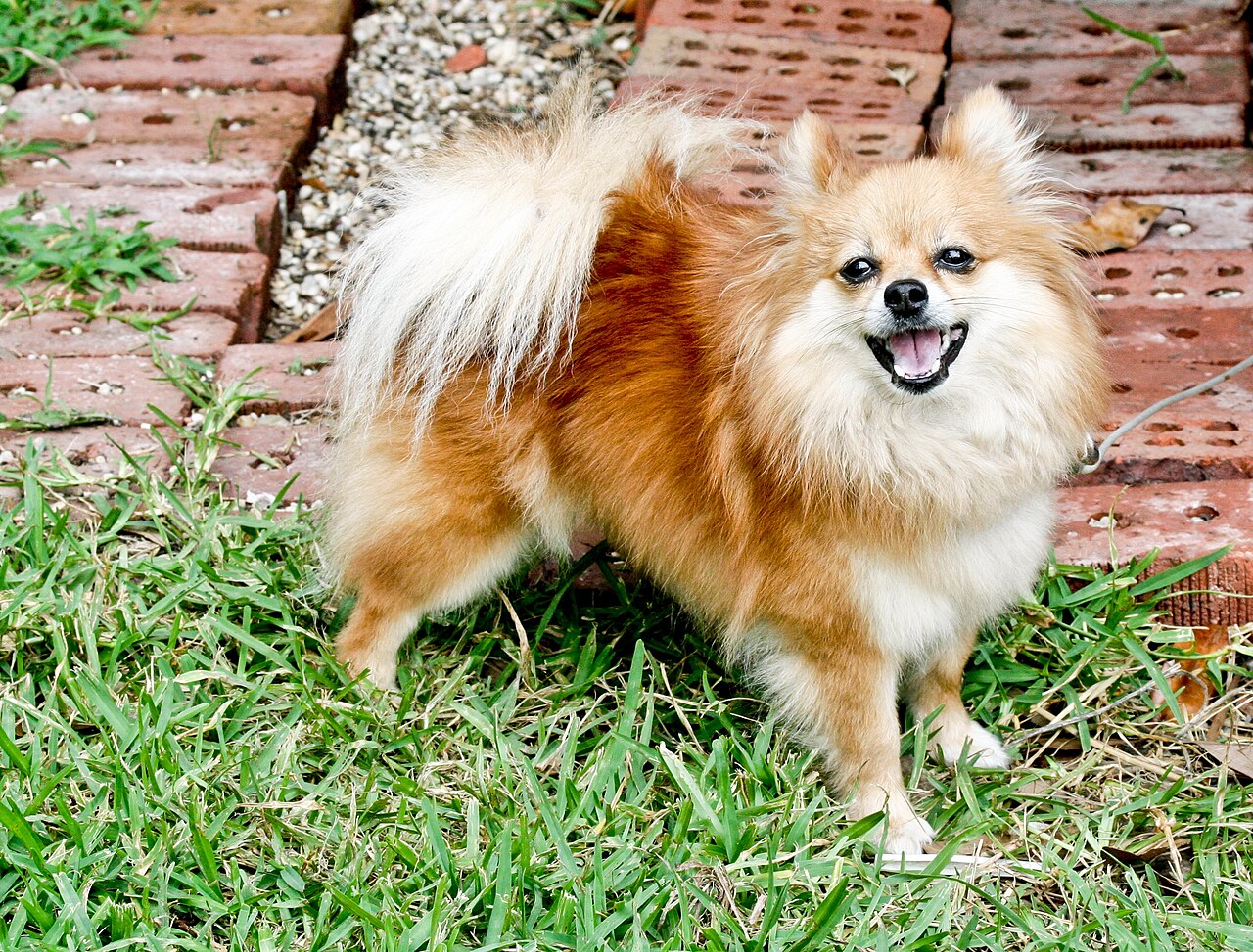
The Pomeranian is, above all, a cheerful, lively and outgoing dog. He loves to be the center of attention and gives himself completely to his people: he will want to be where you are, follow you from room to room and participate in everything that happens in the house. This dedication makes him a very funny companion, but also a dog who suffers if he is ignored.
Beneath that toy look beats the temperament of a real Spitz: Self-confident, brave to the point of recklessness and with a strong protective instinct. It is always alert to changes in its environment and reacts by barking at any new stimulus, making it an excellent warning dog. The flip side of that virtue is that, without clear boundaries, that barking can become a habit that is difficult to control.
It is an intelligent dog of marked character. In Stanley Coren’s well-known classification of canine intelligence, it occupies a prominent place among the working and obedient breeds. That alert head, combined with its confidence, makes it need an owner who sets the rules lovingly but consistently: if you don’t, he will, and a compliant Pomeranian can become bossy.
Coexistence: children, other pets, flat and loneliness
Pomerania is very well adapted to urban life, but its small size dictates almost everything.
- With children: is best with older, respectful children. Due to its tiny size and thin bones, abrupt handling can seriously injure it; in addition, as a good Spitz, it does not tolerate mistreatment and may respond with a growl or defensive bite. Supervision is mandatory with the smallest.
- With other pets: behaves well when introduced as a puppy. Beware of playing with large dogs: an accidental hit or bite can cause serious injuries due to its fragility.
- On the floor: is a practically ideal breed for apartments. It occupies little, exercises indoors and is content with short walks. The only exception is the bark, which should be managed so as not to disturb the neighbors.
- In the face of loneliness: is very dependent on his family and it is not good to be alone for long hours. If you spend the day outside, you will need to gradually get used to it and have entertainment, or you will experience barking and anxiety.
Education and training
No matter how smart the Pomeranian is, he needs firm, early education; otherwise, his self-confidence easily turns to stubbornness.
The two absolute priorities are the socializing and the control of barking. Accustom him from puppyhood to people, noises, other dogs and various situations to prevent him from becoming suspicious or reactive to strangers. In parallel, work from the first day so that barking does not become his response to everything: reward calmness, do not reinforce the scandal and teach him a silence order.
It works wonderfully with positive reinforcement: rewards, play, and a kind voice. Sessions should be short and fun, because you get bored with repetition. Avoid the “little dog syndrome” – holding him in your arms for every conflict or forgiving behavior you wouldn’t tolerate in a big dog only reinforces insecurities and dominance. Treat him like a real dog, not a stuffed animal.
Exercise and activity
The Pomeranian has a lot of energy concentrated in a tiny body, but its exercise needs are moderate and easy to cover.
What he really needs is mental stimulation: scent games, interactive toys, little tricks and obedience routines keep boredom at bay, which is the source of much of his barking and mischief.
Two warnings for its physiognomy: watch out for heatstroke, as its dense double coat makes it sensitive to high temperatures, and no abuse of jumps and stairs to protect its delicate joints.
Care: fur and hygiene
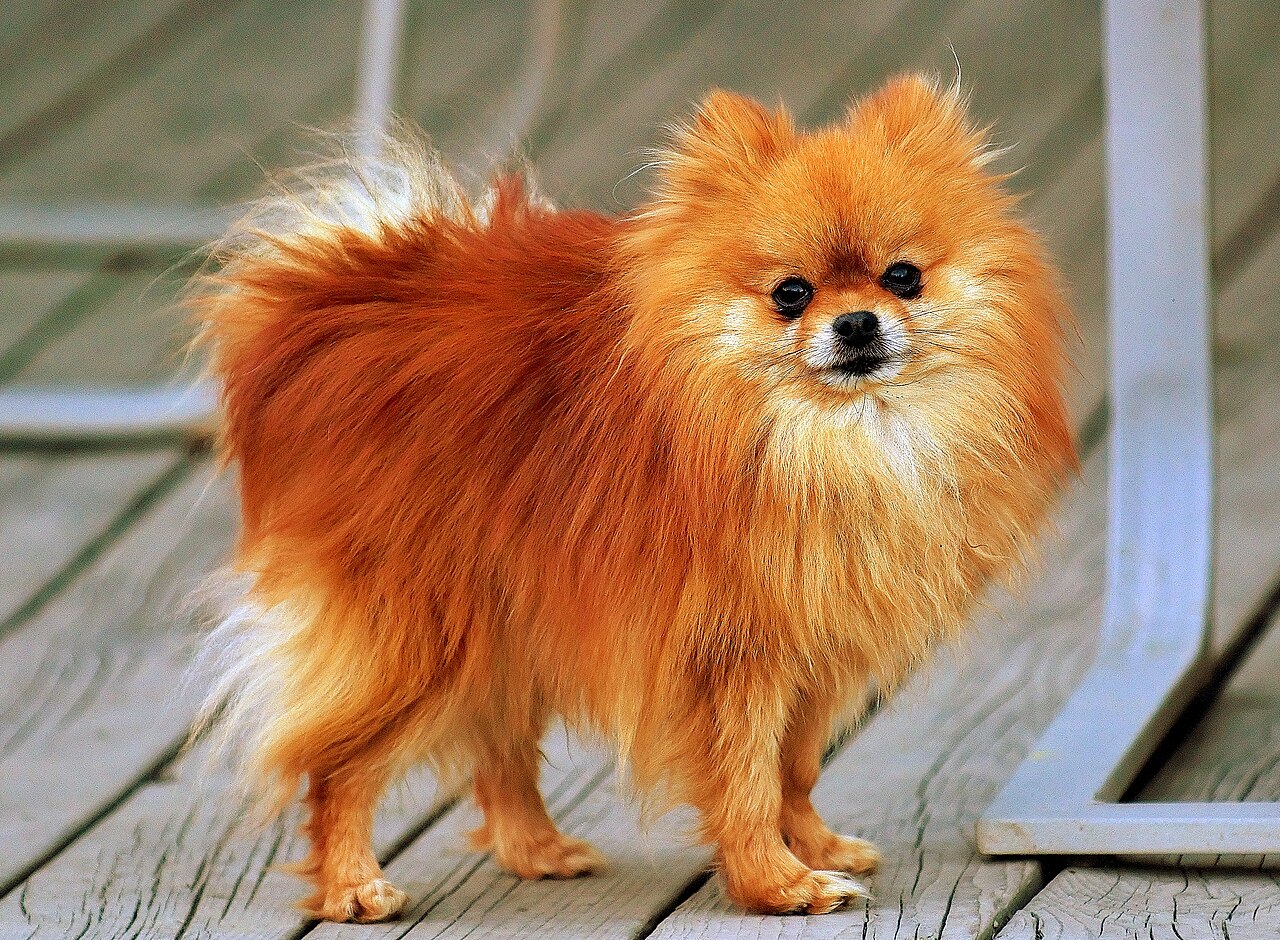
The Pomeranian’s spectacular coat is its hallmark and, at the same time, its main demand for care. It has a double mantle: a dense, soft inner layer that insulates, and a long, smoother, rougher outer one that forms the characteristic neck droplet and tail feather.
To keep it healthy and without knots, brush it several times a week is suitable, reaching up to the inner layer and paying attention to the rubbing areas. Males usually move once a year; unsterilized females do so with zeal, after childbirth and during times of stress, so during those seasons you will need to intensify brushing. One piece of advice: never rap it to zero., because its double mantle regulates temperature and aggressive cutting can damage its growth.
The rest of the hygiene is the usual of a toy breed, but critical in its case: frequent tooth brushing(it is very prone to cavities and tartar), regular cleaning of ears and tear ducts to avoid infections, and inspection of nails.
Foodstuffs
Because the Pomeranian is such a small dog, it needs little food, but high quality. Ideally, a food formulated for mini or toy breeds, with croquette size suitable for its jaw and a good protein intake that maintains its musculature and the health of its coat.
It is advisable to distribute the daily ration in two or three takes., especially in puppies: toy breeds can suffer from low blood sugar (hypoglycemia) if they go too many hours without eating.
Keep fresh water available at all times, and if you have any questions about your diet – especially for puppies, pregnant dogs, or older dogs – check with your veterinarian.
Health and life expectancy
The Pomeranian is, in general, a robust and long-lived dog: its life expectancy is around 12 to 16 years. Nevertheless, it shares the pathologies typical of toy breeds, and knowing them helps to prevent and detect them in time.
The most frequent and relevant problems are:
- Dislocation of the patella: is one of the most characteristic disorders of the breed; in moderate to severe cases it may require surgery.
- Collapse of the windpipe: causes a characteristic dry cough and has become a serious problem in the breed.
- Alopecia X or “Black Skin Disease”: a hair loss of unknown cause, strongly associated with Pomerania, usually starting in the tail.
- Eye problems: Dry keratoconjunctivitis, alterations of the tear ducts and cataracts in older dogs.
- Other conditions: persistent ductus arteriosus (heart disease), Legg-Calvé-Perthes disease, hypothyroidism, epilepsy, hypoglycemia, dental problems and, in males, cryptorchidism. Hydrocephalus is occasionally reported in puppies.
Many of these problems can be prevented with routine hygiene, weight control, regular veterinary checkups, and the choice of a responsible breeder who rules out hereditary pathologies in the parents.
Physical appearance
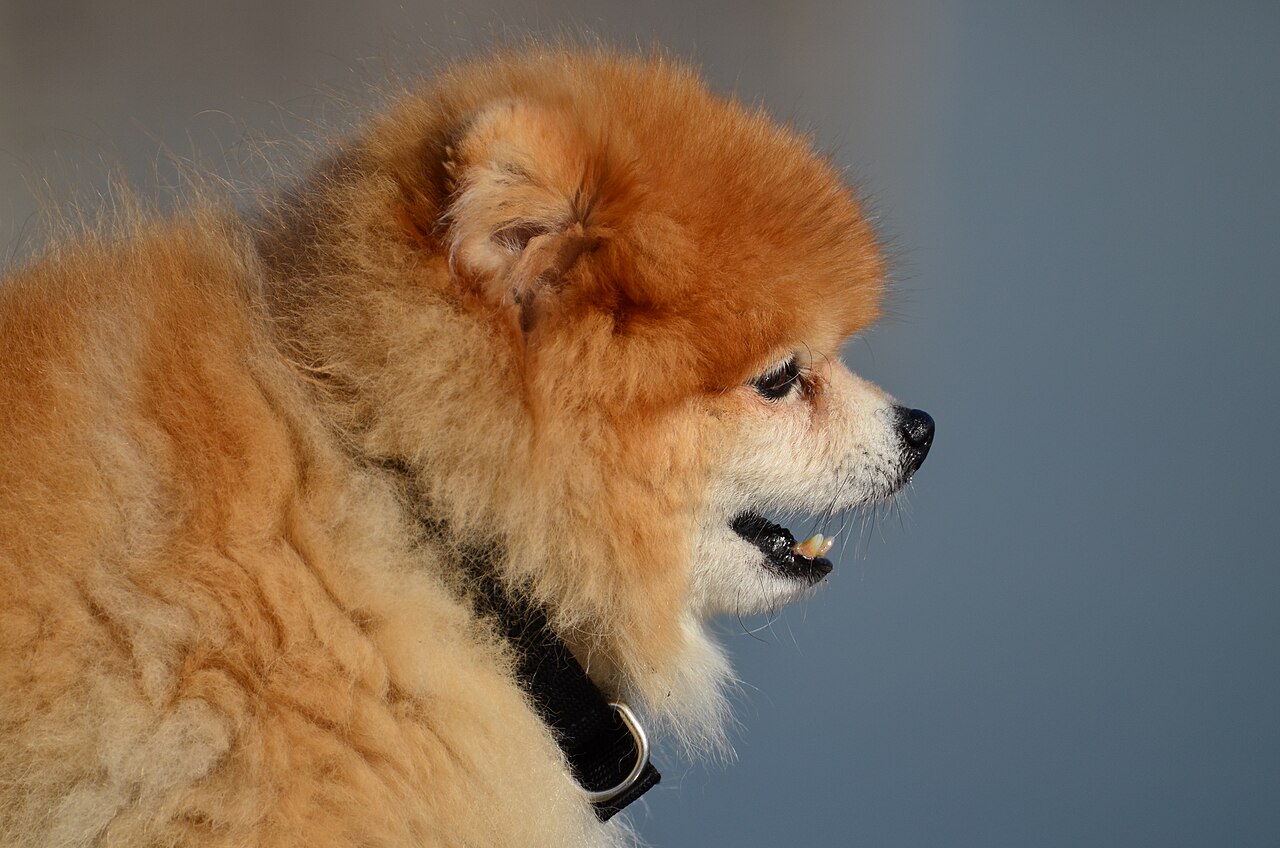
The Pomeranian is the smallest of the Nordic dogs, weighing between 1,4 and 3,2 kg and measuring around 18 to 24 cm at the withers, with a compact, proportionate and surprisingly robust body under so much hair.
Its head has a triangular shape and a wakeful expression that gives it the unmistakable you little prick air: thin snout, vivid eyes and small ears, erect and very close together. The tail is another of its distinctive features: well-feathered, curves over the back and is carried high and flat.
As for color, it is one of the breeds with the widest palette that exists: The most common are orange, black and cream/white, but you can also see red, brown, blue, sable, atigrated, particolor and many combinations. Historically, three types of face are distinguished – fox (the recognized standard), bear, and wrist – although only the fox type meets the official standard of the breed.
Origin and history
Pomerania takes its name from the region of Pomerania, on the shores of the Baltic Sea, today divided between northeastern Germany and northwestern Poland. There, this area of passage of Celts, Slavs, Swedes and Prussians shaped the dog from the large Northern Spitz; their ancestors were sled-type dogs from northern Europe. For its typology, the FCI classifies it within Group 5 (dogs of Spitz type and primitive type), Section 4 (European Spitz), under the German Spitz standard (no. 97).
Interestingly, the pocket Pomerania we know today did not exist until the 19th century. The first specimens that arrived in England weighed more than 10 kg: They were much larger working and companion dogs. It was the British breeders who, by selection, drastically reduced their size and multiplied their variety of colors, preserving the robustness and fur of cold-climate dogs.
The final push came from royalty. Queen She was the daughter of Charlotte of Mecklenburg-Strelitz. introduced the breed to the English nobility, but it was her granddaughter, the queen Victoria, who launched her into stardom: He came back from a vacation in Florence with a little Pomerania named Marco and became fond of the tiniest specimens. During his lifetime, the average size of the breed came to be cut in half, and the taste for small Pomeranians spread throughout the world.
Curiosities
- He survived the Titanic. Of the only three dogs rescued from the 1912 shipwreck, two were Pomerania. One of them, named “Lady”, belonged to passenger Margaret Hays.
- It shrunk in half. During Victoria’s reign, selection reduced the average size of the breed by almost 50%.
- Tres “caras”. Amateurs and breeders distinguish the fox type, the bear type, and the doll type, although only the former is the recognized standard.
- Queen Charlotte had two Pomerania, Phoebe and Mercury, portrayed by none other than the painter Thomas Gainsborough.
- Related to giants. Its closest relatives are imposing Nordic dogs such as the Samoyed or the Norwegian Elkhound, and it descends from the German Spitz.
- Minimum layers. is one of the breeds with the lowest average of puppies per litter, around two young.
If you are attracted to the Pomeranian, you may want to compare its character and care with other related breeds. Take a look at the German Spitz, its direct descendant; the sociable and furry Samoyedo; the intelligent and compact Schipperke; or another small city buddy like the Chihuahua.
Frequently asked questions about Pomerania
How long does a Pomeranian live?
With good nutrition, weight control, dental hygiene, and regular veterinary checkups, many specimens easily outlive twelve years.
Does the Pomerania bark a lot?
Yes, it tends to bark. It is a very alert dog that warns of any new stimulus, which makes it a good alarm dog but also prone to excessive barking. With socialization and training from puppyhood, barking can be controlled.
How much does a Pomeranian weigh and measure?
It is the smallest of the Nordic dogs. It weighs between 1.4 and 3.2 kg and measures approximately 18 to 24 cm at the withers, with a compact body under its abundant fur.
Is it a good breed to live on a flat?
It is almost ideal for flooring due to its minimal size and moderate exercise needs.
Is the Pomerania good with kids?
Because of its small size and fine bones, a rough handling can injure it, and as a good Spitz it does not tolerate mistreatment.
What care does your fur need?
It has a double coat that must be brushed several times a week, intensifying in moulting seasons.
Is the Pomerania easy to train?
It is very intelligent and learns quickly, but it also has a strong character and can be stubborn. It responds very well to positive reinforcement, with short, fun sessions, as long as clear boundaries are set for it as a puppy.
What health problems are common in the breed?
The most common are knee dislocation, collapse of the windpipe, alopecia X or “Black Skin Disease”, eye and dental problems, and conditions such as hypothyroidism or hypoglycemia.