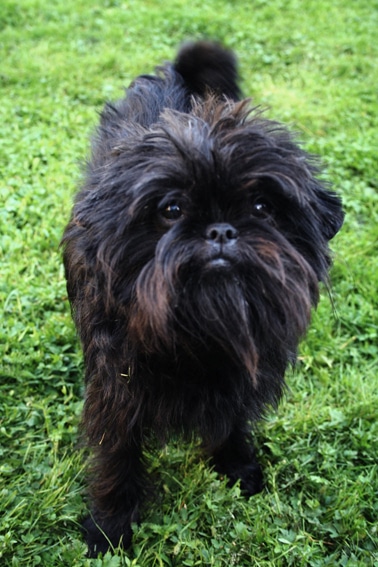
The Affenpinscher is one of the most personalized small dogs in existence: A fellow German of the pinscher type, brave, curious and possessed of an unmistakable ape-like face that gave him his name. Though not much more than a palm in length, it behaves like a large dog trapped in a tiny body. In this comprehensive guide, we review their character, care, health, and history so you know if the Affenpinscher is the breed you’re looking for.
Is that the Affenpinscher for you?
Before you fall in love with that monkey face, you should know what kind of dog you’re going to meet. The Affenpinscher is a friendly and loyal whirlpool, but also stubborn and with a marked hunting instinct. Here you have, at a glance, its strengths and its disadvantages.
In favour .
- Small size, perfect for flat and city.
- Very close and loyal to his family, great company.
- It’s shiny, comfortable to have at home.
- Brave and vigilant – an excellent whistleblower despite its size.
- Funny character, clown and full of personality.
To be taken into account
- Stubborn and independent: education requires patience.
- Strong hunting instinct with rodents, birds and small prey.
- It tends to bark to warn if it’s not managed.
- Rough hair needs regular brushing and grooming.
- Rare breed, hard to find, not good with loneliness.
Character and temperament
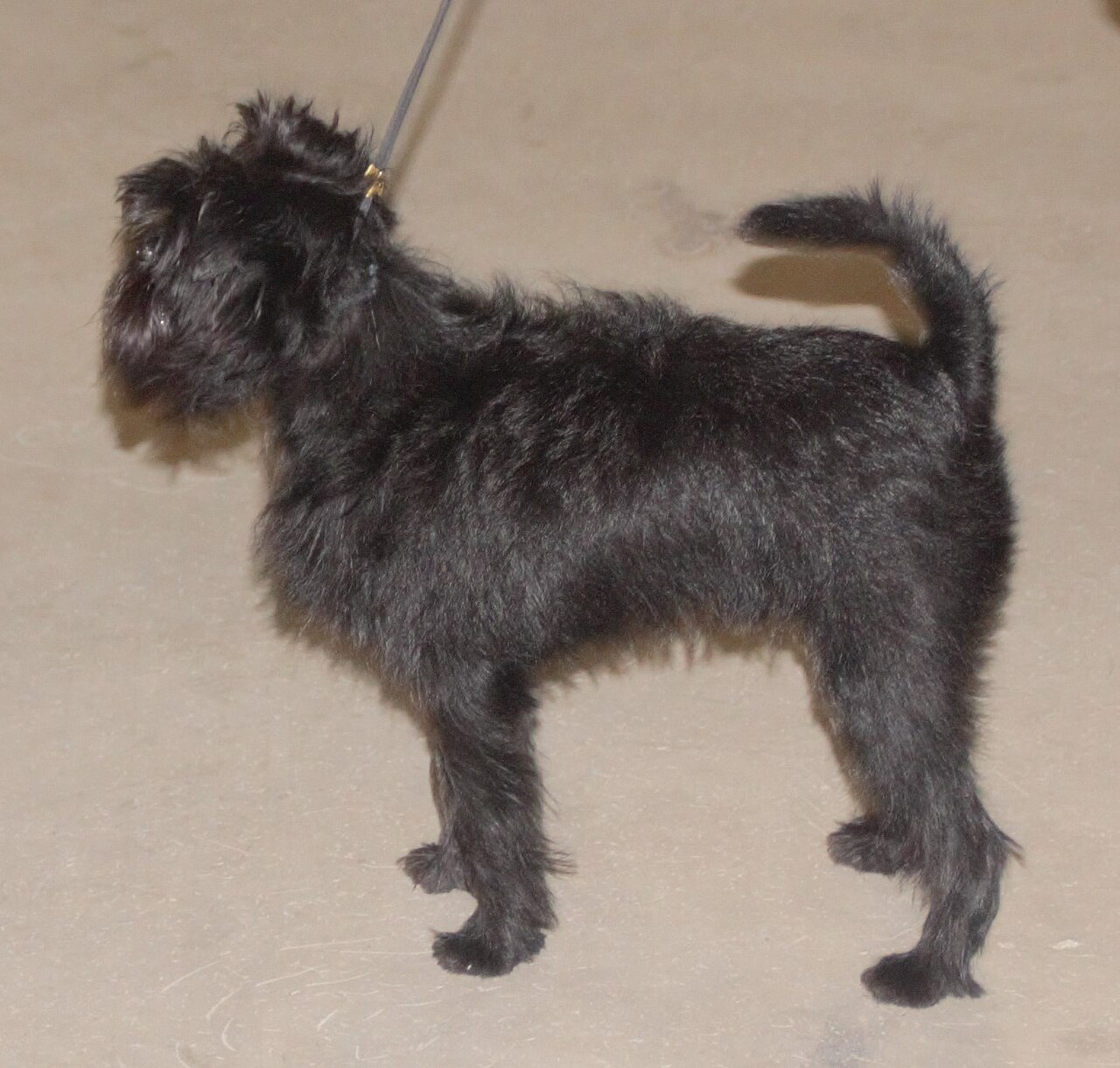
If we had to sum up the Affenpinscher in one word, it would be character. Under its unkempt appearance hides a dog awake, confident in himself and with a comic point that makes those who live with him laugh.
With its people it is extremely affectionate and attached. It enjoys company, seeks the lap and becomes a faithful shadow that follows you throughout the house. This devotion has its counterpart: it is not a dog made to spend many hours alone, and if it is left too long isolated it can get bored and develop annoying behaviors.
It is also vigilant by nature. It inherits from its past as a mousetrap an alert instinct that makes it an indefatigable warner: little escapes it and will sound the alarm at any noise or visit.
Coexistence: children, other pets, flat and loneliness
The Affenpinscher adapts very well to family life, but there are nuances that you should know depending on who you live with and where:
- With children: goes well with older, respectful children who know how to treat a small dog. Very small ones must always be supervised, because their size makes them fragile and do not tolerate pulling or rough handling.
- With other dogs: can live comfortably if socialized early, although its courageous nature makes it resistant to much older dogs.
- With cats and other pets:, if it grows up with them, usually accepts them, but with rodents, birds, and small pets, its hunting instinct can go off, so it’s rarely a good match.
- Its size makes it ideal for apartments and urban life, as long as it has your daily walks and stimuli.
- In the face of loneliness: has a hard time staying alone for long hours, needs company, and if he spends too much time alone, he may bark excessively or become stressed.
Education and training
Educating an Affenpinscher is an exercise in patience and a sense of humor. It is intelligent and learns quickly, but also independent and somewhat stubborn, so it will decide to collaborate only if it compensates. Positive reinforcement – rewards, play and praise – works much better than any method based on imposition, which with this breed only generates blockage and distrust.
Early socialization is essential. Exposing a puppy to people, noises, other animals and various situations prevents him from becoming suspicious or overly barking as an adult.
Short, frequent and fun sessions give much better results than long training sessions. Its clownish side plays in your favor: if you turn learning into a game, this puppy enthusiastically delivers. Consistency and clear rules from the beginning make the difference between a polite Affenpinscher and a charming little tyrant.
Exercise and activity
Although it is energetic and lively, its exercise needs are moderate and easy to cover. One or two daily walks, in addition to the moments of play and the activity that he himself generates by running around the house, are enough to keep him in shape and balanced.
As important as physical exercise is mental stimulation. Being smart and curious, it appreciates olfactory games, interactive toys, food puzzles, and small obedience challenges. A bored Affenpinscher is a problematic Affenpinscher: boredom is the main culprit for excessive barking and mischief.
Care: fur and hygiene
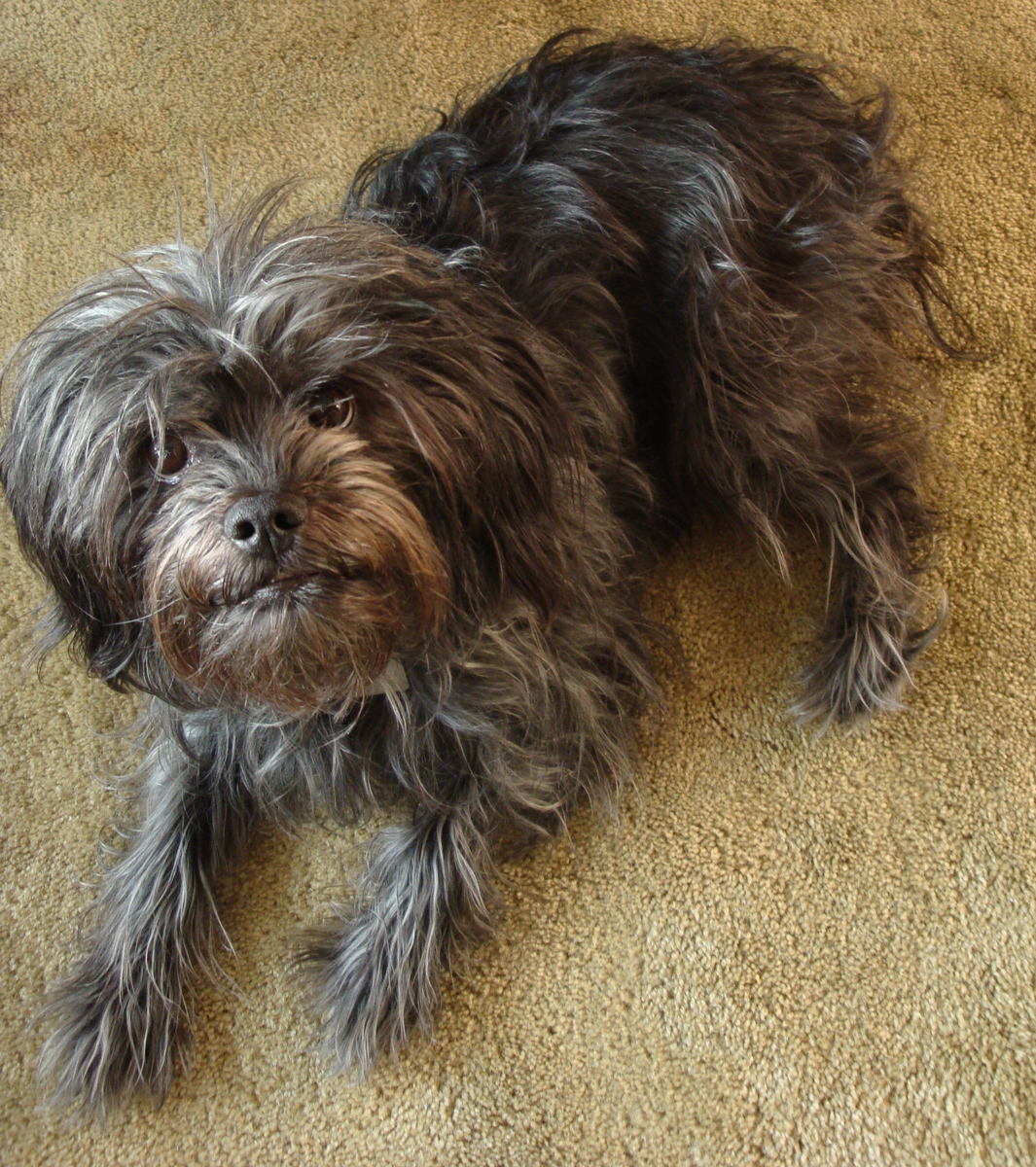
The Affenpinscher’s coat is rough, hard and unkempt in appearance, longer and plentiful on the head and shoulders – where it forms a kind of mane and beard that frames its monkey face – and shorter on the back and hindquarters.
Ideally, the coat should be brushed several times a week and, depending on the type of coat, stripped to preserve its characteristic hardness, or cut to make it softer and more soft but less typical.
The rest of the hygiene is that of any small dog: bathing only when necessary, checking and cleaning the ears, regular nail trimming and, very importantly, dental care.
Foodstuffs
The Affenpinscher needs a complete and balanced diet, adapted to its small size, age and activity level.A quality feed for small breeds, with a croquette of a size suitable for its mouth, is usually a good base; it can also be fed with wet or well-formulated home diets, ideally with veterinary advice.
Being such a frequent dog, it is advisable to measure the rations well: excess weight falls hard on delicate joints like the knees, prone to knee dislocation. Splitting your food into two servings a day, keeping track of your prizes, and always having fresh water are simple habits that can help you stay healthy in the long run. Monitoring your weight is one of the best investments in your well-being.
Health and life expectancy
The average life expectancy of the Affenpinscher is between 12 and 15 years, which is typical of a small, long-lived dog. However, a study in the United Kingdom recorded a lower average of about 9.3 years, a reminder that genetics and care make a big difference.
It’s a generally robust breed, but with some predispositions worth knowing:
- Dislocation of the patella: kneecap displacement is relatively common in dogs of this size and should be monitored.
- Dysplasia of the hip: its incidence is the subject of debate, but it is among the points to control.
- Cataratas: There is some hereditary predisposition to this eye problem.
- Siringomyelia associated with Chiari malformation: this neurological alteration has been observed in the breed.
- Seasonal alopecia of the flank: hair loss on the sides that appears seasonally.
Going to responsible breeders who perform health tests, maintain veterinary checkups, control weight and take care of dental hygiene are the best tools for your Affenpinscher to enjoy a long and healthy life.
Physical appearance
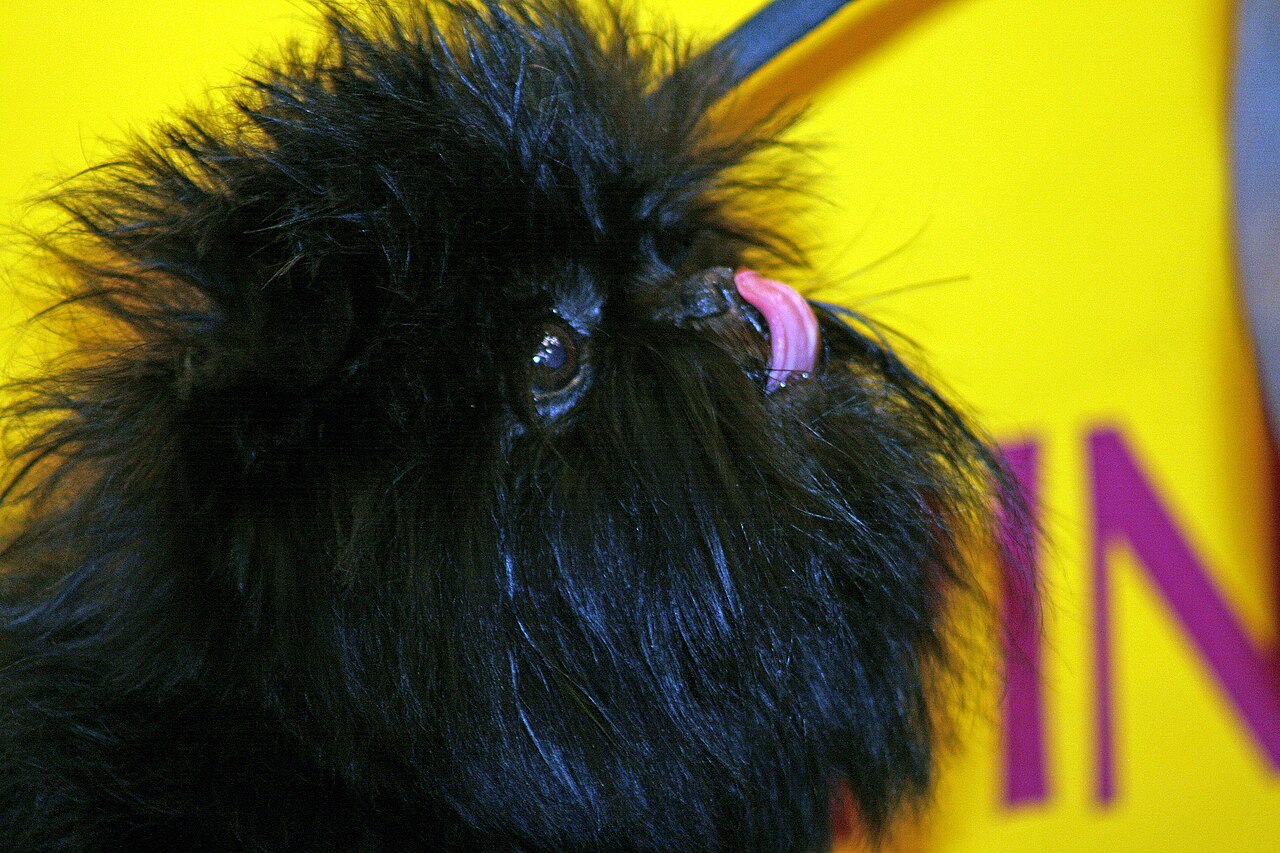
The Affenpinscher is a small, compact and robust dog. According to the standard of the International Cynological Federation (FCI), it measures between 25 and 30 cm at the cross and weighs about 4 to 6 kg, with very similar sizes in males and females.
Its most famous feature is its head: round, with large, dark, round eyes, short, strong snout, slightly prominent lower jaw, and erect, pointed ears.
The coat is rough and hairy-looking, longer on the head and shoulders forming a small mane. As for color, the FCI and British Kennel Club standards only accept black, while the American Kennel Club also accepts gray, silver, red, black and fire, and beige.
Origin and history
The Affenpinscher is an ancient German breed, belonging to the group of pinschers. Its name comes from the German word Affe(monkey), for its unmistakable hairy face.
For generations it was a farm and stable dog, bred to hunt mice and rats. These small, robust and courageous mice guarded quarters and homes, and from this utilitarian past comes its alert and hunting instinct.
The modern history of the breed begins in Germany in the late 19th century. In 1895 the Pinscher-Schnauzer-Klub was founded, which grouped the varieties of pinscher and schnauzer; its first book of origins, published in 1902, already collected fourteen Affenpinscher. The breed was recognized by the American Kennel Club in 1936 and definitively accepted by the FCI in 1955. Today it is a small race: In Germany, annual enrollments have been very low over the past few decades, making it a relatively rare dog.
In the FCI classification, the Affenpinscher falls into the Group 2 (Pinscher and Schnauzer, Molossians and Swiss mountain dogs), Section 1: Pinscher and Schnauzer. Although its appearance is reminiscent of a terrier and its English nickname of “Monkey Terrier”, it does not belong to the terrier group.
Curiosities
- A face with a name:‘s name comes from the German Affe, “monkey”, for the ape-like expression that gives it facial hair, crowded eyebrows and round eyes.
- Terrier that is not terrier: in English is nicknamed Monkey Terrier, but it belongs to the family of pinscher and schnauzer, not terrier.
- Star of the rings: An Affenpinscher named Banana Joe (GCH Banana Joe V Tani Kazari) was proclaimed Best in Show at the prestigious 2013 Westminster Dog Show, a milestone that gave the breed worldwide fame.
- Ancestor of other races: is considered that the Affenpinscher contributed to the development of other small furry-faced companion dogs.
- Small but brave: retains such composure that, despite its size, it behaves like a guardian who is not afraid to warn of any intruder.
If you are attracted to the character of the Affenpinscher, you may be interested in other breeds in the same family or of similar size and temperament. You may discover the Pinscher in miniature, another energetic little pinscher; the German Pinscher, its medium-sized relative; the This is a miniature schnauzer., a bearded companion from the same German club; or the popular Yorkshire Terrier, another pocket dog with a great personality.
Frequently asked questions about the Affenpinscher
Is the Affenpinscher a good dog for beginners?
It may be, but with nuances. It is small, affectionate, and adapts well to a floor, which helps beginners. However, it is stubborn and independent, so it requires patience, constancy, and positive reinforcement. If you are willing to devote time to socialization and gentle but firm upbringing, it will fit well; if you are looking for a dog that obeys the first one without work, it may disappoint you.
How long does an Affenpinscher live?
It is worth noting that a British study recorded a lower average of about 9.3 years, influenced by hereditary diseases and the small number of specimens analyzed. With good care, veterinary checks and weight control, many Affenpinscher reach advanced ages.
Does the Affenpinscher shed a lot of hair?
No, their coat is scarce. They have a rough, hard coat that sheds little, so they are usually well tolerated at home. Instead, that coat needs maintenance: regular brushing and, in the case of hard-coated specimens, stripping or trimming. No dog is completely hypoallergenic, but their low coat makes it comfortable for many sensitive people.
Do you get along with children and other pets?
It gets along well with older and respectful children who understand how to treat a small dog. With very young children it is advisable to always supervise, because its size makes it fragile and does not tolerate abrupt handling. It can coexist with other dogs and cats if it socializes from a puppy, although its hunting instinct causes it to chase rodents, birds and small prey.
How much exercise does an Affenpinscher need?
Its needs are moderate. It needs one or two daily walks and play periods, supplemented by the activity it generates by running around the house. More important than physical exercise is to keep its mind occupied with olfactory games, interactive toys and small obedience challenges, because it is a smart dog that gets bored easily.
Does the Affenpinscher bark a lot?
It is an alert and vigilant dog that warns of any novelty, so it tends to bark to sound the alarm. It is not a compulsive barker by nature, but if not managed it can catch on to the habit. Good socialization and teaching it to stop on cue help to keep barking under control.
Is he a good dog to live in a flat?
Yes, it is one of its great virtues. Its small size makes it ideal for apartments and small houses. It tolerates the city life well as long as it has its daily walks, company and stimuli. Of course, it does not tolerate prolonged solitude, so it is advisable not to spend too many hours alone.
Where did the name Affenpinscher come from?
From the German Affe, meaning monkey. It was given this name because of its hairy face and monkey-like expression, which reminds one of a primate.