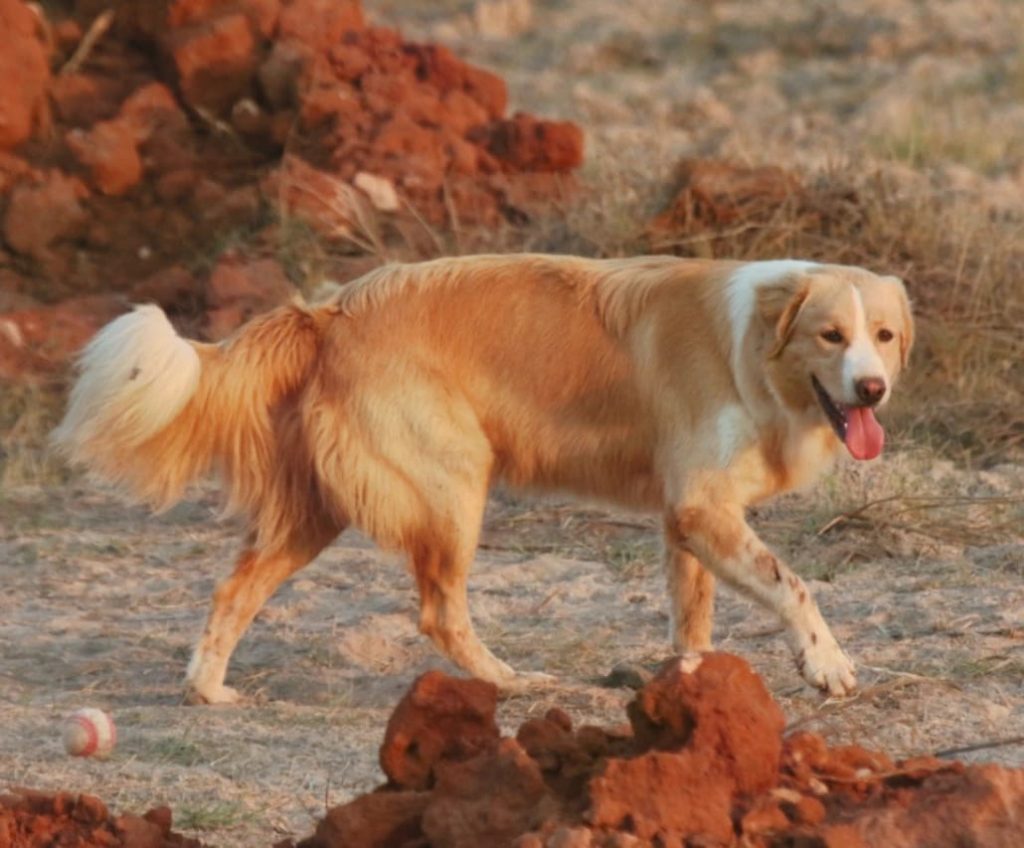
The Aidi is one of the great unknowns of canine science: a guard dog native to the Atlas Mountains in North Africa, bred for centuries by Berber herders to protect flocks and camps. Rustic, courageous, and deeply territorial, the Aidi – also called the Atlas Mountain Dog – is not a pet for just anyone, but it rewards those who understand its character with unwavering loyalty.
Is the Aidi for you?
Before you fall in love with its image, be honest: the Aidi is a working dog, not a working dog. Its natural habitat is a farm, a cattle ranch or an active rural family that knows how to give it function, space and leadership. Here’s the quick balance.
In favour .
- Exceptional guardian: alert, courageous and deterrent.
- Total loyalty to your family and your territory.
- Rustic and tough, with few inherited health problems.
- Simple fur maintenance.
- Intelligent and autonomous: it thinks and decides for itself.
Against
- Very territorial and suspicious of strangers.
- He needs a lot of exercise and space; bad on the floor.
- Independent: it does not obey “because it does”, it must be earned.
- Rare breed outside Morocco: little breeding and few breeders.
- He tends to bark and watch; not suitable for sensitive neighbors.
Character and temperament

The Aidi’s temperament is summed up in one word: the guardian. It is an alert, courageous and serious dog, who lives attentive to its environment. Where other breeds seek constant human approval, the Aidi maintains an independence inherited from generations of working alone in the mountains, guarding herds against predators and thieves without anyone giving minute-by-minute orders.
With his family he’s loyal, affectionate in his own way and hugely protective. With strangers, however, he is reserved and suspicious: He’s not a dog that gives out trust lightly. That distrust is not a flaw, but the very essence of its function. A good Aidi warns of anything new, assesses the situation, and acts with composure, not hysteria. Early socialization is what makes the difference between a balanced watchdog and an overly reactive dog.
It is also a bond-sensitive animal: it needs to belong to a group – human or animal – and gives itself completely to it. It does not tolerate prolonged abandonment or isolation, and responds much better to firm but fair treatment than to imposition or punishment.
Coexistence: children, other pets, flat and loneliness
With children: The Aidi is usually tolerant and protective of the children in his own home when he has grown up with them.
With other pets: has a remarkable ability to coexist with other animals that he considers part of his group. With unknown dogs of the same sex he can be dominant and territorial. Gradual introductions and socialization from puppyhood are key to a calm coexistence.
On the floor and in the solitude: here is its biggest limitation. The Aidi is an outdoor, open-space, outdoor dog. Locked in a small apartment, with no homework and only many hours, it tends to get frustrated, bark and develop problematic behaviors.
Education and training
Training an Aidi isn’t like training a Labrador. It’s not a dog that lives to please; it’s a dog that decides. That doesn’t mean it’s clumsy – on the contrary, it’s very intelligent – but you have to gain their respect it and give it reasons to collaborate. Positive reinforcement, consistency and patience work; harshness and punishment don’t: they just make it shut down or become suspicious.
The absolute priority is the early socialization: exposing the puppy, in a controlled and positive way, to people, animals, noises and different environments. A well-socialized Aidi distinguishes the normal from the threatening; one who is not can perceive anything new as a threat.
It is a dog recommended for people with experience in guarding breeds or independent character. A first-time owner, without advice, can be overcome by its autonomy and territorial instinct.
Exercise and activity
The Aidi was bred to traverse steep terrain for hours, so its demand for exercise is high. It is not satisfied with a walk around the block: it needs long walks, terrain to explore and, above all, a purpose. It is an excellent companion for hiking, mountain trails and outdoor life.
Just as important as exercise is the mental stimulation. An Aidi with a task – guarding a farm, accompanying in the field, working with livestock, practicing obedience or tracking dog sports – is a balanced dog. An Aidi with nothing to do turns boredom into problems: Barking, wrecking and obsession with the perimeter. Its excellent sense of smell, inherited from its role as a prey locator, makes it especially suitable for games and tracking sports.
Care: fur and hygiene

A good news for would-be owners: maintaining the Aidi is simple. Its coarse, dense and weather resistant fur is designed to protect it from the cold of the mountain and the sun, and is cared for with a weekly brushing that removes dead hair and dirt.
She doesn’t need a hairdresser, she doesn’t need a haircut, she doesn’t need a make-up: It’s a natural dog. Bathing should be occasional, only when it is really dirty, so as not to damage the protective layer of your hair. Complete the hygiene with the basics of any dog: Ears checked and cleaned, nails trimmed when they don’t wear out on their own, and regular dental care. Their crowded tail and dense mantle are worth a look after field trips to remove grain or parasites.
Foodstuffs
As a rustic and active dog, the Aidi needs a quality diet, balanced and proportionate to its actual energy expenditure, which is high when it is working or exercising a lot.A complete diet – be it good-quality feed, moist food or a diet supervised by a veterinarian – should cover its protein and fat needs without falling into excess weight.
It is advisable to divide the daily ration into two portions, adjust the amount according to age, activity and body condition, and always keep fresh water available, especially after exercise. Watch the weight: an Aidi should look smooth and muscular, never curly.
Health and life expectancy
The Aidi is, first of all, a healthy and resilient dog. As it is a breed little modified by intensive breeding and selected for centuries for its functionality, it does not drag the long list of hereditary problems of other more “manufactured” breeds.
That doesn’t exempt him from the usual preventive care: daily vaccination, internal and external deworming – important in a dog that spends time in the field – and regular veterinary checks. As with any breed of medium size and active life, it is advisable to monitor the joints over the years and take care of dental hygiene. His life expectancy is routinely cited around the 10 – 12 years, a figure that good handling, proper exercise and controlled weight help make the most of.
Physical appearance

The Aidi is a medium-sized dog, smooth and muscular, made for movement and resistance rather than for mass. The males measure between 52 and 62 cm at the withers and weigh around 25 kg.
Its most characteristic feature is the coat: rough, thick and very weather resistant, topped by a densely populated, almost feathered tail. The head, often described as “bear-like”, is proportionate to the body, with a snout that is pointed toward the truffle – black or brown, usually matching the coat – and strong jaws with tight lips. The ears, medium in size, drop slightly forward, and the eyes, medium and dark, are framed by equally dark edges.
In terms of color, the breed supports a good variety: white, black, white and black, pale red and lion-like, often spotted and mottled.
Origin and history
The Aidi is an indigenous breed of atlas mountains in North Africa. It is found mainly in Morocco – a country that keeps its official standard with the International Cinological Federation (FCI) – but also in Algeria, Tunisia and Libya. For generations it was the dog of the berber shepherds and nomads, who used it to protect their flocks of sheep and goats and to guard the camps from wild cats, predators and strangers. At night, the most alert and brave specimens would bet on the perimeter of the camp.
Its name has led to a curious historical confusion. In the 1963 standard it was christened “Atlas shepherd dog”, but the Aidi he was never a herding dog. in the sense of leading the herd: it was always a guardian. The mistake was corrected in 1969.
Unlike the elegant Sloughi – the greyhound that the tribes considered a noble dog – the Aidi did not historically enjoy the same social prestige, despite its value as a protector. In fact, they both worked as a team on the hunt: The Aidi would locate the prey with his excellent sense of smell and the swift Sloughi would chase after it. In recent times a club has been created in Morocco to preserve the purity of the breed and recognize its role as a guardian, hunter, utility dog and companion.
Curiosities
- A name with a history:“Aidi” simply means “dog” in several languages of the area; it is also called Atlas mountain dog or, by the tribes that raised it, “Berber”.
- The pastor’s misunderstanding: was for years referred to as the “Atlas shepherd dog”, despite never having herded a flock.
- Hunting duo: paired with the Sloughi – he tracked by smell, the greyhound chased – a fine example of complementary canine specialization.
- Border guard: in the nomadic camps, the most vigilant dogs occupied the night perimeter, the first line of defense.
- Rareza: outside North Africa remains a very rare breed, almost unknown in much of Europe and America.
If you are interested in the Aidi for its profile as a guard and protector dog, you may want to know other breeds with a vocation of defense and work: the imposing Cane Corso, the powerful Mastín, the versatile Pastor Alemán or the independent and loyal Akita.
Frequently asked questions about AID
Is the Aidi a good family dog?
The Aidi is deeply loyal and protective of its own, but drags on centuries of selection as an independent watchdog: it is not a complacent dog or especially sociable with strangers. It works best in homes that understand its territorial character and give it a job, not as a small-floor decorative pet.
How much exercise does the Aidi need?
It is a rustic working dog bred to patrol mountain terrain for hours at a time. It needs at least one or two long outings daily, space to move around and, if possible, a task (surveillance of a farm, hiking, dog sport).
Does the Aidi get along with children?
With the children of his own family, he is usually tolerant and protective if he has grown up with them and is well socialized. However, due to his size, strength and guardian instinct, it is advisable to always monitor interactions, teach children to respect the dog and monitor their reaction to friends or children visiting outside the house.
Is the Aidi aggressive?
It is not a dog that is gratuitously aggressive, but it is suspicious and very territorial: it warns, watches and defends. This reactivity to the unknown is precisely what was sought in it for generations. With early socialization and consistent management it channels that instinct well; without it it can become overly suspicious.
Does the Aidi adapt to living in a flat?
It’s not their ideal environment. An Aidi can live in a city if it gets plenty of exercise and enough mental stimulation, but its nature as a keeper of open spaces fits much better in a house with fenced terrain. On the floor it tends to bark at noises and suffer if it spends too much time alone or inactive.
How tall and how much does an Aidi weigh?
It is a medium-sized dog: about 52 to 62 cm at the withers and weighs about 25 kg, with a smooth, muscular body and nothing heavy. It is not a giant molosoid, but an agile guard capable of moving on steep terrain.
How long does an Aidi live?
Its natural robustness plays in its favour; good maintenance, exercise and proper nutrition help it to reach old age in good health.
Does the Aidi need a lot of grooming?
Their rough, weather-resistant coat is maintained with a weekly brushing, which is intensified during the seasonal mowing season.