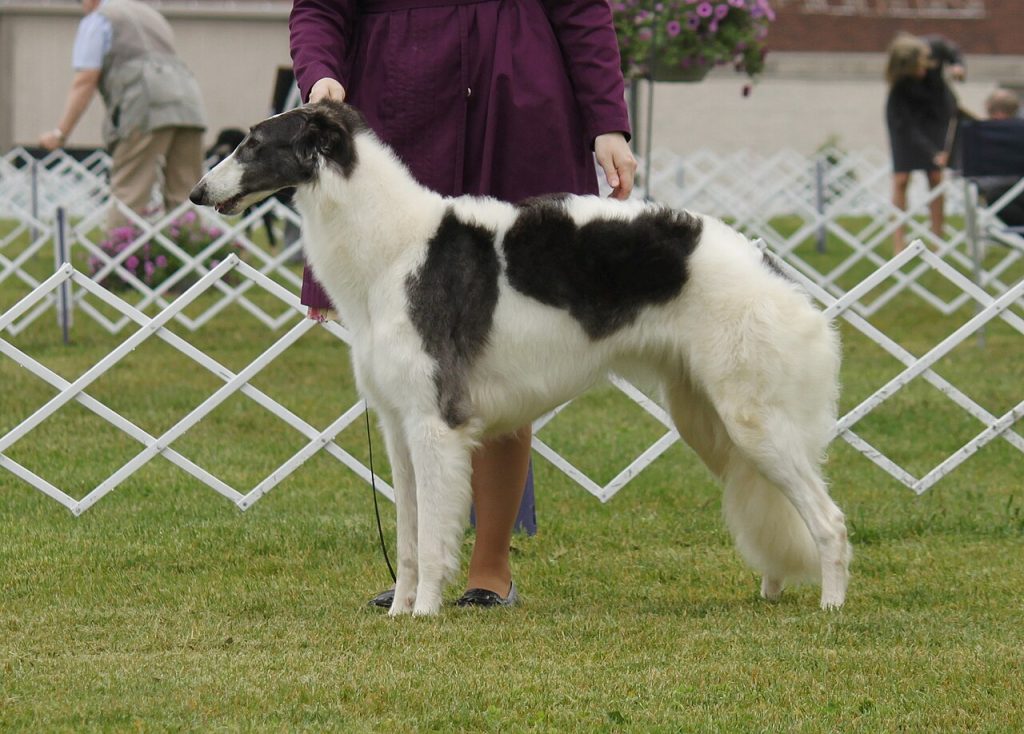
The Borzoi, also known as Galgo Ruso, is one of the most spectacular hares in existence: A big, thin, fast dog with a long, silky coat, who went from hunting wolves in the Russian steppes to becoming a quiet, elegant couch companion. Hiding beneath his aristocratic air is a hunter in plain sight with an intact instinct, remarkable sensitivity and an independent character to be understood before falling in love with his image.
Is the Borzoi for you?
The Borzoi is a dog of contrasts: giant in appearance and minimalist in character inside the house. It is not a dog for everyone, and therefore it is advisable to be honest before deciding. These boxes summarize the good and the demanding of sharing life with a Russian Greyhound.
In favour .
- Quiet, clean and quiet from doors inside: an excellent housemate.
- Elegant and unmistakably beautiful, it draws attention wherever it goes.
- Affectionate and loyal to his family, without being burdensome or demanding.
- Little barking and nothing “guard”: not a scandalous dog.
- It needs less endurance exercise than it seems – short, intense runs are all it needs.
To be taken into account
- Very strong hunting instinct: it chases everything that runs, so the call is never 100% reliable.
- He needs a fenced-in space where he can gallop safely.
- Independent and not very “obedient”: not the ideal dog for someone looking for a hardworking student.
- Long coat that requires regular brushing and loose hair.
- Sensitive to anesthesia and prone to stomach torsion; requires a veterinarian familiar with hares.
Character and temperament

Those who expect a noisy dog will be surprised: the Borzoi is serene, reserved and of almost feline dignity. At home it behaves like a real “couch dog”, able to sleep a good part of the day made a silk bundle. It is deeply affectionate with its family, but shows it discreetly: it prefers to be close to its own rather than on top of them.
This reserve, inherited from its past as a noble dog, should not be confused with aggressiveness or fear: it is simply a selective dog with its affections.
The trait that should never be forgotten is their hunting instinct in plain sight. A Borzoi can lie quietly and, in the next second, shoot out after a cat, a squirrel or anything that moves fast. It’s something inscribed in their genetics, not a problem of upbringing, and it shapes much of their management decisions.
Coexistence: children, other pets, flat and loneliness
With children: is patient and gentle with the children in the house, especially with the older ones who understand how to treat it. It is not a dog that seeks abrupt play, and pulls or surprises bother it, so it is advisable to monitor the relationship with the younger ones and teach them to respect their rest.
With other pets: usually gets along well with other dogs, especially greyhounds and hares that share their playing style. With cats and small animals the thing changes: their chase instinct is very strong. Many Borzoi coexist without problems with the house cat if they have grown up together, but will continue to see the neighbor’s cat or the park rabbit as prey.
On the floor:, although it seems contradictory, is a good apartment dog. It is clean, quiet and barely barks; the only essential thing is to compensate for the lack of garden with outdoor runs in safe areas.
Soledad: tolerates being alone reasonably well if it is used to being a puppy, but it is an attached dog and should not spend long days alone on a regular basis.
Education and training
The Borzoi is intelligent, but not obedient in the classical sense. As a good hare, it was bred to make decisions on its own during hunting, and that shows: it learns quickly what it is interested in and is quickly bored of repetitive exercises. It is not stubborn in carrying the opposite, but independent by design.
It works much better with positive reinforcement, short, varied sessions, and a gentle tone. Pressure, yelling, or rigid training turn it off and make it suspicious. Socialization from puppyhood – people, noises, surfaces, other dogs – is the best investment for having a balanced, confident adult.
There is a limit that no education can erase: the call with a prey in sight. No matter how well trained a Borzoi is, when thrown into a race after something that moves, he does not pay attention to reason. So the golden rule is to release him only in fenced and safe enclosures, and walk him on a leash in open spaces.
Exercise and activity

Here’s one of the great surprises of the breed: Despite its size, the Borzoi is not a hyperactive dog. It’s a natural sprinter, not a distance runner. It loves to sprint at full speed for a minute or two – it reaches a spectacular gallop – and then lie down again to rest. It doesn’t need hours and hours of activity like a herding dog.
Ideally, combine one or two quiet daily walks with regular opportunities for free running in a fenced-in area, where you can stretch and vent. Activities like lure coursing(chasing a decoy) are perfect for channeling your instinct in a safe and fun way.
It is advisable not to overdo impact exercise during growth, as it is a large dog with long bones, and because of its deep chest anatomy, it is wise to avoid strenuous exercise right after meals.
Care: fur and hygiene
The Borzoi’s coat is long, silky, and varied in texture – smooth, wavy, or slightly curly – with a nice “collar” on the neck and abundant fringes on the chest, the back of the legs, and the tail.
To keep it free of knots, it is enough to brush it two or three times a week, which is advisable to do daily in moulting seasons. The critical points where tangles form are behind the ears, armpits and fringes. It does not need haircuts: its beauty is natural. The bath, only when necessary.
The rest of the hygiene is the usual: checking and cleaning the ears, brushing the teeth regularly and cutting the nails.
Foodstuffs
The Borzoi is a dog of slender build and dry musculature: it is normal to see the last marked ribs, and that is a sign of good shape, not of thinness.
The most important thing in this breed is not so much what it eats as how it eats. Being a large and deep-chested dog, it has a risk of gastric dilation-torsion, so it is recommended to divide the food into two daily intakes instead of one, use feeders that curb voracity and avoid intense exercise in the hour before and after eating.
If you have any doubts about the quantity or type of food, it is best to consult your veterinarian, especially during growth.
Health and life expectancy
Overall, the Borzoi is a fairly healthy and rustic breed, with a life expectancy of about 10 to 12 years.
The first is gastric dilation-torsion(the dreaded “stomach twist”), a common life emergency in large, deep-chested dogs like this one. Recognizing its signs – swollen abdomen, unproductive attempts to vomit, restlessness – and going to the vet right away can save your life.
The second is the sensitivity to anaesthesia, common to hares: Their low fat percentage and lean musculature make them metabolize anesthetics differently, so a vet familiar with greyhounds is recommended. Some heart problems are also monitored (blisters and small valve disturbances are detected with some frequency in otherwise healthy specimens) and, as in other large breeds, certain bone and eye problems. Going to responsible breeders who perform health tests significantly reduces these risks.
Physical appearance

The Borzoi is a large zebra with long and harmonious lines, built for speed. The males measure between 75 and 85 cm at the cross and the females between 68 and 78 cm, with an approximate weight of 34 to 48 kg in males and 25 to 41 kg in females.
Its head is long, narrow, and refined, with an almost flat skull and a very thin snout topped by a slightly curved truffle. His eyes, dark and oblique, give him that sweet, aristocratic expression; his ears, small and folded back, stand up when he is attentive. The neck is elegant, the back gently arching over the back – more so in males – and the chest is narrow but very deep, reaching to the elbows. The tail, long and scythe-shaped, hangs covered in fringes.
The mantle supports virtually all colours: pure white and white with grey, lions, reddish or streaked spots are very popular; the characteristic is that these spots fade gradually, without clear boundaries.
Origin and history
The Borzoi originated in 16th-century Russia from crossing Saluki-type hares with European sighthounds and thick-haired local breeds, able to withstand the harsh Russian winter.
For centuries it was the dog of the aristocracy and the tsars. It was hunted in large parties on horseback, releasing pairs or trios of Borzoi that had to catch and hold the wolf until the hunters arrived. They didn’t buy it: They were just giving each other away. Grand Duke Nicholas even kept about a hundred specimens on his Perchino estate, one of the most famous breeding grounds in the history of the breed.
The 1917 revolution and the downfall of the Russian nobility almost wiped out the breed in their own country, but by then the Borzoi had spread throughout Europe and America, thanks in part to specimens given by the Russian court – Queen Victoria of England received a pair from Tsar Alexander II. The International Canine Federation officially recognized the Russkaya Psovaya Borzaya in the 1950s.
Curiosities
- Until 1936 the breed was officially known as Russian Wolfhound, i.e. “Russian wolf hunter hare”.
- The word borzoi comes from an old Russian adjective meaning “fast”; psovaya alludes to its long silky coat.
- It is one of the dogs with the longest snout in the canine world, likely inherited from its greyhound-type blood.
- Its elegance made it an icon of luxury: it appears on art deco posters, films and fashion shows of the early 20th century.
- At home, he is so sleepy that many owners half-jokingly describe him as “a big cat with greyhound legs”.
If you are attracted to the Borzoi’s combination of elegance, speed, and calm temperament, you may want to compare it with other hares and fine-lined dogs. Check out the Greyhound (Galgo Inglés), its fastest cousin; the nimble and small Whippet; or, if you are seduced by the demeanor of a giant and noble dog, the imposing Gran Danés.
Frequently Asked Questions about Borzoi
Is the Borzoi a good family dog?
Yes, within its style. The Borzoi is affectionate, quiet at home and very attached to its people, but it is not an effusive dog or “clown”: it enjoys the company with elegance and discretion. It works very well with adults and older children who respect their space. It is not the best choice for homes with very young and rebellious children, because it is sensitive and intolerant of sudden pulls.
How much exercise does a Borzoi need?
Less than its size suggests, but of quality. At home it is a real sleeper, able to spend the day lying down. In return, it needs to be able to gallop deeply in a safe and fenced space several times a week, in addition to one or two good walks daily. It is a sprinter, not an endurance dog: it prefers to sprint for a couple of minutes to jog for hours.
Does the Borzoi get along with cats and other dogs?
With other dogs it usually coexists well, especially with greyhounds and hares of its style. With cats and small pets it depends: it has a very marked hunting instinct at sight and a running animal can shoot the chase. It can learn to live with house cats if it grows up with them, but it is advisable to be suspicious of other cats and small animals on the street.
Can a Borzoi live in a flat?
Yes, and in fact it is a surprisingly comfortable roommate: clean, quiet and very quiet with doors inside. The condition is to give it real exercise outside (running in fenced area) and a good sofa or large bed to stretch your long body. What is worse is not the size of the house, but the lack of running and excessive loneliness.
How much hair does the Borzoi shed and how much care does its coat need?
It has long, silky hair that entangles easily behind the ears, in the collar and in the fringes of the legs and tail. With a brushing of two or three times a week (daily in moulting season) it is kept without knots. It loosens hair moderately throughout the year and with a more intense seasonal moult.
Is the Borzoi easy to train?
He’s intelligent but independent and bored with repetition, so he’s not the typical obedient student. He learns quickly what interests him and “disconnects” from mechanical exercises. It responds to positive reinforcement, short and varied sessions and patience; punishment and pressure block it. The call is never 100% reliable when there’s a prey in sight: The fenced area and the belt are non-negotiable.
How long does a Borzoi live and what health problems does he have?
Their life expectancy is around 10 to 12 years. It is a fairly healthy breed, but as a large, deep-chested dog it has a predisposition to gastric dilation-torsion (swelling of the stomach), a vital urge. Heart problems are also monitored and, as with other hares, a special sensitivity to anaesthesia due to their low body fat; a veterinarian familiar with greyhounds is recommended.
Why is it called Borzoi and it’s the same as the Russian Greyhound?
Yes, they are the same dog. “Borzoi” comes from an old Russian word meaning “fast”, and in Spanish it is also known as Russian Greyhound. Until 1936 the breed was officially called “Russian Wolfhound”; its current official name in Russia is Russkaya Psovaya Borzaya.