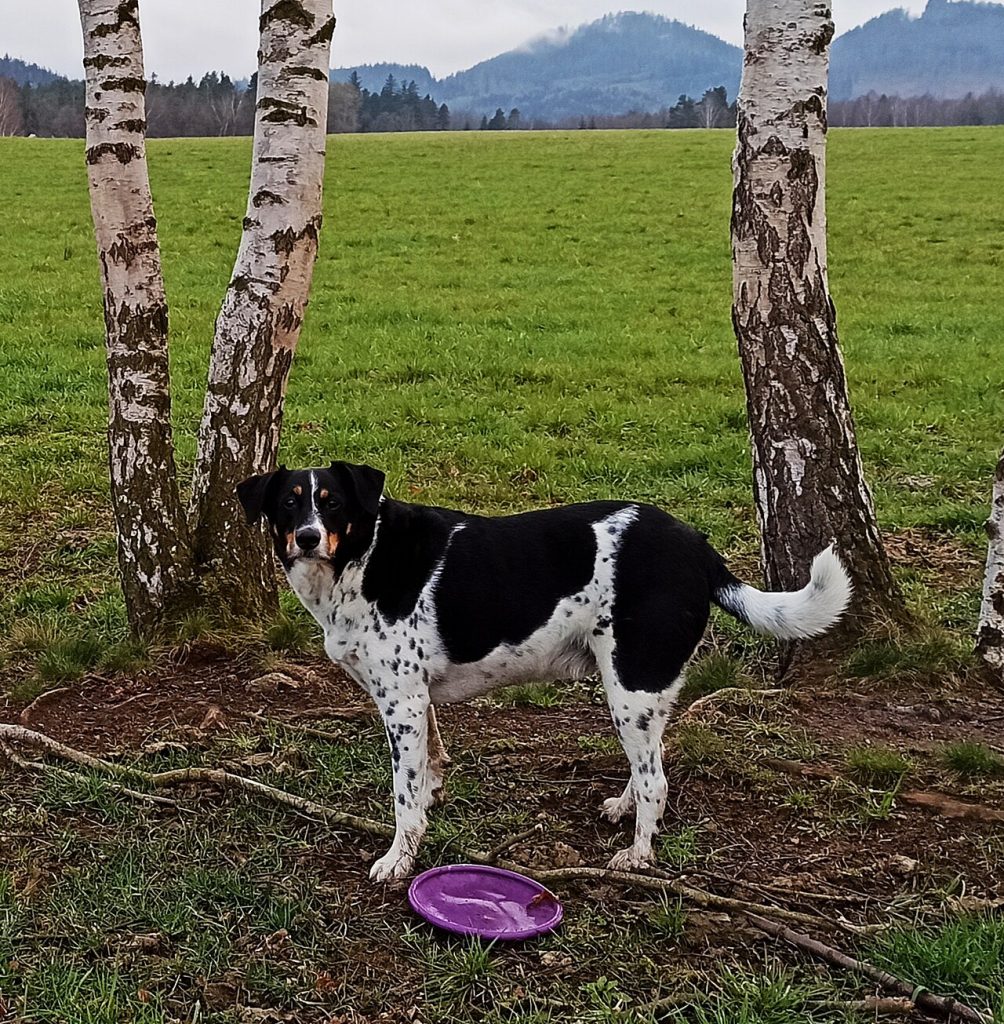
The The Mute Dog of Bohemia(in Czech czech strakatý pes) is one of those breeds that almost no one knows and that, however, has one of the most curious stories in the canine world: It was born in a laboratory in Prague in the 1950s and today it is, above all, a friendly, sociable and surprisingly easy-to-treat companion dog. If you’re looking for a medium, balanced, unusual dog, here’s everything you need to know about the Bohemian Mute Dog.
Is the Bohemian Mute Dog for you?
Before you fall in love with its mottled coat, be honest: no dog fits everyone. The Bohemian mottled dog is a versatile and easy-going companion, but it asks for time, play and family life. These boxes succinctly sum up its lights and shadows.
In favour .
- Friendly and open-minded – ideal for first-time owners.
- Very sociable with people and other dogs; can live in groups.
- Intelligent and willing: learns quickly and enjoys training.
- Medium size and manageable, adaptable to the floor if you exercise.
- Warning of strangers without being aggressive: good alarm dog.
- Multi-purpose: agility, dog dancing and assisted therapy.
To be taken into account
- He needs daily physical and mental activity; he is not sedentary.
- He’s very close to his family. He can’t stand prolonged loneliness.
- Barks to warn, something to moderate in neighborhood communities.
- Very rare breed: finding a puppy can require patience and travel.
- It is not recognized by the FCI, which complicates its dissemination outside the Czech Republic.
- Loosen the hair and brush regularly, especially the long variety.
Character and temperament
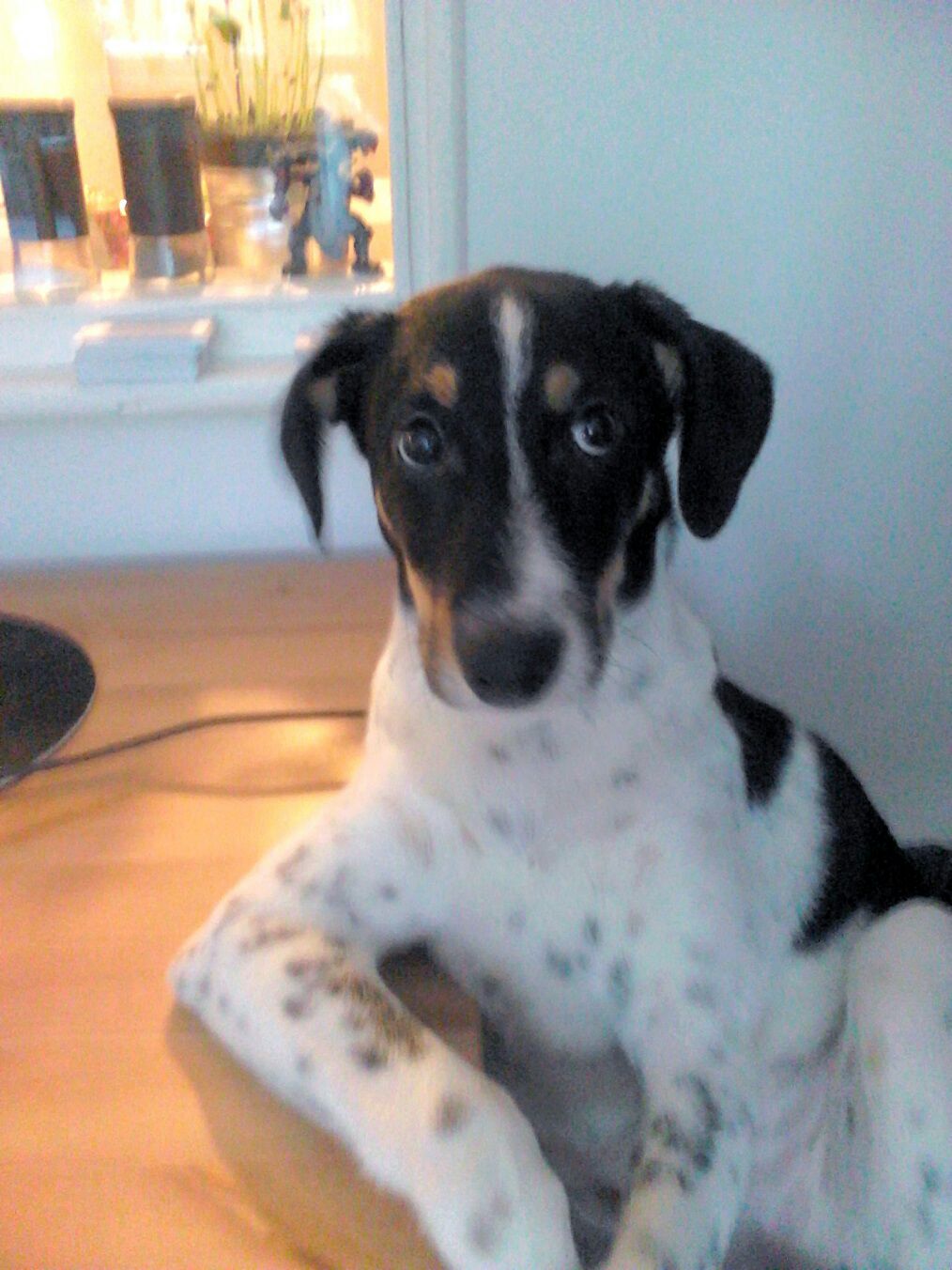
If anything defines the Bohemian Mute Dog it is its good character. It is a friendly, extroverted and very unconflicted dog, to the point that it is considered an excellent companion even for people with no previous experience.
It is a deeply related to his family dog. It enjoys human company, participates in home life, and enthusiastically engages in play. It is not a distant or independent dog: it wants to be with you, collaborate with you, and be a part of what you do.
Despite its meekness, it retains a very useful warning instinct: it barks when someone approaches, which makes it a discreet alarm guard.
Coexistence: children, other pets, flat and loneliness
The children is patient, affectionate and playful, an ideal combination for homes with small children as long as the basic rules of interaction between dog and child are respected.
The coexistence with other dogs is one of its strengths: it tolerates group life very well and can even integrate into a small pack without conflict. With cats and other animals the key is the early socialization: a puppy that grows up with them accepts them as part of their group without much problem.
As for the floor, its medium size and its quiet character inside the house make it perfectly compatible with urban life, provided that it covers its exercise needs.
Education and training
Few breeds make things so easy when it comes to training. The Bohemian Mute Dog is intelligent, attentive and willing to cooperate, which translates into a quick learner when working with positive reinforcement. It enjoys mental challenges, so training is not for it an obligation but almost another game.
It’s best to start early. socialization in the puppy stage– exposing him to people, environments, noises and other animals – is the best investment for his natural sociability. If you want him to live with cats or other pets, that early time is crucial.
Due to its docility and good disposition, it is an ideal dog for start training, and equally suitable for anyone who wants to go further and compete in canine disciplines.
Exercise and activity

Here’s the other side of the coin: the Bohemian Mugger is a active dog that needs to expend energy. It’s not just a couple of toilet breaks; it asks for daily walks from a certain entity and, very importantly, mental stimulation to keep its head occupied.
Its agility and willingness to cooperate make it stand out in dog sports. agility and dog dancing(musical obedience) are two disciplines in which this breed develops especially well, taking advantage of its coordination and its eagerness to please.
A well-trained dog, physically and mentally, is a calm and happy dog at home; a bored one, on the other hand, will look for ways to entertain himself that you won’t always like.
Care: fur and hygiene
There are two varieties of mantle, and the care varies slightly depending on which one you have:
- Short hair: body-fitting and undercoat, a weekly brush is all it takes to remove dead hair and keep it clean and shiny.
- Long hair: also has undercoat, more fluid and slightly wavy.
As with any dog, it is advisable to complete the routine with examination of ears(its dropped ears deserve a periodic glance), cutting of nails when needed and dental hygiene regularly.
Foodstuffs
A curiosity of its origin explains much of its feeding: among the characteristics that were sought when creating the breed was a low food intake.
The guideline is that of any healthy dog: a complete and balanced diet, adjusted to its age, weight and, above all, activity level.
Since it is a voracious and collaborative dog, it is easy to throw prizes during training; deduct them from the daily ration is suitable to avoid overweight.
Health and life expectancy
The Bohemian Mute Dog has a reputation for being a rustic and healthy dog. Its genetic base is carefully managed precisely because the breed started from very few specimens, so responsible breeders monitor diversity to avoid problems stemming from inbreeding.
It does not drag along the long list of hereditary pathologies of other more popular and manipulated breeds. Like any medium dog, it benefits from periodic veterinary checks, daily vaccination and deworming schedule, ear and tooth control, and an active life that keeps it in its weight.
It is worth remembering that, since this is such a minority breed, the wisest thing to do is to go to serious breeders affiliated with the Czech club, who know their dogs’ genealogy and prioritize health and temperament over any fashion.
Physical appearance

The Bohemian Mute Dog is a medium, harmonic and no heavy dog. Males reach between 45 and 53 cm at the withers and females between 43 and 51 cm. The trunk measures 110-120% of the height at the withers, giving it a slightly rectangular, athletic and well-proportioned silhouette.
Its most striking feature is undoubtedly the tricolour coat mottled. It appears in two equally valid combinations: black fire white and brown-fire-white. The ratio between the dark and white zones is 1:1, with a dark base color adorned with fire-colored (yellowish) markings.
What is truly unique is the dotted on the white areas: yellowish spots in the light areas and dark spots in the dark areas. This mottling is as individual as a fingerprint – there are no two dogs with the same design – and, according to the standard, it should not give the feeling of jasper coat, but of a clean and defined splash.
Origin and history
Few breeds have such an unusual birth.[citation needed] The Bohemian Mute Dog was created in the Prague in the 1950s by Czech kennel František Horák, who in 1954 described the dog he wanted to obtain: adequate size, smooth hair, high fertility, good character and low food consumption.
The first litter was born that same year, at the Institute of Physiology where the breed was developed. Interestingly, there is hardly any record of relevant experiments on these dogs; studies on tissue transplants and on epilepsy are documented, but little else.
In 1981 some specimens of the institute passed into the hands of private breeders, and it was then that they began to be called “Bohemian spotted dogs”. The start, however, was not as good as expected and the race was on the brink of extinction. It was saved by a few enthusiasts who, after rediscovering its history, assembled 11 dogs from all over the Czech Republic. A new layer on 1994 gave her hope back. Towards 2022 there were about 600 copies. The breed is recognized by the Czech Kennel Club, but not by the FCI.
Curiosities
- Its original name, “Horak’s laboratory dog”, betrays a unique origin among canine breeds: it was born from a scientific project, not from hunting, herding or guarding.
- It was specifically selected for its good character and its low appetite, two unusual traits as a foundational criterion of a breed.
- She was on the verge of disappearing and owes her survival to barely 11 dogs gathered by fans determined to rescue her.
- The spotted in his cloak. is unique in each copy, like a signature of its own.
- Today it is seen less as a working dog and more as a companion, sportsman and therapy dog, a complete vital turnaround from its original purpose.
If you are attracted to the Bohemian Mouse because of its sociable nature, mottled coat, or sporting versatility, you may be interested in other similar breeds. The Dálmata shares with it that striking spotted coat; the Beagle is another tricolor medium, sociable and playful; the Border Collie and the Pastor Australiano are benchmarks in agility and canine sports, ideal if you are looking for a partner as active and collaborative as this one.
Frequently Asked Questions About the Bohemian Mute Dog
Is the Bohemian Mute Dog a good breed for someone with no experience?
Yes. It is one of its greatest strengths: it has a kind, open and non-conflicting character, learns easily and enjoys cooperating with its family. This docility makes it possible for a first-time owner, with patience and constancy, to educate it without great complications. What it does need is company and daily activity, not an ornamental dog.
How tall is the Bohemian Mute Dog?
It is a medium-sized dog. The males measure between 45 and 53 cm at the withers and the females between 43 and 51 cm. The trunk is slightly longer than the height (110-120% of the height), which gives it a somewhat rectangular silhouette and not heavy.
Does he get along with children and other dogs?
Very well. It is sociable by nature, tolerates group coexistence and can even live in a pack with other dogs. With children it is affectionate and playful. With cats or other pets early socialization is appropriate: if it grows up with them, it accepts them without problem.
Does the Bohemian Mute Dog need a lot of exercise?
Yes, it is an active dog. It needs daily walks and, above all, mental stimulation and play. It excels in canine sports such as agility and dog dancing, and is also used as a therapy dog. It is not a breed for those looking for a sedentary companion.
Does the Bohemian Mute Dog bark a lot?
It barks to warn of the arrival of strangers, so it works as a good alarm dog. However, it is not aggressive: it was selected precisely for its good temperament, so it warns but does not attack. It is vigilant without being problematic.
Is it recognized by the FCI?
No. The Bohemian Mute Dog is recognized by the Czech Kennel Club (Český kynologický svaz), but does not have recognition from the International Kennel Federation (FCI).
Is this a rare breed?
Yes, it is rare even in its country of origin. It was on the brink of extinction and recovered from just 11 specimens collected by amateurs. By 2022 it was estimated to be about 600 dogs in total, making it a minority breed.
Is your hair short or long?
The short hair is attached to the body and has undercoat; the long hair, also with undercoat, is more fluid and slightly wavy.