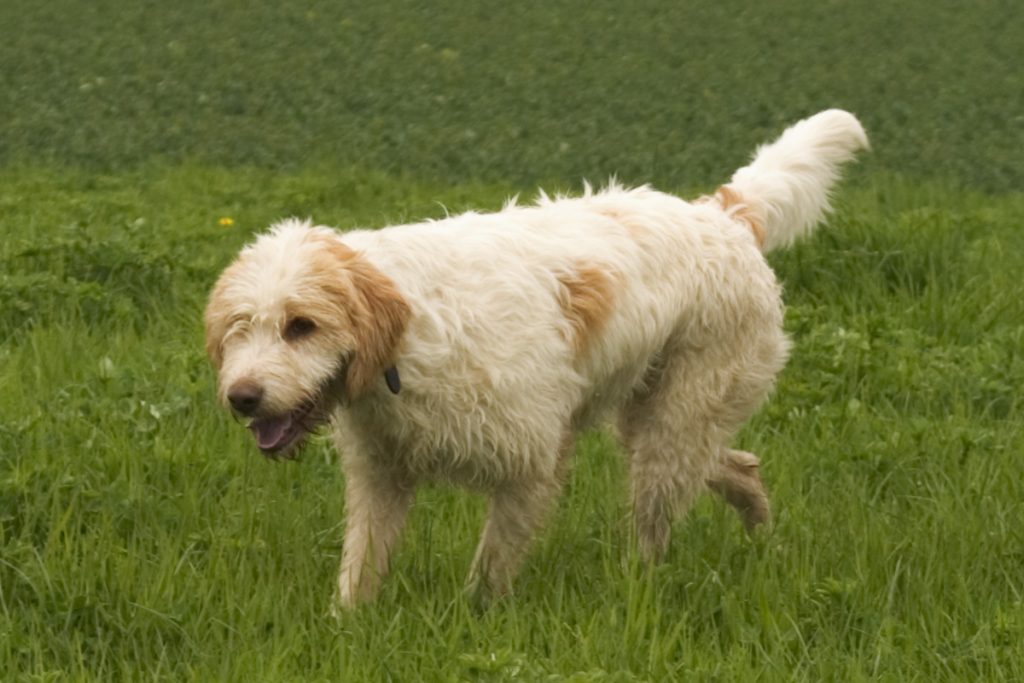
The Briquet Grifón Vendeano is a medium-sized, hard-haired French hound with a tireless character, born in the Vendée to track large pieces in the open field. Hidden beneath his unkempt rustic griffon appearance is a passionate hunter, sociable with other dogs and surprisingly gentle with children. It’s not a living room pet: He needs space, a sense of smell to exercise and miles ahead. If you’re looking for a sporty, cheerful, professional-smelling companion, read on: Here’s everything that matters about the Vendean Griffin Briquet.
Is the Vendean Griffin Briquet for you?
The Vendean Gryphon Briquet is an honest breed: it gives you exactly what its origin promises. It was bred to hunt all day through rough terrain, and that sets everything else apart. It fits wonderfully with anyone who lives in the countryside or goes out to the mountains, and is frustrated by a sedentary city life. Before you fall in love with its bald face, look directly at its lights and shadows.

In favour .
- Sociable and not aggressive with people.
- Extraordinarily patient and affectionate with children.
- He gets along very well with other dogs; he lives happily in a pack.
- Rustic and hardy, it adapts to any climate.
- Exceptional olfaction and inexhaustible energy for sport.
- Easy maintenance: hard hair that doesn’t require a hairdresser.
To be taken into account
- He needs a lot of daily exercise; the city feels terrible to him.
- Independent and stubborn: Obedience is not his priority.
- His sense of smell commands; without fence and without work he goes after a trail.
- He tends to use the voice, hound heritage.
- Rare breed outside France: difficult to find.
- It’s not a couch dog or for someone who hangs out all day.
Character and temperament
The breed standard describes the Vendean Gryphon Briquet as a dog that knows how to take the initiative, determined, intelligent and endowed with remarkable resistance.
At home, however, his friendly side emerges. He is a cheerful, lively and enthusiastic dog, never aggressive with people. He enjoys the company of his family and, far from being a nervous or tense dog, transmits balance when he has spent his energy. The key is right there: a tired Vendean Gryphon Briquet is a charming companion; a boring one, a constant source of mischief.
His passion for hunting is the engine of everything he does. He sniffs with his nose to the wind, chases what his nose dictates and does not shrink from bushes or rough terrain. Understanding that you live with a native hunter, and not an urban companion dog, is the first step to understanding him and being fair to him.
Coexistence: children, other pets, flat and loneliness
With the children, the Vendeano Griffin Briquet is one of the most recommended hounds. The standard itself underlines its great patience with the little ones, and its tolerant and playful character makes it a good family companion, always with the supervision that any dog of its size deserves.

With other dogs it shines even brighter. It was bred to work in packs, so canine sociability takes it for granted: It coexists smoothly with its congeners and even prefers group life. He is not possessive of his belongings or quarrelsome, which makes it much easier for multi-dog households. With cats and small animals it is advisable to be careful: Their hunting instinct is strong and a running cat can activate their chase impulse, especially if they haven’t grown up together.
The floor and the city are its big weakness. The standard openly discourages urban living: This is a field dog, made for running and tracking, which needs space and stimulation outdoors. You may live in a house with a well-fenced garden, but an apartment without easy access to the outside will make you unhappy. And as for the loneliness, it ‘s not a dog to spend hours alone: Accustomed to the company of the pack and his family, he resents prolonged isolation and pays for it with howling and destruction.
Education and training
Training a Vendean Gryphon Briquet requires patience and a sense of humor. It is intelligent, but also independent: it is not enthusiastic about being told what to do and prefers to negotiate rather than obey the first one. It works much better with play, rewards and motivation than with impositions; if you convince it that cooperating is in its best interest, it will be delighted.
The early socialization is important, although it starts with the advantage of its sociable character. Exposing him to people, noises, other animals, and a variety of environments as a puppy will help his natural confidence mature. The great challenge of training is the called: When he catches an interesting trail, his nose can do more than your voice. Work the call response from a young age, in controlled environments, and be realistic: In an open and unfenced area, many specimens are unreliable loose. Short, frequent, and enjoyable sessions are better than long, repetitive sessions, which quickly bore you.
Exercise and activity
There are no half-measures here: the Vendean Gryphon Briquet needs plenty of exercise. It was designed to hunt large pieces for hours over broken terrain, with a stamina few breeds can match. A short walk to the block does not do it any good; it needs long walks, runs, mountains and, above all, opportunities to use its sense of smell.
The activities that combine body and nose are his paradise: tracks, search games, hiking, mantrailing or any sport that rewards your tracking instinct. A well-trained Briquet, physically and mentally, is calm and balanced at home. One who doesn’t burn his energy will seek his own amusement, and it will rarely be one you like. If your lifestyle doesn’t include intense daily outdoor activity, this is not your breed.
Care: fur and hygiene
The coat of the Vendean Griffon Briquet is hard, rough and well-provided, with undercoat, designed to protect it from rain, cold and brambles. It must never be woolly. The good news is that it’s easy to maintain and far from a barbershop: It is enough to brush regularly, once a week, to remove dead hair and avoid tangles, and a more thorough brushing after field trips to remove mud, grain and vegetable remains.

Other care is the usual and, in your case, especially important for your working life. Check and clean your ears frequently, for medium insertion and falls, which retain moisture and dirt and favor otitis, especially after passing through water or dense vegetation. Watch your pads and finger spaces for cuts or spikes, keep your nails in check, and brush your teeth regularly. It is a rustic dog that does not require aesthetic pampering, but a careful inspection after each day of hunting.
Foodstuffs
As an athletic and hardworking hound, the Vendean Griffon Briquet needs a complete and quality diet, adjusted to its actual level of activity. A specimen that goes out to hunt or play sports daily burns much more energy than one with a quieter life, and the ration should reflect this.
It is advisable not to leave food always available and to monitor the condition of the body: You should be able to feel his ribs without them sticking out. As with any deep-chested, medium-sized dog, it is wise to avoid strenuous exercise just before and after meals. Always provide fresh water, especially on field days, and check with your veterinarian for a specific diet based on his condition and activity.
Health and life expectancy
The Vendean Griffon Briquet is a rustic breed and, in general, robust, the result of work-oriented selection rather than aesthetics.
Because of his active dog profile, the most realistic points of attention are the ears(moisture infections and foreign bodies), the small wounds, cuts and grains s of the weed worker, and joint care as he ages. The life expectancy is not officially documented in the standard, but, in line with other well-groomed medium-sized hounds, is usually around 12-14 years old. Proper exercise, weight control, and prevention are the best allies for your longevity.
Physical appearance
The Vendean Griffon Briquet is a medium-sized, streamlined, air-sporting common griffon. Males measure between 50 and 55 cm at the withers and females between 48 and 53 cm; their weight is not fixed in the standard, but roughly 18-24 kg, proportional to a compact and athletic constitution. The head is rather light, with the skull fairly short and slightly bulbous, a well-marked stop and the lines of the skull and snout parallel. The eyes, dark brown in color, convey liveliness.
Their ears, flexible, narrow and thin, are of medium length and turn slightly inward. The tail, of high insertion, is short, thick at the base and sharpened towards the tip, and carries it in the shape of a sabre. The coat is his trademark: Hard and rough hair, plentiful, never woolly. The most common coat is white and orange, but the breed supports many combinations: white and black, black and fire, black and sand, tricolor, carbonate lions and carbonate sand, with or without white. The set gives a rustic dog, well planted and instantly recognizable by its uncombed and noble expression.
Origin and history
The Vendean Griffon Briquet comes from the Vendée, in western France, the birthplace of the entire Vendean griffon family. It was born as a smaller version of the imposing Grand Griffon Vendéen. It was Count Christian d’Elva who, before the First World War, gave it the name “briquet”, a French term for a medium-sized dog. These dogs were kept in the hands of farmers and monters, who valued their hunting skills.
The breed almost disappeared after World War II. Its recovery is due to the impulse, from 1946 and in Fontenay-le-Comte, of amateurs headed by the French canine judge Hubert Dezamy, who reconstructed the population and fixed the type. The Federación Cinológica Internacional (FCI) officially recognized the breed in 1954, placing it in Group 6 (hound-type dogs and similar breeds), with standard number 19. It has since remained a widespread breed among big game hunters in France, where it continues to work at full yield.
Curiosities
- “Briquet” is not just any name: in cinegetic French means, simply, “medium-sized dog”, and serves to distinguish it from the “grand” (large) within the Vendée family.
- A family of four: the Vendéen Griffons form an unmistakable quartet: the Grand Griffon Vendéen, the Briquet Vendéen Griffon, the Grand Basset Vendéen Griffon and the Small Basset Vendéen Griffon.
- Champion of France: a pack of Vendéan griffon briquets won the French deer hunting Cup in 1995, proof of its validity as a working dog.
- He hunts with his snout in the wind: unlike other hounds, stands out for tracking by raising its nose to pick up the smell in the air, not just sticking to the ground.
- Off-road weather:‘s hard hair makes it so hardy that it adapts well to very different climates and does not shy away from brush and mud.
If you’re attracted to the tracking character and energy of the Vendean Griffon Briquet, you’ll be interested to learn about other related hound and hound breeds: The tireless Beagle, another pack dog with a prodigious sense of smell; the unmistakable Basset Hound, a short-legged hound with a portentous nose; the legendary Bloodhound, king of the trail; and the versatile Vizsla, a sporty and family-friendly hunter. Comparing their temperaments will help you decide which dog fits your life best.
Frequently Asked Questions about the Vendean Griffin Briquet
Is the Vendean Griffon Briquet a good family dog?
Yes, as long as the family is active and able to exercise. He is cheerful, patient with children and not aggressive with people. His only great requirement is to expend a lot of energy daily; covered that, he is a balanced and loving companion.
Does he adapt to living in a flat?
This is its weak point. The standard advises against urban life: it is a field dog that needs space and long walks. In a flat without easy access to the outside and without intense exercise it gets bored, barks, howls and can become destructive. It fits much better in a house with fenced terrain.
How much exercise do you need?
It was bred to hunt for hours over rough terrain, so it needs long walks, runs, and most of all, daily olfactory activities. Without that physical and mental wear and tear, it’s not okay.
Is it easy to train?
He’s intelligent, but independent and somewhat stubborn: he doesn’t like to be ordered. He responds very well to play, rewards and motivation, and badly to imposition. The biggest challenge is the call when he follows a trail, because his sense of smell can outsmart your voice; he’s been working on it since he was a puppy.
What’s his coat like and how much care does he need?
It has hard, rough and abundant hair, never woolly, easy to maintain. Just a weekly brushing and a review after field trips to remove mud and grains. The most important thing is to check and clean the ears well to prevent otitis.
Do you get along with children and other dogs?
The standard is noted for its great patience with children, and having been bred to work in packs, it is extremely sociable with other dogs; it even enjoys living in groups.
How tall and how much does he weigh?
It is a medium-sized dog: the males measure between 50 and 55 cm at the cross and the females between 48 and 53 cm. The weight is not fixed in the standard, but in guideline around 18-24 kg, according to its compact and athletic constitution.
Is this a rare breed?
Outside France, yes. It is very popular with French big-game hunters, but is infrequent as a companion dog in other countries, which can make it difficult to find breeders and specimens.