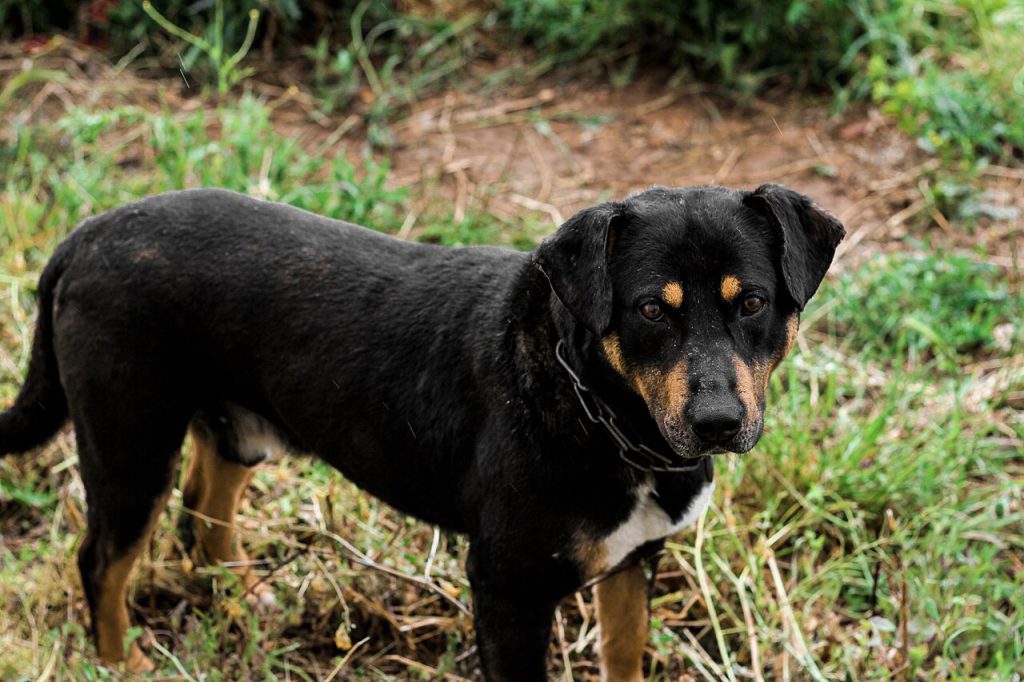
The Carea Leonés is the traditional sheepdog of the region of León, in northwestern Spain: A medium-sized dog, rustic, very lively with a head and born to lead the cattle through the Mont-Lyon. Also known as Lion Shepherd Dog or Pastor Leonés, it is an indigenous breed officially recognized in Spain since 2016 and still little known outside its homeland. If you are looking for a tireless, loyal, hardworking companion – but one who needs an equally active owner – this page shows you what the Carea Leonese really is like.
Is the Carea Leonese for you?
The Carea Leonese is, first and foremost, a working dog. That conditions everything else: it shines with an active family that lives in the countryside or that can give it exercise and mental work every day, and it suffers locked in a floor with nothing to do. Before you fall in love with its waking gaze, look honestly at these two columns.
It’s a good fit if…
- You live in the countryside, an estate or you have easy access to open space.
- You’re looking for a very intelligent dog, willing to learn and work with you.
- You like dog sports, hiking, or you have cattle to drive.
- You want a loyal companion, very attached to his person, healthy and rustic.
- You feel like supporting a rare native Spanish breed.
Think about it if…
- You spend many hours outside and the dog would be lonely and bored.
- You want a quiet couch dog: this one needs to be spent.
- He’s your first dog and you don’t see him getting any time off.
- You’re bothered by your herding instinct.
- You’re looking for a breed with international pedigree recognized by the FCI.
Character and temperament
The Carea Leonés is the living image of the greyhound: the one who “cars” the herd, that is, leads it, gathers it and turns it to the voice or gesture of the shepherd.
It is a very intelligent and attentive. dog, which seems to be always reading its owner and anticipating what he will ask of it. That connection with the person is one of its best virtues: it gives itself to work and to its family with remarkable loyalty. In return, it is not an indifferent dog; it needs to feel part of something and participate.
reserved and vigilant is usually more than openly sociable with strangers. It warns of what is happening at home and watches its territory without being, by nature, an aggressive dog. This healthy distrust makes it a good keeper of the farm, provided it has been well socialized as a puppy so that caution does not lead to fear.
Above all, it is a dog nervous in a good way.: energetic, alert and with a lot of initiative. Bored it becomes frustrated, and a frustrated Carea invents the work that you do not give it (barking, digging, chasing what moves).
Coexistence: children, other pets, flat and loneliness
With children: is a well-socialized dog that is affectionate and playful with its owners, and its energy matches well with older and active children.
With other pets:, accustomed since puppyhood, gets along well with other dogs and, of course, with livestock, which is its raison d’être. With cats and small animals, the instinct to chase can emerge, so good early socialization is key.
On the floor: is not their ideal habitat. A Carea Leonese can live in a city only if his family commits to giving him several long outings and plenty of mental stimulation a day; otherwise, he will accumulate energy that will end up in behavioral problems.
In the face of loneliness: is a dog that is very attached to its people and ill-mannered with prolonged neglect. Spending many hours alone and without activity is probably the worst thing you can do to it. If you work all day outside and no one can look after it, it is not the right breed.
Education and training
Here the Carea Leonese stands out. Its intelligence and desire to please make it an excellent learner: it learns quickly, retains well and enjoys working sessions. It is one of those dogs that seems to understand what is asked of it almost before it is finished asking.
The key is the positive reinforcement and consistency. It responds phenomenally to motivation (food, play, the driving task itself) and very poorly to harshness: punishing such a sensitive dog only blocks it or makes it suspicious.
Two priorities from puppyhood: socializing wide (people, dogs, noises, environments) to soften his natural reserve, and impulse control to channel his herding instinct. If you also give him a “job” – advanced obedience, agility, herding, searching – you will have a mentally satisfied dog and much easier to manage at home.
Exercise and activity

This is the point that cannot be negotiated. The Carea Leonés is a high energy dog, bred to spend the whole day in the mountains behind the herd. A short walk is not enough: it needs real physical exercise and, above all, mental stimulation.
The ideal combination is free running in a safe space, long walks and head work: obedience games, sniffing, search and bring, or directly a dog sport. The agility, obedience, sport shepherding or canicross comes like a ring on your finger, because they combine physical wear and tear with the mental challenge your brain demands.
A Carea who exercises daily is a calm and balanced dog at home. One who stays short of activity ends up channeling that energy where it shouldn’t. The practical rule: the more you give him of body and head, the better companion he will be inside the house.
Care: fur and hygiene
The mantle of the Carea Leonés is of rustic type: medium-length hair, smooth or slightly wavy, with a dense undercoat that protects it from the cold and humidity of the Leonese mountain.
The maintenance is simple: a weekly brushing(two or three times a week during moult) is enough to remove dead hair, avoid knots and keep it clean.
The rest is the basic hygiene of any active dog: checking and cleaning the ears, watching the pads and nails (which with so much exercise in the field usually wear themselves out), and maintaining good dental hygiene.
Foodstuffs
As a medium-sized dog with a lot of energy expenditure, the Carea Leonés needs a complete and balanced, adjusted to its actual level of activity feed. A dog that works or sports daily requires more caloric input than one that lives a quieter life, and the ration must be adapted to each case to keep it at a correct weight.
It serves both a good quality feed and a well-formulated cooked or raw diet; the important thing is that it covers your protein and energy needs. It divides food into two doses a day in the adult and adjusts amounts according to exercise, age and season. Fresh water is always available, especially after exercise.
Be careful not to overweight: although it is an athletic dog and does not tend to get fat if it moves, excess weight punishes its joints and deprives it of the agility that is its hallmark.
Health and life expectancy
The Carea Leonés is a rustic and sturdy dog, the product of a natural selection for functionality over generations.
An official and detailed picture of the breed’s inherited diseases does not yet exist, partly because of its recent recognition. As with other medium-sized sheepdogs, it is advisable to maintain veterinary checkups, the schedule of vaccinations and deworming, and pay attention to the joints for their active life. Special attention should be paid to the control of hearing and vision in blackbirds, since the merle gene is generally associated with possible sensory disturbances when two blackbirds are crossed with each other; therefore, a responsible breed avoids merle × merle crossing.
There is no official published longevity figure for the breed. Compared to rustic shepherd dogs of similar size, it is reasonable to expect a long life if well cared for, in a guideline range of around 12-14 years. Basic care, exercise and good nutrition are the best recipe for it to live a healthy life.
Physical appearance

According to the standard published by the Junta de Castilla y León, the males measure between 48 and 55 cm to the cross and the females between 45 and 52 cm; the weight is around 16-27 kg in males and 15-25 kg in females.
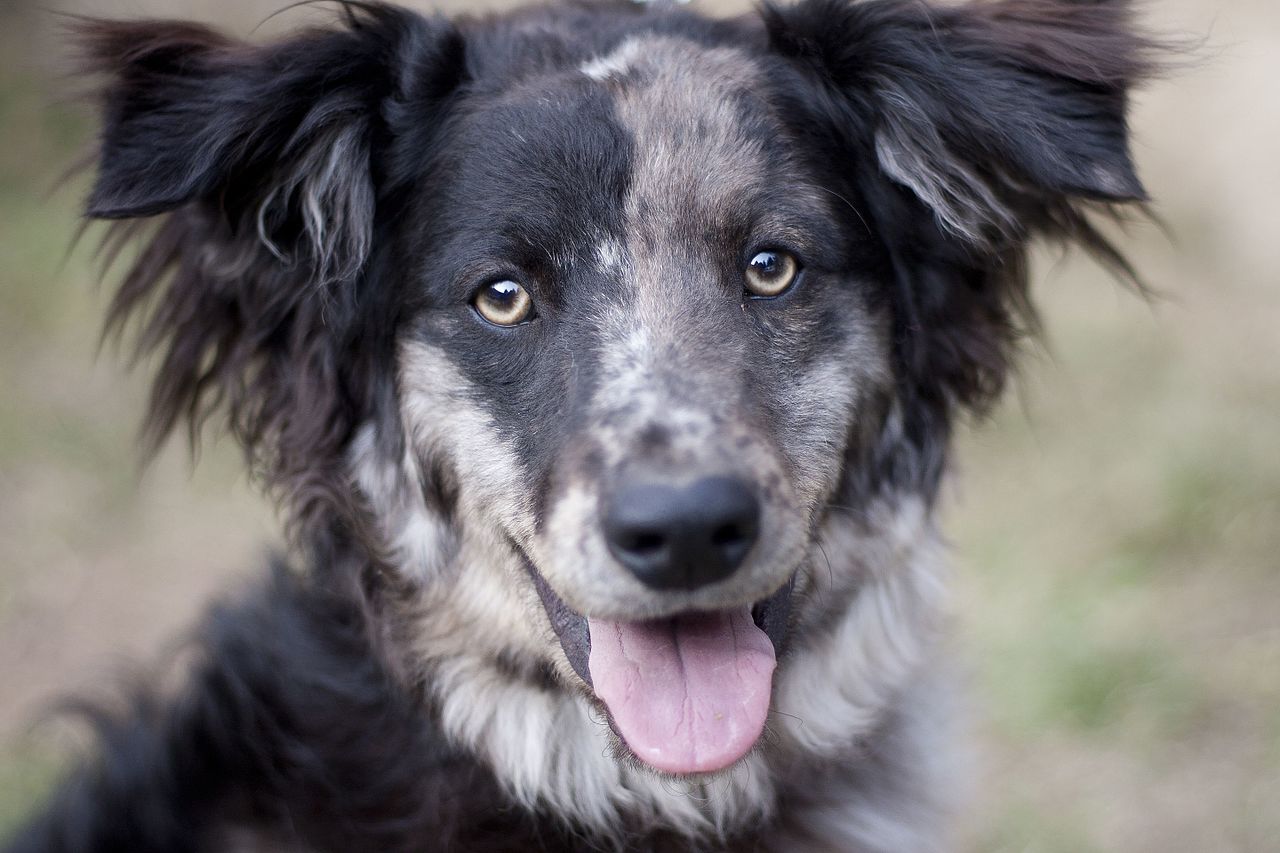
The coat is medium-length, smooth or slightly wavy, with abundant undercoat. But what’s most striking are his two coat varieties: the solid black and the characteristic grey mulberry, with black spots on a grayish background and sometimes also white spots. In both layers, fire-colored marks may appear on the eyes, face and inner face of the legs, although they are not always present.
The eyes are always dark in the black specimens and lighter in the mirlo layer; in the latter it is not uncommon to find heterochromia, with areas of a whitish blue in one or both eyes, a trait associated with the merle gene.
Origin and history
The Carea Leonés is the traditional herding dog of the historic region of León, in northwestern Spain. For centuries it accompanied the lion shepherds in the management of the herds through the mountains, selected naturally by a single measuring rod: his useful for the beard, that is, to drive and gather the cattle. He wasn’t born in exhibition halls or in pedigree books, but in the countryside, next to the man who needed him to work.
The term “Carea” refers precisely to these cage dogs, present with different variants throughout the peninsula (such as the Carea Castellano Manchego).
Its official recognition is recent: was included in the Official Catalogue of Breeds of Cattle of Spain– the national breed registry – in 2016, and the Junta de Castilla y León published its racial standard in 2018. Despite this, and the admiration of those who know him, he is still a minority race: in 2026 it was among the sixteen Spanish breeds considered vulnerable by the Royal Canine Society of Spain. To preserve it is also to preserve a part of Leonese livestock and cultural heritage.
Curiosities
- Its name comes from the verb “carear”: the careo is the art of driving and gathering the herd, and the Carea is the dog that dominates it.
- It is also known as Lion Shepherd Dog and Pastor Leonés.
- It is not recognized by the FCI: it is a native Spanish breed with national, not international recognition.
- Its striking mirlo coat, with sometimes bluish or two-colored eyes, makes it very recognizable from other sheepdogs.
- It’s categorized as a vulnerable breed, so every well-bred litter counts for its future.
- It is a “professional” relative of other large herding and herding dogs, with whom it shares intelligence and a passion for work.
If you are attracted to the Carea Leonese for its intelligence and working dog energy, you will surely enjoy meeting other equally alert herding breeds. Check out the tireless Border Collie, the versatile Pastor Australiano, the elegant Collie or the multifaceted Pastor Alemán: they share with the lionese that mix of head, loyalty and willingness to work.
Frequently asked questions about Carea Leonés
Is the Carea Leonese a good family dog?
Yes, for an active family. It is loyal, affectionate with its own and very attached to its people. It needs exercise, mental stimulation and companionship; with that, it is a great companion. It does not fit into homes that spend many hours outside or that look for a quiet and sedentary dog.
How tall and how much does a Carea Leonese weigh?
According to the standard of the Junta of Castilla y León, the males measure from 48 to 55 cm at the withers and weigh 16-27 kg; the females, from 45 to 52 cm and 15-25 kg.
What colour is his coat?
There are two varieties of coat: solid black and blackberry (merle) gray, with black spots on a grayish background and sometimes white.
Can he live in a flat?
It is not ideal. It can adapt to the city only if it receives several long walks and a lot of mental stimulation every day. A house with land and access to the countryside is what suits a dog with so much energy best.
Is it easy to educate?
It’s one of the most intelligent and eager to learn dogs that exists, responds wonderfully to positive reinforcement and very badly to harshness, should be well socialized as a puppy and given a “work” to channel its energy.
Is it recognized by the FCI?
The Carea Leonés is a Spanish autochthonous breed with national recognition: it was included in the Official Catalogue of Cattle Breeds of Spain in 2016, with a standard published in 2018, but is not recognized by the International Cinological Federation (FCI).
How long does a Leonocereus live?
Compared to similar-sized rustic shepherd dogs, it is reasonable to expect a long, healthy life – typically around 12-14 years – if well cared for, with exercise and good nutrition.
Do you get along with children and other pets?
Well socialized, yes. It is affectionate with house children, although its herding instinct may lead it to encircle or nibble on heels when they run. With other dogs and cattle it coexists naturally; with cats a good early socialization is warranted because of its chase instinct.