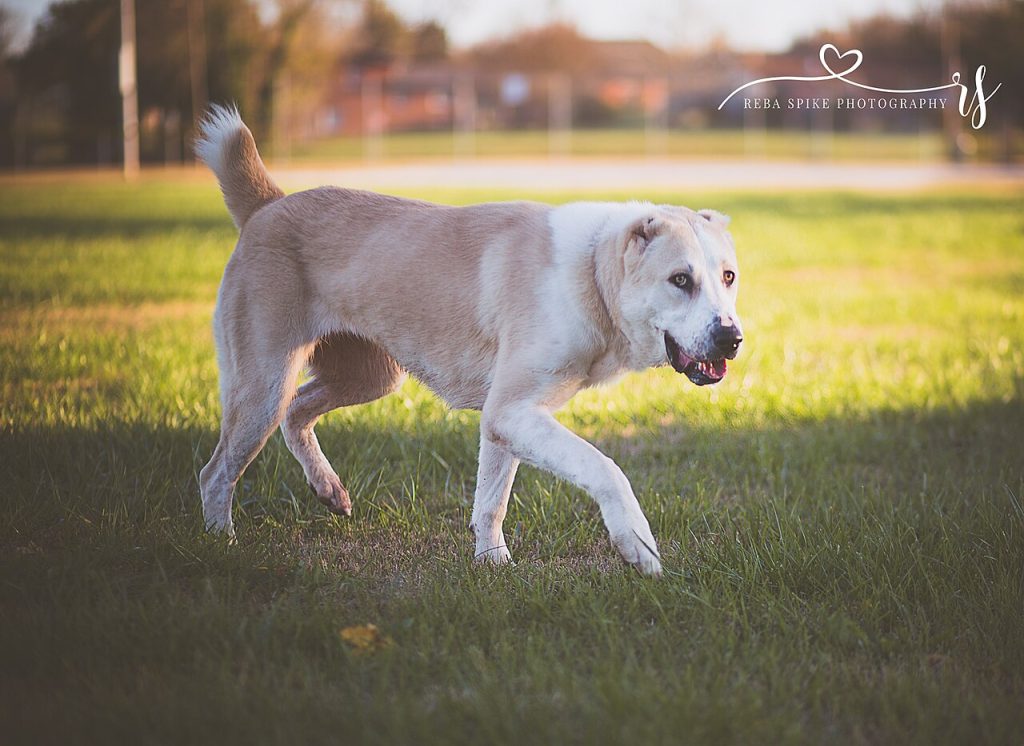
The Shepherd from Central Asia, also known as praise him ., is one of the world ‘s great cattle guard dogs: A rustic, serene and formidable molosoid, shaped over thousands of years by steppes and mountains stretching from the Caspian Sea to China. It’s not a trendy dog or a toy: He is an ancestral protector, independent and unwaveringly loyal to his people. In this comprehensive guide we review their character, care, health and everything you need to know before considering living with a Central Asian Shepherd.
Is the Central Asian Shepherd for you?
Before you fall in love with his imposing stature, you should be honest: The Central Asian Shepherd is a magnificent dog for the right owner and a bad idea for almost everyone else. It is a giant, territorial, independent cattle herder that thinks for itself and needs space, quiet leadership, and constant socialization. If you’re looking for a dog that’s obedient and sociable with everyone, this isn’t your breed; if you’re looking for a loyal, balanced, rural protector, few can top it.
In favour .
- Exceptional guardian: territorial, courageous and a deterrent to intruders and predators.
- Absolute loyalty and tremendous sweetness to his family, including children.
- Calm and balanced in character – not a nervous dog or barking without reason.
- Natural and rustic breed, with good general health and remarkable longevity for its size.
- Under fur maintenance and not picky about food.
To be taken into account
- Not suitable for beginners: it requires experience and a firm and serene hand.
- Distrustful of strangers and domineering with other dogs if not well socialized.
- Giant size: eats, occupies and moves what a 50-80 kg dog weighs.
- It needs fenced land; it suffers in floors and small spaces.
- Independent and stubborn – obey out of respect, not submission.
Character and temperament

The temperament of the Central Asian Shepherd can be summed up in four words: confident, balanced, proud and independent. It is a dog of impressive calmness, almost imperturbable, rarely disturbed without reason. That serenity is not passivity: beneath that calm appearance beats an alert guard who constantly evaluates his environment and reacts decisively when he perceives a real threat.
With his family he is a deeply affectionate and protective dog. He respects older people, is patient with children, and is strongly connected to his group. In the face of strangers, however, he shows a natural distrust: It’s not hostile because it is, but it’s also not giving away your trust. This combination of affection for his own and reserve toward outsiders is exactly what was expected of a dog assigned to guard the flock and the camp.
Their independence deserves a separate paragraph. For centuries, these dogs worked alone or in groups, away from the shepherd, making their own decisions in the face of a wolf or a thief. That autonomy remains there: the Central Asian Shepherd is not a dog that lives to please you, but a companion that cooperates with you out of respect. Understanding this is the key to living with him.
Coexistence: children, other pets, flat and loneliness
With children: within its family nucleus is usually tolerant, patient and caring with the smaller ones, which it tends to consider part of the herd that it must protect.
With other pets: with the animals with which it grows up and which it recognizes as its own – other dogs of the house, cats, cattle – is usually protective and not aggressive.
Floor and solitude: is not a floor dog. It needs a territory to guard, ideally a house with a well-fenced plot. It tolerates moments of solitude better than other breeds – it is independent by nature – but should not spend the day isolated or locked up: a bored and unstimulated guard can become destructive or barking.
Education and training
Raising a Central Asian Shepherd is an exercise in patience, consistency and mutual respect. It does not respond to training based on mechanical repetition or harsh methods, which only a suspicious or reactive dog gets. What works is calm and predictable leadership, positive reinforcement and, above all, intense socialization during the first months of life.
Socialization is, in fact, the most important point of their education. A puppy that knows people, dogs, noises, and various situations grows into a confident adult able to distinguish normal from threatening. An isolated puppy turns into a distrustful, difficult-to-manage adult. He is not a difficult dog to teach the basics – he is intelligent and learns house rules quickly – but his obedience will always have a shade of discretion of its own: He’ll do what you ask if he understands why and if he trusts you.
Exercise and activity

Although its large size may be misleading, the Central Asian Shepherd is not a hyperactive dog. It is an endurance worker, able to jog for hours without getting tired, managing its energy intelligently: resting a lot and releasing it when necessary.
Ideally, several long walks a day and, above all, space to move and patrol freely. It is not a dog for high-intensity canine sports or to accompany a runner, but it enjoys exploring, guarding its territory and walking with its family. During growth, moderate impact exercise – jumping, long hard runs – is helpful to protect joints that take time to mature in such a large dog.
Care: fur and hygiene
In terms of maintenance, the Central Asian Shepherd is surprisingly simple. Its coat, double-layered with a dense undercoat, exists in two varieties: one with short hair (about 3 to 5 cm) and another with moderately long hair (about 7 to 8 cm), which forms a mane in the neck and freckles in the ears, legs and tail.
The exception is the seasonal moult, which is particularly intense in spring, when the undercoat loosens into strands and it is advisable to brush several times a week to remove the dead hair. The bathroom is only necessary occasionally. As with all dogs, complete hygiene with regular ear checks, nail trimming, and good dental hygiene. He ‘s a rustic and unpretentious dog: He appreciates a clean, dry space to rest in more than any hairdressing whim.
Foodstuffs
Because the Central Asian Shepherd is a giant dog, feeding must be carefully planned, especially during growth. Giant breed puppies need a specific feed that controls the intake of calories, calcium and phosphorus so that bone development is slow and harmonious; too fast growth favors joint problems.
In the adult, the important thing is to adjust the ration to his actual activity and monitor the weight: Obesity punishes the joints of a dog this big. A classic recommendation in giants is to divide food into two daily servings and avoid strenuous exercise just before and after eating, as a precaution against gastric torsion. Otherwise, he’s not a caring dog: Its rustic origin makes it efficient with food and not prone to caprices.
Health and life expectancy
The Central Asian Shepherd is, in general terms, a robust and healthy dog. Being a natural breed, developed over centuries by essentially functional selection and not aesthetics, it has retained remarkable rusticity and fewer hereditary problems than many highly modified modern breeds.
That doesn’t mean I’m risk-free. Like almost all giants, it can suffer from hip and elbow dysplasia, so it is advisable to acquire puppies from breeders who test the breeders. gastric dilation-torsion, a common veterinary emergency in deep-breasted dogs, and obesity and joint problems due to overweight should also be monitored. Regular veterinary checkups, weight control, and responsible parenting are the best guarantees of a long and healthy life.
Physical appearance

The Central Asian Shepherd is a large, massive dog of imposing strength, slightly longer than tall. The FCI standard marks minimum heights of 70 cm in males and 65 cm in females, with no top cap, and weights starting at about 50 and 40 kg respectively; it is not uncommon to see specimens that brush or exceed 80 kg. Everything in it transmits contained power: Muscular, bulky body, strong bones and a powerful neck topped by a marked paw.
The head, one of its hallmarks, is massive and almost rectangular, with a broad, truncated snout, a slightly marked stop, and calm, dark, oval eyes. The ears, small and triangular, are of low implantation; they were traditionally cut very short in their countries of origin, a practice now banned in much of the world. The coat is accepted in a wide variety of colors – white, black, gray, lionskin and reddish, straw, gray-brown, tan or spotted – often with a black mask. Despite their size, their trot is wide and their gallop surprisingly agile.
Origin and history
The Central Asian Shepherd is one of the oldest dog breeds in existence, with several thousand years of history. It originated in the vast region between the Urals, the Caspian Sea, Asia Minor, and the northwestern border of China, a territory that today encompasses countries such as Turkmenistan, Kazakhstan, Uzbekistan, Tajikistan, Kyrgyzstan, and Afghanistan. It is believed to descend from ancient Mastiff-type dogs, related to the Tibetan Mastiff and other rangers in the area, and to have developed primarily by natural selection: Only the most resilient and capable survived extreme weather and predators.
For millennia he was, above all, a keeper of cattle: He protected flocks of sheep and goats from wolves and thieves, and he guarded nomadic camps. Starting in the 18th century, Russian naturalists and scientists began to study these dog populations and, already in the Soviet era, specimens were selected for work tasks and military guard. Today the breed is recognized by the FCI within Group 2 (molosoids, mountain type, standard number 335) and maintains native populations in their countries of origin, where it is considered a symbol of national identity.
Curiosities
- National treasure of Turkmenistan. The alabai is a true symbol of pride for Turkmenistan: in 2020 a 15-meter golden monument dedicated to the breed was inaugurated in Ashgabat, and there is even an annual national holiday in its honor.
- A presidential gift. In 2017, the Turkmen president gave Russian President Vladimir Putin an alabai puppy named Verni for his birthday.
- Many names, one dog. It is known as Alabai, Tobet, Turkmen wolfhound (“turkmenskiy volkodav”) or Central Asian ovcharka, reflecting the huge geographical extent where it was bred.
- Layer variability. Due to its past as a natural breed, puppies of very different sizes, colors and abilities can be born in the same litter, each oriented to a role within the group.
- It’s a sports mascot. The alabai was the official mascot of the 2017 Asian Indoor and Martial Arts Games.
If you are attracted to the character of large molluscs and guard dogs, you may be interested in other breeds of similar strength and temperament. You can continue to explore with the Cane Corso, the imposing Mastín Inglés, the versatile Rottweiler or the independent Akita, all of them dogs of marked character that share with the Central Asian Shepherd that point of nobility and firmness.
Frequently Asked Questions About the Central Asian Shepherd
Is the Central Asian Shepherd a good family dog?
Yes, with his family he is a deeply loyal, calm and protective dog, and is usually very tolerant and caring with the children of the house. He is not, however, a dog for everyone: he needs experienced owners, space and the will to socialize and educate him from a puppy. As a native guardian, he is suspicious of strangers, so coexistence with visitors must always be managed with a head.
How tall and how much does a Central Asian Shepherd weigh?
It is a giant size dog. The FCI standard sets minimum heights of 70 cm at the cross in males and 65 cm in females, without maximum limit. The weight starts from about 50 kg in males and 40 kg in females, and the large specimens easily exceed 70-80 kg. It is a breed of great variability: within the same litter can be born dogs of very different wings.
Can you have a Central Asian Shepherd in a flat?
It is not the ideal breed for a flat. It is a huge, territorial dog and used to guarding large areas, which feels much better in a house with a fenced plot. It can live in the city if it is given space, daily walks and a constant owner, but a small flat and the lack of a territory to guard generate frustration.
Is the Central Asian Shepherd aggressive?
It is not a gratuitously aggressive dog, but a livestock guardian selected for centuries to deter predators. With its family it is balanced and serene; with strangers and other dogs invading its territory it is suspicious and can be forceful. Early and extensive socialization, along with responsible handling, are essential to channel that protective instinct well.
How long does a Central Asian shepherd live?
Its life expectancy is around 12 to 15 years, a remarkable longevity for a dog of this size. Being a natural breed, little modified by extreme selective breeding, it usually enjoys good hardiness and general health, although it shares with other giants the risk of dysplasia and gastric torsion.
Do you need a lot of exercise?
It needs moderate but constant exercise: it is not a hyperactive dog or a racing athlete, but a hard worker who saves energy and releases it when needed. It needs several long walks a day and, above all, a large patrol area. It avoids intense exercise during growth to protect its joints.
Is it suitable for first-time owners?
Honestly, it’s not the best choice for a first-timer. Its size, independence, and strong guarding instinct demand an owner with experience in dogs of character, able to lead with calmness and consistency. In bad hands, a 70-kilogram territorial and distrustful dog is a serious problem; well guided, it’s an exceptional companion.
Do you get along with other dogs and pets?
With the animals with which it is raised and which it considers part of its social group – including the livestock it traditionally protects – it is usually very careful. With unfamiliar dogs, especially of the same sex, it can be dominant and intolerant due to its past as a guardian.