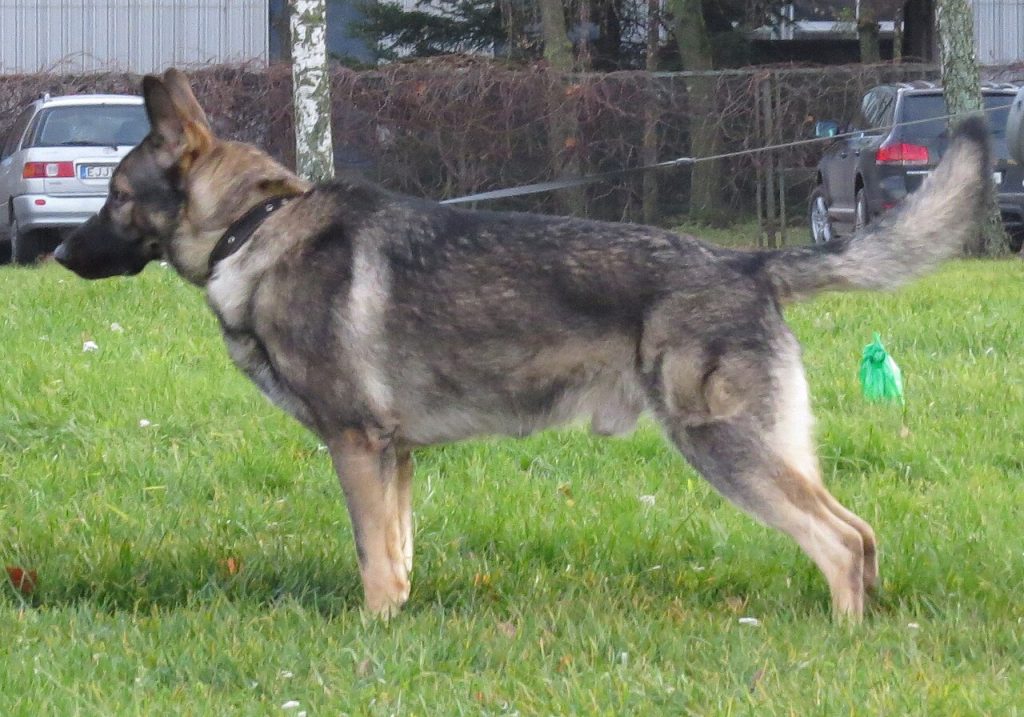
The Shepherd from Eastern Europe is a large shepherd and guard dog, bred in the Soviet Union from the German Shepherd to withstand extreme cold and serve in military and police duties. Impressive, intelligent, and deeply loyal, this German Shepherd’s “eastern cousin” combines a sturdier physique with a serene yet strong protective instinct. If you are looking for a well-balanced, hardworking keeper, get to know this unusual breed in Western Europe.
Is he the Shepherd of Eastern Europe to you?
The Eastern European Shepherd is a serious working dog that gives its best in the hands of an owner with time, experience and a clear goal for it. It is not a decorative or ornamental dog: it needs a role, whether as a property guardian, sports companion or service dog. Before deciding, weigh honestly what it offers and what it demands.
In favour .
- A natural guardian, brave and very deterrent.
- Smart and eager to learn; he learns fast.
- Huge loyalty and attachment to his family.
- Very resistant to cold and harsh conditions.
- Balanced and stable when raised and educated.
To be taken into account
- It’s not for beginners. It needs a steady, consistent hand.
- Remarkable size and strength; requires space.
- Strong territorial and guarding instincts that need to be channeled.
- It requires daily exercise and mental stimulation.
- A rare breed: serious breeders are hard to find.
Character and temperament

The temperament of the Eastern European Shepherd is, above all, that of a reliable service dog. It is described as intelligent, courageous, determined and of great mental strength; in fact, many owners compare its character to that of the Dóberman: serious, attentive and with a point of harshness that distinguishes it from the more sociable German Shepherd.
It is a well-balanced dog with firm nerves, which is not easily upset. To his family he is affectionate, calm, and deeply loyal; to strangers, however, he is reserved and watchful. This combination of calm and controlled distrust is exactly what was sought in creating the breed: A guardian who distinguishes normal from threatening and acts with his head, not his nerves. Well socialized, that surveillance becomes a secure presence; mismanaged, it can lead to overprotection.
Coexistence: children, other pets, flat and loneliness
In its family, the Eastern European Shepherd is an affable and protective dog. Well socialized from puppyhood, it coexists well with the children of the house, whom it tends to watch closely. As with any large dog, contact with small children should be monitored, more for its size and energy than for aggressiveness.
With other dogs and pets the key is early socialization. It is a territorial dog and, among males, can be dominant, so it is advisable to take care of the presentations and coexistence with unfamiliar dogs.
Not the ideal breed for a small flat: its size, its tendency to bark at stimuli and its need for space fit better into a house with a fenced-in garden. He tolerates indoor life if he gets plenty of exercise, but he has a hard time with prolonged solitude: It’s a dog that needs to be integrated into the daily lives of its people. Left alone for too many hours, it can develop anxiety or destructive behaviors.
Education and training
Few dogs respond as well to training as a motivated Eastern European Shepherd. It is intelligent, attentive, and enjoys having a job, which makes it easy to teach it obedience, control, and complex tasks. That same intelligence, however, demands consistent guidance: it learns both good and bad, and quickly detects lack of leadership.
Positive reinforcement, short and varied sessions, and extensive socialization (people, noises, environments, and other animals) during the first few months are the foundation of a stable adult. Firmness should never be confused with toughness: This dog responds to respect and constancy, not imposition. Because of its powerful guarding instinct, the work of impulse control and basic obedience is not optional, but imperative. It is a very suitable breed for disciplines such as tracking, sports obedience or protection work under professional guidance.
Exercise and activity

We’re dealing with a medium-high-energy working dog. It’s not hyperactive, but it needs to expend body and mind on a daily basis to keep its balance. A couple of long walks, playtimes and, above all, exercises that test its head are the recipe for a satisfied Eastern European Shepherd.
Mental stimulation is as important as physical stimulation. Smell games, obedience, homework learning and dog sports channel their energy and strengthen the bond with the owner. Its resistance to cold makes it an excellent companion for outdoor activities in harsh climates. An unstimulated specimen, on the other hand, may become destructive or overly vigilant, barking at any stimulus.
Care: fur and hygiene
The Eastern European Shepherd’s coat is dense, of medium length, with a highly developed inner layer of blotch and somewhat longer and softer hair on the ears, neck, extremities and tail.
Care, however, is simple: a weekly brushing keeps the hair in good condition, which should be intensified to several times a week during moulting seasons to remove loose bristles and reduce hair at home. He does not need frequent baths; just bathe him when he is really dirty so that his skin does not dry out. As with any breed, complete the routine with nail growth control, ear cleaning, and good dental hygiene.
Foodstuffs
As a large, muscular dog, the East European Shepherd needs a complete and quality diet, tailored to its size, age and activity level. A high-quality protein-rich diet, with adequate fat intake and a correct balance of calcium and phosphorus, promotes healthy bone and muscle development, which is especially important in such a large breed during the puppy stage.
It is advisable to divide the daily ration into two portions and monitor the weight to avoid overweight, which punishes their joints. In large and deep-chested dogs it is prudent, in addition, to avoid intense exercise just before and after eating as a precautionary measure against digestive problems.
Health and life expectancy
The East European Shepherd is, in general, a robust and hardy dog, the result of decades of selection for functionality and rusticity.
As with all large shepherd breeds, it is advisable to watch for joint conditions specific to its size, especially hip and elbow dysplasia, which is why it is so important to go to breeders who perform health tests on breeders. Proper feeding during growth, avoiding overstrain on the puppy, maintaining a proper weight and regular veterinary checkups are the best tools for him to reach healthy old age.
Physical appearance
The East European Shepherd is clearly larger than the German Shepherd and shows marked sexual dimorphism. The males usually measure between 66 and 72 cm at the cross – some specimens reach 74 cm – and the females between 62 and 67 cm.
The head is proportionate, with long, erect ears, and eyes that can be brown, amber, or blue. The legs are large, with long toes, giving their feet an almost snow racket-like appearance, a useful adaptation for unfolding on icy ground. The mantle, dense and of medium length, is predominantly black and fire, sword (gray or interpelled lionate) and solid black; the black and white are rare.
Origin and history

The story of the Eastern European Shepherd – Vostochno-Evropeiskaya Ovcharka or VEO, for its Russian name – begins in the Soviet Union in the early 20th century. In the 1920s, several German Shepherds were imported from Germany to the Ukrainian Soviet Socialist Republic, where a breeding program was launched with a clear goal: to adapt the breed to the harsh Soviet climatic conditions, much colder than those of central Europe.
After several decades of selection, a distinctly different dog from the West German Shepherd had been configured, and from 1950 it was given the name “Eastern European Shepherd”. Although the breed originated in Ukraine, it soon spread throughout the Soviet Union. The army and police used it extensively as a guard and detection dog. Its first official standard was approved in 1955 by the Central Committee of the DOSAAF of the USSR and, in 1964, by the Presidium of the Service Dog Breeding Federation.
Today the Eastern European Shepherd is one of the most numerous breeds in Russia and several countries of the former Soviet orbit, although it is still little known in Western Europe. Since 1 January 2017 it has the recognition of the Nordic Kennel Union, which makes it official for the canopic clubs of Denmark, Finland, Iceland, Norway and Sweden, in addition to its national club under the Russian Kennel Federation.
Curiosities
- The KGB’s favourite dog. The Soviet intelligence service was especially fond of solid black breeds, and it is said that if a single non-black puppy was born in a litter raised by the KGB, the entire litter was discarded and the crossing was not repeated.
- The blood of Laika. In the DNA of the current breed are traces of the Laika dog from eastern Siberia, in addition to the German Shepherd, which helps explain its extraordinary resistance to cold.
- Racket feet. Its large, long-toed legs give it ample support, almost like a snow racket, ideal for moving on icy terrain.
- Although Bigger than his predecessor. is a direct descendant of the German Shepherd, it outperforms it in size, a result of selection for functionality and robustness.
If you are attracted to the Eastern European Shepherd, you will be interested to know other similar breeds by origin, function or character: its direct predecessor, the Pastor Alemán; the Husky Siberiano, whose rusticity and cold resistance share Russian roots; the Dóberman, with a very comparable guard temperament; and the Rottweiler, another great guard of imposing strength and enormous loyalty.
Frequently Asked Questions About the Shepherd of Eastern Europe
Is the Eastern European Shepherd the same as the German Shepherd?
No, even though they’re closely related. The Eastern European Shepherd was bred in the Soviet Union from German Shepherds imported in the 1920s, selected over decades to obtain a larger, more resistant to extreme cold and fit for military work. The result is a different race: taller, with a straighter dorsal line and a somewhat tougher temperament than the West German Shepherd.
Is he a good family dog?
It is loyal, balanced, and very attached to its people, and well socialized, and gets along well with the children in the house. However, it is not a dog for beginners: its size, strength, and strong guarding instinct require a constant owner, with time and experience in working dogs.
How tall and how much does an Eastern European Shepherd weigh?
It is considerably larger than a German Shepherd. Males usually measure between 66 and 72 cm at the cross (some specimens reach 74 cm) and females between 62 and 67 cm. The weight is approximately 35-60 kg in males and 30-50 kg in females, always with good muscle mass.
Do you need a lot of exercise?
Yes. It is a medium-high-energy working dog that needs daily physical activity and, above all, mental stimulation. Long walks, play, obedience and disciplines such as tracking or sports protection work keep it balanced. A bored and unspent Eastern European Shepherd can become destructive or over-vigilant.
Is it recognized by the FCI?
No. The FCI does not recognize this breed. It is recognized by the Russian Kennel Federation (RKF), which maintains its national club, and since 1 January 2017 the Nordic Kennel Union (clubs from Denmark, Finland, Iceland, Norway and Sweden), in addition to registrations such as the Continental Kennel Club.
What colors can it be?
The most common are the black and fire, the sword (grey or interlaced leonoid) and the solid black.
Do you get along with other dogs and pets?
However, it is a territorial and dominant dog, especially among males, so it is advisable to take care of introductions and supervise coexistence with unfamiliar dogs.
Can he live in a flat?
It is not ideal. It tolerates indoor life if it receives plenty of daily exercise, but it is a large dog, vigilant and barks at stimuli, which is better suited to a house with a plot or fenced garden.