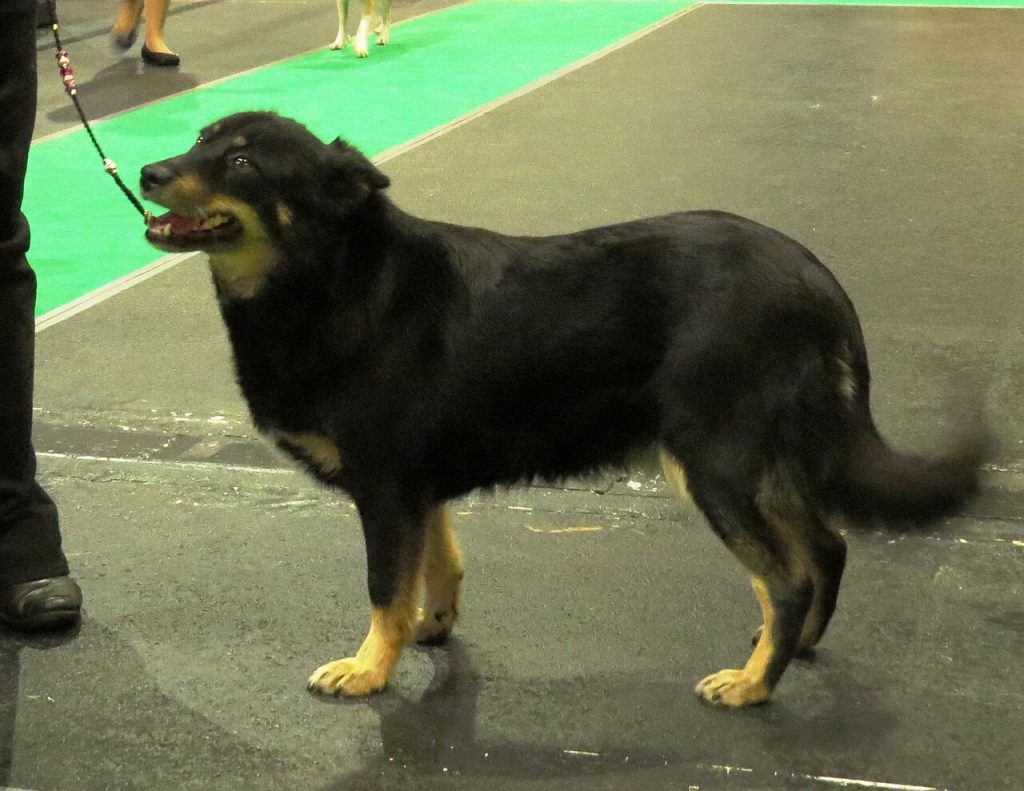
The Finnish Lapland Shepherd Dog(in Finnish Lapinporokoira, and in English Lapponian Herder) is a medium-sized dog, Nordic spitz type, bred for centuries by the Sami people of northern Europe to drive and guard herds of reindeer in extreme conditions. Robust, calm and surprisingly energetic when it comes to work, it’s a rare breed outside Scandinavia, but of an unusual balance: Loyal, docile at home and tireless in the field. If you’re looking for a tough, sociable companion with herding instincts, this is a dog you deserve to get to know.
Is the Finnish Lapland Shepherd Dog for you?
Before you fall in love with this Nordic race, it’s best to be honest about what it entails. The Lapland Finnish Shepherd Dog is a working dog with centuries of selection for reindeer herding: That leaves an imprint on his character. You need to move, have a task and feel part of a group. In return, it offers quiet loyalty and a gentle temperament hard to find in other herding breeds. Here’s a clear summary of its lights and shadows.
Points in favour
- Quiet, friendly and docile temperament in the home.
- Very resistant to cold and prolonged strain.
- Intelligent and highly capable of learning.
- Sociable with people and a good family companion.
- Versatile in canine sports: agility, obedience, mushing, tracking and more.
- Rustic breed, generally healthy and of solid constitution.
Points to Consider
- He needs plenty of daily exercise; he’s not a couch dog.
- Pastoral instinct: may attempt to drive children or other animals.
- Rare breed: finding serious breeders outside Scandinavia is difficult.
- The double coat loosens the hair, especially on the buds.
- He is bored and may become frustrated if he spends a lot of time alone or inactive.
- Unsuitable for very hot climates without precautions.

Character and temperament
The breed standard describes the Lapland Finnish Shepherd Dog as a calm, friendly and docile, but at the same time energetic dog. This apparent contradiction is precisely what makes it so special: at home it is serene and balanced, able to lie down beside you without much trouble, but as soon as an activity is proposed it ignites and displays a remarkable energy and concentration.
It’s a dog designed to work side by side with humans in hostile environments, so it values companionship and collaboration immensely. He’s not a distant dog or an aggressive guard dog: His vocation is to lead the flock, not to defend it with violence. Hence, he is generally sociable and pleasant. As with any breed, the temperament of each individual can vary depending on genetics, early socialization, and education.
It is worth remembering that we are talking about a reindeer herder, not an ornamental dog. Beneath its rustic appearance beats an active brain that needs stimulation. A well-exercised Finnish Lapland Shepherd Dog with a mental work routine is a balanced and charming companion; one who is bored and without homework can become restless.
Coexistence: children, other pets, flat and loneliness
With children:‘s docile and friendly nature makes it a good companion for families with children, always with the supervision and mutual respect that any dog demands.
With other pets: is bred and socialized from a young age, and usually coexists well with other dogs. With small animals and with cats it is necessary to evaluate case by case, since the impulse to chase and group is very present in the breed.
On the floor: is not the ideal breed for a small floor if it is not guaranteed plenty of daily exercise. It can live indoors perfectly as long as it goes out several times a day to really move. A garden helps, but never replaces active walking and mental work.
Soledad: is a social dog that enjoys being with its people. It tolerates times alone if it is well exercised, but long days of loneliness and boredom do not feel good to it and can lead to frustrating behaviors. It is not a breed for those who spend all day outside.

Education and training
The Finnish Lapland Shepherd Dog is intelligent and easily learns, something that is logical in a dog selected for generations to make decisions with the shepherd. It responds very well to positive reinforcement: rewards, play and clear communication are much more effective than harshness, which only manages to block such a cooperative dog by nature.
Early socialization is key. Exposing the puppy to people, other dogs, noises, surfaces, and different situations from a young age avoids fears and channels their natural sociability. Being a working breed, they appreciate that sessions have a purpose: learning a “craft” or routine motivates them more than repeating meaningless commands.
Instead of simply repressing it, the ideal is to give it an outlet: driving games, dog sports or even herding tests if you have access to them. A dog with a busy mind is an easy dog to train.
Exercise and activity
This is probably the most demanding part of living with the breed. Like most herding dogs, the Lapland Finnish Shepherd you need plenty of regular exercise.. It is not enough for a couple of laps to the apple: it asks to move, run, explore and, above all, exercise the head.
He’s a very versatile athlete. He excels in disciplines such as agility, carting(light chariot shooting), mushing(sled shooting), obedience, rally obedience, flyball, tracking(crawling) and, of course, grazing trials. Their instinct and ease of training can be measured even in noncompetitive herding tests, and specimens with good instinct can be trained to compete.
Think of at least one or two daily sessions of intense physical activity, combined with olfactory games, interactive toys or training. A well-tired Finnish Shepherd Dog from Lapland, physically and mentally, is a calm and happy dog at home.
Care: fur and hygiene
The Lapland Finnish Shepherd Dog wears a medium-length double coat: a protective outer coat and a woolly undercoat that insulates it from the polar cold.
A weekly brushing is usually enough to remove dead hair and keep the mantle in good condition.During seasonal seedlings, however, the undercoat sheds in abundance and it is advisable to brush daily to control the amount of hair at home and avoid tangles.Baths should be sporadic: overwashing dries the skin and spoils the natural impermeability of the mantle.
The rest of the care is the usual for any dog: check and clean the ears (upright, which favors ventilation), cut the nails when needed, take care of dental hygiene and watch the pads, especially if you work or walk on hard or icy terrain.
Foodstuffs
As an active and muscular dog, the Finnish Lapland Shepherd Dog needs a quality and balanced diet, adjusted to its actual activity level. A dog that works or trains daily will have much higher energy needs than a dog with a more sedentary lifestyle, and the diet must be adapted accordingly.
The important thing is to meet your high-quality protein requirements to maintain your muscles, without becoming overweight, which would overload your joints. Break food into two servings a day, respect rest around intense exercise, and make sure you always have fresh water available, especially after activity sessions. If you have any doubts about the quantity or type of feed, it is best to consult your veterinarian, who will evaluate the animal’s age, weight and specific physical condition.

Health and life expectancy
The Lapland Finnish Shepherd Dog is a rustic and robust breed, the result of centuries of natural selection in a harsh environment where only the healthiest and most functional specimens survived.
As with all breeds, it is advisable to rely on responsible breeders who work with healthy breeders and perform the health tests recommended for medium-sized working dogs. The stud book(origins book) of the breed remains open, which helps to maintain a broad genetic base and reduce problems arising from inbreeding. Keeping the dog at its ideal weight, with adequate exercise and regular veterinary checkups, is the best policy for a long, active life.
Physical appearance
We are talking about a medium-sized dog, of medium build, well proportioned and with a clear difference between the sexes: males and females should look different, the males being the heaviest.
- Height at the cross: about 51 cm in males and 46 cm in females.
- Peso: approximately 25 to 29 kg, with males usually heavier than females.
- Pelaje: double cloak of medium length.
- Colores: is usually black, dark gray or brown, and occasionally reddish brown, with lighter tones on the head and lower body, often with white markings.
- Orejas: erect (lifted); dropped ears are considered an elimination defect.
The set conveys exactly what it is: a functional, well-balanced working dog prepared to move for hours over rough terrain.
Origin and history
The history of the Lapland Finnish Shepherd Dog is linked to that of the sami people from northern Europe, which for a very long time used spitz-type dogs to manage its herds of reindeer.
Although in the 1930s Swedish and Finnish enthusiasts began to collect information about these dogs, the Segunda Guerra Mundial was a devastating blow and most of those specimens were lost.
In Finland, one of the earliest recognitions came from the Kukonharjulainen(a breeding name) by the Finnish Kennel Club: was obtained by crossing some of those herding dogs with the Karelian Bear Dog, white and black, which gave a short-haired dog. Other breeders, linked to another club, developed a more abundant coat variety, which we now call the Finnish Lapland Shepherd Dog. In the late 1950’s and early 1960’s more dogs were collected and assigned to one variety or another depending on their appearance.
At that time, the two clubs merged and all Finnish reindeer dogs were placed in one registry. In 1966 separated again based on hair length: one breed was named Lapphund and the other was named Lapinporokoira, translated into English as Lapponian Herder and into Spanish as Finnish Shepherd Dog of Lapland.
Today the breed is recognized under Finnish tutelage by the Federación Cinológica Internacional (FCI), within the Grupo 5(Spitz type and Primitive type dogs), Section 3 (Nordic guard and herding dogs).
Curiosities
- It is one of the three lapphund breeds developed from the same type of Sami herding dog, along with the Finnish Lapland Dog (Finnish Lapphund) and the Swedish Lapland Dog (Swedish Lapphund).
- Genetically it belongs to a subclade of mitochondrial DNA called d1, exclusive to northern Scandinavia, which groups together all races of Sami origin and which originated from the hybridization of a wolf with a male dog after domestication, at most between 480 and 3,000 years ago.
- The maternal wolf sequence that gave rise to these breeds has not been found anywhere else in Eurasia, underscoring the uniqueness of their lineage.
- Its Finnish name, Lapinporokoira, literally means “reindeer dog of Lapland”.
- The book of the race’s origins remains open, unusually, to preserve its genetic diversity.
If you are attracted to the hardworking and balanced nature of this Nordic breed, you may be interested in other herding or northern dogs with whom it shares energy and needs. Take a look at the Perro Lapón Finlandés, a direct relative of this same Sami tradition; the tireless Border Collie, a world reference in grazing; the versatile Pastor Australiano; or the tough Samoyedo, another Nordic spitz used to extreme cold.
Frequently asked questions about the Finnish Lapland Shepherd Dog
Is the Finnish Lapland Shepherd a good family dog?
Yes, his calm, friendly, and docile temperament makes him a good family companion, provided he is provided with the abundant exercise he needs.
How much exercise do you need?
Like most herding breeds, it requires regular and intense daily exercise, as well as mental stimulation. It is not a suitable dog for a sedentary life.
What size and weight is it?
It is a medium-sized dog: males measure about 51 cm at the cross and females about 46 cm. The weight is around 25-29 kg, with males usually heavier than females.
Do you lose a lot of hair?
It has a medium-length double coat that loosens hair, especially during seasonal moulting.
What colors can it be?
Usually black, dark gray or brown, and sometimes reddish brown, with lighter tones on the head and lower body, often with white markings.
Is it easy to train?
Yes, it’s intelligent and it learns easily, and it responds very well to positive reinforcement, and being a working breed, it appreciates that training has a clear purpose and motivating sessions.
Which FCI group are you in?
It is recognised under Finnish patronage in FCI Group 5 (Spitz type and Primitive type dogs), Section 3 (Nordic guard and herding dogs).
Is it a common breed?
No. Outside Scandinavia it is a rare breed. It was exported to North America, where it is recognized by the United Kennel Club, and is promoted as a rare breed for those looking for a unique mate.