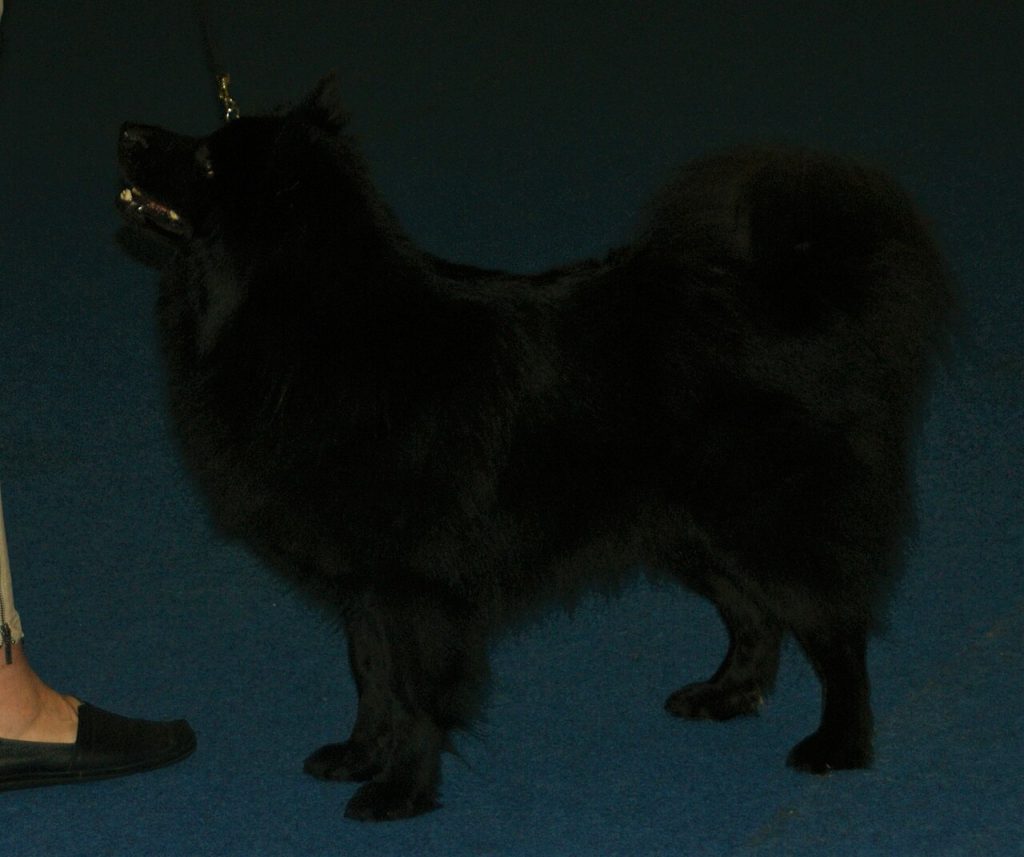
The Lappish Shepherd from Sweden(Swedish: Swedish lapphund) is an agile, black and alert spitz-type dog, bred for centuries by the Sami people of northern Scandinavia to guard and guide their reindeer.
Is the Lappish Shepherd from Sweden for you?

The Swedish Lapland Shepherd is a dog designed for active people who want an engaged companion, not a quiet ornament. It fits very well with families who play sports, go to the countryside or enjoy training as a hobby. In return, it requires time, movement and, above all, keeping your head occupied. Before you decide, weigh what it offers against what it demands.
In favour .
- Loving, loyal and very close to his family.
- Smart and willing to work: easy to motivate.
- Very versatile (obedience, agility, shepherding and tracking).
- Rustic, healthy and adapted to the cold and outdoors.
- Manageable size, slightly below the median.
To be taken into account
- Medium-high energy: needs real daily exercise.
- It tends to bark to warn and draw attention.
- He can be independent and a little stubborn.
- Double coat that loosens hair and shifts forcefully.
- He gets bored and frustrated if you leave him alone and inactive.
Character and temperament
The character of the Swedish Lapland Shepherd can be summed up in three words: alive, alert and affectionate. It is a receptive, attentive and willing to work dog, qualities that made it indispensable in the reindeer trade and that today make it a very pleasant companion. It is involved in what its family does and seeks to be part of the human herd, not to be left on the sidelines.
As a good spitz, he combines that friendliness with a dose of independence and stubbornness. He ‘s not a submissive dog who obeys because he obeys . collaborates when he understands the game and trusts his guide. It retains instincts of vigilance and alertness, so it is usually alert to what is going on around it. Well balanced it has a remarkable “on and off switch”: intense and energetic in activity, able to relax when it comes to calm.
Coexistence: children, other pets, flat and loneliness

With children:‘s friendly and playful temperament makes it a good companion for families with children, always with the usual supervision and respect.
With other pets: raised and socialized as a puppy usually gets along well with other dogs. Its past pasture can awaken the impulse to control movement, something to be channeled with education.
On the floor: can adapt if taken out daily and given company and encouragement, but it is not a sedentary dog.
Soledad: is a sociable dog that wants to be with its people. It does not tolerate prolonged isolation; if bored, boredom translates into barking and destructive behavior. Best in homes where it does not spend too many hours alone.
Education and training
Training a Swedish Lappish Shepherd is, in general, rewarding: She’s smart, has good stamina and enjoys working side by side with her guide. He learns quickly and is eager to please when the session is interesting. The key is to harness that motivation with positive reinforcement, variety, and short, dynamic sessions, avoiding the monotonous repetition that bores a waking dog.
Its independent and somewhat stubborn side means that it responds worse to harsh methods or imposition. Early socialization and a stable upbringing are essential for a spitz: it needs clear rules from puppyhood and mental stimulation in addition to physical.
Exercise and activity
We are dealing with a middle-high-energy working race that needs daily exercise both physically and mentally. It is not satisfied with a short walk: it appreciates long walks, play, running and space to move. Equally important is to occupy its head, because a bored Swedish Lappon seeks its own activities, almost never desirable.
It competes successfully in obedience, agility, obedience rally, freestyle or heelwork, scent work and blood tracking, as well as in trials and herding events, where its instincts are still very present.
Care: fur and hygiene

The coat of the Swedish Lapland Shepherd is double, abundant and climate-resistant, with a dense undercoat that protects it from the Nordic cold.
The rest of the care is the usual: punctual baths only when necessary so as not to damage the natural protection of the mantle, inspection and cleaning of ears, cutting nails when they do not wear themselves and regular dental hygiene.
Foodstuffs
The Swedish Lappon Shepherd works well with quality food, whether commercial or domestic, always under veterinary supervision and approval. The diet should be adjusted to its life stage (puppy, adult or senior) and to its actual activity level, which in a sport dog can be high.
Since some specimens tend to be overweight, it is advisable to monitor calories and body weight. Sweets are a very useful aid in training, but in excess favor obesity, so they are discounted from the daily ration. You should always have clean and fresh water available, and if there is any doubt about weight or diet, it is best to consult the veterinarian.
Health and life expectancy
The Swedish Lapland Shepherd is a rugged and robust breed, the result of centuries of functional selection in a harsh environment. Its life expectancy is around 12 to 14 years, a good figure for a dog of its size. It is not a working breed so extreme as to suffer serious widespread problems, but as with any dog, it is advisable to go to responsible breeders who have health tests.
The best insurance for their well-being is daily care: maintaining a proper weight, regular exercise, regular veterinary checkups, daily vaccination and deworming, and attention to ears, teeth, and joints as they age.
Physical appearance
The Swedish Lappon Shepherd is a spitz of somewhat less than medium size, compact appearance, proportionate and clearly Nordic. The males measure between 45 and 51 cm at the cross and the females between 40 and 46 cm; a healthy adult weighs about 19 to 21 kg according to the standard.
Its most recognizable feature is the coat: double, abundant and weather resistant, with dense undercoat. The usual color is solid black, sometimes with bronze or white markings, hence the nickname “Norrland black beauty”. Everything in its morphology responds to the function: a resistant, agile and prepared to work outdoors in demanding conditions.
Origin and history
The Swedish Lapland Shepherd is the oldest of the native Swedish breeds and is considered one of the oldest breeds in existence. It was a fundamental companion of the Sami people of Lapland (northern Norway, Sweden, Finland and northwestern Russia), first as a hunting and guard dog and, with the domestication of the reindeer, as a grazing partner. A peculiarity of his way of working was the use of voice: The Sami favored barking dogs because the barking deterred predators and warned the reindeer that the four-legged animal was a friend, not an enemy.
Genetically it belongs to the group of breeds related to the Sami, along with the Finnish Lapphund, the Laponian Shepherd, the Jämthund and the Norwegian Elkhound, a lineage from northern Scandinavia with a very particular ancestral trace. The breed came close to extinction and was recovered thanks to the efforts of dedicated breeders, who preserved this Nordic worker for present generations. Today it is still recognized within the FCI’s group of Nordic guard and herding dogs.
Curiosities
- It is known as “the black beauty of Norrland” because of its characteristic black mantle and its origin in northern Sweden.
- Their herding instinct is still “alive and well” in modern specimens, many centuries after working with reindeer.
- She is part of a northern Scandinavian lineage with a maternal genetic footprint that has not been found anywhere else in Eurasia.
- The “useful bark” that must be managed today was once a virtue – it frightened predators and reassured the flock.
- It shares Sami roots with other Nordic breeds such as the Finnish Lapphund and the Lapland Shepherd.
If you are attracted to the profile of the Swedish Lapland Shepherd (active, smart and hardworking Nordic dog), you may also be interested in other working and herding breeds with a similar character. Samoyedo Siberian Husky Border Collie Australian Shepherd
Frequently Asked Questions about the Swedish Lapland Shepherd
Is the Swedish Lapland Shepherd a good family dog?
Yes. It is a caring, attentive, and close-knit companion that thrives when included in household activities. Its friendly nature and willingness to work make it easy to get along, provided it receives sufficient exercise and mental stimulation.
How much exercise does a Swedish Lappish Shepherd need?
It is a medium-high energy breed that needs daily activity: long walks, play and, above all, mental work. It performs very well in obedience, agility, shepherding, tracking or freestyle.
Does the Swedish Lapp Shepherd bark a lot?
It tends to be vocal. It preserves from reindeer herding the habit of barking to warn and draw attention, a trait that the Sami valued. With early education and sufficient stimulation it is managed, but it is advisable to take this into account if you live in a flat with nearby neighbors.
What’s the Swedish Lappish Shepherd’s coat like and how much does it loosen?
It has an abundant and climate-resistant double coat, with dense undercoat. It is usually solid black, sometimes with bronze or white markings. It sheds hair continuously and makes strong seasonal moult, so it needs regular brushing, more frequently in moult season.
How tall and how much does a Swedish Lappish Shepherd weigh?
It is a medium-sized spitz. Males measure 45-51 cm and females 40-46 cm at the withers. The weight of a healthy adult is around 19-21 kg according to the breed standard.
Is it easy to train the Lappish Shepherd from Sweden?
It is intelligent, responsive, and loves to work, which makes it easy to train. It can be independent and somewhat stubborn, so it responds better to positive reinforcement, consistency, and varied sessions than to monotonous repetition or harsh methods.
Does the Swedish Lapland Shepherd adapt to living in a flat?
It can live on the floor if its needs for exercise and companionship are met, but it is not a couch dog. Its energy and tendency to bark require daily activity and mental stimulation; otherwise it may become bored and develop annoying behaviors.
How long does the Swedish Lappish Shepherd live?
It is a rustic and long-lived breed for its size, with an approximate life expectancy of about 12 to 14 years.