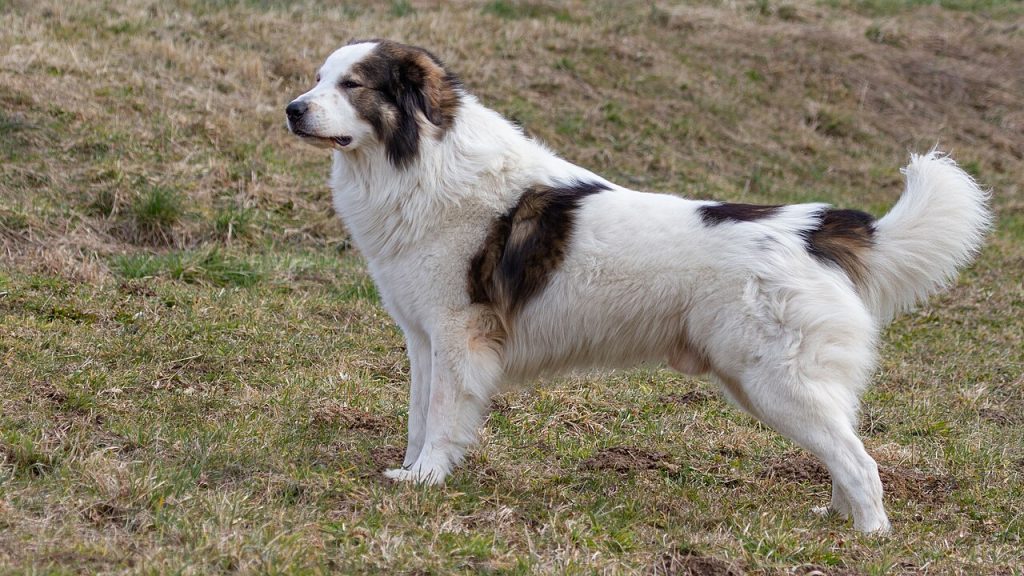
The Tornjak is an imposing mountain dog native to Bosnia and Herzegovina and Croatia, an ancestral livestock guardian who for centuries protected herds in the Balkans from wolves and bears. Large, serene and deeply loyal, the Tornjak combines a long, spectacular coat with a balanced character that makes it an exceptional keeper and a quiet companion for whom it can offer space and a coherent upbringing.
Is the Tornjak for you?
The Tornjak is not a dog for everyone. It is a large, independent and territorial herd guardian, selected for centuries to work alone in the mountains. That makes it a wonderful animal in the right environment and a bad choice in the wrong one. Before you fall in love with its image, honestly evaluate if it fits into your life.
In favour .
- Born guardian: vigilant, brave and protective with his family and his territory.
- He’s temperamentally balanced, calm and not nervous.
- Very loyal and affectionate to his own.
- Rustic and hardy, with a mantle that allows it to live outdoors.
- Smart and with a good memory: he learns fast.
- He doesn’t need as much exercise as his size suggests.
Against
- He needs space. He’s not a floor dog.
- Independent and with its own standards: it does not obey because it obeys.
- It requires very intense early socialization.
- Strong territorial instinct and reserved with strangers.
- Rare breed: difficult to find and advise outside the Balkans.
- It sheds a lot of hair on the seedlings.
Character and temperament

The Tornjak is, first of all, a calm dog. The typical adult is a calm, peaceful, and seemingly indifferent animal, able to spend hours observing its surroundings without being moved. But that calm is deceiving: When the situation demands it, he becomes a vigilant and determined watchdog. His character goes hand in hand with his temperament; he is not a nervous or aggressive dog by nature, but he is balanced and self-assured.
With its human family it can be very affectionate, and in a pack it is a deeply social animal that coexists without fighting with other dogs. He is more reserved than hostile toward strangers or unfamiliar animals. Now, when it comes to defending his cause, the Tornjak doesn’t think twice: He’s capable of taking on much larger rivals with legendary tenacity. The shepherds of the Balkans asserted that a single Tornjak is worth two wolves and that a pair of them chases away a bear.
That combination of everyday placidity and courage under pressure is the essence of the breed. It is not a dog that seeks conflict, but neither does it shy away from it when it perceives a real threat to its territory, its herd, or its people.
Coexistence: children, other pets, flat and loneliness
In the right environment, the Tornjak is an excellent family dog. Its calm temperament and strong bond with its owners make it patient and protective with the children of the house, although, due to its size and its guardian instinct, coexistence with the smallest should always be supervised and based on mutual respect.
It usually gets along well with other dogs, especially if it has grown up in a group: it is a pack animal accustomed to cooperating without fighting. It can also coexist with other pets and with livestock, which is precisely what it was bred to protect.
Where the Tornjak doesn’t fit is on a floor. It needs space, preferably a large garden or a plot where it can move, patrol, and take care of much of its exercise needs on its own. Its dense mantle protects it so well that it can live outdoors as long as it has adequate shelter. It tolerates loneliness better than many races, thanks to its independent character, but independence should not be confused with abandonment: She still needs companionship, bonding and encouragement.
Education and training

The Tornjak learns quickly and does not forget easily. In that sense, he’s an easy dog to train: understands quickly what is asked of him and carries out the tasks willingly. The challenge is not in their intelligence, but in their independence. It has been selected for centuries to make decisions on its own with the flock, away from the shepherd, so it is not a dog that obeys automatically or out of pleasure.
That’s why it needs a consistent, calm and firm guide, who works with positive reinforcement and clear rules from day one. Hard methods are counterproductive with this breed: they create distrust and blockage. Much more effective is to earn their respect with patience and consistency.
The most important piece of your education is the early socialization. Experiences before the age of nine months mark the dog for life. A Tornjak puppy should be aware as early as possible of traffic noise, trucks, buses, strangers, other dogs and animals; if it does not face these puppy stimuli, it will develop fear reactions as an adult. Intense socialization in those early months is the best investment for a stable and secure guardian.
Exercise and activity
Although it is a large dog, the Tornjak is not particularly demanding in terms of exercise. It enjoys long walks without a leash and playing with other dogs, but settles for a 20-minute walk if its owner is in a hurry.
During the first 9 – 12 months, in full development, it is advisable to avoid intense exercise and, very importantly, not to let him go up and down stairs repeatedly, because it can damage the joints of the corvettes or promote hip dysplasia.
It is an exceptionally weather-resistant dog. Strong and well-bred, it sleeps outdoors on winter nights and is covered in snow without getting cold thanks to its thick coat. Its natural habitat is the countryside and the mountains, not the sofa.
Care: fur and hygiene
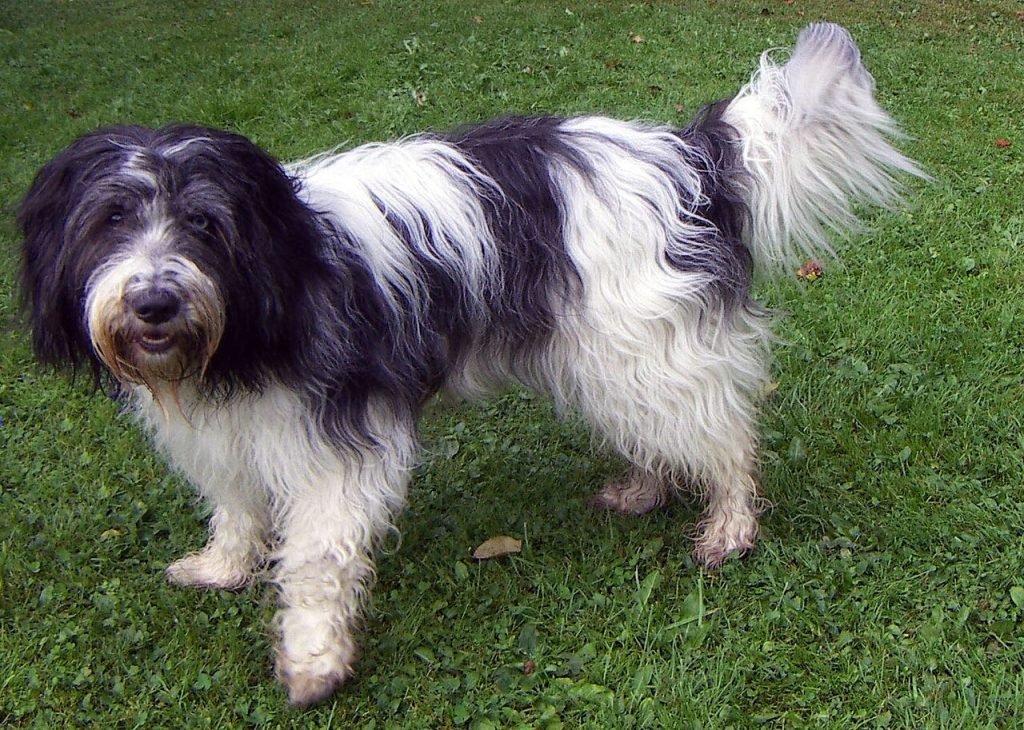
The coat of the Tornjak is one of its hallmarks: long, double and very dense, with short hair on the face and extremities and especially abundant in the neck, forming a mane, and in the back of the thighs, the characteristic “shorts”.
Despite its volume, it is an easy-to-maintain blanket. A weekly brush is enough to keep it healthy and knot-free most of the year. In spring and autumn, when the seedlings are in season, they shed a lot of hair and should be brushed daily to remove dead undercoat. She doesn ‘t need a haircut or a hairdresser . their coat is self-regulating and protects them from cold, heat and humidity. The rest of the hygiene is the usual: Check your ears, nails and teeth regularly.
Foodstuffs
Like all large mountain dogs, the Tornjak needs a quality diet, balanced and tailored to its size, age and activity level. The most delicate stage is growth: a large breed puppy should eat a specific feed for large breeds, which controls calcium and energy intake and promotes slow and harmonious bone development. Growing too fast is one of the risk factors for dysplasia.
In the adult, it is advisable to divide the daily ration into two servings and monitor the weight: overweight punishes the joints of a dog of this size. As in large breeds at risk of gastric dilation, it is prudent to avoid intense exercise just before and after meals. Fresh water always available, especially if you live outdoors.
Health and life expectancy
The Tornjak is a remarkably rustic and healthy breed. Its origin as a mountain landrace, shaped by generations of natural selection in a harsh environment, has given it a strong constitution and few hereditary problems compared to many modern breeds.
As with all large dogs, the main vigilance is the joints: hip and elbow dysplasia. That’s why it’s so important to take care of the puppy’s growth, control its weight, and choose breeders who work with its reproductive x-rays. With proper nutrition, sensible exercise, and regular veterinary checkups, the Tornjak usually enjoys a long and active life.
Physical appearance

The Tornjak is a large dog of the molosoid and mountain type, with a somewhat square body and surprisingly agile movements for its size. It is not a heavy or rough dog: its bone is strong, but its silhouette conveys balance and functionality.
Its coat is particularly fine, almost always with the white as the dominant background colour and spots that can be of any color, distributed mainly on the head, neck and back. This distinctive layer is not just aesthetic: As with other cattle herders, the spots served to help the shepherd distinguish his dog at a glance from both sheep and wolves. The head is proportionate, the ears drooped, and the expression serene and attentive, typical of a self-assured dog.
Origin and history
The Tornjak is a breed with ancient roots and a fascinating recent history. The first written references to these dogs date back to the 11th century, and are described in detail in the texts of Peter Horvat, bishop of Đakovo, in 1374, and Peter Lukić, canon of the diocese of Đakovo, in 1752. Even then they were described as guard dogs, intelligent and bred to limit aggression. They were the shepherd dogs of the Wallachian transhumance in medieval Bosnia.
Its name says it all: Tornjak is derived from tor, which means “sheep’s fold” or “sheep’s fold”. In different areas of the Balkans it is known by other names – Toraši in Sinj and Mount Kamešnica, Dinarci among the shepherds of the Dinaric Mountains, or Shepherd Dog of Bosnia-Herzegovina and Croatia – reflecting its roots throughout the region.
With the end of nomadic herding, the breed was on the brink of extinction. In the early 1970s, a group of cinologists undertook a project to recover it: They found dogs that shared the characteristics described in the historical texts and, in 1978, started breeding them in purity. The basis of the modern breed is a set of genetically homogeneous landrace herding dogs identified in that process. Today the Tornjak is recognized by the FCI with the standard number 355, within Group 2 (pinscher and schnauzer type dogs, molosoids and mountain), and continues to grow gradually outside its homeland.
Curiosities
- Its name literally means “dog of the fold”: it comes from tor, the den where the sheep were kept.
- It is a “re-created” breed: it was almost extinct and was recovered from the 70s thanks to a meticulous cynological work based on historical descriptions.
- The spots on his coat have a practical function – they helped the shepherd distinguish his dog from sheep and wolves even from a distance.
- The pastoral legend says that one Tornjak equals two wolves and that a couple can stand up to a bear.
- Its mantle is so insulating that it can sleep covered in snow without getting cold.
- It is shared as a national breed by two countries, Bosnia and Herzegovina and Croatia, and is known as the “Bosnian Herzegovinian Shepherd Dog”.
If you are attracted to the Tornjak for its serene guardian role and its mountain dog demeanor, you may be interested in other large breeds with a balanced temperament and protective vocation. Cane Corso Mastín San Bernardo Gran Danés
Frequently asked questions about the Tornjak
Is the Tornjak a good family dog?
Yes, within his profile. The Tornjak is calm, balanced and very loyal to his family, with whom he can be surprisingly affectionate. He’s not a nervous dog or a noisy one. Watch, observe, and act only when necessary. Now, it’s a large, independent livestock guard dog, so it fits better in families with space, experience, and a willingness to socialize and raise it well from puppyhood.
How tall and how much does a Tornjak weigh?
It is a large mountain dog. According to the FCI standard, the males measure between 65 and 70 cm at the cross and the females between 60 and 65 cm. The weight is around 35 – 50 kg in males and slightly less in females, always with a robust constitution, with strong bones but agile movements.
Can the Tornjak live on one floor?
It is not ideal. The Tornjak is designed to live outdoors, with space, and its dense coat allows it to withstand the cold perfectly in a sheltered garden. In a flat it would suffer from lack of space and stimuli. If you do not have a plot or a large garden, this is not the most suitable breed for you.
Is he an aggressive or dangerous dog?
It is not free. With its family and its familiar environment, it is balanced and peaceful; it is not nervous or biting. In front of strangers or other animals, it is usually reserved rather than aggressive. However, when defending its territory or its flock, it is determined and tenacious: shepherds said that a Tornjak plants face to two wolves.
How much exercise does the Tornjak need?
It is smaller than its size suggests. Long walks, loose time on safe ground and play with other dogs are sufficient. It is adapted even to a short walk of 20 minutes if its owner is in a hurry. During the first 9 – 12 months, in full growth, it is advisable to avoid intense exercise, jumps and climbing and descending stairs to protect its joints.
Is it easy to train a Tornjak?
It learns quickly and has a very good memory, so in that sense it is easy to train. The difficulty is not in its intelligence but in its independence: it was selected to make decisions alone with the herd. It needs consistent guidance, with positive reinforcement and clear rules from puppyhood, and very intense socialization before 9 months.
How long does a Tornjak live and how healthy is he?
It is a rustic and healthy breed, the result of generations of natural selection in the mountains, with a normal life expectancy of around 11 – 14 years.
Does the Tornjak need a lot of hair maintenance?
Its coat is long, double, and very dense, but it does not shrink easily. A weekly brushing is enough to keep it healthy; during the seasonal mowing, in spring and autumn, it is advisable to brush it daily because it sheds a lot of hair. It does not require hairdressing or cuts: its fur self-regulates and protects it from cold and heat.