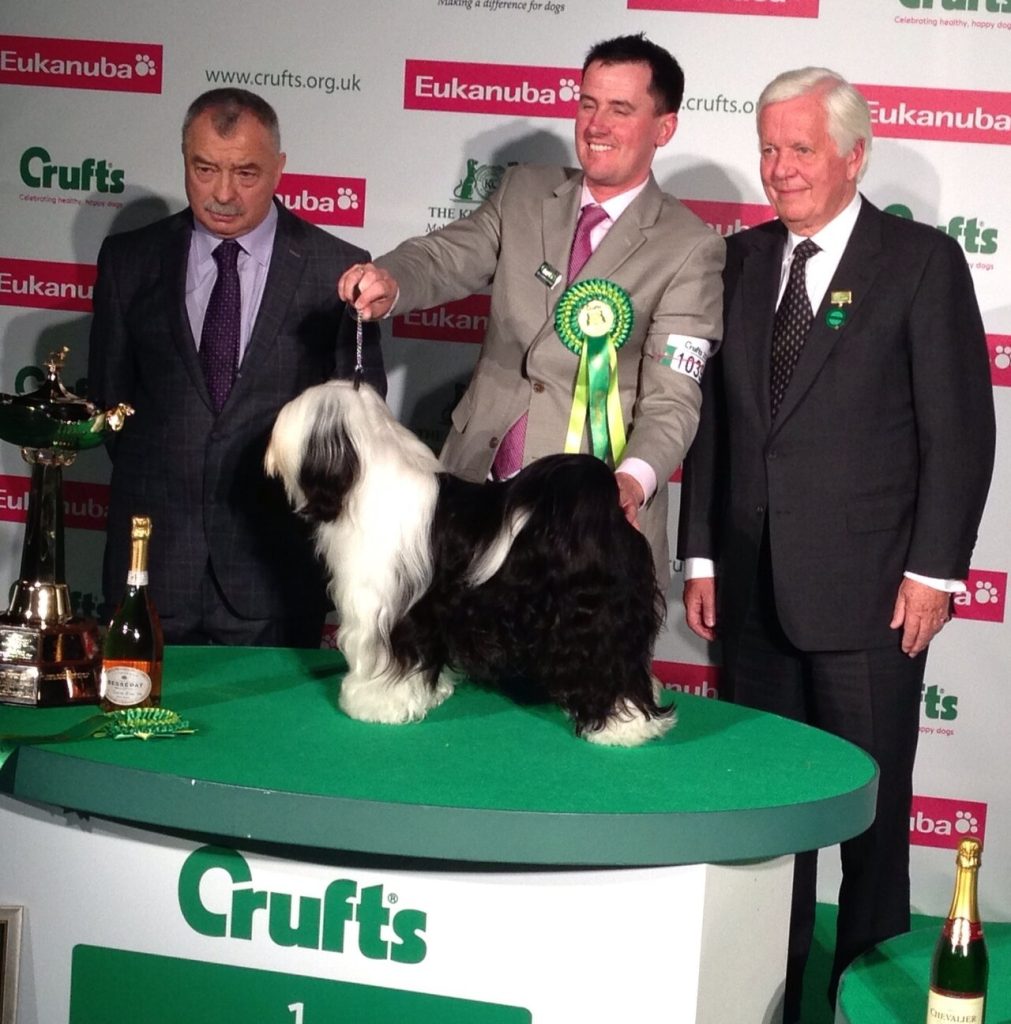
The Other cattle is a medium-sized, furry and surprisingly agile dog that carries 2,000 years of history behind it: He was born as a good luck charm, watchman and companion to the monks and nomads of Tibet. Despite its name, it is not a terrier; under that plentiful coat is a robust, smart dog, affectionate with his own and reserved with strangers, able to adapt to a floor but with plenty of energy for the countryside and the mountains.
Is the Tibetan Terrier for you?

The Tibetan Terrier is a perfect match for anyone looking for a medium-sized, balanced, affectionate dog that participates in family life without being dependent or nervous. It is not the easiest breed for an absolute beginner because of its stubborn point and need for grooming, but it rewards those who devote time to it.
In favour .
- Loving and loyal to his family, very close to his own.
- Comfortable medium size: suitable for both floor and garden.
- It sheds little hair, better tolerated by many sensitive people.
- Very intelligent and agile: brilliant in agility and canine sports.
- Long and generally rustic and tough.
- Excellent watchdog: he warns of everything that happens.
Against
- Its double coat requires frequent brushing to avoid knots.
- Severe barking and tendency to bark excessively if not worked on.
- He can be stubborn – he needs patient and constant training.
- Reserved with strangers; requires early socialization.
- Some protect their resources from other pets.
- He needs real daily exercise, he’s not a sedentary dog.
Character and temperament
Temperament has been, ever since the breed was first observed, one of its greatest attractions. The Tibetan Terrier is a kind and affectionate family dog, sensitive to the mood of its owners and attentive to what is happening around it. True to its past as a monastery guard dog, it tends to show reserved with strangers, but a well-bred specimen should never be aggressive or fearful: Just be cautious until the situation gives you confidence.
He’s cheerful, active, alert and agile, with an intelligence that comes with a good dose of stubbornness. He’s steady, determined and cunning, qualities that are great for the job but also make him able to quietly ignore you if you don’t give him a good reason to obey. It has a deep bark and is not difficult to use, something that should be channeled early. In short: A lovely, loyal companion with his own personality.
Coexistence: children, other pets, flat and loneliness

With children: gets along well with older children if the introductions are made with the head and they are taught to respect the dog.
With other pets: can share a home with other animals, and in fact in Tibet it lived comfortably with large dogs such as the Tibetan Mastiff. Now, some specimens tend to protect their food, their toys or their space, which can complicate coexistence with another dog if not socialized in time.
On the floor: is perfectly suited for apartment living thanks to its medium size, provided it goes out daily.
Soledad: is a dog that is very attached to its people, so it is not good to spend long hours alone. If you are going to be away for many hours, prepare your routine gradually and leave stimuli so that it does not get bored or develop excessive barking.
Education and training
The Tibetan Terrier is smart and quick to learn, but its intelligence comes independently: it understands first what you ask it and then decides if it pays. The key is the positive reinforcement, short and fun sessions, and a lot of perseverance. Hard methods don’t work with such a sensitive dog; they just get it to close in on you.
It prioritizes two things from puppyhood: a broad socialisation(people, noises, other dogs, environments) to soften its natural reserve against strangers, and barking control, teaching it to be quiet when ordered. It takes advantage of its natural ability: it is a dog that enjoys working, so channeling its mind toward obedience games or canine sports makes education much easier.
Exercise and activity
The fact that it is hairy and ground-fit should not fool you: the Tibetan Terrier has an energy level of medium to high and an active nature. It needs regular exercise, not only to burn energy but to keep its head occupied. Two good walks a day, plus playtime, are usually enough for a balanced specimen.
His agility, balance, and intelligence make him especially good at agility, and he also competes in obedience, rally, flyball, tracking, and even herding trials, where his old instincts come to the surface.
Care: fur and hygiene

The mantle is the great commitment of this race. It ‘s a double hair: a fine, woolly undercoat beneath an abundant outer layer with the texture of human hair, neither silky nor curly (wavy is acceptable). Since dead hair doesn’t fall out but gets entangled, the only way to avoid knots is brush regularly: In the case of an adult dog, once a week is usually sufficient, except in the spring moult, when it is more frequent.
Work the coat in layers, from bottom to top, and moisten the hair slightly with a water sprayer and conditioner before combing, because dry brushing breaks it. Watch for areas of friction (armpits, behind the ears, joints), which are most prone to swelling. Many owners pick up the freckle that falls on their eyes with rubber bands, although the breed’s long eyelashes usually provide plenty of protection.
The bath, once a month at most, with shampoo suitable for the type of hair and thoroughly rinsed so that there is no residue of product in the undercoat.
Foodstuffs
The Tibetan Terrier does not have exotic dietary requirements: a complete and high-quality diet, adjusted to its average size, age and activity level, suits it well. It divides the daily ration into two servings and adjusts the amount to its actual body condition, not to what the sack marks by default, because excess weight strains the joints and reduces agility.
Proper nutrition also affects their teeth (the breed is not particularly prone to tartar if cared for) and the health of their coat.
Health and life expectancy
It is a long-lasting and generally healthy breed: a British study from 2024 estimated its life expectancy at about 13.8 years, above the average for purebred dogs.
- Patients who have been diagnosed with Cystic Fibrosis: is a neurological disease whose first symptom is night blindness. The gene responsible was identified in 2009 and there is a DNA test; combining it with not crossing two carriers, prevents affected specimens from being born.
- Primary lens dislocation: the race is one of the most affected; it is due to a recessive mutation of the ADAMTS17 gene and also has a genetic test.
- Dysplasia of the hip and some eye problems such as cataracts or retinal atrophy, reasons why it is advisable to ask for hip and eye checkups from the parents.
The recommendation is clear: always choose a breeder who performs genetic and eye tests on your breeders.
Physical appearance
The Tibetan Terrier is a medium square proportions dog: the body length is equal to the height at the withers, which gives it that compact silhouette so characteristic. It measures between 35 and 41 cm at the withers and weighs about 8 to 14 kg, preferring specimens around 9.5-11 kg in both sexes, always in proportion.
The head is of moderate size, with a strong snout of medium length; the eyes, large, dark and well separated, with alert expression. The ears fall in a V-shape, heavily populated with hair. The body is muscular and firm, and the tail inserts high and is wrapped over the back. Its most curious feature is the feet: wide, flat and with hair between the toes, an authentic natural snow racket, perfect for moving through the mountains and snow of Tibet.
In terms of colour, almost anything goes: white, cinnamon, gold, grey, black, and combination of two and three colours, red sabre or pea. Gold is the rarest. The only one not allowed is chocolate or liver, which is tied to a brown truffle; the standard asks for black truffle and dark eyes and edges.
Origin and history
The Tibetan Terrier is a very old breed, bred for about 2000 years in the monasteries and by the nomads of Tibet, at 3,500-5,000 meters of altitude. There it comes from the smaller dogs of the Tibetan plateau, the same root that gave rise to the Lhasa Apso and contributed to breeds such as the Tibetan Spaniel or the Shih Tzu. They were considered good-luck charms and were used as watchmen, shepherds, and companions, even retrieving objects dropped from mountain slopes. The Tibetan Buddhist culture believed that these long-haired dogs could carry reincarnated souls, so they were forbidden to be sold or sacrificed and were often given as a token of gratitude.
His leap to the West has a name of its own: The this is Dr. Agnes R. H. Greig., an English doctor who practiced in India. Around 1922, after successfully operating on a Tibetan patient, he received as a gift a golden and white puppy named Bunti; with her and a male, Rajah, he founded his kennel. The first litter was born in 1924 and was registered as “Lhasa Terrier”. In 1930 the Kennel Club of India changed the name to the Tibetan Terrier, and in 1931 the breed was recognized by the Kennel Club of England. The first specimens arrived in the United States in 1956, and the American Kennel Club recognized it in 1973 within the non-sporting group. In Spain it began to be seen sporadically in the 1960s and did not have its first champion until 1980.
Curiosities
- It’s not a terrier. The name was given to it by Westerners because of its resemblance; its Tibetan name, Tsang Apso, means “hairy dog of Tsang Province”.
- Built-in snow shovels. His flat, hairy feet between his toes allowed him to walk on the snow and climb the mountains of Tibet.
- It changes like a person. Its hair has a long cycle similar to human hair; it does not fall out continuously, but is gradually renewed.
- It was “coin” between monasteries. Monks exchanged specimens as an offering of respect and to refresh blood between breeding grounds.
- They called him “little people”. For his affable character and his role as a companion in nomadic life.
- Famous owners. Actor Hugh Bonneville (Downton Abbey) has two, and presenter Clare Balding chose the breed for living with someone allergic to dandruff.
If you are attracted to the Tibetan Terrier for its balance of affectionate companion and active dog, you may also find other breeds with similar characteristics to suit you. Check out the Lhasa Apso– its most direct Tibetan relative – the intelligent and energetic Caniche, the furry and sociable Shih Tzu, and the versatile Cocker Spaniel– all family companions with their own personalities.
Frequently Asked Questions About the Tibetan Terrier
Is the Tibetan Terrier really a terrier?
Despite its name, the Tibetan Terrier does not belong to the terrier group nor does it share its instinct to hunt foxes. The name was given to it by European travelers and the Kennel Club of India because of its physical resemblance to these dogs.
How long does a Tibetan Terrier live?
It is a long-lived breed. A British study from 2024 placed its life expectancy at around 13.8 years, above the average of purebred dogs (12.7 years).
Does the Tibetan Terrier shed a lot of hair?
Its hair has a long growth cycle, similar to human hair, instead of constantly changing. Dead hair tends to get entangled in the coat instead of falling to the ground, so it must be brushed regularly.
Is he a good dog to live on?
Yes, it adapts well to life on the floor as long as it receives daily exercise. It is an energetic and alert dog, not a couch dog, so it needs walks and mental stimulation. It should be noted that it barks easily and has a severe bark, something to work with as a puppy if there are neighbors nearby.
Is the Tibetan Terrier hypoallergenic?
No dog is 100% hypoallergenic, but its long-cycle hair and low muzzle make it more tolerated by many sensitive people than other breeds. In fact, there are owners who have chosen it precisely to live with someone allergic to dog dandruff.
Do you get along with children and other pets?
With older children it is usually affectionate and patient if presented well; with very small ones, it is better to supervise because of its sensitive nature.
What health problems does the breed have?
Serious breeders especially watch for three things: neuronal ceroid lipofuscinosis (an inherited disease with DNA testing available since 2009), primary lens dislocation (ADAMTS17 gene mutation), and hip dysplasia.
How much exercise do you need a day?
His energy is medium to high. With two good walks a day and some play or mental work, he is usually satisfied. He is agile and smart, so he enjoys dog sports like agility, flyball or obedience tests, where he also channels his intelligence.