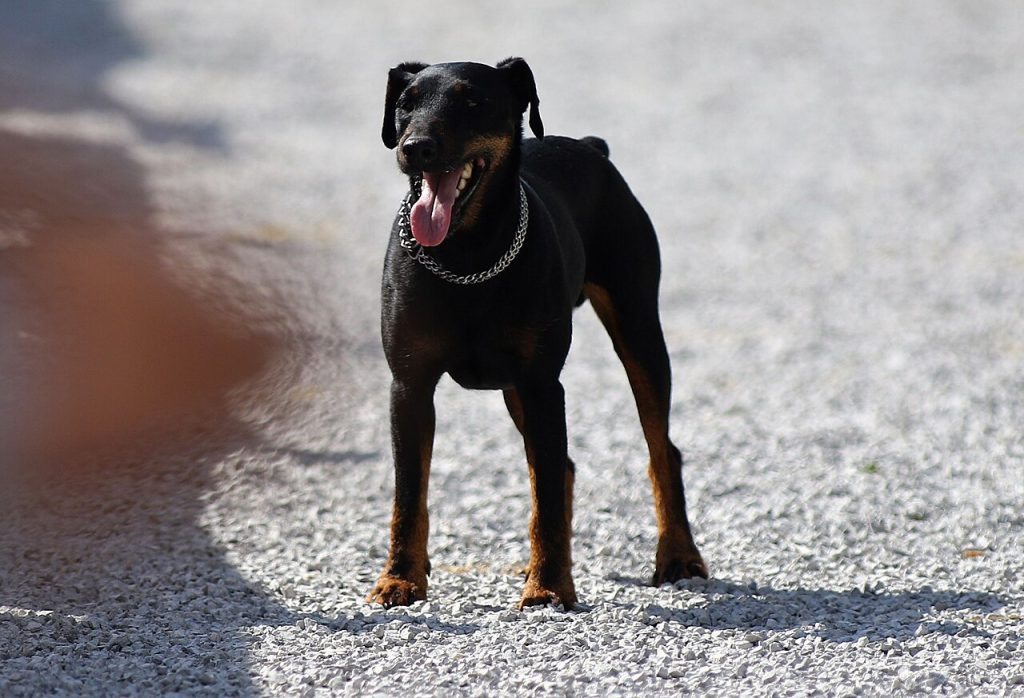
The Jagdterrier(or German hunting terrier) is a small, compact and extremely courageous working dog, bred in Germany to hunt underground and on the surface. Behind their modest size lies one of the most intense prey instincts in the canine world: A tireless hunter, brave to the point of recklessness and deeply attached to his master. It’s not a dog for everyone, but for anyone looking for a tenacious, hardworking field companion, the Jagdterrier is hard to beat.
Is the Jagdterrier for you?
The Jagdterrier is a fascinating, yet demanding dog. Before you get carried away by its waking terrier face, let’s be honest: this breed was bred to work and needs an owner who understands – and knows how to channel – that energy. Here’s an honest summary of its lights and shadows.

In favour .
- Brave, tenacious and absolutely tireless.
- Intelligent and highly capable of learning.
- Very loyal and devoted to his family.
- Handled size and sturdy and durable physique.
- A first-rate all-purpose hunting dog.
- A healthy, long-lived breed with few hereditary problems.
Against
- Very high prey instinct: dangerous with small animals.
- He needs a lot of physical and mental exercise.
- Stubborn and independent: not suitable for beginners.
- He tends to dig, bark and wreck if he’s bored.
- He can be dominant with other dogs.
- He’s not a couch dog or a small-floor dog.
In short, if you’re an active person with experience with dogs and access to the outdoors or activities that keep you busy, the Jagdterrier can be an extraordinary companion.
Character and temperament
The Jagdterrier’s temperament is a pure working terrier driven to the extreme. It was developed to be a versatile hunter, and that determination permeates everything it does. It is courageous, energetic, resilient and is endowed with an extremely intense prey instinct: a dog that knows no fear when chasing prey underground.
With its family, however, it shows another side. It is loyal, affectionate and forms very strong bonds with its owners. This mixture of toughness at work and affection at home is precisely what makes those who know the breed fall in love.
It’s a dog that needs a purpose. Without enough physical or mental work, that energy turns into frustration, and a Jagdterrier’s frustration is rarely silent: it results in barking, holes in the garden, and broken objects. Understanding this is the key to living well with it.
Coexistence: children, other pets, flat and loneliness

With children: with the children of his own family, with whom he has grown up, is usually playful and affectionate. Because of its intensity and energy, it is convenient to supervise games with the youngest and teach children to respect the dog.
With other pets:‘s predator instinct is so strong that coexistence with cats, rodents, rabbits or other small animals is problematic and, in many cases, inadvisable.
On the floor: is not its natural environment. It can adapt if you give it plenty of exercise, but fits much better in a house with a fenced and secure garden (remember that it is an expert excavator capable of escaping under a fence).
In the face of loneliness: the jagdterrier is not good at spending long hours alone it is a dog that wants to be with its people and participate prolonged periods of loneliness and boredom are the perfect recipe for destructive behaviors
Education and training
Training a Jagdterrier is an exercise in patience and consistency. It is a very intelligent dog that learns quickly, but its independent and stubborn nature makes it not obey “because it does”: it needs to understand that it is worth working with you.
Positive reinforcement works much better than harshness. Short, varied, and motivating sessions keep your attention, while monotonous repetition gets you bored right away. Early socialization – with people, other dogs, and different environments – is key to moderating its intensity and dominant tendency.
A Jagdterrier in the hands of an inexperienced or inconsistent owner can turn into a small whirlwind that is difficult to handle.
Exercise and activity
If there’s one thing that defines this breed, it’s their need for activity. The Jagdterrier was bred to work for hours chasing prey underground and beating the weeds, and that engine doesn’t shut down from living in a house.
Just as important as physical exercise is mental work. Tracking games, scent-searching, dog sports (agility, canicross, mantrailing) and activities that mimic their original function are ideal for channeling their instinct and keeping it balanced. A physically and mentally satisfied Jagdterrier is a quiet dog at home; a bored one is an inexhaustible source of trouble.
Care: fur and hygiene

The Jagdterrier’s coat can be either hard and rough, smooth or broken (included), always short and designed to repel water and dirt while keeping it warm in winter.
A weekly brushing is enough to remove dead hair and keep the coat healthy; in moult seasons it may be advisable to brush more frequently. Hard-haired specimens may require some punctual stripping to preserve texture, although in a hunting dog this is usually secondary. Bathrooms only when it’s really dirty, regular checkups of ears, teeth and nails, and little else: the hygiene of this breed is simple and practical, in line with its working dog character.
Foodstuffs
The Jagdterrier is a small but very active dog, with an energy expenditure that can be considerable if it works or exercises a lot. The basis should be a complete and balanced diet, adjusted to its age, weight, activity level and health status.
Although it is an athletic breed by nature, being overweight is detrimental to its joints and overall health.Always have fresh water available, especially after exercise, and consult your veterinarian about the amount and type of food most suitable for your animal.
Health and life expectancy
The Jagdterrier has a reputation for being a robust, resistant and long-lived breed. Its life expectancy is around 12 to 14 years, an excellent figure that reflects how healthy this working terrier is usually.
That said, no breed is risk-free, and veterinary checks should be kept up to date. Among hereditary conditions to watch for are certain eye problems, such as primary lens dislocation(primary lens luxation). Therefore, choosing responsible breeders who perform breeder health tests, along with proper exercise and proper nutrition, is the best way to enjoy a healthy dog for many years to come.
Physical appearance
The Jagdterrier is a small, compact and well-proportioned terrier with a decided air that betrays its character. According to the breed standard, it measures between 33 and 40 cm to the cross.
Its most characteristic color is the black and fire, with reddish-tone markings on the snout and lower body. The standard (UKC/FCI) also supports chocolate or liver brown coloured specimens. The mantle, short and functional, can be hard, smooth or broken. The tail has traditionally been cut to two thirds of its natural length, though not always and subject to each country’s legislation on amputations.
Origin and history
The history of the Jagdterrier is as unique as the breed itself. It was born in Germany in the interwar period, starting in the 1920s, at a time when German hunting managers were looking to develop national breeds of their own.
The starting point were four black and fire terriers (of the Fell Terrier type, related to what we would today call the Patterdale Terrier), provided by Lutz Heck to a group of cynologists and hunters – including Carl Eric Gruenewald and Walter Zangenbert. By crossing these individuals with working fox terriers already proven in hunting, and after a relentless selection over a decade, they managed to fix a terrier that bred “more or less pure”, similar in appearance to the Patterdale but with more fire in the lower part of the body.
The Deutscher Jagdterrier-Club(German Jagdterrier Club) was founded on 1926, and the breed quickly consolidated. Over the years it also came to the United States – Max Thiel imported specimens in the 1950s and in 1956 the Jagdterrier Club of America was founded in St. Louis (Missouri) – although there it never reached the popularity it has in Europe, in large part because in the U.S. The United States The fox is hardly hunted underground. Today, it remains, above all, a highly prized hunting dog for its versatility.
Curiosities
- A name that says it all:“Jagd” means “hunting” in German, so its name literally translates as “hunting terrier”.
- Extreme selection: at the peak of the breeding program, its creators managed to keep about 700 dogs in their breeding facilities, with very strict selection criteria.
- Cousins of the Patterdale: shares ancestry with the Fell Terrier and Patterdale Terrier, hence its resemblance to these British working terriers.
- All-terrain fighter: not only works underground with foxes, badgers and raccoons; it also picks up wild boars and rabbits from the brush and follows blood trails of injured animals, such as deer.
- Manto “impermeable”:‘s short, hard hair is designed to repel water and mud, essential for a dog that spends the day in burrows.
If you are interested in the Jagdterrier for its energy and hardworking nature, you may want to compare it with other equally determined and hardworking terrier breeds. Take a look at the Yorkshire Terrier, the fast and also origin terrier Dachshund(another great burrow hunter), the versatile and energetic Beagle or the brilliant and hardworking Border Collie, another dog that needs homework to be happy.
Frequently asked questions about the Jagdterrier
Is the Jagdterrier a good dog to live on the floor?
It can live on the floor only if you guarantee it plenty of daily exercise and mental stimulation, but it is not its ideal environment. It is a born hunter with a very high prey instinct and enormous energy; if it is bored or spends too much time alone, it tends to bark, dig and wreck. It fits much better with active owners, with access to a field or a secure, fenced garden.
Does the Jagdterrier get along with children and other pets?
With children of the family with which it has grown up it is usually affectionate and playful, although due to its intensity it is recommended to supervise the game with the smallest.
How long does a Jagdterrier live?
It is a robust and long-lived breed. Its life expectancy is around 12 to 14 years according to breed guidelines, provided it maintains a proper weight, regular exercise and periodic veterinary checkups.
Does the Jagdterrier need a lot of exercise?
Yes, very much. It was bred to hunt for hours underground and on the surface, so it needs intense physical exercise and, above all, mental work every day. Long walks, tracking games, dog sports and activities that channel its instincts are almost mandatory to have a balanced dog.
Is it difficult to train the Jagdterrier?
It is intelligent and quick to learn, but it is also independent, stubborn and very determined. It needs an owner with experience, consistency and positive reinforcement, as well as early socialization. It is not the most recommended breed for someone who has his first dog.
What color is the Jagdterrier’s coat?
The most typical color is black and fire, with reddish-tone markings on the snout and lower body. The standard also supports brown (chocolate or liver) specimens. The coat can be hard and rough, smooth or broken, and all varieties shed hair.
Is the Jagdterrier only for hunting?
It was designed as a multi-purpose hunting dog (fox, badger, wild boar, rabbit and blood trail), and that’s where it shines.
Where did the Jagdterrier come from?
It is a German breed developed in the interwar period, from the 1920s onwards. It was created from black and fire terriers (Fell Terrier type) crossed with working fox terriers, with the aim of fixing a robust and effective German hunting terrier.