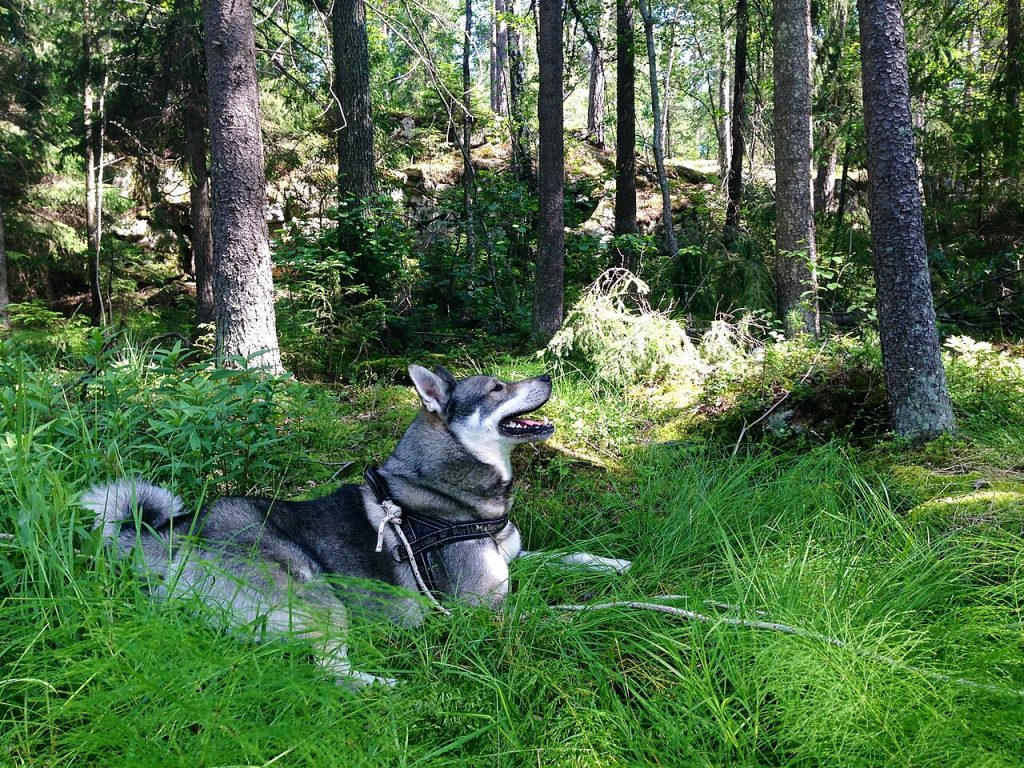
The Jämthund, also known as the Swedish Elkhound or Swedish Moose Dog, is one of the most imposing and functional spitz-type breeds in northern Europe. Originally from the province of Jämtland in central Sweden, he is a wolf-looking Nordic hunter, quiet with his family and of legendary resistance to cold and hard work. If you’re looking for a large, loyal, mountain dog, the Jämthund deserves to be well known.
Is the Jämthund for you?

The Jämthund is a wonderful dog, but very demanding in terms of lifestyle. It was bred to hunt moose and bear in the snowy forests of Scandinavia, and that past marks everything it needs today: space, exercise and an active owner. It’s not a breed for everyone. Before you fall in love with its wolf-like demeanor, honestly evaluate whether you can give it what it asks for.
In favour .
- Loyal, affectionate and balanced with his family.
- Very resistant and ideal for cold climates and outdoor life.
- Smart and eager to learn and please.
- Stable in character: not easily altered.
- Excellent companion for hiking, hunting and dog sports.
To be taken into account
- He needs a lot of daily exercise; he gets bored and becomes destructive if he doesn’t.
- Strong prey instinct: watch out for small animals.
- He can be dominant with other dogs without good socialization.
- It’s not the best choice for small apartments or very hot climates.
- Its double coat sheds a lot of hair and requires regular brushing.
Character and temperament
The Jämthund combines two facets that at first glance seem opposite: it is a tenacious and courageous hunter in the field and, at the same time, a calm and loving companion at home. With its family it is calm, affectionate and very loyal; it takes things calmly and is not easily disturbed, which makes it a stable and reliable dog both in the forest and near the house.
This serenity should not be confused with passivity. It has a strong character, self-confidence and a powerful prey instinct inherited from generations dedicated to big hunting. With other dogs it can be dominant if it has not been well socialized. It is, in short, a versatile and balanced dog: able to move from a hard day of hunting to the calm of the family sofa with great aplomb.
Coexistence: children, other pets, flat and loneliness

With the children in the family the Jämthund is usually patient and affectionate, especially if growing up with them.
Coexistence with other pets is its most delicate point. Its marked prey instinct allows cats, rabbits or other small animals to activate their hunting side. With other dogs, early socialization is advisable to avoid dominance problems.
As for the floor, it is not its natural habitat. A Jämthund can adapt to urban life only if it receives several long outings a day; otherwise it becomes frustrated. And as for the loneliness, it does not do well to spend many hours alone and locked up: it is bored and can become destructive.
Education and training
The Jämthund is a cheerful puppy who loves to please his owner, which makes his education much easier. He learns quickly and enjoys work, but retains the independence of a Nordic hunter, so he needs a consistent and patient guide.
Early socialization is essential to prevent problems of dominance with other dogs later on. It works better with positive reinforcement, varied and stimulating sessions, and consistency in rules, than with harsh methods. Activities such as tracking, obedience, or olfactory work channel its intelligence and energy, and strengthen the bond with its owner.
Exercise and activity
Like most breeds developed for hunting, the Jämthund requires a lot of regular exercise to stay in shape both physically and mentally.
Long walks, hiking on demanding terrain, running, tracking and dog sports are ideal for this breed. A tired and stimulated Jämthund is a calm and happy dog at home; a bored one, quite the opposite.
Care: fur and hygiene

The Jämthund wears a dense and resistant double coat that protects it from the extreme cold.
The bathroom should not be done too often, as excess dries the coat and deprives it of its natural ability to withstand the elements. Washing it only when it is really necessary is enough. It completes hygiene with periodic checking of ears, teeth and nails.
Foodstuffs
As it is a large, athletic and very active dog, the Jämthund needs a quality diet adjusted to its actual activity level. A working or exercising dog will have higher energy needs than one with a quieter life, and the ration must be adapted accordingly.
It is advisable to divide the food into several servings and monitor the weight so as not to overload its joints, something important in any large breed. Fresh water always available is essential, especially after intense exercise.
Health and life expectancy
The Jämthund is a rugged and generally robust breed, forged over centuries in the harsh conditions of northern Scandinavia.
As with any large dog, it is advisable to pay attention to the care of the joints, maintain a proper weight and follow the schedule of vaccinations and deworming.
Physical appearance
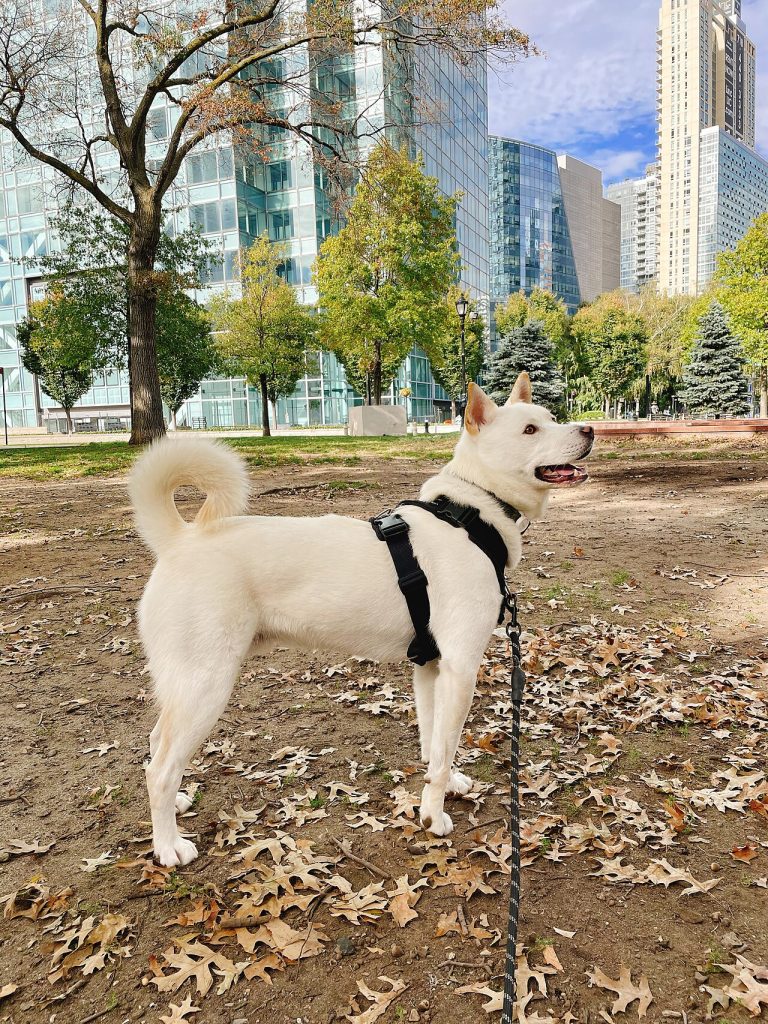
The Jämthund has a distinctly wolf-like appearance that impresses at first glance. It is a large dog, with a strong but elegant build. The males measure between 57 and 65 cm at the withers and weigh between 30 and 35 kg, while the females range between 52 and 60 cm and between 25 and 30 kg.
It has erect, well-separated ears, a medium to long snout, and attentive brown eyes. The tail is curled slightly over the back and, at rest, hangs straight; it should be neither too thin nor too tight. The coat is double, long and robust, in different shades of agouti (wolf grey), with white muzzle and cheeks and the typical wolf marks that distinguish it from the Norwegian Moose Hunter, shorter, compact and with dark mask.
Origin and history
The Jämthund is one of several hunting spits that have been known in Scandinavia for centuries. It is claimed that the locals of Jämtland have bred these dogs since the end of the last ice age, using them to hunt a wide variety of pieces – moose, bear, wolf and lynx – and also to drag sleds.
Despite this long tradition, official recognition as a breed did not come until 1946, thanks to the intense work of Aksel Lindström and others. Until then, the Jämthund and the Norwegian Moose Hunter were considered the same breed. Mitochondrial DNA studies place this breed within subclade d1, exclusive to northern Scandinavia and shared with other breeds of Sami origin, the result of an ancient cross between dog and wolf after domestication.
Curiosities
- Its name is an eponym of Jämtland, the Swedish province from which it comes.
- In his local dialect, he was known as “the bear dog” for his bravery in the face of big game.
- For centuries it was confused with the Norwegian Moose Hunter: they were not officially separate breeds until 1946.
- It belongs to the same genetic lineage (subclass d1) as Sami dogs, such as the Finnish Lapphund or the Lapland Shepherd.
- It is the unofficial national dog most associated with moose hunting in Sweden.
If you are attracted to the Jämthund for its Nordic character, its energy and its connection to hunting and the mountains, you may also be interested in other working and tracking breeds such as the tough Husky Siberiano, the sociable Samoyedo, the stylish Akita or the tracker par excellence Bloodhound.
Frequently asked questions about the Jämthund
Is the Jämthund a good family companion dog?
Yes, as long as the family is active and has space and time available. The Jämthund is calm, affectionate and very loyal to its owners, and fits well into homes where it can accompany its owners outdoors. It is not a dog for confined living or for sedentary owners: it needs plenty of daily exercise and mental stimulation.
How tall and how much does a Jämthund weigh?
The males measure between 57 and 65 cm at the withers and weigh between 30 and 35 kg. The females are somewhat smaller: between 52 and 60 cm and between 25 and 30 kg.
Does the Jämthund get along with other dogs and pets?
It is balanced with its family, but can be dominant with other dogs and has a very marked prey instinct, so it is advisable to socialize it from puppyhood.
How much exercise does the Jämthund need?
Many. Being a breed developed for hunting moose and bear, it requires a lot of daily physical and mental exercise. If kept indoors for too long it easily gets bored and can become destructive. Long walks, hiking, tracking or dog sports are very good for it.
Is the Jämthund easy to train?
It is an intelligent dog and a willing learner because it loves to please its owner, yet it has the character and independence of a Nordic hunter, so it responds better to positive reinforcement, consistency and early socialization than to harsh methods.
How long does a Jämthund live and what medical care does he need?
It is a rustic and generally healthy breed, bred for centuries in the harsh conditions of northern Scandinavia. Like all large dogs, it is advisable to monitor joints and weight, keep the veterinary calendar up to date and take care of its food.
Can the Jämthund live in a flat?
It can adapt to a flat only if its owners guarantee several long outings a day and a lot of activity, but it enjoys much more with access to outdoor space and cool climates.
How is the Jämthund different from the Norwegian Moose Hunter?
For a long time they were considered the same breed. The Jämthund is taller and stylized, with a snout, white cheeks and typical wolf marks, while the Norwegian Moose Hunter is shorter and compact, with a dark mask on the snout and a differently shaped tail.