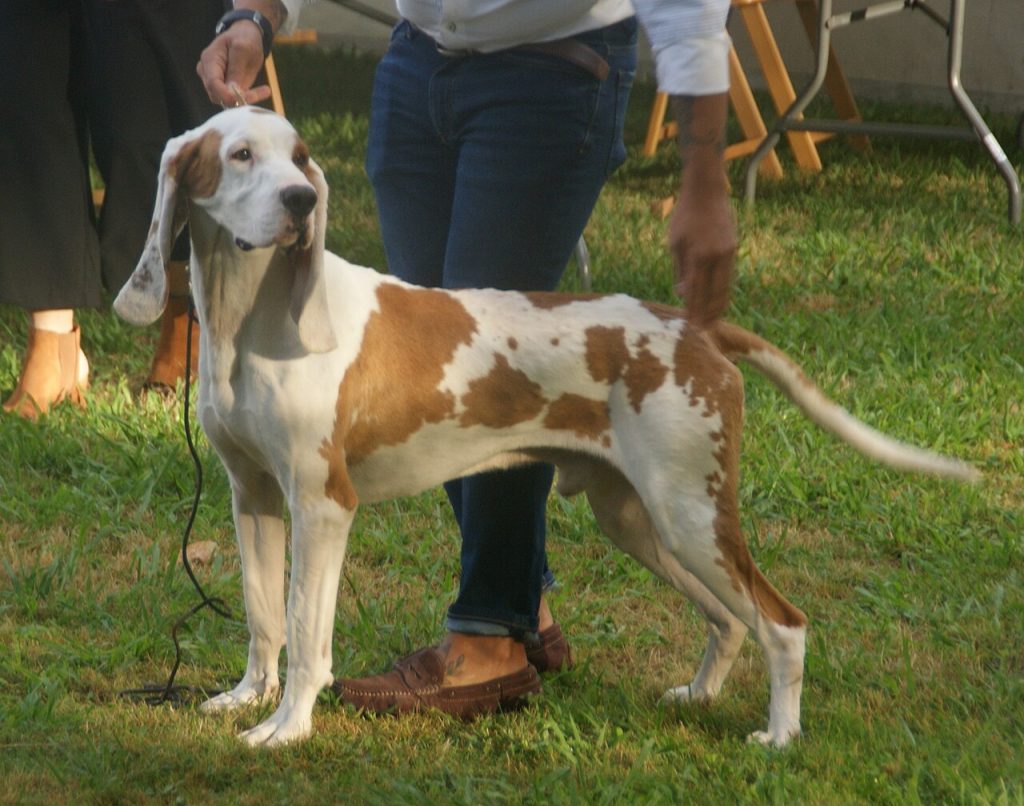
The Sabueso Español is one of the oldest and most genuine tracking dogs on the Iberian Peninsula: a tireless hunter from northern Spain, with a prodigious smell and thunderous voice, who hides behind his reputation as a dog “only for the countryside” a sweet, calm and surprisingly familiar character.

Is that the Spanish Hound for you?
The Spanish Hound is not a dog for everyone, and that must be said clearly. It is a distance runner with a tracking instinct almost impossible to extinguish, designed to work the field for hours. But whoever gives it what it needs discovers a noble, balanced and tremendously affectionate companion. These are its lights and shadows:
In favour .
- A sweet, quiet, loving character at home.
- Very patient and tolerant of children.
- A rustic breed, healthy and long-lived.
- Short hair with minimal maintenance.
- Exceptional sense of smell and tremendous physical endurance.
- Good with other dogs; less conflicted.
To be taken into account
- He needs a lot of daily exercise.
- A low, powerful voice he uses eagerly.
- Tracking and escaping instinct very strong.
- Independent: Obedience costs more.
- He’s not an ideal dog for the floor.
- Watch out for cats and small animals.
Character and temperament
There’s a lovely contradiction in the Spanish Hound. On the mountain is pure courage and determination: It endures a trail of hours, faces a wild boar without fear and does not rest until it has done its job. At home, however, he is a completely different dog. Her gaze, traditionally described as “sweet, sad and noble”, well reflects her true depth: A gentle, serene and deeply affectionate animal with his own.
His most defining personality trait is the independence. It was selected for centuries to hunt alone or, at most, in the company of one or two other hounds, not in large packs. That turned him into a dog who thinks for himself, who makes decisions on a trail without waiting for constant orders. He is not a submissive or clingy dog; he is a cooperator with his own standards, and we must respect that way of being rather than try to turn him into something he is not.
Despite its reputation, the Hound is not a nervous or aggressive dog. It is calm, balanced, and gentle. Its bad reputation as a companion dog is simply a misunderstanding: those who know it closely discover a gentle animal that fits wonderfully into an active family.

Coexistence: children, other pets, flat and loneliness
With the children the Spanish Hound is usually an excellent companion. Its patient nature, its gentle treatment and its tolerance make it very suitable for households with small children, always with the supervision and mutual respect that any dog requires.
He gets along well with other dogs; he is used to working in the company of other hounds, so canine sociability takes him seriously. Things change with cats and small animals: Their tracking and chasing instinct is among the most powerful in the canine world, and a quick movement or an interesting smell can activate it in seconds. It is possible to live with cats if you have been raised with them since you were a puppy.
As for the floor, it’s not their natural habitat. It is a medium-sized dog, very active and with a considerable growl, factors not compatible with life in a block. It can adapt if guaranteed plenty of exercise and outings, but it really shines in a country house. As for the loneliness, it tolerates loneliness better than many breeds thanks to its independence, although a bored and physically inexpensive Hound will seek entertainment on its own, and its idea of fun rarely matches ours.
Education and training
Educating a Spanish Hound is an exercise in patience and consistency. It is an intelligent dog, but its independence makes it unable to respond to commands with the promptness of a shepherd or a retriever. It is not stubbornness: it was bred to make its own decisions, and that mentality sneaks into training.
The key is in a firm but gentle handling, based on positive reinforcement. Rewards, perseverance, short sessions and lots of olfactory motivation work infinitely better than toughness, which only gets the dog on a leash. It is advisable to work from puppy called(the pending subject of almost all hounds, due to their tendency to jump after a trail) and early socializing with people, environments and other animals.
An important detail for those who also want him as a hunting dog: you have to teach him to work only the trail of the species that interests him, because naturally he will follow any smell that he finds appetizing.
Exercise and activity
Here is the critical point of the breed. The Spanish Hound is a endurance athlete designed to chase prey for hours; it is not uncommon for single dog chases to exceed four or five hours.
A 20-minute toilet ride won’t do you any good. You need at least one to two hours a day of real activity: Long walks, controlled racing and, most of all, olfactory work. Letting him track, seek out hidden prizes, or explore new terrain is more mentally and physically exhausting than miles of asphalt. A Hound that exercises and uses its nose is a placid dog on the couch; one that doesn’t expend energy becomes a problem.
Watch out for releasing it into open areas without a very well-crafted call: as soon as it catches an interesting trail, it can disconnect from the world and go after it without looking back.
Care: fur and hygiene
In terms of maintenance, the Spanish Hound is most grateful. Its hair is short, thin, smooth and sticky to the body, without apparatus undercoat, so with a weekly brushing is enough to remove the dead hair and keep the coat clean and shiny. The baths, only when really needed.
The main focus is on the ears. They are long, ringing and falling, which reduces the ventilation of the ear canal and favors the accumulation of moisture and dirt, especially if the dog is working in the field. They should be checked and cleaned regularly to prevent otitis and infections. Complete the routine by cutting your nails when you need to, dental hygiene and a check on the pads after hikes.
Foodstuffs
Since it is a working, active and resistant dog, the Spanish Hound needs a quality food appropriate to their level of activity. A specimen that goes out to hunt or does a lot of exercise will have energy needs much higher than those of a calmer dog, and the ration must be adapted to this to avoid both thinness and overweight.
As a general rule, it is advisable to divide food into two daily servings, choose a feed or diet with a good proportion of animal protein, and monitor body condition: In such an athletic dog, excess weight takes its toll on the joints. After days of intense exercise, it is important to ensure good hydration and not to feed just before or just after intense physical activity.
Health and life expectancy
One of the great virtues of the Spanish Hound is its rusticity. Being a working breed forged by functionality and without morphological exaggerations, it is a robust and healthy dog, with a life expectancy that is usually around the 12 to 14 years.
It doesn’t drag along the long list of hereditary problems of other more aesthetically manipulated races. The most relevant healthcare is common sense: checking and cleaning the ears frequently for their fallen shape, keeping up-to-date with deworming (internal and external, especially in a dog that treads mountains), monitoring pads and fitness after exercise, and keeping vaccinations up-to-date. As with any active, medium-sized breed, caring for joints is vital throughout life.

Physical appearance
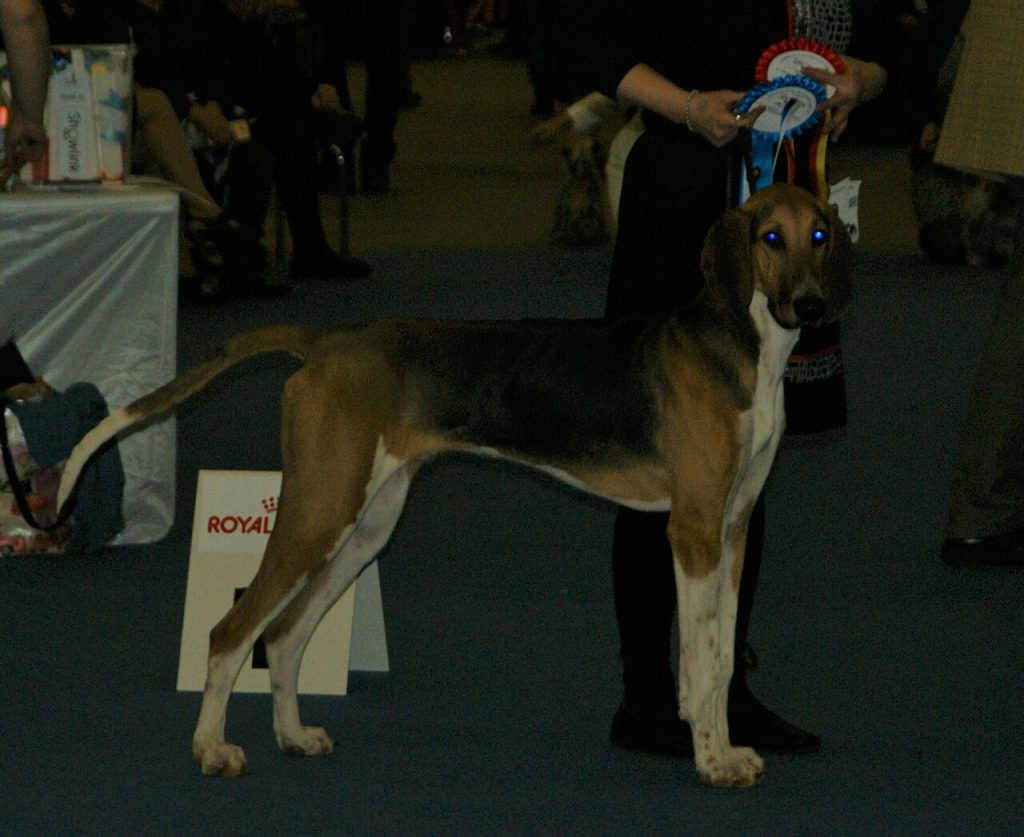
The Spanish Hound is a medium size, eumetric and longitudinal dog: its body is clearly longer than it is tall, with a longitudinal diameter that easily exceeds the height of the cross. It stands out for a very wide chest perimeter, with rounded ribs, a compact skeleton and strong limbs that give it that image of a dog not very tall but tremendously rustic and resistant.
Its head is beautiful and harmonious, crowned by very long, thin, bell-shaped ears s that, stretched, overcome the tip of the nose and usually curl slightly on themselves.
The coat is short, thin, smooth and shiny. It has two colors, white and red, either alone or combined, without spots. The red can range from a very light lemon tone to a reddish brown. Both black and flesh-colored noses and nails are allowed. The breed shows a marked sexual dimorphism: males measure between 52 and 57 cm at the withers and females between 48 and 53 cm.
Origin and history
Few breeds can boast such a well-documented history. The Spanish Hound is a tracking dog originating from the northernmost tip of the Iberian Peninsula, and its ancestors appear already described in the The Book of Monterey of Alfonso XI, King of Castile, written in the second half of the 14th century.
Then the Iberian hounds parade through the great Spanish hunting treaties of the 15th, 16th, and 17th centuries. For centuries they were mainly employed in the bear and wild boar big-game hunting, in the riding mode, and as bloodhounds to track wounded pieces by the ballplayers. With the widespread use of firearms and the decline of big game, their use drifted toward smaller game, especially the “backward” hare.
The breed was standardized and officially unified in 1982. Before there were two subtypes, the mountain hound and the hare hound, which finally merged into one. Today it is framed in the Group VI of the FCI(hound type dogs, trail and similar breeds).
Curiosities
- A vocabulary of your own. In northern Spain, the barking of the hound during hunting is called “beating” or “beating”, and the act of barking while following a trail, “beating” or “beating”.
- It hunts by trail. Its most genuine modality consists of following the trail of the boar attached to a leash, guiding the monter to the place where the piece sleeps during the day.
- Father of another race. The Spanish Hound was involved in the creation of the Astur-Cantabrian Griffin, the most common type of griffin in the northern hunting of the peninsula.
- The cold nose. is a “cold-nosed” tracking dog, capable of taking tracks many hours old, something that distinguishes it from faster but less tenacious hounds.
- A vulnerable race. Despite its history, it is among the Spanish breeds that the Royal Canine Society of Spain considers vulnerable, and in the northern protectorates many hounds are waiting for adoption because of the myth that they do not serve as a family dog.
If you are attracted to the Spanish Hound’s noble, hardworking temperament, you may want to learn about other trail and companion breeds with which it shares character or abilities. We recommend checking out the Bloodhound, the undisputed king of sniffing; the unmistakable Basset Hound, another dog with short legs and long ears; the inexhaustible Beagle, a small dog with a portentous nose; and the versatile Cocker Spaniel, another hunting classic with a familiar soul.
Frequently Asked Questions About the Spanish Hound
Is the Spanish Hound a good companion dog?
Yes, even if it carries an unfair reputation. It is a calm, sweet and very affectionate dog at home, which coexists wonderfully with an active and spacious family. The problem is not their character, but their tracking instinct and their need for exercise: If you let those two things out, you’re a balanced, gentle companion. In shelters in northern Spain there are many Hounds waiting for adoption precisely because of the myth that they are not good as a house dog, and it is a myth.
How much exercise does a Spanish Hound need a day?
Pretty much. It’s a working dog bred to follow tracks for hours, so a couple of short laps isn’t enough. Ideally, at least one or two hours a day of activity, combining long walks, sniffing and, if possible, controlled jogging. A hound that spends energy is a quiet hound at home; one that gets bored will find a way to entertain itself.
Can the Spanish Hound live on one floor?
It is not an ideal environment. It is a medium-sized dog, very active and with a powerful voice that uses eagerly, something that in a neighborhood block can cause problems. It can adapt to a floor if given a lot of daily exercise and outings to the countryside, but it is much better in a house with land in a rural or semi-rural environment.
Does the Spanish Hound bark a lot?
Its voice is one of its hallmarks. In the countryside, when following a trail, it emits a deep, sonorous barking that in the north is called “beat” or “beating”, and that modulates according to the phase of the hunt. At home it is not a particularly barking dog if it is well exercised, but it is worth knowing that it has a powerful howl and tends to use it when it is excited or detects something interesting.
Do you get along with children and other dogs?
With children it is usually excellent: patient, tolerant and gentle. With other dogs it also gets along well, since it is used to working in the company of one or two hounds. With cats and small animals you have to be careful because of its very strong tracking and chasing instinct; coexistence is possible with early socialization, but requires supervision.
Is it hard to train the Spanish Hound?
It requires patience. It’s intelligent but very independent, because it was selected to work alone or almost alone, making its own decisions on a trail. That means it’s not as “default obedient” as a shepherd. With positive reinforcement, consistency and firm but gentle handling it learns well; with harshness or incoherence it closes in on the band.
How long does a Spanish Hound live?
As it is a rustic and hardworking breed, with no morphological exaggerations, it usually enjoys a long and healthy life, around 12-14 years.
Does the Spanish Hound lose a lot of hair?
Not too much. Her hair is short, fine, smooth and attached to her body, very easy to maintain. With a weekly brushing, it is enough to remove the dead hair and keep the mantle shiny. What is worth checking often are the ears, for their bell-shaped and fallen, to prevent infections.