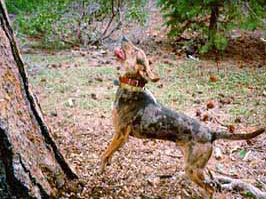
The Sabueso Leopardo Americano(originally known as American Leopard Hound and formerly as Leopard Cur) is one of the oldest and most genuine tracking hunting dogs in the United States. Recognized by the United Kennel Club as a hound and admitted to the Foundation Stock Service of the American Kennel Club, it stands out for its characteristic speckled “leopard” coat, its indefatigable smell and an unusual skill: It tracks for miles and then corners the prey by climbing it into a tree. It’s a purebred working dog, intelligent and devoted to its family, designed for active people who can give it a purpose.
Is the American Leopard Hound for you?
Before you fall in love with his stained cloak, be honest: The American Leopard Hound is first and foremost a hunting dog. Your mental balance depends on having work, exercise and a close bond with your people. In the right home it’s a loyal, loving and surprisingly protective companion; in the inappropriate, a frustrated animal that barks, digs, and will follow a trail without looking back. This quick chart will help you position yourself.
It suits you if…
- You live in the countryside or do hiking, hunting, canicross or dog sports often.
- You’re looking for a dog that’s smart, brave and very close to the family.
- You can offer him ground, mental stimulation and a serious daily exercise routine.
- You like all-purpose dogs: tracker, attentive guard and companion.
- You value a short coat and easy maintenance.
Think about it if…
- You live in a small apartment with no easy access to open spaces.
- You spend a lot of hours outside and the dog would be alone every day.
- You don’t want to deal with a strong sense of smell and prey instinct.
- You’re looking for a quiet saloon dog or a low-energy one.
- It’s your first dog and you don’t have time for constant education and socializing.
Character and temperament
If anything defines the American Leopard Hound it is its intelligence. Breeders and registries that work the breed point it out as one of its greatest attributes: it learns quickly, solves problems in the mountains and reads its guide very well.
It’s a insured and worker dog, with enough courage to face large prey and the determination to follow a trail for miles. That same firmness makes him somewhat reserved with strangers and attentive to what is happening around him: It warns with its powerful and characteristic bark, which gives it added value as an alarm dog. It is not a free-spirited, aggressive animal; it is focused, intense when there is a goal, and gentle when resting with its own. It is worth remembering that behind such a docile character is a hunter: Their drive to chase and shoot doesn’t go out because they live at home.
Coexistence: children, other pets, flat and loneliness
With children. The American Leopard Hound is usually excellent with the little ones in the house, whom it protects with devotion.
With other dogs. is a breed used to hunting in packs, so it tends to get along well with other dogs if it has been socialized since puppyhood.
With cats and small animals. Here you have to be careful. Its very strong prey instinct makes it chase what moves; coexistence with cats or other small pets is possible if they grow together, but it requires careful introductions and should never be taken for granted.
On the floor and alone. is not a dog designed for an apartment or for long days in solitude. It needs space, outings and company; a bored Leopard Hound turns to barking, digging or looking for a way to escape to follow a smell. With enough exercise and a good bond it tolerates lonely mice, but prolonged isolation makes it feel frankly bad.
Education and training
Its intelligence is a double-edged sword: it learns easily, but it also gets bored if the sessions are repetitive or meaningless. It works best with in positive, varied and motivating training, supported by food, play and plenty of social reinforcement. It is a dog that wants to please its guide when it trusts him.
The two priorities are early socialization– people, dogs, noises, environments – and serious work on calling and self-control. Its nose and chase impulse can take it away as soon as it catches an interesting trail, so obedience at a distance, use of a good start and fenced environments to release it are non-negotiable until there is a solid response. It rewards her natural side: tracking, searching and smelling games are the best “task” for channeling what’s in your blood.
Exercise and activity
The American Leopard Hound was bred to work in rough terrain for hours, so its exercise demand is high. A couple of short walks are not enough: it needs running, exploration and, above all, mental stimulation.
- Hunting and tracking, his natural activity, where he gives his best.
- Hiking and mantrailing or sports tracking tests.
- Canicross, bikejoring and other low intensity shooting sports.
- Smell games and search home or backyard for days of low activity.
A dog that gets the physical and mental exercise it needs is a quiet dog at home, and without that exhaust valve, all that energy turns into behavioral problems.
Care: fur and hygiene
Here comes the good news for those looking for a low-maintenance dog: your hair is short and dense, so weekly brushing is more than enough to remove dead hair and keep the skin healthy.
The rest is basic and constant hygiene: check and clean the drooping ears regularly (hanging ones ventilate worse and it is advisable to monitor them, especially after going out in the field), cut the toenails when needed, brush the teeth and the bathrooms only when really needed. After each day of hunting, a quick inspection for ticks, spikes and small wounds is the best preventive routine.
Foodstuffs
As a medium- to large-sized working dog, the American Leopard Hound needs a quality diet and well adjusted to your expense. A specimen that goes out hunting or training for several hours burns much more energy than one that lives a less active season, and the ration must follow that pace to avoid both thinness and overweight.
The reasonable guidelines are those of any sporting dog: distribute food in two doses a day instead of one, do not exercise vigorously just before or after eating (deep-breasted dogs should be monitored for the risk of gastric torsion), always ensure fresh water and monitor body condition with hand over ribs. When in doubt about the quantities, type of feed or diet for a very active dog, it is wise to consult your veterinarian.
Health and life expectancy
The American Leopard Hound is a rustic and functional breed, bred over generations for its ability to work more than for aesthetics.
Being a small breed and of recent development as a registered standard, there is no huge veterinary literature that does accompany more popular breeds. That does not exempt us from caution: As with any dog, it is advisable to keep the veterinary checks, deworming and vaccines up to date, take care of the dropped ears and, in specimens with merle coat, be aware that crosses between two merle dogs can be associated with hearing and vision problems in the offspring – one more reason to always go to responsible breeders who know the genetics of the color. Monitoring weight, teeth and joints throughout life completes the basic care picture.
Physical appearance
The American Leopard Hound is a athletic, balanced and robust in appearance dog, built to move with agility over uneven terrain. It measures approximately between 53 and 68 cm to the cross and weighs between 15 and 35 kg, with notable variation between lines and sexes.
His trademark is the coat: short and dense hair that has the characteristic pattern “leopard” or mottled (merle), although the breed also supports layers in red, blue, tan, black and other shades; the white, when it appears, occupies less than a third of the body. The ears are sloping and medium length, and the eyes can be a striking yellow, brown, or blue, sometimes with heterochromia in merle specimens. The set conveys what it is: A functional hunter, without exaggeration, built to last a full day in the mountains.
Origin and history
The story of the American Leopard Hound goes back to the early days of the New World. It is believed to be descended from dogs brought to Mexico by the spanish conquerors, which eventually made their way to the United States with the help of settlers. There they gained their place as versatile hunting dogs, especially for the bear and other larger prey, at a time when a good tracking dog was a survival tool.
It is, in fact, one of the oldest tree dog breeds in the United States, with a long working tradition before any official recognition. That recognition came late: The United Kennel Club admitted it in 1998 under the name Leopard Cur, designation that in 2008 changed to American Leopard Hound to better reflect its hound nature. Since 2012 is also in the Foundation Stock Service of the American Kennel Club, the preliminary step to an eventual full recognition. It’s not recognized by the FCI. Despite its historical pedigree, it remains a rare breed outside of American hunting circles.
Curiosities
- Master of the tree house. not only tracks: it chases its prey and forces it to climb a tree, barking incessantly to warn the hunter where it is, hence its classification as a tree dog.
- It tracks for miles.‘s ability to follow a scent over great distances is legendary among those who work with it.
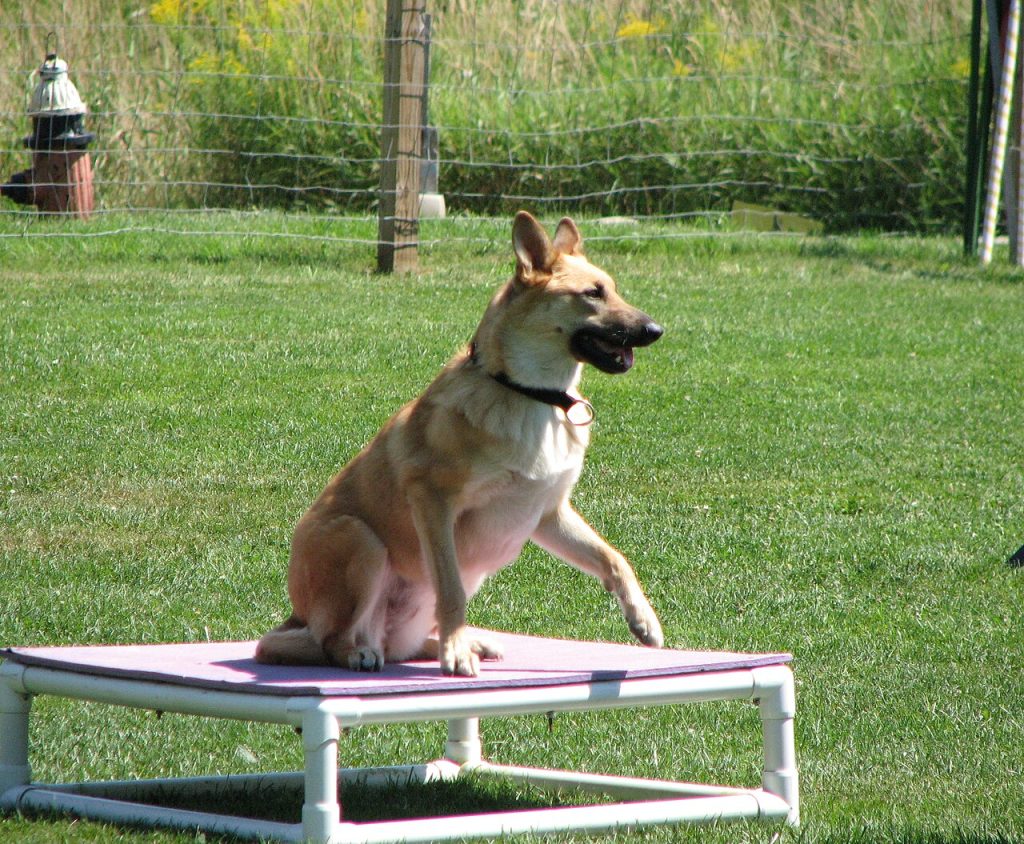
- It’s not the Catahoula. shares the moniker “leopard” and mottled coat with the Catahoula Leopard Dog, but they are distinct breeds with separate histories; it is a common mistake to confuse them.
- He changed his name. switched from “Leopard Cur” to “American Leopard Hound” in 2008, a nod to its true hound identity.
- Colorful eyes. Blues and even heterochromia (one eye of each color) are relatively common in merle specimens.
If you are attracted to this American Hound for its hardworking nature and scent, you may want to compare its profile with that of other large trackers and hunting dogs before deciding. Check out the Bloodhound, the quintessential tracker; the inexhaustible Beagle, the small-scale scent hound; the unmistakable Basset Hound; or the versatile Weimaraner if you’re looking for another versatile, high-energy hunting dog.
Frequently Asked Questions About the American Leopard Hound
Is the American Leopard Hound the same as the Catahoula Leopard Dog?
Although both share the mottled “leopard” coat and are often confused, they are different breeds, with their own origins and histories.
How long does an American Leopard Hound live?
Its life expectancy is usually between 12 and 15 years, and it is a rugged and functional breed; keeping up-to-date with veterinary checkups, proper weight and exercise helps it reach that range in good shape.
Is he a good family dog?
Yes, in the right home. It is affectionate and very attached to its people, and stands out for how protective it is with the children in the house. It needs, of course, plenty of exercise, socialization and companionship; it is not a dog to live isolated or with little activity.
Does he adapt to living in a flat?
It’s not the ideal environment for it. It’s a field dog, energetic and with a powerful bark, which needs space and frequent outings. It can live in the city if it’s guaranteed plenty of daily exercise and mental stimulation, but it performs much better with access to open ground.
Do you get along with cats and other pets?
With other dogs it usually coexists well, as it is a breed used to working in packs. With cats and small animals you have to be careful: its prey instinct is very strong. Coexistence is possible if they grow together and with well-made presentations, but it should never be taken for granted.
How much exercise do you need?
He’s a long-distance runner bred to work long hours in the mountains, so he needs intense daily exercise combined with mental stimulation – hiking, tracking, dog sports or sniffing games.
Is it hard to train?
It’s very intelligent and it learns fast, which makes it easy to train, but its independence and its sense of smell demand consistency. It works best with positive methods, varied sessions and good calling work and self-control, because an interesting trail can make it disconnect from its guide.
Do you need a lot of hair care?
No, their short, dense coat is maintained with weekly brushing and occasional bathing. Most important is regular checking of their droopy ears, especially after going out in the field, in addition to basic nail and tooth hygiene.