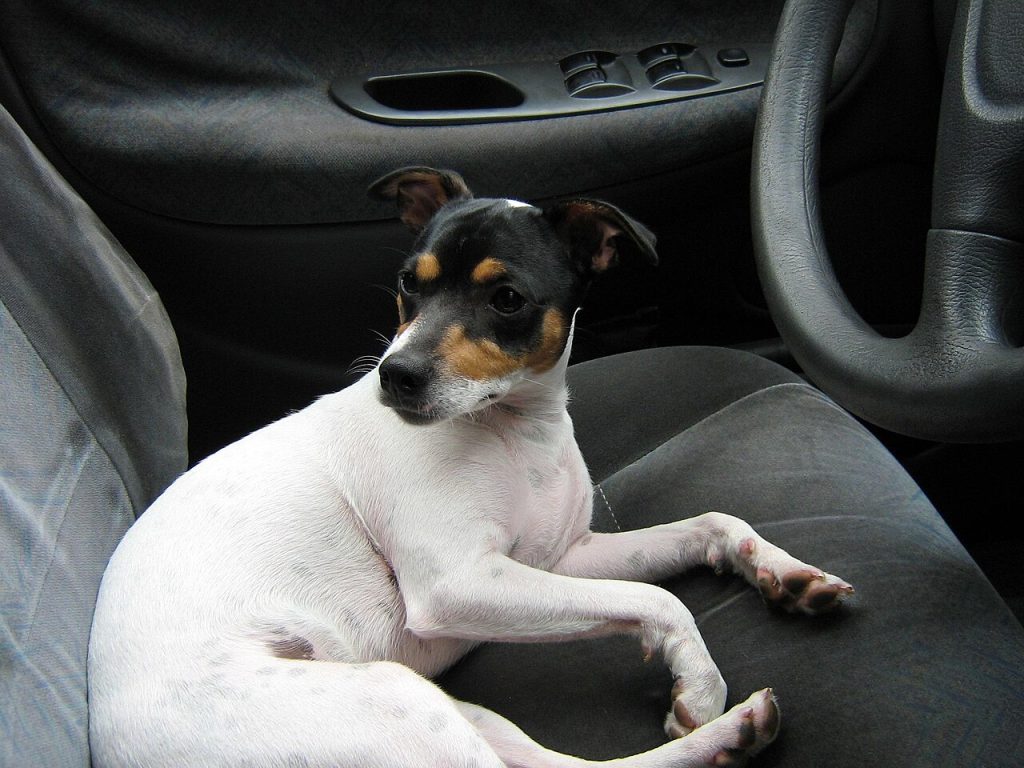
The Terrier Chileno is the first purebred dog born in Chile: A small, white terrier with a black head and fire, alert, brave and deeply attached to his people. Hiding beneath his pocket-sized fox terrier air is a tireless mouse hunter and, at the same time, a kissing buddy. In this guide you will find everything you need to know about the Chilean Terrier before sharing your life with one: character, coexistence, education, care, health and its unique history, the only genuinely Chilean dog breed.
Is the Chilean Terrier for you?
The Chilean Terrier is a large, small-bodied dog that fits in well with families and active people who want a cheerful, mousy and very affectionate companion, but it is advisable to know its two faces before deciding.
In favour .
- The Practical size: is small and lightweight, suitable for both the field and the floor.
- Very affectionate: attached and “beak”, a faithful companion for the whole family.
- Rustic and healthy: breed bred for life hard, tough and hairy very easy to maintain.
- Wake up and good warning: is smart, alert, alerts you to anything new.
- Energetic and playful: is ideal for active people, children and long gaming sessions.
- Born hunter: first-rate rodent control in rural environments.
To be taken into account
- Lots of energy: needs daily physical and mental expenditure or it gets bored.
- Tendency to bark: inherited from the fox terrier; it needs to be trained.
- Strong hunting instinct: eye with rodents, rabbits, cats and leeches.
- Skin and subcutaneous tissue prone to allergies and dermatological problems.
- Very rare breed outside of Chile: breeders are scarce and still without FCI recognition.
- He doesn’t like solitude. so attached that he suffers if he spends too many hours alone.
Character and temperament

The standard describes the Chilean Terrier with four words that depict its entire body: active, docile, alert and very energetic. To these we must add a fifth that is repeated by all who live with the breed: kissing.
His temperament is the result of two very different heritages. From its English ancestors – the smooth-haired fox terrier – it inherited the restless character, the sparkle, and the ease of barking. He inherited balance, courage, loyalty, and a curious “sense of duty” from the local dogs that were crossed with them in the Chilean hinterlands. The cocktail gives a lively but sensible dog, brave without being reckless and devoted to his own to the bone.
It is also an extremely alert animal: nothing escapes it: it detects visitors, noises and movements before anyone else, which makes it an excellent alarm dog despite its small size. This same liveliness requires stimulation in return: a bored Chilean Terrier will seek entertainment on its own, and will rarely be silent.
Coexistence: children, other pets, flat and loneliness
As a family companion, the Chilean Terrier fulfills abundantly. Its attachment and playful character make it a good with children dog, as long as they learn to respect their rest times. It is resistant and energetic, so it endures the game well, but being small it is advisable to supervise the smallest to avoid falls or scares.
other dogs usually gets along well if it has been socialized. The delicate point are small animals: its raticidal instinct is very alive and can throw itself after rodents, rabbits and even cats.
As for the housing, it’s a chameleon breed. It was born in the hinterlands of south-central Chile, but at the end of the 19th century it moved with its owners to the urban cités and adapted without problems to the city. For its size it lives perfectly on the floor, provided it goes out daily and burns energy. The worst thing he wears is the loneliness: is so dependent on his family that long hours alone can lead to anxiety and undesirable behaviors.
Education and training
The Chilean Terrier is intelligent and wants to please, a combination that makes training easy… as long as it’s done right. As a good terrier, he has character and is bored with repetition, so positive reinforcement – rewards, play, cheerful voice – works much better than imposition. Short, varied and fun sessions give the best results.
The first is early socialization: exposing him as a puppy to people, dogs, noise and different environments softens his alert tendency and prevents reactivity. The second is control of barking: it is advisable to teach him early a command to “enough” and, above all, to ensure him sufficient activity, because a large part of the barking is born of boredom.
Their hunting instinct also requires specific work. Strengthening the call (coming when called) and practicing in safe areas prevents scares when a cat or rodent appears. Channelled with games of smell and prey, that same instinct becomes a great motivational tool.
Exercise and activity
Don’t be fooled by its size: the Chilean Terrier is a very energetic dog that needs to burn out every day. A couple of long walks, playtimes and, if possible, running and exploring in open spaces keep it happy and balanced.
Smell games, interactive toys, small obedience challenges, or hiding prizes at home tire a terrier just as much as a walk. A well-exercised body and head Chilean Terrier is a quiet dog at home; a bored one will find its own amusement, usually barking or digging.
Care: fur and hygiene

If there is something simple about this breed, it is the maintenance of the hair. The Chilean Terrier wears a short, smooth, tight and shiny coat, with a coat of undercoat. A weekly brushing is enough to remove the dead hair and distribute the natural fat that gives it shine.
Bathrooms should be the fair ones. Since your skin is your weak point, you should not abuse aggressive shampoos and shampoos, which can dry out your skin and cause irritation; soft products are best and only when it is really dirty. The rest of the hygiene is routine: check and clean the ears (high-inserted and semi-inserted), cut the nails – remember that the standard says not to remove the spurs – and take care of dental hygiene to keep that scissor bite in good health.
Foodstuffs
The Chilean Terrier has no special dietary requirements beyond those of a small, active and rustic dog. A complete and quality diet, adjusted to its age, weight (between 5 and 8 kg depending on sex) and activity level, covers its needs without problems.
The quantity should be monitored to avoid overweight, which in a breed with thin bones and small joints takes its toll. Because of their tendency to develop skin problems, many homeowners opt for diets that promote skin health – with good omega fatty acids – and keep an eye out for food allergies. If you have any dietary concerns, especially if you experience itching or digestive problems, it is best to consult your veterinarian.
Health and life expectancy
The Chilean Terrier is, as a whole, a rustic and resistant dog, the result of generations bred for a hard and useful life. That doesn’t mean I’m trouble free. His Achilles heel is the skin. It is one of the most pathologically concentrated organs in the breed, with conditions ranging from simple allergies to immune-mediated diseases; its white coat and its own terrier condition are thought to influence that skin sensitivity.
Beyond the skin, disorders of the lens(eye problems), dislocation of the shoulder and legg-Calvé-Perthes disease, also known as Legg-Calvé-Perthes, a degeneration of the head of the femur common in small breeds, are described as relatively common problems.
As a reference, small, rustic terriers of their size usually enjoy long lives, in the environment of 12 to 15 years, provided that their weight, their skin and their activity are taken care of.
Physical appearance
The Chilean Terrier is a well-balanced compact and small to medium size dog, with an elegant and firm appearance without being heavy. The males measure from 32 to 38 cm at the cross (35 cm is ideal) and weigh between 6 and 8 kg; the females, somewhat more collected, measure from 28 to 35 cm (ideal 32 cm) and weigh from 5 to 7 kg. The body of the male tends to be almost square, while in the female something longer is admitted.
Its most distinctive feature is the colour. The white predominates and covers virtually the entire body, neck and tail, while the head and ears look black and fire (or chocolate and fire), with the fire distributed symmetrically over the eyes, cheeks and inside the ears. There is also a two-color variety, only black or only fire. The hair is short, smooth, tight and shiny.
The head, seen from above, resembles a pear or a triangle: wide at the base and tapering towards the truffle. The ears s, small, triangular and high-inserted, stay semi-dived and fall forward at the tip, forming that recognizable “V”. The eyes s are small, almond-shaped and dark. The tail is usually short – cut in the second vertebra – and it is not uncommon for some specimens to be born directly without a tail (anulus). It moves gracefully, with short steps, high head and firm back.
Origin and history
To tell the story of the Chilean Terrier is to go through the history of Chile since the 18th century. It all begins, however, far from there: in the province of Cádiz, in Spain, where in the late 18th and early 19th centuries English wine merchants introduced their fox terrier with smooth hair. Crossbred with the dogs that cleaned the cellars and blocks of rats, they gave rise to the Ratonero Bodeguero Andaluz, direct ancestor of our protagonist.
These dogs arrived in America in the ships of Spanish sailors during the 18th and 19th centuries. In the south central Chilean foothills the breed took on its own form, acclimating to a rustic life, often of horseback riding.
Since there were few of them, the Chilean Terrier was initially associated with the high society of the time. But in the late 19th century, the Industrial Revolution pushed many peasants into the cities, and with them came the dog. In the urban cities he proved to be a formidable rat killer, and for much of the 20th century he was identified with the country’s working class. Despite little interest from cannibals at the time, the breed survived and became popular.
The official recognition came late. Since 2007, the Chilean National Terrier Club resumed standardization work, and the 2 July 2020 was published as the breed standard with a clear goal: making the Chilean Terrier the first dog originating in Chile recognized by the FCI. Today it is supported by the Kennel Club of Chile (Group 11) and, since 2011, Alianz Canine Worldwide (Group 3), pending definitive international recognition.
Curiosities
- The first Chilean dog: is the first – and so far only – canine breed genuinely native to Chile.
- A comic book star: owes much of its fame to Condorito, the mythical Chilean strip: the faithful Washington dog that accompanies the protagonist is a Chilean Terrier.
- From upper class to working class: started out associated with the elite because of its rarity and ended up being the town dog in 20th century urban cities.
- Andalusian roots: its ancestor, the Andalusian Bodeguero Mouse, was born in the wineries of Cádiz from the crossing of English fox terriers with local raticid dogs.
- Dogs without a tail at birth: some specimens are born already anus, without a tail, a trait accepted by the standard.
- It’s also called the “Chilean Fox Terrier”: a nod to its English origins that is still popularly used today.
If you are attracted to the Chilean Terrier because of its manageable size, energy, and mouse instinct, you may also be interested in other small, alert, strong-willed breeds. Check out the Yorkshire Terrier, another quick and brave terrier; the Dachshund, a tenacious, small-bodied hunter; the ever-lively Chihuahua; or the cheerful, snooty Beagle if you’re looking for a tracking partner.
Frequently Asked Questions About the Chilean Terrier
Is the Chilean Terrier a good family dog?
Yes, it is a small, docile and extraordinarily affectionate dog – in fact, it is described as a “buzzard” – very attached to its own. It gets along well with children who know how to respect it and enjoys family life. You only need to channel its energy through play and walking, and socialize it from a puppy to soften its alert terrier character.
How tall and how much does a Chilean Terrier weigh?
According to the Chilean standard, males measure between 32 and 38 cm at the withers (35 cm is the ideal height) and females between 28 and 35 cm (ideal 32 cm).
Does the Chilean Terrier bark a lot?
It has a tendency to warn. It inherited from the English fox terrier a restless temperament and a certain facility for barking, which makes it a good alarm dog. With enough exercise, mental stimulation and teaching “enough” from puppyhood, the barking is kept under control.
Can you have a Chilean Terrier on a floor?
Yes, as long as you meet its activity needs. Its small size makes it comfortable on the floor, and in fact during the 20th century it lived in the urban cities of Chile. It needs several daily walks, play and release of its hunting instinct so as not to get bored or develop excessive barking.
Is it recognized by the FCI?
The Chilean Terrier is recognized by the Kennel Club of Chile (KCC), which includes it in its Group 11 (races not recognized by the FCI), and since 2011 it is in Group 3 of the Alianz Canine Worldwide (ACW).
What health problems does the Chilean Terrier have?
Its most delicate point is the skin: it often suffers from dermatological conditions, from allergies to immune-mediated diseases, something that is associated with its white coat and its terrier condition.
Where does the Chilean Terrier come from?
It is the first breed of dog native to Chile. It descends from the Andalusian Bodeguero Ratonero – the result of crossing English smooth-haired fox terriers with raticida dogs from the wineries of Cádiz – which Spanish navigators brought to America between the 18th and 19th centuries.
Does the Chilean Terrier get along with other pets?
The challenge is small animals: due to its strong raticid instinct, it can chase rodents, rabbits and, sometimes, cats. If it is raised with other pets from puppyhood, coexistence improves greatly; even so, supervision with hamsters and the like is appropriate.